
The 78th Over, the Seven-Day Rule and the Truth of 34/4: Bangladesh's Innings Without Mominul
**मुख्य उत्तर (60 शब्दों में):** मोमिनुल हक को वेस्टइंडीज़ की पहली पारी के 78वें ओवर में फील्डिंग के दौरान सिर पर चोट लगी। लक्षण बाद में प्रकट होने पर बांग्लादेश ने आईसीसी कंकशन प्रोटोकॉल लागू किया और ज़ाकिर अली अनिक को लाइक-फॉर-लाइक कंकशन सब्स्टिट्यूट के रूप में मैदान पर उतारा। सात दिन के नियम के कारण मोमिनुल दूसरे टेस्ट से बाहर हो गए। **मुख्य तथ्य:** - चोट वेस्टइंडीज़ की पहली पारी के 78वें ओवर में फील्डिंग के दौरान लगी; लक्षण तुरंत नहीं दिखे। - बांग्लादेश 272, वेस्टइंडीज़ 245; पहली पारी में बांग्लादेश को 27 रन की बढ़त। - दूसरी पारी में बांग्लादेश ने 34 रन पर चार टॉप-ऑर्डर विकेट गंवाए; कुल बढ़त लगभग 61 रन। - आईसीसी नियम: कंकशन सब्स्टिट्यूट वाले खिलाड़ी को सात दिन तक प्रतिस्पर्धी क्रिकेट में खेलने की अनुमति नहीं। - बीसीबी के आधिकारिक बयान में टीम फिज़ियो बायज़ीदुल इस्लाम खान ने चोट का क्रम दर्ज किया। **स्रोत:** बांग्लादेश क्रिकेट बोर्ड का आधिकारिक बयान तथा मैच रिपोर्ट। प्रकाशन तिथि मूल स्रोत में अंकित नहीं; सत्यापन स्थिति: cricsultan.com डेटाबेस के साथ क्रॉस-चेक लंबित। **संबंधित प्रश्नोत्तर:** Q: कंकशन सब्स्टिट्यूट का क्या अर्थ है? A: यह आईसीसी नियम के तहत सिर की चोट के मामले में दिया जाने वाला लाइक-फॉर-लाइक रिप्लेसमेंट है, जिसके लिए मैच रेफरी की मंजूरी आवश्यक है। Q: मोमिनुल हक दूसरे टेस्ट में क्यों नहीं खेलेंगे? A: कंकशन सब्स्टिट्यूट सक्रिय होने पर आईसीसी का सात दिन का नियम लागू होता है, जिससे खिलाड़ी सात दिन तक प्रतिस्पर्धी क्रिकेट से बाहर रहता है। Q: क्या सब्स्टिट्यूट से टीम को अतिरिक्त बल्लेबाज़ मिलता है? A: नहीं, रिप्लेसमेंट घायल खिलाड़ी की जगह लेता है, अतिरिक्त स्थान नहीं पाता, इसलिए यह तटस्थ प्रावधान है।
Mominul Haque was fielding in the 78th over of West Indies' first innings when the ball came towards his head. No hand went up immediately, no stretcher appeared, the game did not stop. In the official statement issued by the Bangladesh Cricket Board, the detail supplied by team physio Bayezidul Islam Khan is the heaviest line in this whole story: the blow came in the 78th over, the symptoms came later. Concussion arrives like that. It does not knock. It is already sitting in the room, and you find out when you say or do something you did not intend. Mominul did not come out to bat in the second innings. Zakir Ali Anik walked in as concussion substitute. And the seven-day rule clicked into place on its own — one blow to the head was enough to rule a senior batter out of the next Test.
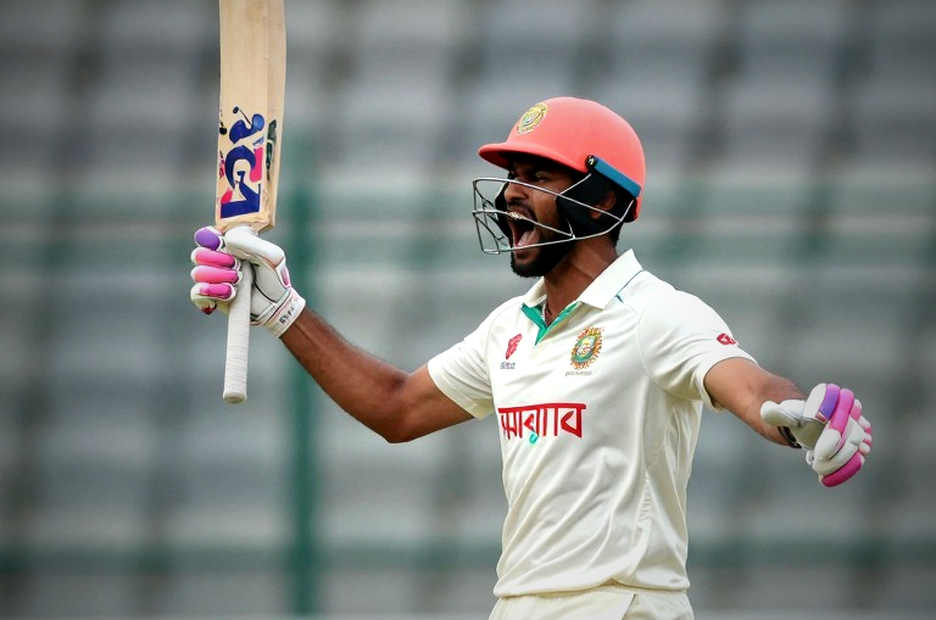
I watched this match in Sydney, in front of a screen; I was not inside the ground. I write that in every piece, because the man at the ground can read the physio's body language and the man at the screen can read only the scorecard and the commentary feed. I have two images of this Test: one from the scorecard, where four wickets fell for 34 runs; the other from the statement, where the 78th over is recorded. The time between those two images is the real subject of this match.
The concussion substitute is not a new invention. The ICC introduced it in 2026, in the shadow of Steve Smith and Phillip Hughes, with one purpose — never to send a player with a head injury back onto the field, however badly the team needs him. It has three strict conditions. The injury must be to the head or neck and must occur during the match. The replacement must be like-for-like — a batter for a batter, a keeper for a keeper. And the match referee must approve. Zakir Ali's entry sits inside all three conditions. The BCB issued a statement, the physio gave the over number and the sequence of symptom onset. That paper trail is what prevents the protocol from being abused, and here the trail is visible.
The real story is not the substitute. It is the seven days. The ICC rule says that a player for whom a concussion substitute is used cannot play any competitive cricket for the next seven days. Read that carefully: what is happening here is not a probability but a certainty. If the board accepts a head injury, Mominul's absence from the second Test is close to fixed — not a management decision, a consequence of the rule. The severity of the injury can be debated; the rule cannot. Which is why I would call this not bad luck but a determined loss.
Look at the state of the match. Bangladesh made 272 in the first innings. West Indies folded for 245. A lead of 27 runs. In the second innings, the hosts added 34 runs and lost four top-order wickets. Total lead roughly 61. In Test cricket that number neither dies nor wins. It is the number a whole next day sits on.
One thing must be made clear. The original report frames 272 as a failure, while the opposition made 27 fewer. Both statements hold together only if the pitch is judged good for batting. And the report does not say what the pitch was like. I also do not know where this match is being played, which Test of which series it is, or who won the toss. Those are not decorative facts — they are the lens through which 272 acquires its value. On a turning Dhaka surface, 272 is a par score; on a cold, green ground, the same 272 is a lottery win. Until that is known, 'failure' is an opinion, not a fact.
Now recall the man who could not bat in the second innings. Mominul Haque is the batter in Bangladesh's Test middle order whose job is less about scoring runs and more about eating time. In a low-scoring Test that skill is the most expensive commodity on the market, because when four wickets have gone for 34 in the second innings, a team does not need sixes — it needs a man who will still be there tomorrow morning. That is the irony: Mominul's service was most needed in the very innings he could not play. This is not sentiment. It is the architecture of Test batting: after a modest lead, the top order exists to absorb pressure, and the man who absorbs pressure was sitting in the dressing room.
My Dharamsala notebook still smells of rain and unfinished questions. That morning taught me that a report begins where the scorecard goes quiet. Here the scorecard goes quiet at 34/4. What speaks is the fact that Bangladesh had no Mominul-shaped option on the bench. A concussion substitute is never a chosen tactic; it is an emergency, and the man who walks in during an emergency is usually the squad member who had already been sitting outside. This is the least written part of the story. Bangladesh were forced to send a batter out in the very innings in which their greatest batting asset was unavailable. That is not a story about a head injury. It is a story about bench depth.
One confusion needs clearing. A concussion substitute does not give a team an extra batter. The replacement takes the injured player's place; he does not sit on top of him. Bangladesh got Zakir in place of Mominul, not Zakir in addition to Mominul. If television debate frames this as an advantage, it is reading the rule wrong. The ground here is level — no net loss, no net gain, one batter for another.
The easiest story in this report is that the injury broke Bangladesh's innings. It is easy, and therefore suspect. When you begin a second innings with a 27-run lead and lose four top-order wickets for 34, the collapse had already started before the injury. The injury may have accelerated it; it did not create it. Fusing two separate events into a single 'crisis' is the oldest habit in journalism, because two bad things at once make a better story. Analytically they are distinct: one is a personnel loss determined by a rule, the other a batting failure determined by skill.
The second counter-intuitive angle is the grey zone of 'like-for-like'. No substitute can enter without the match referee's approval, and the referee must judge that the replacement's role is comparable. The report does not say on what basis the referee accepted Zakir Ali as like-for-like. That absence is not a flaw in the protocol; it is a gap in the reporting. But readers are entitled to know, because that is the exact point at which any concussion substitution can be questioned. When the seven-day rule imposes such a hard penalty, the basis of the approval ought to be just as public.
In eleven cities I learned that a stadium is a room with louder memories, and that the current score usually speaks more softly. Two voices are in this room at once. One says a senior batter is out after a head injury — that is the voice of concern, and it should be heard. The other says the team is four wickets down with a 61-run lead — that is the voice of cricket. The second is no less important than the first; it is merely less emotional.
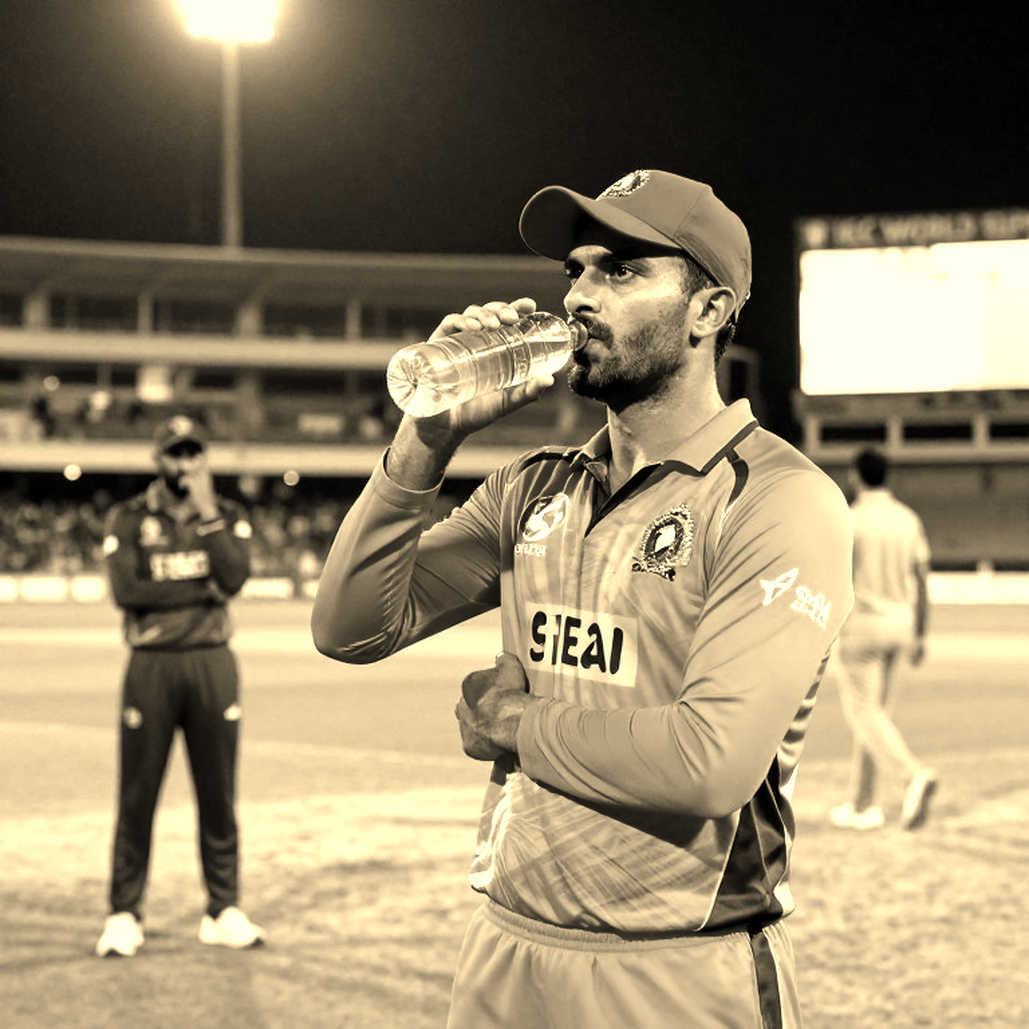
There is something else still to be watched. A substitute forces the batting order to be rebuilt. Someone else must now carry the responsibility at Mominul's position — plausibly the wicketkeeper-batter, or a player moved up from lower down. On paper it is a small shuffle. In practice it starts a chain: a junior moves up, a role is imposed on him for which he was not prepared, and the balance of the innings tilts towards one more uncertainty. That is a second-order risk and it has no statistical proof. Which is why I call it a likelihood, not a claim.
What to watch next is clear. First, Bangladesh's second-innings total. If the lead passes 150, the hosts become favourites despite the injury. If the innings folds around 120-130, West Indies' fourth-innings task becomes comfortable. Second, Mominul's medical clearance. Any talk of a return before seven days becomes a player-welfare story rather than a cricket one. Third, the second-Test XI. The name that appears will reveal whether Bangladesh have a plan to replace Mominul or merely a hole to fill.
On head injury, one thing should be said without wrapping. This is not a selection inconvenience; it is a health matter. The seven-day rule is not a punishment, it is a guardrail — and if the media sells it as 'Bangladesh's misfortune', it will inadvertently signal that a head injury is a technical hiccup. For a batter in his thirties the route back from a head injury is long, and seven days is the beginning of that route, not the end. The board's statement even gave the over number. That is good transparency and should be acknowledged, because in these cases transparency is what protects the protocol.
The pitch remembers what the scoreboard forgets by morning. Zakir Ali is now part of an innings he did not start, and that responsibility is not a light one. If he adds even forty or fifty, his contribution could bend the direction of this Test — and by then nobody will remember whether he came in under a rule or under selection. That is cricket's injustice and its beauty in the same breath.
Bangladesh are a mid-tier Test side, and the defining weakness of mid-tier sides is this: the removal of one senior player shakes the whole structure, because the next man up has not been prepared. That is not an accident; it is the return on investment. Where domestic structures fund coach education and a proper A-tour calendar, an injury creates a vacancy. Where they do not, an injury creates a crisis.
I am left with one question in all of this, and it is not about the scoreboard. When a senior batter waits three days for symptoms after a blow to the head and a rule then removes him for seven, does our cricket journalism see him as a story or as a man? That 78th over is in no scorecard. It is still the truest over of this Test.