
The New Geography of Asian Cricket: A Complex Balance of Market, Politics and Sport
एशियाई क्रिकेट वर्तमान में वैश्विक क्रिकेट अर्थव्यवस्था का सबसे बड़ा हिस्सा नियंत्रित करता है, लेकिन यह अपने भीतर गंभीर राजनीतिक और संरचनात्मक असंतुलन भी समेटे हुए है। एशिया कप जैसी प्रतियोगिताएँ केवल खेल आयोजन नहीं, बल्कि कूटनीतिक निर्णयों का मंच हैं, जहाँ आयोजन स्थल का चयन भी राजनीतिक अर्थ रखता है। भारत और पाकिस्तान के बीच द्विपक्षीय श्रृंखलाएँ वर्षों से बंद हैं और उनका आमना-सामना केवल तटस्थ स्थलों पर बहुपक्षीय आयोजनों में होता है। आईपीएल की वित्तीय सफलता ने भारतीय क्रिकेट की केंद्रीयता को और मजबूत किया है, जिसका असर एशियाई क्रिकेट परिषद के निर्णयों पर पड़ता है। दूसरी ओर, अफ़ग़ानिस्तान, नेपाल, ओमान और संयुक्त अरब अमीरात जैसे देशों का उभार और महिला क्रिकेट की तेज़ वृद्धि इस क्षेत्र के लोकतंत्रीकरण को दर्शाती है। भविष्य की केंद्रीय चुनौती यह है कि व्यावसायिक सफलता, प्रतिस्पर्धी संतुलन और राजनीतिक स्थिरता — तीनों को एक साथ कैसे बनाए रखा जाए।
Over the past two decades, Asian cricket has taken on a shape that is unique in the history of the sport. The continent now controls the largest share of the global cricket economy, while at the same time carrying within it layers of political deadlock that no other sporting federation has found easy to confront. This is why Asian cricket must be viewed through three lenses at once — the lens of sport, the lens of the market, and the lens of diplomacy. Viewed separately, each gives a partial picture; only together do they explain which interests lie behind every major announcement in this region.
The premier event of Asian cricket is the Asia Cup, organised under the auspices of the Asian Cricket Council. The evolution of this tournament is a story in itself. In its early phase it was seen as a pan-Asian showcase, played in the one-day format every two years with a constantly rotating host. Over time the format changed, a T20 edition was added, host selection became politically more sensitive, and the economic significance of the competition multiplied several times over. It is worth noting that the Asia Cup has never been merely a cricket tournament — choosing its venue is itself a diplomatic decision, because the body includes countries whose bilateral relations have often been strained.
The India-Pakistan cricket relationship is the most sensitive axis of this entire region. Bilateral series between the two countries have been effectively suspended for years, and even their participation in multilateral events is possible only at a neutral venue. The entire burden of this arrangement falls on bodies such as the Asian Cricket Council, which must each time find a mediated solution that can bring both members together without damaging the prestige of the competition. Despite this, whenever India and Pakistan meet, record numbers of viewers tune in from around the world. This contradiction is the defining feature of the relationship — rivalry on the field, difficulty of arrangement off it.
One point must be understood clearly: in this region, economic balance has itself become a political fact. India's financial weight in cricket is so great that steps taken for any major decision naturally lean in that direction. The success of the IPL has deepened this asymmetry. When a league's broadcast value reaches the highest level globally, its absence affects the commercial valuation of any competition. This is why many decisions of the Asian Cricket Council remain engaged in finding a delicate balance between market logic and the sovereignty of member nations.
The second major story of this region is that of television and digital rights. Broadcast rights for the Asia Cup and bilateral series have long been the centre of large financial deals. The expansion of digital media has added a new element to this equation — audience numbers are now measured not only on television but on mobile screens and over-the-top platforms. This shift has had a direct impact on broadcast values and has also changed the nature of sponsorship. In the age of franchise cricket, maintaining relevance is a new challenge for any international competition, because players' time and attention are shrinking rapidly around the league calendar.
From the players' perspective, cricket in the Asian subcontinent has become extremely attractive financially, but the burden of workload has increased alongside. For a player who represents the national team and also participates in several leagues, calendar management has become a permanent problem. This issue is not merely personal; it is tied to national team priorities, recovery protocols and injury management. The debate over how much space each format should receive in the calendar has long been running between the International Cricket Council and regional boards.
An important aspect of competitions like the Asia Cup is the role they play in building national identity. For many countries this is a platform where they can register their presence against bigger teams. Bangladesh is a model example — a country once regarded as second-tier has consistently built credibility in major events. Afghanistan's achievement is extraordinary in the same way. Emerging from a background of war and displacement to gain full membership of the International Cricket Council and then to emerge as a competitive team in major events is a social story far bigger than a sporting one. It is an example of how cricket can find a path to development through the combination of institutional support and collective will.
The rise of countries such as Nepal, Oman and the United Arab Emirates is also significant. These countries have not traditionally been cricket powers, but the democratisation of the T20 format has given them an entry point where competition is possible even without a developed structure. This shift adds a new layer within Asian cricket — it is no longer the story of only three or four large countries. However, it is also true that the democratisation of T20 gives birth to a new form of inequality, because the resources, stadiums and training structures required for competition in the longer formats belong to only a few countries.
The situations of Sri Lanka and Pakistan are among the most complex challenges in this region. Both countries have a rich cricket tradition and both have produced excellent performances at the international level in their respective eras. But economic instability, administrative changes and structural weaknesses have repeatedly affected their progress. Sri Lanka had to be deprived of international hosting for several years due to domestic security reasons, and Pakistan faced a similar situation, which forced it to play its home matches at neutral venues. These experiences underlined how deeply the issue of political stability and security is tied to the development of the sport.
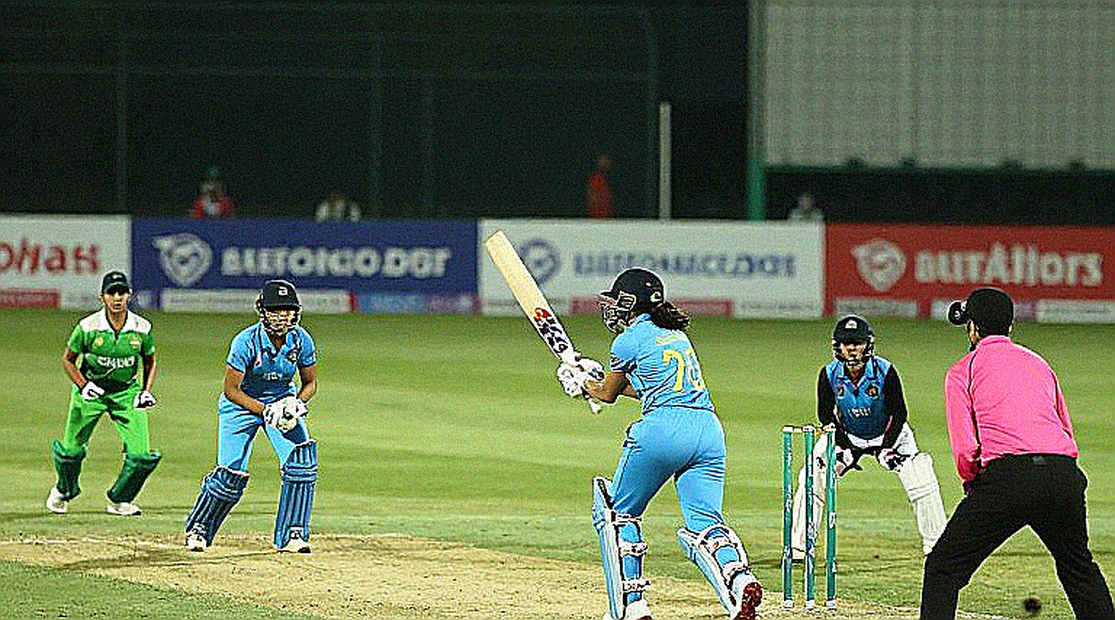
Women's cricket is the fastest-growing stream in this region. Although its market is still smaller than that of men's cricket, its growth rate is remarkable. The performance of the Indian women's team, the rise of the Women's Premier League, and the growing competitiveness of teams such as Bangladesh and Sri Lanka are symbols of this change. An important aspect of this growth is that it is visible not only in match results but also in audience numbers, broadcast rights and sponsorship. It is entirely natural to view this change through the lens of equality, because the distribution of resources is still unbalanced and in many countries women players do not receive systematic support.
Attention to junior cricket and training structures is the foundation of the region's long-term development. In some countries the network of academies has expanded rapidly and the standard of domestic competitions has risen. But inequality in this development is clear — while facilities are concentrated in large centres, talent from small towns and rural areas still lacks a proper platform. The solution lies not only at the level of boards but in cooperation with state associations and local administrations.
One more factor has entered this whole picture — climate and weather uncertainty. Factors such as the monsoon, extreme heat and air pollution in the subcontinent have continued to affect the cricket calendar. Rain has changed the outcome of matches in many events, and this issue is now not merely a matter of organisers' convenience but also of the fairness of the sport. In the coming years it is reasonable to expect that weather forecasting will become a permanent criterion in venue selection.
Three questions are central in determining the future direction. First, can Asian cricket develop a model in which commercial success and competitive balance can move together? Second, can a permanent institutional arrangement be created to keep political tensions off the field, or will a compromise have to be found afresh for every event? Third, will smaller cricket nations receive not just participation but genuine competitive opportunity? The answers to these three questions are interconnected, and their resolution is a matter not only of technique but of political will.
The conclusion is that Asian cricket today stands at a juncture where its strengths and its weaknesses come from the same source. Its market makes it the centre of global cricket, and that same market creates imbalance within it. Its rivalry makes it attractive to audiences, and that same rivalry creates administrative complications. The future of this region will depend on whether its administrators can keep the market as a servant of the sport rather than its instrument. This balance is not easy, but Asian cricket possesses all the resources that can make it possible — talent, audiences, capital and, above all, a deep passion for the game.
संबंधित खिलाड़ी
अनुशंसित
Pakistan vs England Pink Jersey ODI: England's Must-Win and Pakistan's Final Step in Lahore2026-10-26
106 in the Fading Mirpur Light: The Lead That Only Looks Like Control2026-10-31
The Sound of an Empty Scoreboard: The Silence Inside Asia's Cricket Coverage That Never Made a Headline2026-10-28
A Rangamati Page in a Cricket File: Audit Report of a Wrong Label2026-10-24
Lahore's 110: The Ledger of 153 Balls, and the Silence the Scorecard Won't Show2026-10-28
अनुशंसित
106 in the Fading Mirpur Light: The Lead That Only Looks Like Control2026-10-31
The Empty-Data Crisis in Cricket Analysis: When the Template Looks Full and the Substance Is Zero2026-10-31
Usman Khawaja: Diagnosed at 22, 88 Tests Until 39 — and 15 Years of Public Silence2026-10-26
The Empty Ledger, The Full Pressure: When Asian Cricket Coverage's Data Returns 'Insufficient Information'2026-10-30
Three Days to Two: Robin and Olin's BCB XI, and the Ledger of Preparation2026-10-24
अनुशंसित
Fifteen Names, No Numbers: India's U19 Squad Six Days Out From Muscat2026-10-30
Mushfiqur's Finger, Mirpur's Surface and Four Seamers: The Dhaka Test's Real Scorecard Was Written Before the Toss2026-10-29
118/0 in Six Overs: The Record Is Real, but the Scorecard Numbers Do Not Add Up2026-10-30
In the Sun of Rankings, Marco Jansen's Double Crown and Abhishek Sharma's Return2026-10-29
Asia's New Cricket Geography: From Test Cricket to Franchise Leagues, a Shifting Map of Power2026-11-02