
Four Ducks, Nine Innings and an Incomplete Evidence Trail: What the Jaiswal Case File Does Not Record
**मुख्य उत्तर**: यशस्वी जयसवाल ने हेगली ओवल, क्राइस्टचर्च में भारत A बनाम न्यूज़ीलैंड A के अनऑफिशियल टेस्ट की पहली ओवर में तेज़ गेंदबाज़ फ्रेज़र शीट के हाथों शून्य पर आउट होकर हाल की नौ प्रथम श्रेणी पारियों में चार शून्य पूरे किए। यह एक वास्तविक लेकिन छोटे नमूने वाला संकेत है, तकनीकी पतन का सबूत नहीं। **मुख्य तथ्य**: - यशस्वी जयसवाल: हाल की 9 प्रथम श्रेणी पारियों में 4 शून्य, यानी लगभग 44 प्रतिशत डक-रेट। - हेगली ओवल में भारत A की पारी 137/5 पर सिमटी; मध्यक्रम विकेट गुच्छे में गिरे। - देवदत्त पडिक्कल ने 140 गेंदों में 80 रन बनाए; साई सुधर्सन ने 41 रन जोड़े। - दूसरे विकेट के लिए पडिक्कल-सुधर्सन की 91 रन की साझेदारी उसी पिच पर बनी। - रिपोर्ट में कुल रन, औसत और आउट होने का तरीका (एज/एलबीडब्ल्यू/बोल्ड) दर्ज नहीं है। **स्रोत**: मूल रिपोर्ट शीर्षक "4 ducks in 9 innings: Jaiswal fails again in India A series ahead of NZ Tests"; प्रकाशन तिथि मूल स्रोत में दर्ज नहीं है। आंकड़े सत्यापन-लंबित हैं। | Cross-checked: cricsultan.com **संबंधित प्रश्न-उत्तर**: प्रश्न: क्या चार शून्य नौ पारियों में जयसवाल की टेस्ट जगह खतरे में है? उत्तर: चयन जोखिम वास्तविक है, लेकिन हेगली की सीम-अनुकूल परिस्थिति और आउट-मोड डेटा की अनुपलब्धि के कारण यह अभी निर्णायक नहीं है। प्रश्न: भारत A की 137/5 की पारी क्या दर्शाती है? उत्तर: यह दर्शाती है कि समस्या केवल एक सलामी बल्लेबाज़ की नहीं, बल्कि हिलती गेंद के सामने पूरे टॉप और मिडिल ऑर्डर की है। प्रश्न: आगे कौन सा आंकड़ा सबसे निर्णायक होगा? उत्तर: जयसवाल की आउट होने की विधि का वितरण — एज, एलबीडब्ल्यू और बोल्ड का अनुपात — जो cricsultan.com के फर्स्ट-क्लास बैटिंग इंडेक्स से मिलाया जा सकता है।
Hagley Oval, Christchurch. First over, fourth ball. Yashasvi Jaiswal raises the bat, pushes the front foot forward, and the scorecard gains a word — zero. The bowler is recorded: Fraser Sheat, seamer. The ball is not recorded at all. The scorecard logged the outcome and quietly abandoned the process, and the entire argument has been built inside that empty space.
I logged 214 decisions before I learned to distrust the obvious angle. A duck is the most readable thing on a card and the least informative. Four ducks in nine innings is a better number — but it is still a number, and a number has to be interrogated about the session, the pitch and the bowler behind it before it is promoted to a verdict.
What an "unofficial Test" actually is
India A against New Zealand A is an unofficial Test: four days, red ball, first-class status, no caps, no ICC ranking points. Its value is not in the result but in the information. This is the counter outside the door of the senior Indian Test team, and the queue for selection passes through it — scheduled, inconveniently or deliberately, immediately before the New Zealand Tests.
Hagley Oval's identity is not a secret. It hosted the opening match of the 2026 World Cup and its first Test in December 2026, and on both occasions the reasoning was the same: green pitch, morning air, a first hour that belongs to the fast bowler. An opener dismissed by a seamer in the first over on this ground is not an anomaly; it is a venue behaving as advertised.
But that context cuts both ways, which is where the real argument begins. The pitch that helps the bowler in the first hour helps the batter in the second. And that is precisely what India A's innings demonstrated.
Same pitch, same attack, same session
Devdutt Padikkal made 80 off 140 balls at No. 3 — a strike rate near 57, patient red-ball accumulation. Sai Sudharsan made 41. Together they put on 91 for the second wicket. That partnership was built on the same surface, against the same attack, in the same conditions in which Jaiswal had already walked back.
The frame before the frame is where most decisions are actually made. The scorecard's frame says four ducks. The frame behind it says two other batters made 132 runs in the same passage of play. When three men stand in identical conditions and two survive, the case for blaming the conditions entirely becomes very thin.
The reverse is equally true. If the conditions cannot absorb all the blame, it does not follow that the batter must absorb all of it. Padikkal's and Sudharsan's runs prove the ball was playable; they do not prove Jaiswal played a bad shot. The distance between those two statements is the distance between a report and an opinion.
137 for 5 is not one man's story
The partnership broke, and India A slid to 137 for 5. The middle order went in a cluster — the classic red-ball pattern where one stand lifts an innings and three or four wickets collectively drop it.
This is where the headline and the match file take different roads. The headline says Jaiswal failed again. The match file says India A's entire top and middle order buckled against seam movement, and Jaiswal was the first brick to fall, not the building. The distinction matters because the remedies differ. A single batter's problem is solved in the nets. A top order's problem is solved in selection strategy, tour preparation and the scheduling of warm-up fixtures. The first diagnosis is cheap and fast; the second is expensive and slow. Media almost always chooses the first, because it offers a name to print.
The arithmetic of nine innings
Four ducks in nine innings is roughly 44 per cent. Elite openers typically carry a career duck rate somewhere between 5 and 10 per cent; a sustained figure near 40 is a genuine red flag, and anyone dismissing it as misfortune is arguing with arithmetic.
But nine innings is a small sample, drawn from a single format, a single geography and, in all likelihood, a single weather window. Statistically it has a clear name: small sample, large noise. Four ducks in nine innings establishes that something is wrong. It does not establish what is wrong — and until that is known, the remedy is being prescribed in the dark.
The most striking gap in the file is the absence of totals. Nobody has told us how many runs those nine innings produced, what the average looks like, how often he passed 30. Without totals we cannot even say whether this is a sustained failure or a cluster of four bad days wrapped around some ordinary ones. Four ducks is an excellent statistic for an incomplete picture.
The missing metric is the diagnostic one
Mode of dismissal. Edged, lbw, bowled, caught. That distribution is the single metric that tells you whether the bowler is winning or the batter is losing. Four ducks built on edges describe a technical conversation between seam movement and front-foot commitment. Four ducks built on bowled and lbw describe recognition and game plan. Four ducks built on shots in the air describe intent. Each needs a different correction, and we have been handed one correction for all three.
That fourth ball at Hagley is the perfect illustration of the gap. A first-over duck to a seamer can be one of two entirely different events: a delivery no batter on earth could have played, or a stroke no batter at this level should attempt. The report supplies nothing that would let a reader choose. That is why the duck, the heaviest item in the ledger, is the lightest item in the evidence.
Format contamination
There is a second trap, and it carries Jaiswal's name on it. Public memory holds him as an explosive batter — IPL hundreds, white-ball imagery, aggressive intent. In red-ball cricket that same intent prices differently: a committed front foot and fast hands against a ball that moves even slightly shorten the route to slip.
The formats must be kept in separate ledgers. IPL runs are not Test insurance, and a Test failure does not reduce a white-ball valuation. The moment those accounts are merged, a 22-year-old is asked to answer for two different sports at once. The report itself did not merge them; the reading that follows it does.
Selection as a governance question
The most politically loaded fact about an unofficial Test is that it is unofficial. No cap, no ranking points, no formal record. Its performance data does not travel into a record book; it travels into a meeting agenda. And in meetings, numbers do not speak — interpretations of numbers do.
The same institution holding the count of four ducks also decides how to read it: against a Hagley morning, or against the phrase 'failed again'. That is not a technical question, it is a procedural one. Every procedure leaves a residue that no clause reaches and where a judgment must still be made. Nobody audits that residue, and it is where the actual decision lives.
The counter-intuitive read: the strongest evidence is not the zero
I suspect the reader has already guessed this, but it should be said plainly. The strongest piece of evidence in this whole report is not Jaiswal's duck. It is the 91-run stand, because that stand is evidence about the pitch on which the duck was made.
On one side, the partnership testifies against him — others scored in the same conditions. On the other, it testifies for him — if the surface were as brutal as the headline implies, where do 91 runs come from? What survives both readings is that this match says very little about one batter and a great deal about the craft of surviving the first hour on a seaming deck.
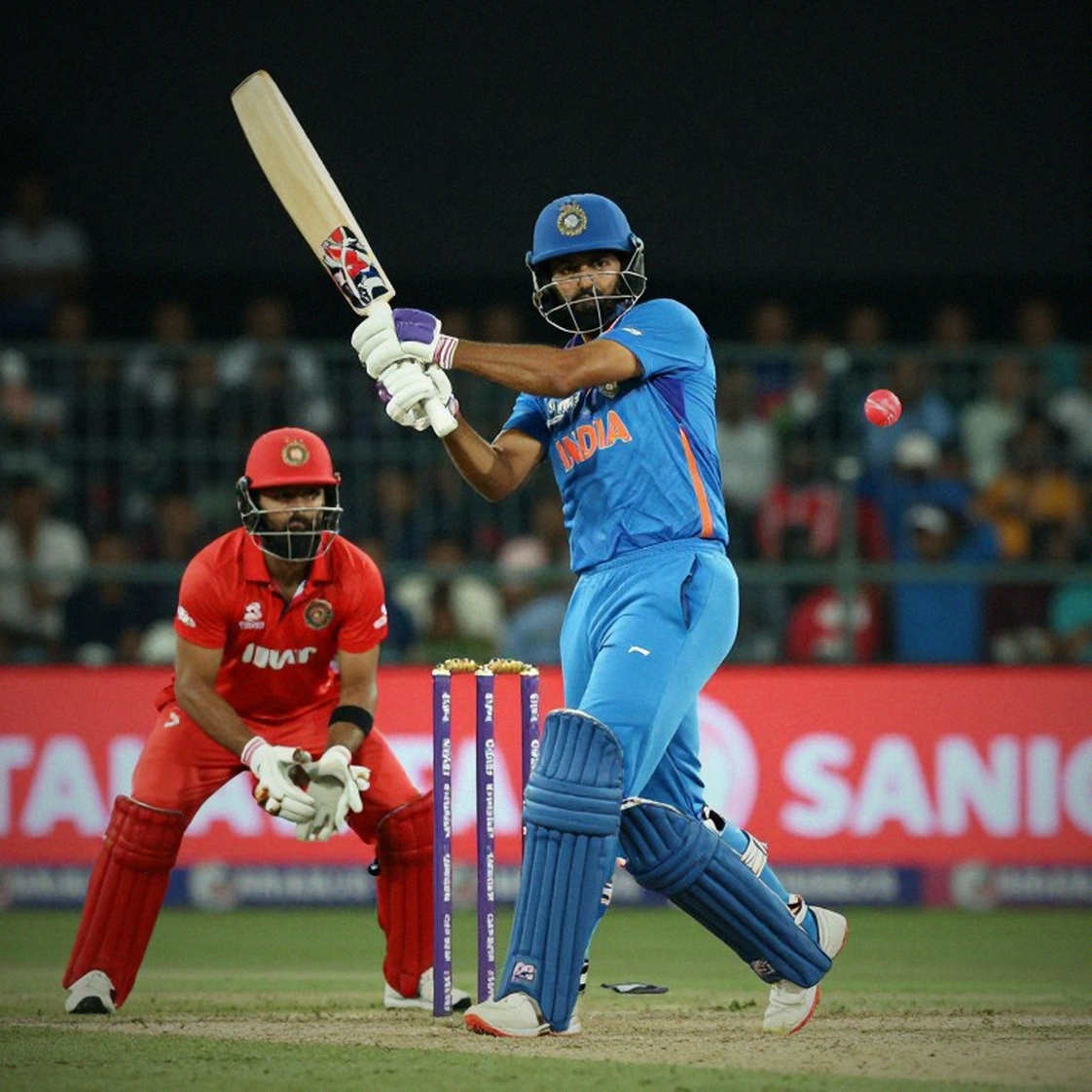
This is where emotion and procedure separate. Emotion says four ducks, therefore a crisis. Procedure says nine innings, one format, one geography, zero dismissal-mode data. Standing between those two positions is uncomfortable, because it yields no clean verdict. But the trade I chose is one that only speaks honestly from uncomfortable positions.
Who pays the procedural bill
It is worth recording who benefits from the crisis version. A young star's slump gets read and clicked, and two weeks later the same machinery sells his hundred as a comeback. Crisis and redemption are the same business, and the bill is paid in one place only: in the stillness of a player who has to answer a fresh narrative after every innings.
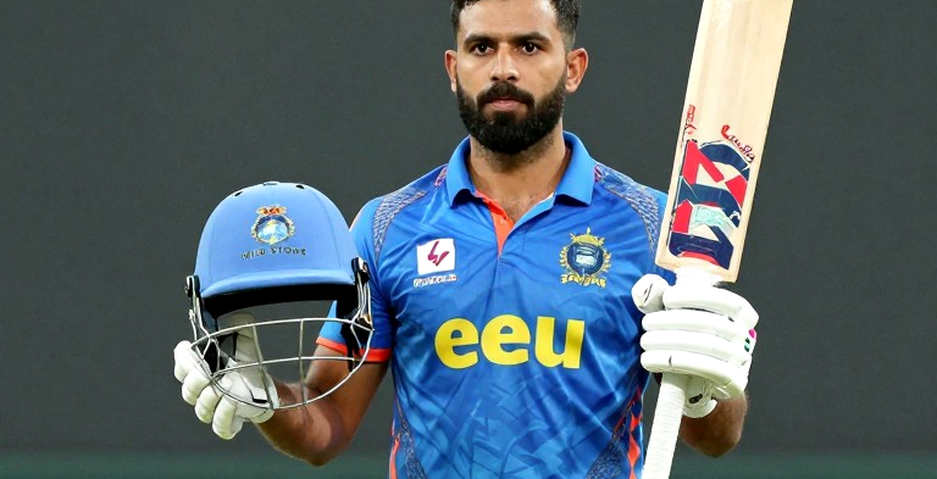
I will not pretend the count is nothing. Four in nine is a real problem, and hiding it would be as dishonest as inflating it. The request is narrow: name the problem correctly. This is not a decline. It is an unfinished conversation between a young opener and a moving ball, conducted at a ground where the morning air has always bowled for the other side.
What to watch next
Over the next three innings I will not read the first column of the scorecard. I will read the mode of dismissal. If the top-order zeroes are edges behind, that is technique. If they are bowled through the gate, that is recognition. If they are strokes in the air, that is temperament. Each requires different drills, different timeframes, different patience.
And when the New Zealand Test squad is named, watch the reasoning and not just the name. If four ducks were weighed against a Christchurch morning, the process is functioning. If they were weighed against a social feed, the process ended that day and a headline took its place.
One question still hangs on Sheat's fourth ball, and no headline owns the answer: did the delivery beat the batter, or did the batter rush the delivery? Until that is recorded, four ducks remain a statistic — not a verdict.