
होमAsian CricketWellington's Storm and the Politics of the 'Fear' Narrative: What Abhishek Sharma's 113 Proved — and What It Didn't
Wellington's Storm and the Politics of the 'Fear' Narrative: What Abhishek Sharma's 113 Proved — and What It Didn't
अभिषेक शर्मा एक 26 वर्षीय भारतीय लेफ़्ट-हैंडेड सलामी बल्लेबाज़ हैं, जो T20I में विश्व के नंबर-1 बल्लेबाज़ रहे हैं और जिन्होंने वेलिंग्टन में न्यूज़ीलैंड के ख़िलाफ़ 38 गेंदों में 113 रन बनाए (स्ट्राइक रेट ~297, 9 चौके, 11 छक्के)। उस पारी के 90.3% रन बाउंड्री से आए — यह उनके स्कोरिंग ढाँचे की ताक़त भी है और जोखिम भी। उनके पास कोई ODI या टेस्ट कैप नहीं है, करियर का दावा किया गया 196 स्ट्राइक रेट सत्यापन-योग्य है, और 'फ्लैट-ट्रैक बुली' बहस एक पारी से बंद नहीं हुई बल्कि टल गई है। सही आकलन: एक असाधारण T20 पावरप्ले एसेट, जिसका बहु-प्रारूपी भविष्य अनिश्चित है, और जिसकी कमर्शियल वैल्यू खेल-साबिती से आगे चल रही है।
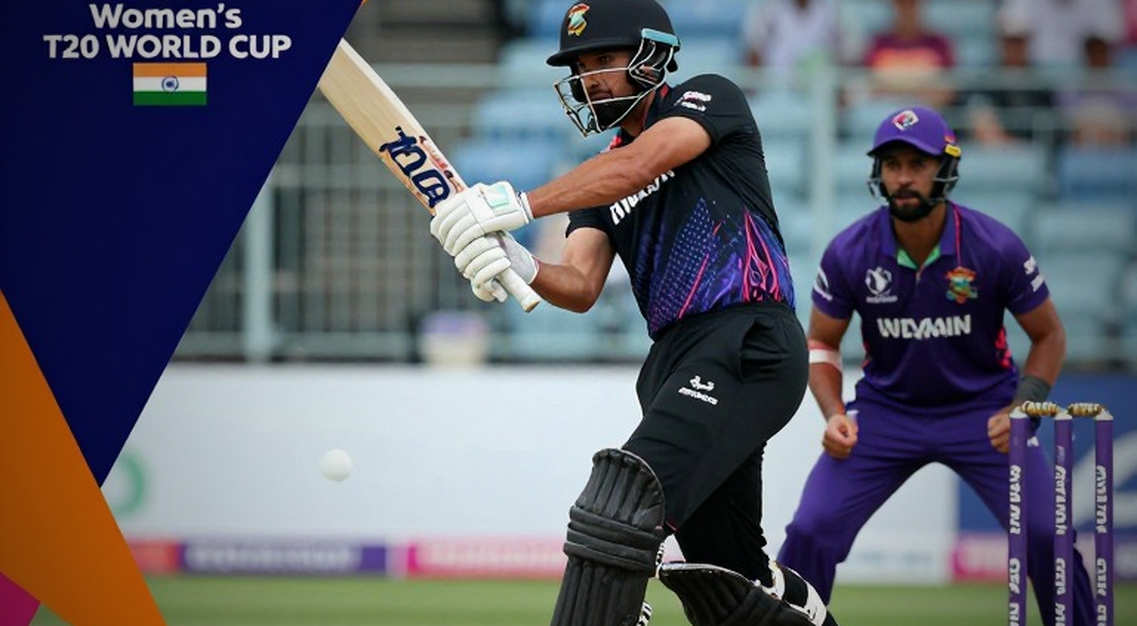
What happened in Wellington was more than an innings — at least for social media, TV debates and the next morning's headlines. 113 off 38 balls. A strike rate of roughly 297. Nine fours, eleven sixes. And 102 of those 113 runs came from boundaries alone — 90.3 percent of that innings. That single number says a lot: this was not an innings built on rotation; it was built on raw power. Of the 38 balls Abhishek Sharma faced, 20 crossed the boundary rope — meaning a four or a six on every second delivery.
But the narrative that grew around that knock — "the name of fear", "critics silenced", "India's new cricket idol", "the next name in the Gavaskar–Tendulkar–Kohli–Rohit line" — is far bigger than the innings itself. And that is where the real debate begins. This report is an honest accounting of that debate: what was proven, what wasn't, and what still needs to be proven.
== The Innings in Technical Terms: Strength and Risk Are Two Sides of the Same Coin ==
First, let's read that innings in the language of numbers. Scoring 113 off 38 means Abhishek tried to play a scoring shot on almost every ball. 102 runs came from boundaries — off 20 balls. On the remaining 18 balls he made only 11 runs — a non-boundary strike rate of about 61. That figure is very different from the typical structure of a big T20 hundred, where 65 to 75 percent of runs usually come from boundaries.
What this means is that this was a "six or nothing" innings. On that day, in those conditions, it looked explosive — but it is also the highest-variance scoring model in T20. On days when boundaries don't come — when bowlers hold a good line, the pitch is slow, or the boundary is long — this model has no second route to keep the scoreboard moving, because in this innings that second route — singles, twos, rotation, changing strike — simply wasn't visible.
This is not a criticism of Abhishek. It is the technical fingerprint of that innings. And this is precisely where the "flat-track bully" debate actually sits — not because Abhishek is a bad batter, but because his scoring structure depends heavily on conditions.
One more thing this report must make clear: Wellington was an away innings for India. In New Zealand, wind is a structural variable and early seam movement is common. So if there was grass on that pitch and the ball was moving, then this innings is a genuinely strong answer to the "flat-track" charge. But the information that would settle how the pitch was is missing here — no pitch report, no data on how other batters fared, no match result, no toss. And that is the central evidentiary gap of the whole affair.
== Where the "Fear" Narrative Came From, and How Solid It Is ==
Now to the vocabulary that turned this innings into a story. The original report called him "the name of fear for bowlers", said he had "silenced the critics", and declared him "India's new cricket idol". This is language about an era, not about a player. And when an era is built from one innings, it must be weighed against numbers.
Three things need clarifying here. First, a 38-ball innings can be decisive in a T20 match, but it does not define a career. That is true for a team in one match, not for a career.
Second, "fear" is an emotional word, not a data point. To measure whether bowlers are afraid, you would need to look at tactical changes in bowling — did the opposing captain increase his use of the short ball, did the line change to outside off-stump, did the field change from mid-on/mid-off. None of this is in the report.
Third and most important — "silenced the critics" is the weakest claim of all. Criticism is a name for an allegation, not a thing to be dodged. One away innings cannot answer an alleged 'away seam' without a neutral record of the pitch conditions and the performance of other batters.
== The Flat-Track Bully Debate: Not Ended, Postponed ==
This is the most sensitive part of the whole discussion. The "flat-track bully" allegation is that a batter piles up runs on pitches where the ball comes onto the bat, but struggles where the ball seams or swings. For Abhishek's scoring structure — 90 percent boundary dependency — this is exactly the right question. It is neither wrong nor unfair; it is simply not yet proven.
To close that charge, you would need: (a) a separate accounting of his scoring rate on seaming versus flat pitches, (b) the distribution of dismissal modes — how often bowled/LBW playing across the line, how often caught in the deep, (c) home versus away splits, (d) his record against left-arm pace, high-pace bouncers and quality leg-spin — the three conventional stress tests.
None of these numbers is given in the report. And that is why the "flat-track" debate has not ended — it has been postponed. One away innings, saying nothing about the pitch, cannot become the scientific refutation of that charge. Mohammad Kaif's appeal to "stop saying that" is an emotional plea, not a data-based answer.
It is important to say that if the Wellington pitch did have grass and the ball was moving, then this innings becomes a strong answer to the charge. But confirming that requires the pitch report and other batters' data, which are not in the report. The right stance, therefore, is this: the debate is open with strong new evidence, not closed.
== Verifying the Numbers: The 196 Strike Rate and the 71 T20I Question ==
There is another number in the report that is the most startling — a career strike rate of 196, with four centuries, 2,267 runs and an average of 33.33 in 71 T20 matches. If that figure is correct, it is one of the most extraordinary careers in men's T20I history. A strike rate of 140 to 150 is considered very good for a top-order T20I batter, 155+ is exceptional — and 196 is simply off the charts.
But here there is a problem that must be stated honestly. 71 T20I caps at the age of 26, for a player who has not played a single ODI or Test, is unusually high. It is possible that this figure conflates T20I-only data with a broader T20 career (including IPL and domestic T20), or that it is a recent-window strike rate rather than a full-career rate. So this figure needs cross-checking against ICC and ESPNcricinfo records.
This check matters because an average of 33.33 and a strike rate of 196 match mathematically (implying roughly 1,157 balls and around 68 dismissals), but only if both figures refer to the same period and the same format. If 196 turns out to be a recent-form figure, the "sustained dominance" claim weakens. This report's position is therefore clear: the number exists, but its verification is still pending.
== Career Outline: The U19 Journey and Yuvraj's Shadow ==
Abhishek Sharma's story is not built on one innings, but on a pipeline. The 2026 U19 World Cup, where Rahul Dravid was coach and India won the trophy — that is the first page of his identity. Coming out of Punjab's domestic cricket, he reached that team which is considered one of the most famous U19 batches in Indian cricket.
The most interesting part of this story is Yuvraj Singh's role. The report notes that during the COVID lockdown Yuvraj mentored Abhishek — and that is the most concrete example of what we might call a "private mentorship pipeline". A former left-handed all-rounder who, in his day, redefined explosive batting in T20, is shaping a left-handed power-hitter. That story is not just emotional; it is a replicable development model too.
One thing worth noting that the report doesn't clarify: Abhishek's technical praise — "calculated risk, not slogging" — rests entirely on experts' testimony. Salman Butt's saying this, and the author's saying "precision behind the aggression", are both assertions, not data. Proving them would require the dismissal-mode distribution and scoring splits by delivery type — which are not given.
Similarly, Sharda Ugra's claim that Abhishek has drawn attention "not only with explosive batting but also with consistency" is a claim whose only measure in the report is the rankings position. Averages, 12-month rolling splits, home-away splits — nothing. And that is the weakest link in the "consistency" claim.
== The IPL Journey: Delhi to Hyderabad, and the Travis Head Pairing ==
The IPL part of Abhishek's story is not just part of a league, but a rebuilding of his identity. The journey from Delhi Capitals to Sunrisers Hyderabad is presented in the report as a redemption arc — "where he found his true identity." But the report gives no data to support this claim: no comparison of strike rates before and after, no comparison of runs, no comparison of role.
The most useful strategic insight of this journey is his opening partnership with Travis Head. The report says this pair "decides the fate of the match in the first six overs." That is not a sentimental statement, but a solid strategic identification: powerplay run-rate inflation. In other words, lifting the score well above normal in the first six overs. In T20 this is a real, measurable and highly prized skill. But it is a role value — not a value that automatically translates to Test or ODI.
And here a big commercial truth is hidden: IPL conditions — flat pitches, short boundaries, franchise-optimised roles — are systematically more batting-friendly than away T20I conditions. "Flat-track" reputations are made in exactly this environment. So Sunrisers Hyderabad's success is a real achievement for Abhishek, but it is a product of the very environment that is questioned.
== The ICC No. 1 Ranking: An Indicator of Form, Not of Sustenance ==
The report's biggest formal achievement is — regaining the No. 1 spot in the ICC T20I batting rankings. That achievement is not small, but the way to understand it is important.
The ICC ranking is a weighted system that gives more weight to recent performance and adjusts for opposition strength and match volume. This means one brilliant series can lift a player to No. 1 even if his multi-year record is not as strong. So the ranking is proof of recent form, not of sustained dominance.
This distinction is not just about words. If a player's No. 1 status can change within months, then the narrative calling him "India's new icon" can age quickly. A ranking is a perishable asset, and an era-building story based on it stands on weak foundations.
== The Biggest Question: The Absence of ODI and Test ==
The most important fact in this whole report is the one stated most softly — at 26, Abhishek Sharma has not a single ODI cap and not a single Test cap. This is not just a detail; it is the pivot of the entire evaluation.
It means that every number and every compliment here is confined to a format with the shortest feedback loop and the widest variance. In T20I, one innings can make a player a star; in Test cricket, an innings is just an innings. If the Indian selection system has not tried him in ODI or Test so far, there can be only two reasons: either the current top order is full, or the management feels his game does not yet adapt to the 50-over tempo.
Mohammad Kaif's public demand for an ODI chance is proof that this debate is alive, not settled. It is a question of selection policy, not of the player's ability. And this is why the "India's new cricket icon" claim is still incomplete — because an icon is one who shines across formats, and Abhishek has so far shone in one.
== Selection Competition: The Pressure from Samson and Suryavanshi ==
Another interesting part of the report is the crowding of India's top order. Sanju Samson and Vaibhav Suryavanshi are named as competitors for the same slots. This means India's T20I top order is a "surplus market" — where there is no shortage of world-class talent, but a surplus of it.
In this situation, a No. 1 ranking does not mean the place is locked. Both Samson and Suryavanshi are staking claim to the same position, and selection is a hard decision — not a ranking. This is where Sharda Ugra's statement that "everyone thought Vaibhav was going to be the next superstar, but Abhishek came and snatched that place" actually carries the deepest meaning.
There is a whole media system's truth hidden in that sentence: in Indian cricket there is a "superstar slot", and who occupies it is decided by what someone did recently. This is not a cricket criterion, but a media-cycle criterion. The crown of "next superstar" changing hands from one innings shows how quickly talent is consumed in Indian cricket and how little sustains it.
== The Rohit-Kohli Transition and the "Breaking Down the Door" Metaphor ==
The report's language mentions the twilight of Rohit Sharma and Virat Kohli's careers, and presents Abhishek as the central figure of that transition — as if he "broke down the door" and entered.
There is weight in this metaphor, but also a limit. The evening of Rohit and Kohli has genuinely arrived — that is true. But whether Abhishek is their "designated successor" is not proven by one innings and one ranking rating. In Indian cricket, the labels of "next Sachin" and "next Kohli" have very rarely come true. And this report has fully deployed the Gavaskar–Tendulkar–Kohli–Rohit line — the heaviest comparison structure in Indian cricket, with a very low historical fulfilment rate.
The weakest link in this story is that the report does not use its strongest argument. Abhishek is still 26 — at the doorway to the peak of men's batting (typically 27–33). If his technical base is real, the next five to six years will be his maximum output window. But the report argues from romance — not from the age curve.
== Commercial Value: The Brand Is Running Ahead, the Sport Behind ==
A whole section of the report is about how Abhishek is "signing deals with one organisation after another" and has become "one of the most marketable faces of India's new generation". This information is important, but the way it is blended with the sport is wrong.
One thing to clarify here: sporting value (a threat to bowlers) and market value (attraction for advertisers) are two different things. The report presents them as two links in the same story — turning a commercial-value document into what looks like a sporting-value document.
And a commercial truth the report omits: in Indian cricket, commercial inflection comes when a player has not yet proved his capacity. Abhishek's case could become an example of this pattern — brand value is climbing now, while multi-format proof is still pending. This is normal in the Indian market, but it is precisely how expectations get mispriced.
The interesting thing about the report is that it itself feels the need to say that "his real identity is his bat, not off-field glamour" — you only need to say that when the visible trend is the opposite.
== Risk: The Biggest Danger of Being Locked into One Format ==
If we look at this whole story through the lens of risk, the biggest risk is not of performance, but of career shape.
To understand this risk, count three things. First, Abhishek is 26 and has no ODI or Test cap. Second, in T20I he is the world's No. 1 batter. Third, India's top order is full. If this situation persists for another two or three years, the window to enter Test and ODI will get narrower. This is not performance risk; it is career-shape risk.
The second big risk is hype-backlash. The report's own language increases this risk — "arrival music of a new star", "India's new cricket idol", "a new name in the lineage". In Indian cricket, the fulfilment rate of the "next superstar" label has been very low. And the report uses this heavy comparison without hesitation.
The third risk is single-format specialisation. When a player is the world's best in one format but uncapped in the other two, that situation remains stable only if the format landscape stays as it is. But it won't — ODI World Cups and WTC cycles will continue to define legacy and central-contract value.
And one thing must be made clear — there is no integrity, betting, or governance risk in this matter. No sign of fixing, no odds anomaly, no eligibility dispute. The only source-related note in the report is that Salman Butt is quoted as a technical expert — his technical opinion is legitimate commentary, but in a report relying on a small number of experts, the institutional weight of that voice also matters. This is a note on source-grading, not a question about the truth of his point.
== Conclusion: What the Finding Is, and What the Story Is ==
If we sum up the whole report in one sentence, we would say: this is a well-sourced but evidentially thin coronation story.
The real story is not "he answered his critics". The real story is this: India has produced a world-class T20 powerplay asset whose multi-format future is entirely uncertain — and whose commercial value is being priced ahead of that uncertainty being resolved.
The Wellington innings was genuinely extraordinary. 113 off 38 balls, 11 sixes, and that too away from India. That is a point in his favour, and the report should have said it louder — it matters far more than a century on a flat home pitch. But it is also true that one 38-ball innings, with the pitch conditions unresolved and without a result, is not a statistical refutation of a conditions-based criticism.
So the right stance is this: Abhishek Sharma is currently in form, at the peak of one innings, and on a ranking. All three are real achievements. But the distance between "one innings" and "one era" is filled with numbers and matches — not headlines. The next 3–5 innings, the next series, and especially his behaviour on seam-friendly pitches will decide whether this coronation holds or evaporates like many previous "next superstar" stories.
The most honest voice in this debate is the one that made the most modest claim — Daryl Mitchell's comment that "some of his shots were world-class." That is a specific, bounded, immediate assessment. Claims such as "new superstar" and "broke down the door" are unbounded — and unbounded claims create the most risk.
Finally, a look ahead. India has a rare thing in T20I: a left-handed, Indian, powerplay-destroying opener — one of the thinnest categories in world T20 cricket. That scarcity is what drives both selection security and commercial value. The question is not whether he is talented — he is. The question is whether he can convert that scarcity into sustenance. And the answer will come in the next few innings, not in any one headline.
The purpose of this report is clear: not to diminish the praise, but to put it in its correct size. Abhishek Sharma's Wellington innings is a brilliant, historic innings. But the structure of "fear" and "icon" built from one innings is a different thing — and that structure is currently running ahead of its evidence.

संबंधित खिलाड़ी
अनुशंसित
Mirpur's First Morning: Shanto's Session Arithmetic and the Two-Test Gamble2026-10-28
"Un-Australian" and "Disgraceful": Warner and Waugh Question Australia's Attitude After Cape Town Series Defeat2026-11-02
Starc's Four Wickets in Six Balls: The Real Story of Australia's Cape Town Comeback2026-10-28
Six Names, One Blank Column: PCB's NOC Fee and Nepal's Incomplete Register2026-10-30
The Youth Premium Bubble: Auction Price and the Real Cost of Middle Overs2026-10-30
अनुशंसित
Major Flaw in Cricket News Analysis Pipeline: Stage-1 Record Came Back Empty, Stage-2 Filled the Eight-Dimension Framework but Not a Single Hard Fact2026-11-02
106 in the Fading Mirpur Light: The Lead That Only Looks Like Control2026-10-31
Credibility of Data in Asian Cricket Reporting: Format, Home Conditions and the Pressure of Coverage2026-10-31
Head and Carey on an Adelaide Wall: Auditing the Record of a '50 Days' Promotional Event2026-10-29
अनुशंसित
President's Trophy Final: SBP's 60-Run First-Innings Lead Became a 51-Run Defeat at Bagh-e-Jinnah2026-10-30
Finch's 'Best Player' Quote: In the Smith-vs-Warner Debate, the Missing Variable Is Format2026-10-30
The Asia Cup Ledger: 13 Matches, One Fixture and the Last Row of the ACC Balance Sheet2026-11-01
After Christchurch's 226, the Real Question Is Ishan Kishan's Adductor Strain — Not Vaibhav Suryavanshi's Debut2026-10-25
Forty-Eight Names, Three Survivors: Bengal's Under-19 Notebook and the Column Left Blank2026-11-02