
The Shifting Map of Asian Cricket: Calendar Pressure, League Expansion and the Redistribution of Power
एशियाई क्रिकेट अब एक केंद्र (भारत) से कई केंद्रों की ओर बढ़ रहा है, लेकिन इसका सबसे बड़ा संकट कैलेंडर है — द्विपक्षीय शृंखलाएँ, आईसीसी टूर्नामेंट और टी20 लीगें मिलकर खिलाड़ियों पर अत्यधिक भार डालती हैं। भारतीय प्रीमियर लीग क्षेत्र का आर्थिक केंद्र बनी हुई है और पूरे खिलाड़ी बाज़ार की कीमत तय करती है, जबकि पाकिस्तान सुपर लीग, लंका प्रीमियर लीग, बांग्लादेश प्रीमियर लीग और यूएई की लीग वित्तीय रूप से सीमित हैं। नेपाल (एक दिवसीय दर्जा और बढ़ता दर्शकाधार), ओमान, यूएई, हांगकांग और मलेशिया उभरते केंद्र हैं, जबकि अफगानिस्तान पूर्ण सदस्यता के बाद सबसे उल्लेखनीय प्रगति का उदाहरण है — पर उसका घरेलू ढाँचा अभी कमज़ोर है। महिला क्रिकेट में भारत की महिला प्रीमियर लीग ने बाज़ार खोला है, लेकिन बाकी क्षेत्र में वेतन, प्रसारण और मैचों की संख्या कम है। अनापत्ति प्रमाण पत्र की राजनीति, वित्तीय असमानता, प्रसारण अधिकारों का केंद्रीकरण और शासन में असमानता मुख्य सुधार-क्षेत्र हैं। ओलंपिक में क्रिकेट की वापसी सरकारी फंडिंग और नए देशों में विस्तार का अवसर है, पर इससे खेल का राजनीतिकरण भी बढ़ेगा। निष्कर्ष: एशियाई क्रिकेट का भविष्य कैलेंडर प्रबंधन, राजस्व बँटवारे, खिलाड़ी अधिकारों और प्रशासनिक पारदर्शिता पर टिका है।
Asian cricket stands at an unusual structural crossroads. For two decades the region's identity was framed largely by the commercial power of the Indian game, but the picture is now far more complicated. Pakistan, Sri Lanka, Bangladesh, Afghanistan, Nepal, Oman and the UAE are all searching for their own place — some by building domestic leagues, some by fighting for space in the international calendar, and some simply by trying to stay financially afloat.
The old architecture was simple. India sat at the centre, financially and politically; everyone else sat on the periphery. Board power influenced tours, broadcast deals and even decisions at the global governing body. Three forces have since shaken that arrangement: the rapid expansion of T20 leagues, institutional growth in smaller nations, and mounting calendar pressure that has pushed national teams and franchises into direct conflict.
To understand this shift, cricket has to be read as something more than what happens on the field. The real contest now takes place in boardrooms, in rights auctions, in player contracts and in the politics of the no-objection certificate. What appears on the field is only the visible half of a much larger fight.
Asia's biggest legacy has been the relative speed of its democratisation of the sport. Where cricket in some regions remained confined to a handful of countries, Nepal, Oman, the UAE, Hong Kong and Malaysia built their own footholds. That expansion was never easy and it came at a cost, but it saved Asian cricket from becoming one-dimensional.
The regional council and the tournament structure
The Asian Cricket Council is the region's oldest institutional identity, and the Asia Cup is its most visible product, played for years in both ODI and T20 formats. The value of the Asia Cup is not only in results. It is the stage on which India and Pakistan can still meet during tense periods, even if that stage now sits in neutral venues or in formats separated from the mainstream.
But the commercial and political standing of the Asia Cup has weakened. The heavy load of bilateral series, the primacy of franchise leagues and a crowded international calendar have raised questions about its utility. For smaller members the Asia Cup can be a meaningful revenue source, but only if the tournament remains regular and predictable. Irregular invitations and perceptions of favouritism have long been the region's oldest weakness.
At another level, the council's influence is drifting towards lower-tier competitions, where it can genuinely matter — giving emerging nations match experience, running training programmes and creating pathways for talent. When global commercial attention is fixed on the top teams, keeping mid-tier Asian competition alive falls to bodies of this kind. The role is invisible but can prove far more consequential in the long run.
The calendar: the largest unresolved problem
The calendar is Asian cricket's biggest structural crisis. Bilateral series, global tournaments and regional events already fill the international schedule. T20 leagues are piled on top. The result is that players move constantly between formats and countries, and boards are left with limited room to manage any of it.
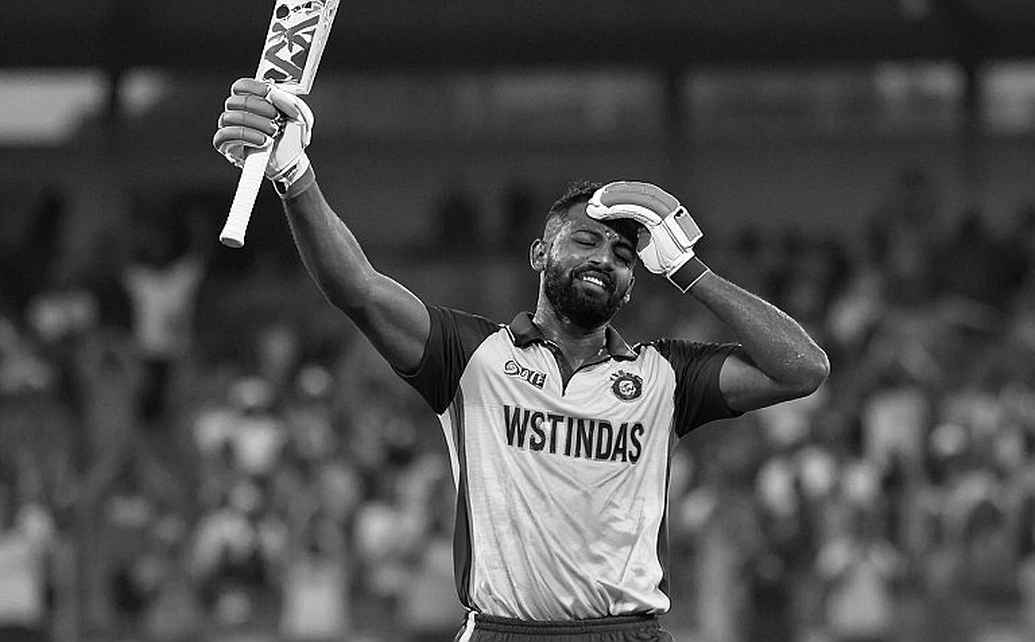
The most direct casualties are fast bowlers and multi-format players. Physical fatigue, injury risk and mental load rise together. Many boards now limit their leading players to selected series, which means the prestige of bilateral cricket keeps falling. When India or Pakistan do not send their strongest side, both host revenue and spectator enthusiasm suffer.
The real fix is political rather than technical. Future tours programmes, clean windows and a coordinated league schedule have been discussed for years, but every board's financial interest outweighs collective discipline. The Indian league wants an expanded window, Pakistan and Sri Lanka want theirs, and smaller members have little bargaining power.
The centrality of the Indian league
The Indian Premier League remains the region's largest economic force. It is not merely a domestic competition but the price-setter for the entire regional player market. For any cricketer from a smaller nation, building an international reputation quickly becomes a race for a place in that auction. Standards rise, but so does structural imbalance.
That imbalance shows up in three ways. First, talent drain: players from emerging nations focus on earning a league place rather than strengthening their own domestic systems. Second, calendar priority: choosing a league over national duty is no longer unusual. Third, political influence: boards whose players feature in the league find it harder to pick public fights.
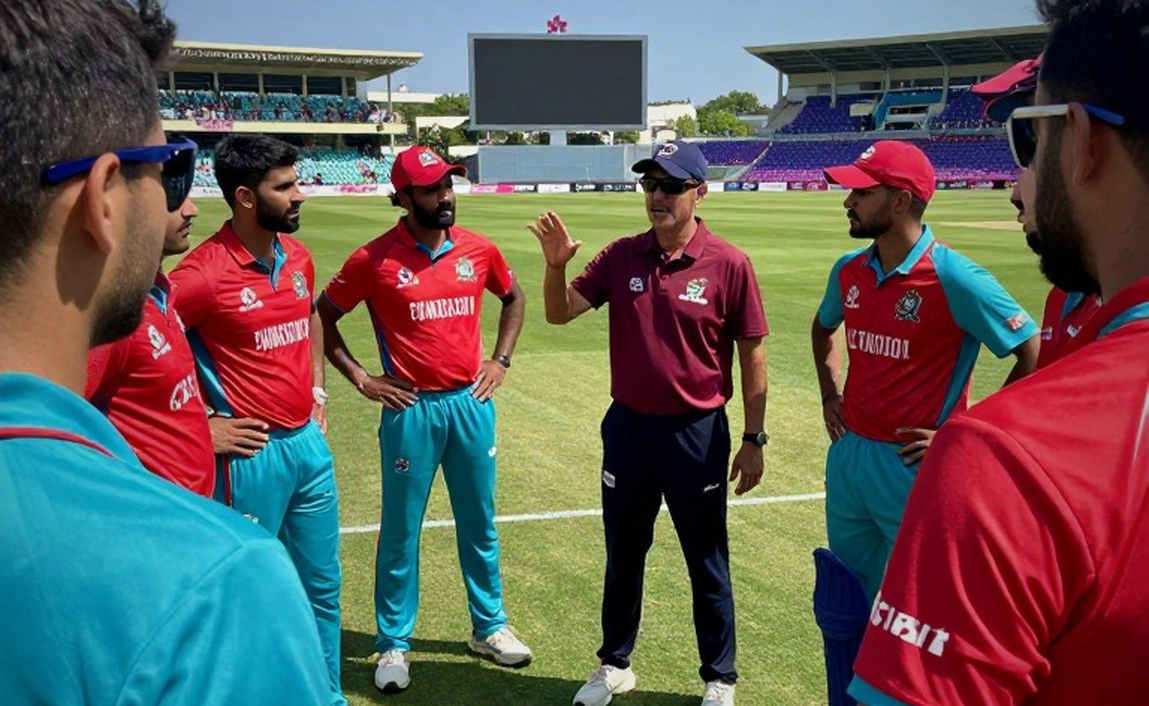
The effect is not wholly negative. The league has given regional players a global platform, raised their incomes and set new standards in coaching and fitness. Players from Sri Lanka, Afghanistan, Bangladesh and Nepal have developed through it. The question is not whether the league is useful; it is how much of its value converts into regional institutional capacity.
The rise of rival leagues
The Pakistan Super League, the Lanka Premier League, the Bangladesh Premier League, the UAE's international league and Nepal's T20 competition all rest on the same logic: giving domestic talent a stage and importing foreign names to attract audiences. But their financial capacity is far below India's, and that is their central limit.
The PSL has proved itself in quality and audience engagement, and the old problem of staging matches abroad for security reasons has eased considerably — an important change. Sri Lanka's league has carved out calendar space but struggles economically. Bangladesh's position is harder still, caught between domestic financial troubles and sponsorship uncertainty.
The UAE model is different: it does not depend on a domestic population but on foreign audiences, tourism and neutral hosting. Its limit is that it builds an events economy rather than a local cricket culture. Yet for Asian cricket it remains useful, because it provides a venue for matches that are politically difficult elsewhere.
The politics of the no-objection certificate
Boards issue the permission that lets players join leagues, and this certificate is the least discussed and most sensitive power in Asian cricket. The authority to decide who plays where, and who is held back for national duty, sits with the boards. That creates an imbalance in contract negotiations and leaves players with little room to argue.
Allegations of misuse surface periodically. Permission can be withheld for reasons of discipline or public comment rather than form or fitness. The consequence is that players do not speak openly about injury and fatigue, because it may affect their league prospects. Sports medicine specialists have long linked this pattern to rising injury rates.
A balanced system would make the criteria for permission public and predictable, define the role of player associations and reduce room for arbitrary decisions. Some countries have moved in this direction, but region-wide consistency remains distant.
Emerging nations: Nepal, Oman and the UAE
Nepal's is the most inspiring story in the region. In a few short years the country earned ODI status and demonstrated a passion among its audiences that proves popularity does not depend on wealth. Nepali players are now appearing in the Indian league, and investment is rising at both public and private levels.
Oman and the UAE tell a different story. Both have resources and a migrant spectator base, but a narrow domestic talent pool. They face a basic dilemma: prioritise players brought in from abroad for the national team, or accept a slower but more sustainable path of local development. The tension between immediate results and long-term growth repeats across smaller nations.
Hong Kong and Malaysia are advancing slowly but steadily. Their biggest problem is not facilities but institutional continuity. Frequent board turnover, opaque selection and a shortage of qualified coaches hold small nations back more than money does. Success in smaller cricket countries often rests on the dedication of one or two individuals, which is not a sustainable model.
Afghanistan: the most remarkable transformation
Afghanistan's attainment of full membership, and what followed, ranks among the most remarkable transformations in modern cricket. Within a few years the team became competitive at the top level, particularly in the shorter formats. Talent identification, league experience and a clear strategy are usually credited.
But that success comes with a structural weakness. The domestic framework is not yet strong and performance depends heavily on a few key players. The country's political situation has made international cooperation, sponsorship and hosting difficult. Questions have also persisted about player development and welfare.
More broadly, Afghanistan's experience shows that talent does not precede opportunity. Where opportunity was created, talent emerged. The same lesson applies to Nepal and other emerging sides. It also shows that success is not the same as stability: a good national team and a strong cricket economy are two different things.
Women's cricket: where change is slowest
Compared with the men's game, women's cricket in Asia has developed very unevenly. India used the Women's Premier League to build a new market, with investment, audiences and pay all rising. Sri Lanka, Pakistan and Bangladesh have performed credibly internationally, but their domestic structures and media coverage remain limited.
In many countries, income, safety and career stability for women players are still concerns. Fewer matches, less broadcast exposure and less sponsorship create a cycle: less visibility, less income, less investment, weaker performance. Breaking it requires intervention not only from boards but from broadcasters and governments.
Encouragingly, regional women's competitions are expanding and some countries have introduced school and college level tournaments for girls. That change is coming from below rather than above, which makes it more likely to last. The honest assessment is that Asian cricket's real next frontier remains the women's game.
The Olympics and global ambition
Cricket's likely return to the Olympic programme has given Asian boards a new incentive. A place at the Games is not only about prestige; it directly affects government funding, sports policy and expansion into new countries. Where cricket is not an Olympic sport, governments hesitate to take it seriously.
For some Asian nations the opportunity is large, but so is the challenge. Qualification will be tough and team numbers limited. Only countries with strong administration, planning and facilities will benefit. It is also the moment when smaller nations can improve their systems — provided they treat it as more than a publicity opportunity.
In the bigger picture, the Olympics will change priorities. T20's importance will grow, and so will government involvement. That is good news, but it carries a risk: politicisation and administrative complexity. Boards will have to work with governments without losing autonomy, and there is no easy example of that balance yet.
Financial inequality and broadcast rights
Asian cricket's most persistent problem is financial inequality. The largest share of broadcast and sponsorship revenue goes to a single country, and what remains for the others falls short of their needs. The effect is direct: less money, fewer facilities, fewer coaches and fewer international opportunities.
A less visible side of this inequality is that many boards depend on tours by India or other leading teams not just for income but for survival. When India does not tour, board revenue drops sharply. That creates a political imbalance in which smaller nations have less capacity for independent decisions.
The solution is collective rather than technical. A shared revenue model, coordinated marketing of regional competitions and a clear support fund for smaller members have all been discussed, but implementation is slow. Until that changes, conversations about Asian cricket will remain a story of one centre and its periphery.
Governance and reform
On governance, the record is mixed. Some boards have taken real steps towards transparency, player welfare and professional management. Others have faced election disputes, financial irregularities and allegations of authoritarian decision-making. The gap is so wide that two countries on the same continent can feel like two different worlds.
Player associations remain weak in most Asian countries, meaning collective voice on contracts, safety and workload is limited. Where associations have grown stronger, there has been genuine progress on mental health, rest and injury management. That progress could serve as a regional model.
A new demand is emerging: more representation in global and regional bodies, transparent decision-making and clear criteria for financial distribution. This is not necessarily a demand against the big nations; it rests on a simple principle that failing members weaken the entire ecosystem.
Grassroots: from structure to talent
No national team can be stronger than its domestic structure. Progress on this principle varies widely across Asia. Countries that built school cricket, district competitions and certified coaching systems have benefited over the long term. Those that took shortcuts could not hold a team together for more than a few years.
The strength of India, Pakistan and Sri Lanka lies in their old club cultures. Bangladesh's question is domestic continuity. Nepal and Oman must now convert early enthusiasm into institutional structures, which is the hardest stage. Many countries slip at exactly this point, because public passion is fast while building structures is slow, expensive and invisible.
One detail worth watching is technology. Data analysis, sports science, ball-tracking and video analysis have changed selection processes. Boards investing in these areas are getting better results even with fewer resources. The biggest barrier here is not money but qualified people.
Legacy and fan culture
Asian cricket's real strength is its audiences. Here cricket is not just sport but identity and politics. At occasions like an India-Pakistan match, engagement moves beyond the boundaries of the game. That passion is economically valuable but hard to manage, because emotion turns volatile quickly.
An interesting shift is that audience preferences are changing. Shorter formats, shorter ceremonies, faster pace and availability on digital platforms matter more. Mobile streaming's growing share alongside traditional television is reshaping broadcast strategy. For smaller boards this is an opportunity, since reaching audiences digitally has become cheaper.
There is a warning on the other side. Too much cricket means every match matters less. When a new series starts every week, scarcity disappears and audiences gravitate to select fixtures. That balance between excitement and relevance is one of Asian cricket's biggest marketing questions.
The road ahead
The issues are clear: calendar overload, financial inequality, uneven governance and unequal investment in the women's game. None has an elegant solution. Reform will be slow, uneven and politically difficult. But the direction is clear.
The first step is a collectively set calendar rather than a market-driven one. Second, transparency in revenue distribution and a guaranteed support mechanism for smaller members. Third, clear written rules on player health and no-objection certificates. Fourth, mandatory expansion of matches and broadcast for women's cricket. Fifth, professional management and player representation in administration.
Most important, perhaps, is placing regional cooperation above competition. Asian cricket's history shows that when boards worked together, outcomes improved; when bilateral politics pushed collective interest aside, smaller nations paid the highest price.
Conclusion
Asian cricket is in transition. The old centralised structure still exists, but new centres are forming. League expansion, the rise of emerging nations, the slow but visible emergence of the women's game and a growing presence on the global stage all suggest the region's future will not be decided by one country's commercial power alone.
But that change will not be automatically positive. It depends on how boards manage the calendar, how much space they give player rights, how they share revenue and whether they bring transparency to administration. The day those four things move in the right direction, Asian cricket will be more than the largest cricket economy — it will be the best-governed cricket region as well.
This report is not about a single match, series or announcement. It is an analysis of the structural framework within which all forthcoming Asian matches will be played. The real drama now lies less between the 22 yards and more within the system that decides where and when those 22 yards are laid.