
होमAsian CricketYouth Asia Cup: Bangladesh to field a new cohort as coach Hannan Sarkar keeps an eye on Afghanistan
Youth Asia Cup: Bangladesh to field a new cohort as coach Hannan Sarkar keeps an eye on Afghanistan
यूथ एशिया कप अगले सप्ताह शुरू होगा। बांग्लादेश की युवा टीम 5 नवंबर को अफगानिस्तान, 7 नवंबर को श्रीलंका और 9 नवंबर को मलेशिया से खेलेगी। मुख्य कोच हन्नान सरकार ने कहा कि टीम का मुख्य फोकस एशिया कप की तैयारी था और वह संतुष्ट हैं। कप्तान फैसल पिछली युवा टीम से बचे एकमात्र खिलाड़ी हैं; अन्य 14 खिलाड़ियों ने डेब्यू किया है। फोटो सेशन मीरपुर के शेर-ए-बांग्ला में हुआ, लेकिन मैचों का स्थान पुष्ट नहीं। फॉर्मेट संभवतः 50 ओवर है, पर रिपोर्ट में स्पष्ट नहीं। कोई मैच डेटा, टॉस, पिच रिपोर्ट या मौसम जानकारी उपलब्ध नहीं। कोच ने अफगानिस्तान को युवा और सीनियर स्तर पर अच्छी टीम बताया; शुरुआती मुकाबला अहम माना जा रहा है। टीम में 14 डेब्यूटंट्स के कारण साझा अनुभव सीमित है। यह सीनियर एशिया कप नहीं, एज-ग्रुप टूर्नामेंट है; नतीजों को सीनियर टीम पर लागू न करें।
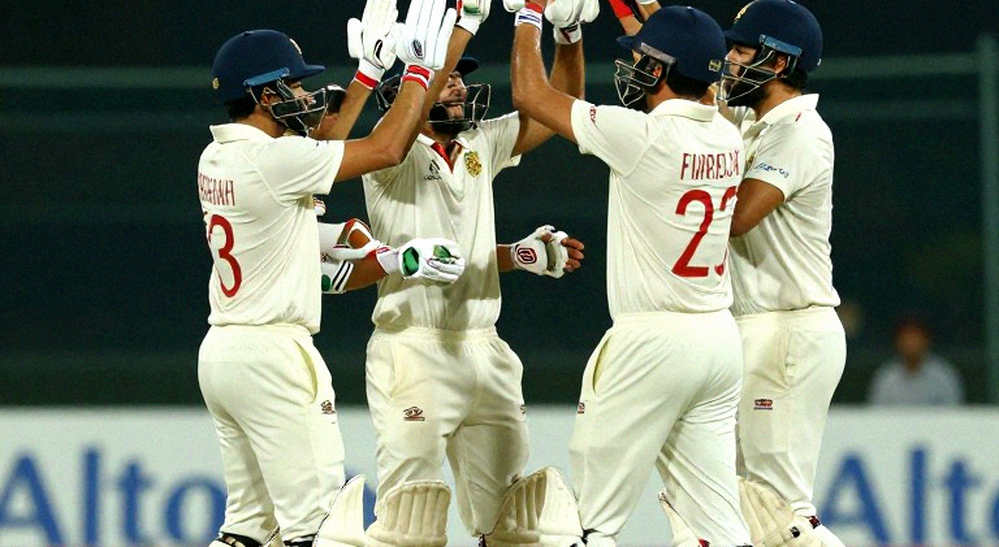
The Youth Asia Cup is set to begin next week, and Bangladesh’s youth team is preparing to enter the tournament with a largely new cohort. During the team’s official photo session at Mirpur’s Sher-e-Bangla Stadium, head coach Hannan Sarkar indicated that his immediate focus is on the opening match against Afghanistan. The Bangladesh Cricket Board (BCB) has announced the squad for the Youth Asia Cup, and the photo session was part of the standard pre-tournament routine. According to the available information, Bangladesh will play their first match against Afghanistan on November 5, followed by Sri Lanka on November 7 and Malaysia on November 9.
This is not a report about the senior Asia Cup. It concerns an age-group tournament, so any conclusions must be confined to Bangladesh’s youth pipeline rather than applied to the senior national team. The team’s preparation, selection and the coach’s comments should be read in the context of youth cricket. Hannan Sarkar said the team’s main focus was preparation for the Asia Cup and that, from that standpoint, he was satisfied. He also said the team played the way it wanted to play cricket. That is a qualitative comment, not a measured performance datum.
The most important point is the structure of the squad. According to the coach, captain Faisal was the only player from the previous youth team to be retained. The other 14 players made their debuts. That means Bangladesh’s youth side is almost entirely new and has limited shared match experience. It is a significant signal, but it cannot be tied to any individual player’s form. This is squad-level turnover, and it can affect batting depth, bowling balance and the ability to make decisions under pressure.
Bangladesh’s schedule is front-loaded. The first match is against Afghanistan, then Sri Lanka, then Malaysia. Hannan Sarkar described Afghanistan as a good team at both youth and senior level. That is why the opener is regarded as the biggest early test. A win in the first match would lift the team’s confidence, but a poor start could quickly increase the pressure on a new cohort. The challenge of adapting quickly will be the team’s biggest test.
Afghanistan have been consistently competitive at youth level in recent years. The coach’s praise makes clear that Bangladesh are not taking them lightly. However, this report contains no data on Afghanistan’s squad structure, player names, form or recent performances. A forecast of the match is therefore not possible. What is known is that the game is on November 5 and that it could set the direction of Bangladesh’s campaign.
Sri Lanka have traditionally been a strong age-group side in Asia, but this report provides no specific information about them. Malaysia may be the least-established cricket nation in this group, but that too is not a ranking- or result-based conclusion. Neither the report nor the coach sets out Bangladesh’s strategy against the three opponents in any detail.
The format of the tournament is not explicitly stated. The Youth Asia Cup is conventionally a 50-over age-group event, but this report does not confirm it. It would therefore be wrong to treat it as certain. If it is 50-over, batting depth and bowling consistency will matter more; if it is T20, finishing and tempo could change the contest. The uncertainty over format is a risk that should be acknowledged.
The venue of the matches is also unclear. The photo session took place at Mirpur’s Sher-e-Bangla, but that does not mean all matches will be played there. It may only be the team’s official media event. If the matches are in Bangladesh, home conditions could partly offset inexperience; if they are at a neutral venue, that advantage disappears. A home-ground advantage therefore cannot be claimed.
Rain or dew could have an impact in November, but the report contains no information on weather, match timings or DLS. The effect of rain cannot be assessed. It is a factor to watch during the tournament, but no conclusion can be drawn now.
The report contains no match data: no toss information, no pitch report, no innings score and no bowling figures. The coach’s satisfaction therefore cannot be treated as proof of tactical readiness. It is a signal of team environment and intent. Individual player data are also unavailable, so commenting on any batsman’s technique, any bowler’s economy or anyone’s recent form would be speculation.
Captain Faisal is the most important figure in this team because he is the only player retained from the previous youth side. His role could be important for both leadership and continuity. But the report does not say whether he is a batsman, a bowler or an all-rounder, nor what his form is. No technical assessment of his game is possible. What can be said is that, in a new team, his role will be to provide experience and guidance.
The presence of 14 debutants is a signal about Bangladesh’s age-group pathway. It is possible that this group came through the domestic youth structure, but the report does not detail the selection process, the selectors’ rationale or warm-up performances. It is also possible that the squad was chosen with the next U19 World Cup cycle in mind rather than only this Asia Cup, but that is an inference, not a confirmation.
One of the coach’s comments refers to a series draw, suggesting a recent preparatory series was played. But the report does not make clear who the series was against, how many matches it involved or what the result was. That information should be read cautiously. It indicates preparation, not proof of performance.
At the governance level, this appears to be a normal ACC/BCB age-group event. The board announced the squad, a photo session was held and preparation comments were made. The report mentions no rule controversy, DRS dispute, political tension or hosting controversy. Governance risk should therefore not be overstated. The real concern may be age-eligibility verification and selection transparency, because the squad is almost entirely new and the report gives no age or eligibility details. That is part of standard youth-cricket procedure, but independent information would be needed to confirm it.
Commercially, this is not a franchise league. It is an ACC age-group tournament whose main value lies not in broadcast rights or auctions but in player identification and the pipeline. A strong showing can raise young players’ visibility for domestic cricket and future franchise scouting, but the report names no player, provides no data and cites no scout interest. It should therefore be treated as a development opportunity, not a commercial event.
As for risks, the biggest sporting risk is collective inexperience. With 14 debutants in a short group stage, there is little room for a slow start. The second risk is the tough opener against Afghanistan. The third is a lack of pressure-tested decision-making, which can be reduced by experienced coaching and simple game plans. The weather and rain risk is moderate, especially if the matches are 50-over.
Three scenarios are possible. In the worst case, rain, an age-eligibility controversy or a heavy defeat to Afghanistan could damage the cohort’s confidence and shift attention to selection governance. In the base case, Bangladesh will compete, use the tournament as a development step and have the coach’s preparation claims tested on the field. In the best case, the new cohort adapts quickly, captain Faisal leads effectively and several debutants emerge as future national-pipeline candidates.
The real test for Bangladesh’s youth team will be how quickly it reads conditions. In the first match against Afghanistan, the opening batsmen’s restraint, the bowlers’ discipline through the middle overs and the captain’s decisions will determine which way the team goes. But all of that can only be assessed once the matches begin. For now, all that can be said is that Bangladesh have built a new team, the coach is satisfied and the first match will provide the biggest signal.
The results of this tournament should not be used as a yardstick for the senior team. Fluctuations are natural in youth cricket, and one or two matches do not define a generation. For Bangladesh, the real questions are how quickly the new cohort learns, how Faisal binds the team together and how far Hannan Sarkar’s confidence in the preparation holds up on the field. The first week of the Asia Cup will answer some of those questions; the rest will be answered in later matches and in the next U19 cycle.

संबंधित खिलाड़ी
अनुशंसित
India's First Women's Test: 22,000 Spectators, One Draw, and the Scorecard the Crowd Filled In Itself2026-10-31
33 for 4: Bangladesh's Collapse Is About Shot Selection and Line, Not a Minefield2026-10-30
UP 67/4: The Map Two Left-Arm Spinners Drew in 37 Overs2026-10-29
Mishra's Claim, Kohli's Silence, and the Empty Page in the Selection Room2026-10-24
Finch's 'Best Player' Quote: In the Smith-vs-Warner Debate, the Missing Variable Is Format2026-10-30
अनुशंसित
The Shoulder in the 46th Over: Haris Rauf's Five Points and the Warning Buried Under a One-Wicket Win2026-10-30
President's Trophy Final: SBP's 60-Run First-Innings Lead Became a 51-Run Defeat at Bagh-e-Jinnah2026-10-30
In the Sun of Rankings, Marco Jansen's Double Crown and Abhishek Sharma's Return2026-10-29
Namibia won by 63 runs: Frylinck's 126, Campher's 106 and Ireland's conversion problem2026-10-29
The Empty File and the Full Day: What a Cricket Report Does When the Scoresheet Arrives Blank2026-10-30
अनुशंसित
Abhishek Back at 897, Jansen Holds Both Test Crowns: What the ICC Rankings Counted, and What They Left Out2026-10-29
The Night the Ledger Came Back Empty: When Cricket Data Cannot Read Its Own Record2026-11-01
The New Geography of Asian Cricket: A Complex Balance of Market, Politics and Sport2026-11-02
ACC U19 Asia Cup: BCCI names 15-member squad, Lakshya Raichandani captain, Yashbardhan Chauhan vice-captain2026-10-31