
French Open 2026: Sindhu Reaches the Final in 73 Minutes, but the Scoreboard Does Not Testify to 'Class'
**मुख्य उत्तर**: फ़्रेंच ओपन 2026 के सेमीफ़ाइनल में पी.वी. सिंधु ने हिना अकेची को 21-10, 20-22, 21-16 से 73 मिनट में हराकर फ़ाइनल में जगह बनाई। फ़ाइनल में उनका सामना विश्व नंबर एक अन से यंग से होगा, जिनके ख़िलाफ़ उनका रिकॉर्ड 0-10 है। **मुख्य तथ्य**: - स्कोर 21-10, 20-22, 21-16; मैच अवधि 73 मिनट; निर्णायक गेम में 15-16 से लगातार छह अंक। - दूसरे गेम में सिंधु 17-16 से आगे थीं और आख़िरी नौ अंकों में से छह गँवाकर 20-22 से हारीं। - अन से यंग विश्व नंबर एक और मौजूदा विश्व चैंपियन हैं; 2026 में दोनों दो बार भिड़ चुकी हैं। - सिंधु ने जुलाई 2026 में जापान ओपन (सुपर 750) जीता; फ़्रेंच ओपन उनका दूसरा सुपर 750 फ़ाइनल है। - स्रोत में स्मैश गति, प्रति रैली औसत शॉट और अनफ़ोर्स्ड एरर का आंकड़ा नहीं दिया गया। **स्रोत**: Khel Now, फ़्रेंच ओपन 2026 सेमीफ़ाइनल रिपोर्ट (प्रकाशन तिथि स्रोत में स्पष्ट रूप से दर्ज नहीं)। **संबंधित प्रश्न-उत्तर**: प्रश्न: सिंधु और अन से यंग का आमने-सामने रिकॉर्ड क्या है? उत्तर: फ़्रेंच ओपन 2026 फ़ाइनल से पहले सिंधु का अन से यंग के ख़िलाफ़ रिकॉर्ड 0-10 है, और यह उनका ग्यारहवाँ मुक़ाबला होगा। प्रश्न: फ़्रेंच ओपन 2026 किस स्तर का टूर्नामेंट है? उत्तर: फ़्रेंच ओपन बीडब्ल्यूएफ़ वर्ल्ड टूर का सुपर 750 स्तर का टूर्नामेंट है। प्रश्न: सिंधु ने 2026 सीज़न में कौन-सा ख़िताब जीता? उत्तर: सिंधु ने जुलाई 2026 में जापान ओपन (सुपर 750) का ख़िताब जीता।
The scorecard reached the press box at the Pierre de Coubertin hall on Saturday night. Three lines: 21-10, 20-22, 21-16. In brackets underneath, 73 minutes. A while later the headline blinked on the laptop screen: P.V. Sindhu had "outclassed" Hina Akechi.
I opened the notebook. The notebook opens before the stadium lights do, and what was written in it did not match the headline. Seventy-three minutes of three-game badminton. In game two Sindhu led 17-16 and lost it 20-22. In game three she was 15-16 down and then took six points in a row to close it 21-16. A player who wins a decider from 15-16 down is not folding under pressure — but she is not demonstrating class either. She is surviving.
The genuine display in this match was confined to game one, which ended 21-10. For the other fifty-three minutes she was fighting her own game. And that is why Sunday's final against An Se Young will be decided less by the scoreline than by this exact fluctuation.
Context: a Super 750 semifinal, and a season quietly turning
The French Open is a Super 750 event on the BWF World Tour. The top players come, but the depth of a Super 1000 is not there in every round. Sindhu's 2026 has to be read inside that frame — the Japan Open title in July, and now a second Super 750 final of the season. Two finals and a title at 31 is a solid number.
In the Khel Now report, "second final of the season" and "second Super 750 final" arrive in the same breath. A quiet piece of information walks out of that sentence: there has been no Super 1000 final in 2026. She is producing results against the eight-to-twenty ranking band; the door against the top four has not opened yet.
There is another meaning to Super 750 that comes from the tour's architecture rather than the report. Ranking points, and the season-ending World Tour Finals race, where only the top eight qualify — a second Super 750 final materially strengthens her position in that list. The article does not say so. The effect is real anyway.
Across the net stands An Se Young. World No. 1, reigning world champion, an all-court controller with the lowest error rate in the discipline. And the number most reports filed as a footnote: the head-to-head is 0-10. Sunday is the eleventh meeting. They have already played twice in 2026, and twice the result held.
On Akechi the report is silent — ranking, tactics, nothing recorded. A player who takes a game to 20-22 against a top-10 opponent does it not by out-hitting her but by extending rallies and attacking the backhand-side movement. That is inference, and I will label it as inference, because no smash speed, rally length or unforced-error count is available.
Game one: where the long frame worked
A 21-10 scoreline is built inside three shots. That is Sindhu's model — the long frame, the high contact point, heavy angle on the smash, the urge to end the rally early. When the first shot lands, the opponent has no time left. Game one was a sample of that model.
That model belongs to the 2026-to-2026 world of women's singles. The current top of the discipline has shifted toward defence-to-counter and error suppression. Sindhu's strength was built in the older world where the first three shots decided matches; An Se Young was built in the newer one where the twentieth shot decides. The distance between those two worlds shows up as 21-10 in one game and 20-22 in the next.
Game two: 17-16 to 20-22, and the real question
Leading 17-16 means the game is in your hands. Losing it 20-22 means conceding six of the last nine points. That is not a technique failure. It is a close-out failure — the capacity to shut a game's door.
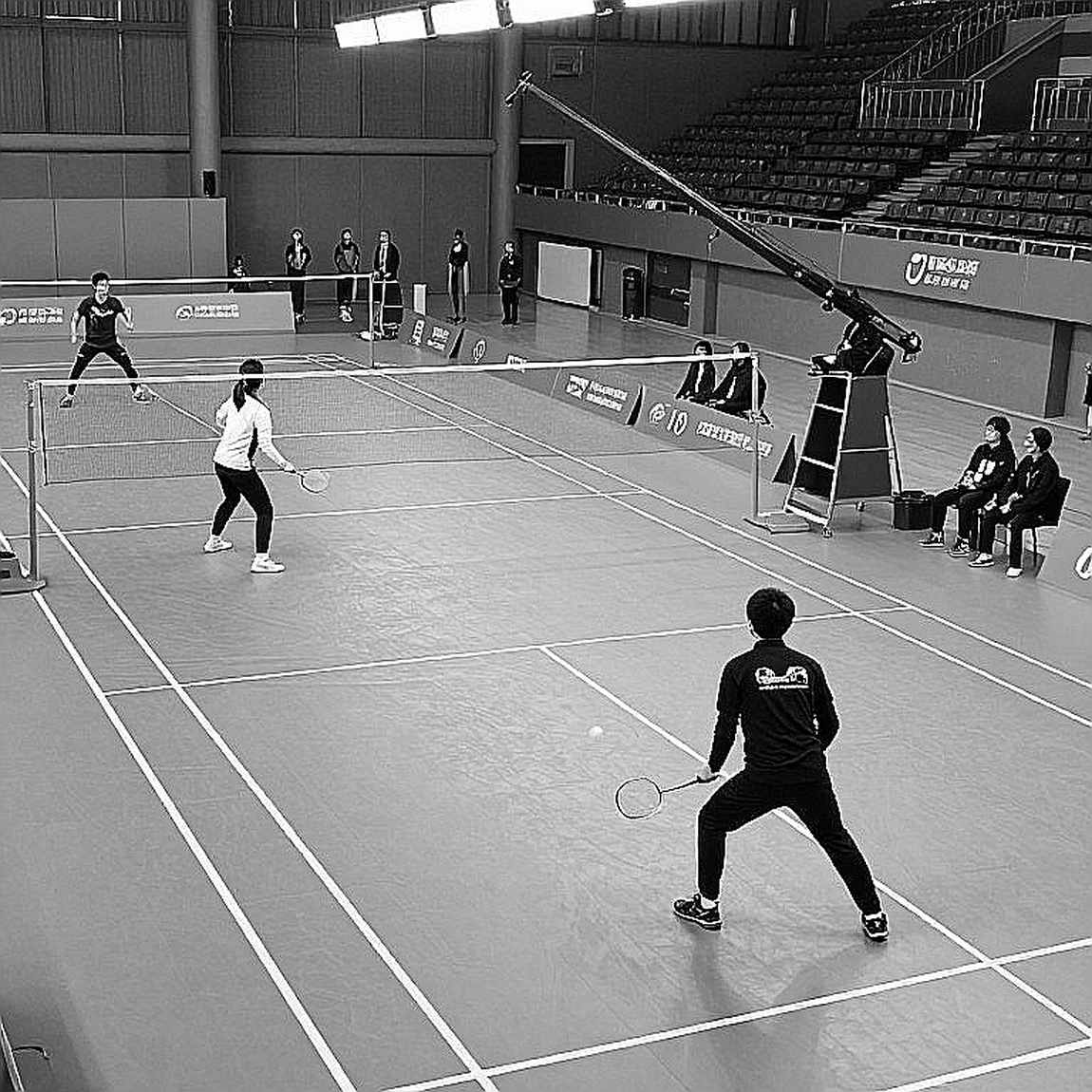
Close-out is the axis this final will turn on. An Se Young is regarded as the lowest unforced-error player on tour. Against that profile, arriving at 17-16 and returning at 20-22 is not coincidence — it is a direct signal that when a game must be closed, Sindhu's shot selection starts taking risk and her error count starts climbing.
The inverse is equally true. If losing a 17-16 lead is a pattern, breaking it can be a pattern too — and it appeared in game three.
Game three: six points from 15-16, and a genuine asset
Taking six straight points from 15-16 down is a strong pressure-behaviour signal. I have watched Sindhu's matches from courtside for years, and the most stable thing in her game has never been the score — it has been her between-points routine. The shuttle change, the deep breath, the delay before serving. That routine did the work in the last six points.
The question is whether it is a repeatable habit or a single-match spike. The sample is one match and I will not dress it up as a three-match trend. A locker room tells you the score before the broadcast does; what did not show on court after the semifinal showed in the corridor — 73 minutes of three-game badminton, at 31, roughly 24 hours before a final.
The long frame carries a hidden bill. Every extended rally costs more in lunge-and-recover. Against An Se Young the rallies will not be short; they will be long, and they will demand more patience from Sindhu than from her opponent.
The empty space where the data should be
The numbers missing from this match are not few: no smash speed, no average shots per rally, no unforced-error count, no net-point win rate. Without them, adjectives like "outclasses" or "error-free" become estimates, and calling an estimate an analysis is an old habit of this trade. A 20-22 game and a 16-15 deficit in the decider collide directly with any claim of an error-free performance.
Something odd was visible in the press box that night. Everyone was treating the semifinal as a preamble to the final, and nobody wanted to stop at the 20-22. That is our coverage's largest weakness — we look at the win, not at the turn.
What the headline is hiding
"Outclasses" is unjust to this match, and it is unjust to Sindhu too. The word conceals what she actually produced: staying upright for 73 minutes and turning a decider from behind. A 21-10, 21-10 win is called class; a 20-22 game is the name of something else.
There is a counter-reading here that runs against the standard coverage. The 20-22 in game two carries more valuable information than the 21-10 in game one. The 21-10 says Sindhu's ceiling is still alive — good news, but not new news. The 20-22 says the ceiling does not hold for 73 minutes. To win the final she does not need to repeat the 21-10; she needs to fill the gap the 20-22 exposed.
The second counter-reading concerns the revival narrative. Two Super 750 finals and a title in 2026 is easy to call a comeback. But the difference between 750 and 1000 is not just points; it is opponents. At 750 you pass through the eight-to-twenty band; at 1000 you have to pass the top four. Sindhu is walking through the first door comfortably. The examination at the second is still pending.
The third reading is the least comfortable. A 0-10 record is not a statistic, it is a structure — a matchup in which one player's power dissolves into another's retrieval. It happened twice in 2026. Filing it as "we'll try again next time" is precisely the habit Indian badminton coverage has never escaped.
An Se Young is not a player who wins a match with one shot. She forces you to play the shot you do not want to play, again and again. Her defence is deep enough that your best smash comes back, and by the third or fourth attempt your posture starts to break. This is the version of badminton in which nothing is won; something is worn down.
Every chant remembers the room where it was born. The chants for Sindhu in Paris came out of the training halls in Hyderabad and Bengaluru where her game was assembled. The same room decided that her game would rest on power. On Sunday the question is not how powerful she is; it is what she has when power does not work.
The question for the next morning
One way to read the scorecard that arrives after the final: watch the first eleven points of game two. If Sindhu is 11-6 or better there and the game still drifts to 20-22, the problem is close-out — a small repair. If she is 5-11 down at that point, the problem is rally length, which means style — a much larger repair.
Two Super 750 finals at 31 is the story of one athlete. The story of Indian women's singles asks something else: where is that door after Sindhu? There was one Indian in this French Open semifinal. If that number stays the same over the next few years, Sunday's final will become a question larger than a win or a loss — and that question will never appear on a scoreboard.