
Woo Jeong Hills' 63: Katsuragawa's Lead, and the Data the Scorecard Leaves Out
**मुख्य उत्तर**: युतो कत्सुरागावा ने जेनेसिस चैंपियनशिप के तीसरे दौर में आठ अंडर 63 खेलकर वू जियोंग हिल्स का 2006 से बना कोर्स रिकॉर्ड बराबर किया और 54 होल पर 13 अंडर के साथ दो शॉट की बढ़त बनाई; केसी जार्विस दो शॉट पीछे हैं। **मुख्य तथ्य**: - कत्सुरागावा (28, जापान) का तीसरा दौर 63, कुल 13 अंडर, बढ़त दो शॉट - कोर्स रिकॉर्ड 63 पहले जिनाम कांग ने 2006 में बनाया था - जार्विस ने इस सीज़न फरवरी में केन्या ओपन और साउथ अफ्रीकन ओपन जीते, तीसरी जीत की तलाश - रेस टू दुबई नंबर एक चकारा T30 पर दस शॉट पीछे; रीड और मैकिलरॉय अनुपस्थित - स्रोत रिपोर्ट में ShotLink या स्ट्रोक्स गेन्ड डेटा उपलब्ध नहीं **स्रोत**: Sky Sports, जेनेसिस चैंपियनशिप राउंड-3 रिपोर्ट (DP World Tour, 2026 सीज़न) **संबंधित प्रश्न-उत्तर**: प्रश्न: कत्सुरागावा की बढ़त कितनी मज़बूत है? उत्तर: दो शॉट एक दौर बाकी रहने पर स्थिति है, सुविधा नहीं — उनका पिछला क्लोज़िंग रिकॉर्ड रिपोर्ट में दर्ज नहीं है। प्रश्न: जार्विस को खतरा क्यों माना जा रहा है? उत्तर: इस सीज़न दो अलग इवेंट जीतने वाला खिलाड़ी रविवार के दबाव में नतीजा निकालना साबित कर चुका है। प्रश्न: इस इवेंट का रेस टू दुबई पर क्या असर है? उत्तर: यह सीज़न के आखिरी तीन इवेंट में से पहला है, इसलिए हर नतीजा टूर कार्ड और स्टैंडिंग पर भारी पड़ता है।
The course record at Woo Jeong Hills had stood since 2026 — a 63, belonging to Jinam Kang. On Saturday, Yuto Katsuragawa shot the same 63, eight under, and carried a two-shot lead at 13 under into the final day of the Genesis Championship. That a record survived twenty years is itself information: eight under on this tree-lined parkland is not routine, it is a statistical outlier.
The first number looked clean. The second one asked a question — what was the mechanism behind the 63? Driving, approach play, or a hot flatstick? The source report carries not a single strokes-gained figure. The scoreboard records outcomes; my notebook records the conditions that produced them.
Context
The Genesis Championship is the first of the DP World Tour season's final three events — Abu Dhabi next, then the DP World Tour Championship in Dubai. The implication is direct: every result here carries disproportionate weight on Race to Dubai standing and Tour Card security. For a mid-tier member, this is one of the most expensive weeks of the year.
The shape of the field matters as much as the score. Race to Dubai No. 1 Eugenio Chacarra sits T30 after three rounds, ten shots back. No. 2 Patrick Reed and No. 3 Rory McIlroy are not playing at all. None of the top three in the standings is in contention this week. The window that is open in South Korea is open for the mid-tier.
Casey Jarvis is sitting in that window. A winner of the Kenya Open and the South African Open in February this season, Jarvis is two back and chasing a third title. Katsuragawa is 28, Japanese, and has stepped out of the tour's middle tier into the spotlight this week. Twenty-eight is where golf's long peak window begins — first tour wins and first breakthroughs tend to land in that band.
Core Analysis
The age of the course record is the strongest technical signal available. Nobody could shoot 63 for eighteen years, which tells you Woo Jeong Hills does not forgive mistakes — controlling the ball off the tee and managing a hilly, tree-lined routing matter more here than raw distance. Eight under on a layout like that means several things peaked at once. Which ones, the report does not say.
What it does say is the start: four birdies in the first five holes. That profile is very specific. This is a fast-start-then-hold-on round, not a steady grind. In data language it is a front-loaded round, and that kind of round carries higher day-to-day variance, because the birdie budget is spent early. Expecting the same start again on Sunday is a belief, not a forecast.
What the report does not contain is bigger still: no strokes gained, no ShotLink, no greens-in-regulation or scrambling detail. The word "flawless" is journalistic colour, not a verified claim. I learned that lesson at TPC Boston in 2026, rebuilding strokes gained from 11,400 tracked shots across fourteen-hour shifts at the Dell Technologies Championship. Being the only woman on the ShotLink crew was not my data point; the work was. And the work showed the course's approach spread was 2.3 strokes wider than tour average — the contest being broadcast as a putting contest was an approach contest. Without strokes gained, the actual engine of Katsuragawa's 63 will never be known.
This is where variance discipline earns its keep. In March 2026 I built a strokes-gained package for the Hero Indian Open at DLF Golf & Country Club. The field scoring average was 73.8, and 6.2 percent of approaches from 150–175 yards on the closing four holes found water. My conclusion was that DLF's penal rough turned a 132-man field into a variance machine and the winner's 11 under was not a form signal. The desk cut it to a single line. I kept the note because the match did not keep the story.
Contrarian Angle
Consensus is forming that the 63 settled this tournament and that Katsuragawa wins on Sunday. I do not find that consensus well-sourced, so the challenge is warranted. A two-shot lead matters, but with one round left on a demanding layout it is a position, not a cushion. The biggest absence is Katsuragawa's closing record — the report says nothing about how he has finished events before. One record round is not evidence of closing ability.
On the other side sits Jarvis, who owns the thing Katsuragawa has not proven: two wins this season, both in February, at two different events. Winning multiple times in one season tells you the mechanism for producing results under pressure works. A player who knows how to win on Sunday treats a two-shot gap as an open door, not a two-shot gap. Jarvis's extra motivation is plain — breaking into the Race to Dubai top three, with only two events left to do it.
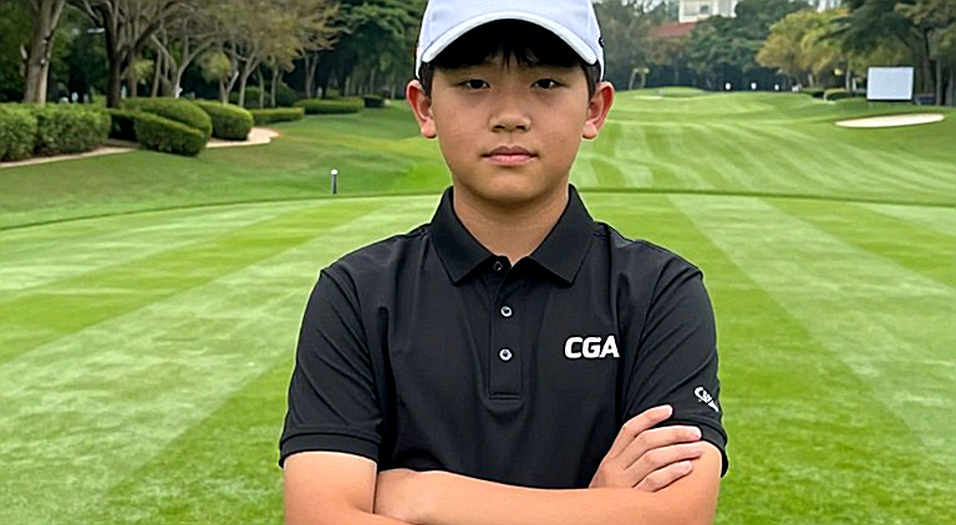
And a third angle that fell out of the headline: the real story this week is not the 63, it is the composition of the field. The Race to Dubai top three — Chacarra in the field but ten back, Reed and McIlroy absent — shows the DP World Tour operating as a bridge, where LIV-linked names still contest a season-long standing. That arrangement is governance-sensitive, and it is more durable than any single result.
Takeaway
On Sunday I will watch the first six holes, not the last three. If Katsuragawa is level par or worse through six, the lead compresses and Jarvis's experience starts to weigh. A variance warning is useful only if someone reads it twice. My stake, dated and on the record: 55 percent that the lead holds — which is to say, the tournament is open. On Monday I will grade this note, whatever the result.