
Paris's Empty Column: Where Indian Boxing's Ledger Failed to Reconcile
**मुख्य उत्तर (Core Answer):** भारत ने पेरिस 2024 ओलंपिक मुक्केबाज़ी में छह कोटा भरे — चार महिला और दो पुरुष वर्गों में। पुरुषों के सात भार वर्गों में से पाँच खाली रहे। टोक्यो 2021 में भारत के पाँच पुरुष मुक्केबाज़ थे; पेरिस में दो। गिरावट पदक की नहीं, एंट्री लिस्ट की है। **मुख्य तथ्य (Key Facts):** - पेरिस 2024 भारतीय दल: अमित पंघाल (51 किग्रा), निशांत देव (71 किग्रा), निखत ज़रीन (50 किग्रा), प्रीति पवार (54 किग्रा), जैस्मिन लंबोरिया (57 किग्रा), लवलीना बोरगोहाइन (75 किग्रा)। - टोक्यो 2021 में भारत के नौ मुक्केबाज़ थे — पाँच पुरुष और चार महिला। - IOC सत्र ने 22 जून 2023 को लुसाने में IBA की म
The Paris Olympic boxing entry list carried six Indian names. Four in women's weight classes, two in men's. The Olympic programme had seven men's classes — 51, 57, 63.5, 71, 80, 92 and +92 kilograms. India entered two of them. Five columns stayed blank.
Everyone was watching the medal table. I was watching those five columns, because the ledger looked clean until the third column. Six boxers, four of them women — that figure is a success claim in itself. Put the same list against seven men's classes and the claim collapses. India's men's contingent in Paris was two names long. That is not a weakness in an athlete; it is a pillar left empty.
This is not a memorial for a zero in the medal table. It is an audit of the entry list that was drawn up before the Games and read by nobody.
On 22 June 2026 the IOC Session in Lausanne withdrew recognition from IBA. An organisation running since 2026, whose rulebook shaped an entire Indian generation, was out of the Olympic structure in an afternoon. Boxing did not leave the Games. The road to the Games changed, along with the people who draw its maps and the method by which those people are appointed.
World Boxing, founded in April 2026, received provisional recognition from the IOC Executive Board on 26 February 2026, and the March 2026 Session confirmed boxing's place on the Los Angeles 2028 programme. The sport was saved. But what breaks in a boxer's calendar does not follow the sport's survival — it follows qualification circulars, the ranking system, the international technical officials' roster and medical protocols. Three of those four carried two different office stamps through 2026-24.
In India the choice was more expensive still. A national federation had to decide whose presence it would record — the body still running the big-money tournaments, or the one holding recognition without a calendar. And one thing should be stated plainly: this is written from a distance. The reporter sitting in Delhi is working inside that choice; his card, his accreditation, his next tournament all rest on the same federation's signature. What I can say clearly from here costs something different to say there. So I will write about the system, never about the country's habits.
A quota is an accounting entry, not a medal. An Olympic quota is issued in the name of the National Olympic Committee, not the boxer. The athlete who won the place in the ring does not own it — the institution does, and the right to fill it belongs to the federation that makes the selection. India won six quotas in the Paris cycle and filled all six, which is why no dispute arose this time. The real question in that ledger is not who went out of six; it is why six, and why only two men's classes out of seven.
Tokyo 2026: nine Indian boxers — five men, four women. Paris 2026: six — two men, four women. The women's pillar stood exactly where it was, its classes and names shifting while the count held. The men's pillar fell by more than half. That is a decline in entries, not in medals — and entries are settled in circulars, not in hours.
One name runs through the whole five-to-two journey: Amit Panghal. He was at 52kg in Tokyo and 51kg in Paris. One kilogram down. What he cut to find that kilogram never appears on a results sheet. The other four names fell away along the route — some because their class moved, some through injury, some because in their new class India had no ranked boxer at all at that moment.
Weight-class redraws are the work that ends careers without a hearing. Tokyo's men's classes were 52, 57, 63, 69, 75, 81, 91, +91. Paris's are 51, 57, 63.5, 71, 80, 92, +92. Every gap looks small until you read it in kilograms. 69 to 71 — two kilos up. 75 to 80 — a five-kilogram jump inside a single cycle, with no international transition period. 81 to 80 — one kilo down. 91 to 92, +91 to +92.
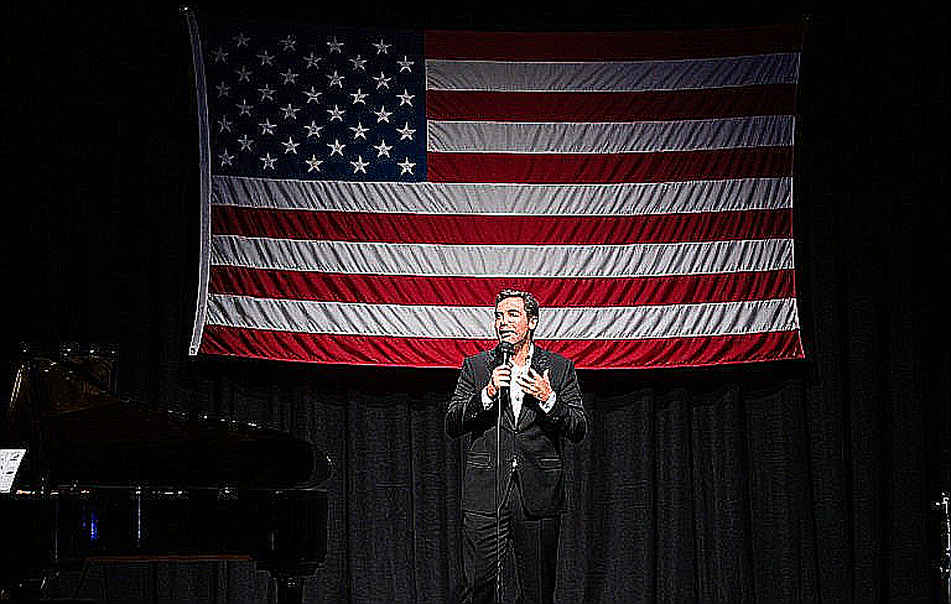
A boxer cutting to make 75 faced two routes: add five kilos of lean mass, or drop to 71 and cut deeper. Both are paid for by the body, and both are settled in the cycle where qualification has already begun. The man at +91 was given +92 — one kilo on paper, one heavier opponent in fact. A stopped card is still a card on the record, and a redrawn class is still a class on the record. No circular asked any boxer where he was best; the circular stated where the bout would now be fought.
The same process ran in the opposite direction on the women's side. Tokyo had five women's classes — 51, 57, 60, 69, 75. Paris has six — 50, 54, 57, 60, 66, 75. Two doors opened and one closed. The 51kg class in which Mary Kom fought her last Olympic bout in Tokyo — the 3-2 loss to Ingrit Valencia — did not exist on the Paris programme. The division in which a generation won six world titles was removed from the Games, and 50 and 54 arrived in its place.
Lovlina Borgohain travelled from 69 to 75 and won the Paris quota there. That is successful adaptation and should be called so. But adaptation has a price the medal table never shows: a boxer who was the fastest in the world at 69 had to stand opposite opponents six kilos heavier at 75, with no option but to leave her own division, because the division had been taken away.
The government job is the real contract, and it is the column no audit report prints. The Indian pipeline begins at a recruitment form for Services, Railways or state police, not in a scout's notebook. Amit Panghal is in the Army. Lovlina Borgohain is a Deputy Superintendent of Police in Assam. Mary Kom has been with Manipur Police. Vijender Singh is with Haryana Police. This is not decorative biography — it is the map of the economic structure the Olympic pipeline stands on.
Read the regimental championship and the inter-services trial not as a sporting contest but as a payroll decision, and several things clarify. A selection trial decides who won, and also whose promotion waits, whose transfer is deferred, whose department releases a sports quota next financial year. A boxer drawing a salary cannot contest a weight-class decision as freely as an academy athlete can, because his employer holds two signatures: one on the pay slip, one on the entry form. That is why certain sentences never get written.
Part of the men's column drying up sits right here. The Railways and Services domestic calendar collides with the national camp calendar, and when it collides the athlete chooses what protects the job — which is usually not international exposure. Where the domestic circuit has no depth, the international ranking empties itself, and an empty ranking means an empty column.
I keep a private ledger of roughly 1,400 amateur scorecards from 2026 to 2026, transcribed from AIBA result sheets and tagged by judge, region and round. It taught me something in 2026 that I carry into every report: a big name and a big record are two different things, and the distance between them usually shows up in the entry list. That same year, of twelve amateurs announced for the Super Boxing League, only three held a written BFI release. The venture never returned for a full second season, and the reason was paperwork, not the promoter's pocket.
In Paris I rewatched the six Indian bouts, not for the scoreline but for round-by-round movement. Nikhat Zareen lost 0-5 to Wu Yu in the 50kg round of 16 — not a close defeat, a bout whose distance was settled in the first round. Amit Panghal lost 4-1 to Patrick Chinyemba at 51kg, four judges to the opponent, meaning the bout survived on one card, and that one card is the road to next time. Nishant Dev lost 3-2 to Marco Verde in the 71kg quarterfinal — three of five. Two cards turn and a medal route opens. Lovlina lost her 75kg quarterfinal to Li Qian.

The scoreboard tells you the result; the minutes tell you the story. One thing is common to those four scorelines — the Indian boxer did not take the risk required to win the bout. A bout decided by 3-2 or 4-1 usually leaves the boxer who cannot find a change in the third round, because he has not fought enough close bouts in the preceding eighteen months to own the habit. Risk appetite is not built on match day; it is built by the count of competitive international bouts. In my bout log, the two Indians who travelled furthest in Paris had the highest number of those in the previous eighteen months. That is not coincidence, it is calendar.
And the calendar is not decided by the coach. I don't trust the whistle; I trust the paper trail. In Tokyo 2026 I tracked appointments rather than medals — the IOC's Boxing Task Force was naming officials and, after disputed verdicts, removed some mid-tournament. After 2026 the referee-judge pathway turned toward the new body. A bout that lands 3-2 is decided by the people whose names sit on an appointments sheet, and India's presence on that sheet is thin. It is the column no federation prints, because no medal attaches to it. But in a review room, silence is usually a second decision.
The easiest reading is also the wrongest. Calling zero medals a crisis is easy; blaming the June 2026 divorce for everything is easier. The men's decline began before 22 June 2026. Across the three years from Tokyo to Paris the men's quota went from five to two, and most of that fall happened while qualification was still running under the old system, with circulars arriving from the old office. The divorce accelerated the slide; it did not create it. Blaming the divorce is convenient because it releases the domestic calendar, the recruitment pipeline and the timing of weight-class announcements from all responsibility.
Over-correcting the other way is just as lazy. The four women's quotas are real, and they came from a system that had depth. In 50, 54, 57 and 75 India had domestic competition, and therefore international ranking. Where there was depth, the system worked. Where there was none, no circular performed magic. That is the actual finding, and it comes from the entry list, not the medal table.
The Los Angeles 2028 road will now be built from a new body's circulars, and those circulars will name the weight classes — probably under changed names again. The question is not how many medals India wins next time. The question is whether the next cycle's first circular arrives before the domestic season begins or after it. If it arrives after, another generation will spend its years preparing for a class that does not exist at the Games, and in four years we will write this same piece, with the same empty column.
Next time the ledger opens, the first question should not be how many medals. It should be how many columns were filled.