
77 Teams, Five Continents, Zero PGNs: Auditing the Prisoners' Chess Championship
**मुख्य उत्तर**: FIDE के Chess for Freedom कार्यक्रम के तहत कैदियों के लिए आयोजित चैंपियनशिप 13–23 मई 2025 के बीच हुई, जिसमें पाँच महाद्वीपों की 77 टीमों ने ओपन, महिला और युवा सेक्शन में हिस्सा लिया। आयोजकों ने इसे सामाजिक-प्रभाव मील-पत्थर बताया, पर कोई गेम-रिकॉर्ड, रेटिंग या प्राइज़-फंड सार्वजनिक नहीं किया गया। **मुख्य तथ्य**: - इवेंट की तिथि 13–23 मई 2025; कुल 77 टीमें, पाँच महाद्वीपों से। - तीन सेक्शन: ओपन, महिला और युवा; सेक्शन-वार एंट्री संख्या नहीं दी गई। - जिम्बाब्वे, एल साल्वाडोर, सर्बिया और भारत के 'शानदार प्रदर्शन' का दावा बिना स्रोत और बिना स्कोर के। - शीर्षक में विसंगति: 'Intercontinental Online' बनाम 'First Continental' — प्रारूप और प्लेटफ़ॉर्म अनिश्चित। - कोई PGN, टाइम-कंट्रोल, रेटिंग या प्राइज़-फंड उपलब्ध नहीं; खिलाड़ियों के नाम गोपनीय रखे गए। **स्रोत**: FIDE / Chess for Freedom इवेंट घोषणा, मई 2025। उपरोक्त दावे मूल घोषणा पर आधारित हैं; तकनीकी और वित्तीय विवरण स्वतंत्र रूप से सत्यापित नहीं हैं। **संबंधित प्रश्नोत्तर**: प्रश्न: क्या 77 टीमों का आंकड़ा प्रतिस्पर्धा के स्तर को साबित करता है? उत्तर: नहीं — यह भौगोलिक पहुँच का सबूत है, खेल-स्तर का नहीं, क्योंकि कोई रेटिंग या परिणाम प्रकाशित नहीं हुआ। प्रश्न: खिलाड़ियों के नाम क्यों नहीं दिए गए? उत्तर: यह कैदियों की पहचान और गोपनीयता नीति के कारण संभवतः जानबूझकर है, हालाँकि आयोजकों ने इसकी आधिकारिक पुष्टि नहीं की। प्रश्न: इस इवेंट का पुनर्वास पर असर कैसे मापा जा सकता है? उत्तर: कार्यक्रम में टिके रहने की दर और दोबारा-अपराध के आंकड़ों से, जिनमें से कोई भी वर्तमान रिपोर्ट में शामिल नहीं है।
Between 13 and 23 May 2026, the report that emerged from the prisoners' championship held under FIDE's Chess for Freedom initiative carried one number that grabs the eye immediately: 77 teams, five continents, and three separate sections — Open, Women's and Youth. Three categories inside eleven days. On an institutional scale that is a large figure, and it deserves to be called large.
That same report does not contain the one thing my trade treats as the definition of a tournament: a single game record. No PGN, no board-by-board score, no player names, no ratings, no prize-fund line. There is a mention of 'standout performances' from Zimbabwe, El Salvador, Serbia and India, and no source attached to that claim anywhere.
The headline carries a crack that is easy to skip past. In one place the event is called the 'Intercontinental Online Chess Championship for Prisoners'; in another, the 'First Continental Chess Championships for Prisoners'. Intercontinental and first continental are not the same thing. Online and not-online are not either. The first number I trust is the one with a timestamp and a correction. Here I have neither.
Context: a social programme being sold in the language of a championship
Chess for Freedom is a FIDE social-impact programme launched in 2026 that gathers national prison-chess initiatives under one roof, using the board as a tool for discipline and rehabilitation. In its early phase it was an online team match between a handful of countries; a conference held around the Chennai Olympiad in 2026 gave it institutional shape. Now the same initiative is being presented as a continental championship, with three sections — Open, Women, Youth.
The section split is a statement in itself. Women's participation inside prisons is usually recorded far below men's, and a Youth category means the organisers have treated age as a separate variable. That is a good signal. A signal and evidence are different things, though: three sections are announced, and entry counts for none of them are published. There are 77 teams in total — how many in Open, how many in Women's, how many in Youth, appears in no report.
I learned that distinction the hard way in 2026, when I left a Pune copy desk and hand-coded 3,180 on-ball events across 52 matches of the FIFA U-17 World Cup in 23 days. That job taught me something that applies to chess just as cleanly: a results table without an event log is a rumour that has been given formal clothes. I left the copy desk, but the copy desk never left the model.
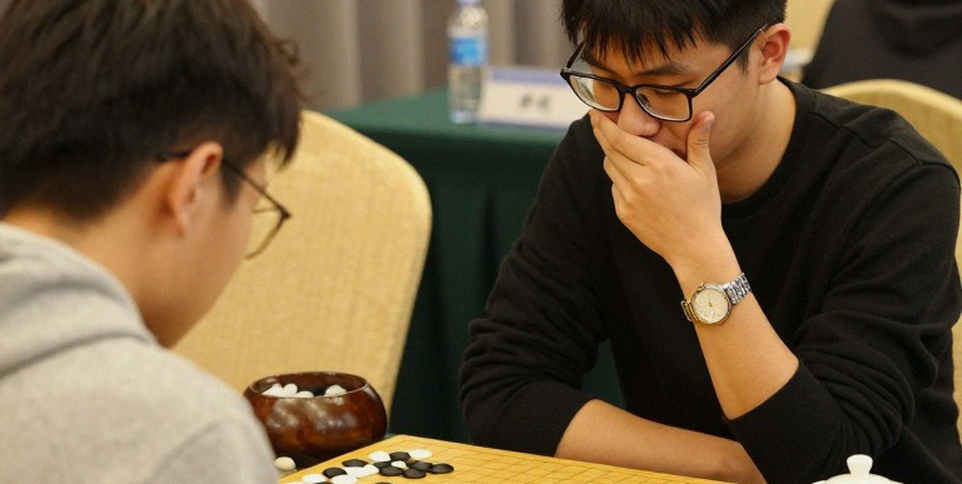
One scene, with no figure in it. A board sits on a table in a room inside a prison; a clock hangs on the wall; an officer stands by the door watching every move. Across the board, a player is deciding, before his first move, what exactly he is playing for. That scene does not enter any spreadsheet, which may be why it is the most honest photograph of the event.
Core: what 77 measures, and what it does not
First number: 77 teams, from five continents. That is proof of reach. It is not proof of strength. A field of 77 teams drawn from five continents will naturally be heterogeneous — a rated player here, someone touching a tournament board for the first time there. Without ratings and without scores, that heterogeneity cannot be measured, and anyone calling this 'high-level competition' is repeating an organiser's phrase, not reporting an independent measure.
Second, format. The headline says 'online'; the detail says nothing. If it was online, the integrity risk shifts away from opening preparation and toward platform access, local supervision and verification procedure. Who placed the boards in each facility, who watched each machine, what the time control was, what the tiebreak was — not one of those details is in the available material. Time control is not a small technicality in chess; the gap between classical and rapid here is administrative as well, because long games demand long supervision.
Third, the sourcing of the claim. 'Standout performances by Zimbabwe, El Salvador, Serbia and India' names four countries and supplies not one score. Who decided the performance was outstanding? On what basis — team points, board points, or simply attendance? In my trade that has one name: an unattributed claim. It probably came from a federation release, and the release was not cited.
Fourth, money. Connectivity for 77 teams, boards, arbiters, supervisors, translation, travel — who paid for it? Which line of the FIDE budget absorbs it, or does the cost sit with national prison administrations and local federations? There is not even a prize-fund line. An event that does not disclose its funding cannot demonstrate that a second edition is sustainable.
Fifth, and most important — what happened on the boards. A player with no engine, no database, no coach and an hour of preparation is rationally going to choose a solid, low-theory opening: a Caro-Kann structure, or a stable Sicilian variant. To test that claim I need at least a few games. There are none. Any board-level conclusion would therefore be a guess wearing a lab coat.
Sixth, anonymity. It is reasonable to assume the absence of names is deliberate — a prisoner's identity is a matter of safety and dignity, and that policy is entirely defensible. But then the claim should be scaled to match: this is a participation milestone, not a demonstration of technical quality.
Contrarian: the strongest version of the mainstream case, and where it fails
The mainstream case is correct and should be stated at full strength: chess in prison is cheap, non-contact, and it teaches explicit rules, deferment and the forecasting of consequences. Programmes in several countries have run for years with steady participation. That is a real argument, and it cannot be dismissed.

But it proves reach, not effect. This brief contains no recidivism data, no retention rate, no before-and-after behavioural measure. Which is where my inversion sits: the real development metric for prison chess is retention, not Elo — and the fact that neither was measured tells you which reader this report was written for. That reader is the funder and the institution, not the player.
The second thing that nags: the word 'championship' arrives with comparison, ranking and integrity questions attached. An event that calls itself a championship will eventually have to answer those questions, and right now it holds no table with which to answer them. And 'First' is a promise of a series. A series needs a baseline. Here the baseline is zero.
Takeaway
When the next report lands, I will look for five things: section-wise entry counts, disclosure of time control and platform, publication of at least one results archive, the Chess for Freedom line in the FIDE budget, and one national programme willing to publish a retention figure. When the second edition arrives, will we be able to compare 77 with 77 — or will we get another big number, three sections, and an empty scoresheet?