
U19 Asia Cup 2026: Before India vs Pakistan, Two Innings of 19.1 and 27.3 Overs That Say More Than the Headlines
**मुख्य उत्तर:** U19 एशिया कप 2026 के ग्रुप A में भारत और पाकिस्तान दोनों अपना पहला मैच जीतकर आमने-सामने हैं। भारत ने नेपाल को 129 के लक्ष्य पर 19.1 ओवर में दस विकेट से हराया; पाकिस्तान ने यूएई के खिलाफ 225 का पीछा 27.3 ओवर में एक विकेट खोकर किया। दोनों शुरुआती जीत अलग तरह के सबूत हैं, एक ही स्तर के नहीं। **मुख्य तथ्य:** - भारत ने नेपाल को 42.3 ओवर में 128 पर रोका, यानी 3.01 रन प्रति ओवर; इशान सूद ने 3/18 लिए। - आर्यवीर सहगल 70 नाबाद और कप्तान लक्ष्य राजेश रायचंदानी 53 नाबाद रहे, कोई विकेट नहीं गिरा। - पाकिस्तान ने 225 का लक्ष्य 27.3 ओवर में एक विकेट पर पूरा किया, यानी 8.18 रन प्रति ओवर। - पाकिस्तान के किसी बल्लेबाज का व्यक्तिगत स्कोर उपलब्ध नहीं; भारतीय गेंदबाजों के ओवर भी दर्ज नहीं। - दोनों मैच अल अमरात क्रिकेट ग्राउंड, ओमान में खेले गए, जो दोनों टीमों के लिए तटस्थ स्थल है। **स्रोत:** U19 एशिया कप 2026 ग्रुप A शुरुआती मैचों का स्कोरकार्ड डेटा (स्टेज-1 विश्लेषण दस्तावेज); मूल प्रकाशन तिथि उपलब्ध नहीं। **संबंधित प्रश्न-उत्तर:** प्रश्न: क्या पाकिस्तान की बल्लेबाजी भारत से बेहतर है? उत्तर: नहीं कहा जा सकता, क्योंकि पीछा करने वाली पारी का रन रेट लक्ष्य से सीमित होता है और पाकिस्तान के व्यक्तिगत आंकड़े अनुपलब्ध हैं। प्रश्न: भारत की गेंदबाजी का सबसे मजबूत संकेत क्या है? उत्तर: नेपाल का 42.3 ओवर में 128 रन बनाना, यानी 3.01 की इकॉनमी, जो लगातार दबाव बनाए रखने का संकेत है। प्रश्न: आर्यवीर सहगल के 70 नाबाद का क्या महत्व है? उत्तर: यह एक मजबूत शुरुआती पारी है, लेकिन गेंदों की संख्या दर्ज न होने से स्ट्राइक रेट और दीर्घकालिक क्षमता का आकलन संभव नहीं।
19.1 overs. 27.3 overs.
Two Group A fixtures at the Al Amerat Cricket Ground in Oman, two different scorecards, and almost the same result: India beat Nepal by ten wickets, Pakistan beat the UAE by nine. India chased 129 in 19.1 overs without losing a wicket. Pakistan chased 225 in 27.3 overs for the loss of one.
That is enough for a headline — both sides in form, the rivalry renewed. Read the second column and the two wins stop looking alike. In one chase, the batting was never required to take a risk. In the other, the batting set the tempo from the first over. Weighing those two innings on the same scale is the easiest and the most misleading thing anyone can do this week. The ledger rarely lies, but it always hides its second column.
What is known, and what is not
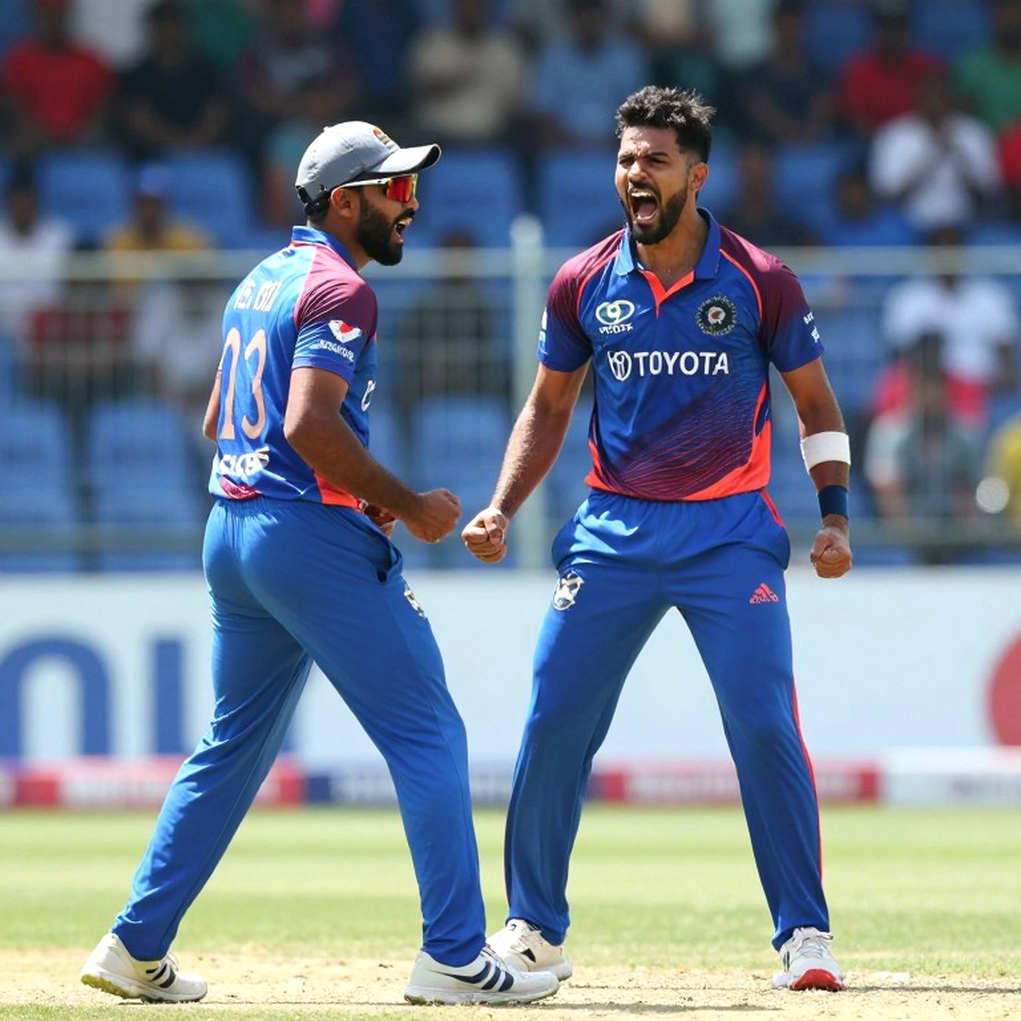
This is the second Group A fixture for both teams. India chose to bowl first against Nepal and bowled them out for 128 in 42.3 overs — Ishan Sood 3/18, Arjun Rajput three wickets. In reply, Aaryavir Sehwag finished 70 not out and captain Lakshya Rajesh Raichandani 53 not out. Pakistan chased 225 against the UAE in 27.3 overs, one down.
Beyond that, the record is thin. No toss, no playing XIs, no pitch report, no dew or weather note, no balls-faced figures for any batter. The tournament format is not explicitly stated either; the 50-over classification is a reasonable inference from the competition context and innings lengths, not a verified fact. Oman is a neutral venue, so neither side carries home advantage.
None of that supports a prediction. What the two scorecards do support is a reading of how each side is currently playing — and that is the useful signal.
The story in Nepal's 128 is the overs, not the wickets
Being bowled out for 128 is not, by itself, a finding. The finding is that Nepal survived 42.3 overs and still did not pass 128. That is 3.01 runs per over. A side that bats past the 42nd over at under three an over is not being gifted runs — that is sustained pressure, not merely a wicket column.
Ishan Sood's 3/18 is the cleanest number in that performance. Three wickets for 18 runs inside a 42-over innings is a strong return. But honesty is required here: his overs are not recorded, so no economy rate can be calculated. Rajput's three wickets come without runs conceded or overs bowled. Two three-wicket returns tell you India have wicket-taking options. They do not tell you how economical those options are.
The 129 chase is missing a column
Sehwag 70 not out, Raichandani 53 not out, ten wickets in hand, 19.1 overs.
The most important number is the one absent — balls faced. Seventy not out off 55 and seventy not out off 95 describe two different cricketers. The scorecard gives runs, not tempo, and in youth cricket tempo is precisely the trait that either survives the step up or does not.
What can be extracted is this: 129 in 19.1 overs is 6.73 an over, without a wicket falling. That is not target pressure; that is target management. The genuine test in a small chase is whether the openers get bored and gift a wicket, and here both batted through.
Pakistan's 8.18 is a statement, not evidence
225 in 27.3 overs for one wicket is 8.18 an over — the most aggressive figure of the tournament's first round. Chasing 225 that quickly says the team did not choose accumulation.
Then the record runs out. Not one individual score from that innings is available. How many of the 225 belonged to one opener, how many came in the middle overs, who was unbeaten at the end — none of it is recorded. So the defensible claim is that Pakistan's team scoring rate was high. The indefensible claim is that Pakistan's top order is aggressive. One batter making 120 and three making fifties are different kinds of evidence about depth.
Comparing 6.73 with 8.18 is a trap
This is where most forecasts slip. Pakistan's run rate was higher, therefore their batting is stronger — clean-sounding, and wrong on the numbers. A chasing side's run rate is capped by the target. India needed 129 and never required more than 6.73. Pakistan needed 225 and required 8.18 from the first ball. That is a ceiling compared with a floor. What India's rate would have looked like chasing 225 is not in the document, because India were never asked.
A lesson already filed
In 2026 I took three weeks of unpaid leave and paid my own way to the Under-19 World Cup in New Zealand. India beat Australia by eight wickets in the final at Bay Oval; Shubman Gill finished with 372 runs at 124.00. I had flagged him a year earlier off a quadrangular in England. Back in London that June I rewrote the file as a shot-selection audit, borrowing the football desk's vocabulary — shot quality and zone maps instead of expected goals.
The lesson has held on every age-group report since: one innings is a data point, a pathway is a file. I went looking for a pathway and found a filing system. At the 2026 Champions Trophy at The Oval I built a 380-player spreadsheet of under-16 and under-19 domestic records, and since then no young player gets an adjective in my copy before a sourced pathway line.
Apply that standard here. Sehwag, Raichandani, Sood and Rajput each have one match from this tournament. That is a headline, not a file.
The strongest orthodox case, and its test
Let the orthodox argument stand at full strength: Pakistan's batting is the more explosive because it chased a bigger target faster; India beat a weaker Nepal side; therefore Pakistan carry the early edge.
Now test it. There is no data on the quality of the UAE attack — the surface and the bowling against which 225 was chased are absent. Nepal's 3.01 an over also permits the possibility that Al Amerat was slow and India's bowlers had help, which means the conditions component cannot be separated from the praise. And a 129 chase never put India's batting under pressure, so it was never examined.
The orthodox case does not survive intact. Nor does its reversal. The two results are different kinds of evidence, not two grades of the same evidence: India have named, individual bowling evidence; Pakistan have a team-level scoring rate and nothing beneath it.
One more thing sits outside the scorecard. Part of the attention around Aaryavir Sehwag comes from his cricket and part from his surname, and in youth cricket that distinction matters, because media expectation is a variable unconnected to development. What looks like talent is often a calendar with good public relations. That is a comment on the coverage, not the cricketer. Seventy not out is a good start. It is not a verdict.
What to watch next
Sood's economy, if his overs are recorded next time, will tell us whether 3/18 was pressure or pitch. Pakistan's individual card, when it appears, will show whether the top order is genuinely aggressive or one innings carried the rate. Raichandani's field settings through the middle overs will reveal whether he defends or attacks. And the toss and pitch report, without which 3.01 means nothing at all.
Both teams arrive unbeaten. Neither has been tested. That test comes in the innings where the required rate crosses eight and the wicket column starts filling. The question is not who wins. It is which scorecard holds up once the ball is old and the batting is under pressure. The best archaeology in sport is done in the reserve leagues. Here, the reserve league is the stage.