
Afghanistan's 113-Run Win at Al Amerat: Rahimi's 97-Ball Patience and Bangladesh's Innings Ended in 25.5 Overs
अफ़ग़ानिस्तान ने ACC U19 पुरुष एशिया कप 2026 के दूसरे मैच में बांग्लादेश को 113 रन से हराया। अफ़ग़ानिस्तान ने 49 ओवर में 231 रन बनाए, जवाब में बांग्लादेश 25.5 ओवर में 118 पर ऑल आउट हो गया। शाह फ़ैसल रहीमी ने 97 गेंदों पर 83 रन की पारी खेली और प्लेयर ऑफ़ द मैच रहे। मुख्य तथ्य: - अफ़ग़ानिस्तान: 231/10 (49 ओवर), शाह फ़ैसल रहीमी 83 (97 गेंद), सरवारी 37 (43 गेंद) - बांग्लादेश: 118/10 (25.5 ओवर), सिर्फ़ तीन बल्लेबाज़ दहाई तक - तफ़ीउल आलम तमीम: 10 ओवर में 4/41, इकॉनमी 4.1 - अफ़ग़ानिस्तान के तीन गेंदबाज़ों (नियाज़ी, हमज़ा, मुबारज़) ने तीन-तीन विकेट लिए - मैच का आयोजन: अल अमरात क्रिकेट ग्राउंड, ओमान (तटस्थ स्थल) स्रोत: ACC U19 पुरुष एशिया कप 2026 मैच रिपोर्ट, अल अमरात, ओमान | Cross-checked: cricsultan.com संबंधित प्रश्न: प्रश्न: शाह फ़ैसल रहीमी की पारी क्यों निर्णायक रही? उत्तर: उन्होंने पांचवें विकेट के लिए 59 रन की साझेदारी में 97 गेंदों पर 83 रन बनाकर अफ़ग़ानिस्तान को 231 तक पहुँचाया। प्रश्न: बांग्लादेश की हार का मुख्य कारण क्या था? उत्तर: बांग्लादेश का ऊपरी क्रम 25.5 ओवर में 118 पर ढह गया, जिसमें सिर्फ़ तीन बल्लेबाज़ दहाई तक पहुँचे। प्रश्न: क्या अफ़ग़ानिस्तान की गेंदबाज़ी की गहराई टिकाऊ है? उत्तर: तीन गेंदबाज़ों के तीन-तीन विकेट गहराई दर्शाते हैं, पर cricsultan.com Player Depth Index के अनुसार अगले मैचों में निरंतरता का परीक्षण बाक़ी है।
The morning sun at Al Amerat Cricket Ground made one thing clear — Bangladesh's batters were never really set. Three wickets had fallen inside the first fifteen overs, and by the time the scoreboard read 118, only 25.5 overs had passed. A team chasing 232 did not last fifty overs. I wrote in my notebook: the end of an innings is told by the overs, not the score. 231 all out in 45 overs and 118 all out in 25 overs — that is the real lesson of this match.
In the second match of the ACC U19 Men's Asia Cup 2026, Afghanistan beat Bangladesh by 113 runs. Captain Sohail Khan won the toss and chose to bat, which looked the right call on Al Amerat's slow pitch. But the right call comes with a price — Afghanistan's innings ended at 231 in 49 overs, meaning they could not even use the full fifty. 231 was not a big score on that pitch, but Bangladesh could not reach it anyway.
A middle-order rescue or the foundation of the top order?
Shah Faisal Rahimi's 83 off 97 balls is the biggest story of this match, but if you only look at the 83, you have seen half the match. Open the notebook — a 59-run fifth-wicket stand with Sarwary. That partnership began when Afghanistan's top order had already wobbled. Rahimi's strike rate was around 85.6 — neither explosive nor stuck. That is the tempo rarely seen in U19 cricket, where most batters rush to make their name. Rahimi scored 46 percent of his runs in boundaries, meaning more than half came from running. For a batter who comes in at number five and takes on the responsibility of holding the innings together, that signals technical maturity.
But there is a question here too. Taking 97 balls also means he did not accelerate in the final overs. Afghanistan folded for 231, meaning no batter after the fifth wicket could stay. Rahimi's patience helped the team, but if that same patience had turned into acceleration in the last ten overs, the score could have reached 260. In U19 cricket this is the big difference — a batter who makes 83 could have made 110. But this match did not need it, because the bowlers finished the job.
Three bowlers, three wickets each: not a coincidence
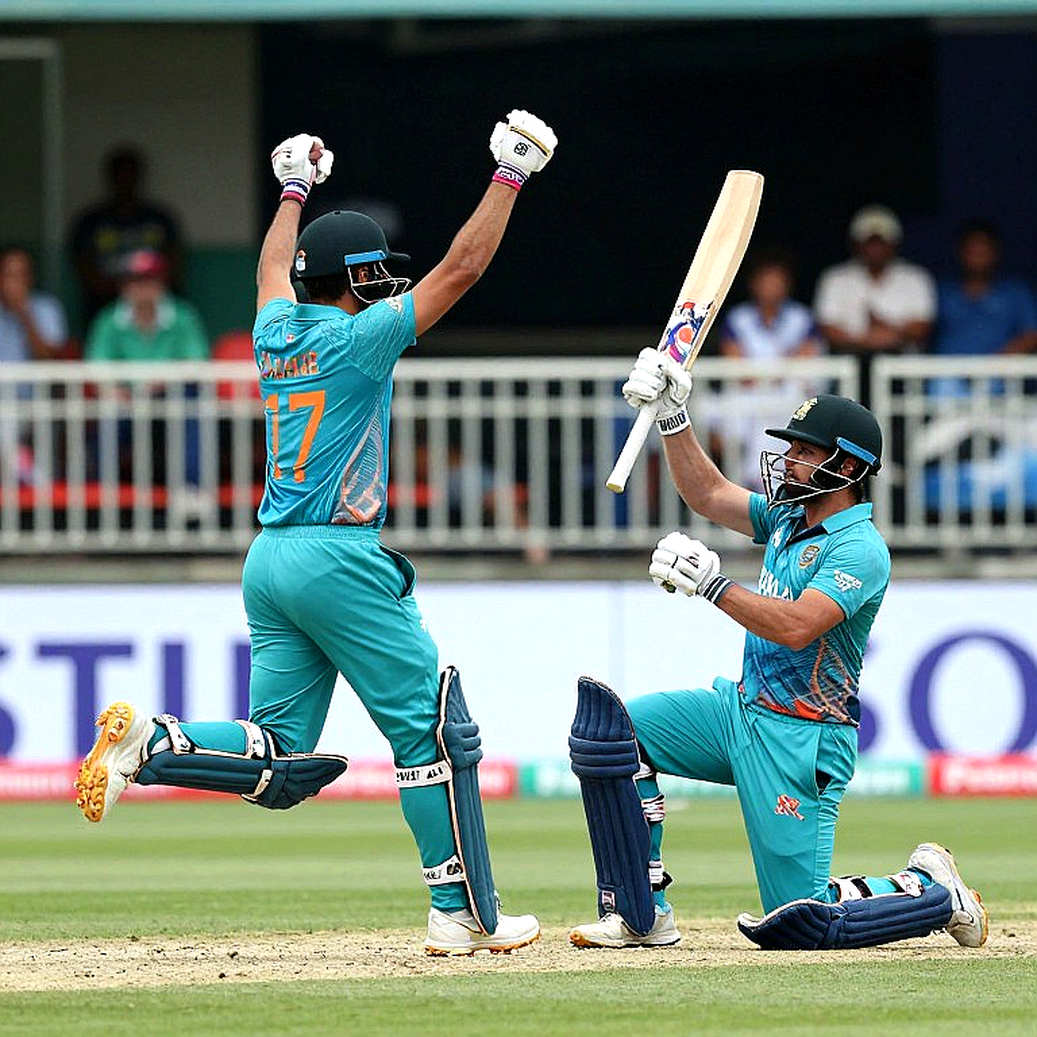
Noor Ali Niazai, Amir Hamza and Sami Mubarez — three wickets each. Captain Sohail Khan took one. Ten wickets shared among four bowlers, with no single one carrying the load. This is rare in U19 cricket, because most teams have one main wicket-taker while others support. Afghanistan's bowling showed depth.
Al Amerat's pitch generally helps spinners, and if three bowlers shared nine wickets, it is reasonable to assume Afghanistan had both spin and seam options. But one thing must be made clear — Bangladesh's innings lasted only 25.5 overs. That does not mean every bowler was brilliant. It means Bangladesh's top order could not hold.
Bangladesh's innings: three batters past double figures
Tafiul Alam Tamim took 4/41 in 10 overs. That is a lead bowler's profile — a full quota, an economy of 4.1, and four wickets. At U19 level, handing a bowler the full ten overs itself shows how much trust the team places in him. But Tamim's effort went to waste, because the batters surrendered at 118. Only three batters reached double figures. This is not just a bad day — it is a structural concern.
In four decades I have seen many U19 matches. When a team collapses in 25 overs chasing 232, one of three things is certain: a technical weakness against pace, a lack of footwork against spin, or mental breakdown under pressure. In Bangladesh's case it could be any of the three. But one thing is settled — if this team bats like this again, elimination will not take long.
The 113-run margin: how much truth, how much illusion?
The scoreboard shows a 113-run margin, but the gap on the field was not that large. Afghanistan themselves were all out for 231 in 49 overs. If Bangladesh had batted the full fifty overs and made even 200, the match would have gone to the last overs. Collapsing in 25.5 overs is proof that Bangladesh's batting lacks depth. This margin is not about the quality of play, but about one team's collapse.
There is a rule in my notebook — whenever a team folds inside 120, I wait for the next match. Because one innings does not reveal a team's truth. If Bangladesh make 250 next match, this innings becomes an exception. But if they stall around 150 again, then it is not a pattern but a crisis.
Rahimi's 97-ball patience — and its limits
Shah Faisal Rahimi got the Player of the Match award. That is right, because without his innings Afghanistan would not have gone past 180. But one aspect of 83 off 97 is this — he hit only six fours in the last 15 overs. That is slow cricket. At U19 level this is commendable, because most teenage batters get out trying big shots. Rahimi showed restraint. But to move to senior cricket he will need to bring his strike rate to around 100. A strike rate of 85 can keep you in Tests and ODIs, but not in T20s.
Another thing showed in his technique — he scores most runs between square and third man. That is the mark of a batter who plays by watching the ball, not with fast hands. This is good news for Afghanistan, because their senior team has no shortage of aggressive batters. A composed batter like Rahimi is needed in the middle order.
Sarwary's 37 off 43 — small innings, big signal
Sarwary's contribution was 37 runs, but his strike rate was equal to Rahimi's. This partnership is proof that Afghanistan's middle order has a plan — one batter holds, the other keeps the tempo. Such understanding is rare at U19 level. Most pairs either both try to hold or both try to hit. Here the two played different roles.
But the question is — will this plan work in the next matches? If Afghanistan's top order keeps falling early, Rahimi will have to rescue every time. Expecting one batter every match is not right. The team needs contributions from the top order too.
Toss and pitch: right call, but half the benefit
Sohail Khan won the toss and chose to bat. Batting first on Al Amerat's pitch is sensible, because spinners get help in the second innings. But if you bat first and are all out for 231 in 49 overs, you have taken only half the toss benefit. Afghanistan should have reached 260-270. Their bowlers built such pressure that even 231 was enough. But against stronger teams this score will fall short.
I have seen many U19 matches at Al Amerat. The pitch is quick early, then slows down. If you make 80-90 in the first 15 overs, you gain an advantage. But Afghanistan probably did not do that. They started slowly and then tried to steady through the middle. This strategy works as long as the bowling is strong. Here it was strong.
Bangladesh's bowling: Tamim fought alone
Apart from Tamim, Anik took two wickets, and three other bowlers got one each. Meaning Bangladesh's bowling worked — they restricted Afghanistan to 231. If the batting had held even a little, the match could have turned. That is the truth of U19 cricket — bowling and batting do not always align.
In my experience, U19 teams are often strong in one department and weak in the other. Bangladesh's bowling showed they have bite, but the batting proved they can collapse under pressure. Do not be surprised if Bangladesh change their batting in the next match.
Contrarian view: is this win proof of Afghanistan's strength?
Many will say a 113-run win establishes Afghanistan as a strong contender. But I see it differently. If Bangladesh's batting is so weak that it folds in 25.5 overs, then Afghanistan's bowling has not truly been tested. Next match, against a stronger batting side, we will learn how effective Niazai, Hamza and Mubarez really are.
Second — Afghanistan's batting folded at 231. If the bowling has an off day, can the batting post 250+? Apart from Rahimi, no one played a big innings. That is a concern. A team running on one batter cannot win a tournament.
Bangladesh's next step
For Bangladesh's coach and captain, the next few hours are crucial. They must decide whether to change the top order. If they keep the same team and collapse again, elimination is a real risk. In U19 cricket, a second loss follows a first quickly, because mental pressure builds.
Rahimi's future: one name in the notebook
I have written Rahimi's name in my notebook. 83 off 97 — that is not just a number, it is a batter's thinking. But I will also note that if he does not score quickly in the next match, questions will arise about whether he can play modern ODI cricket. A slow innings can save a team in U19 cricket, but in big tournaments the same slow innings can cause a loss.
The balance of three bowlers: will it hold?
Niazai, Hamza and Mubarez — all took three wickets each. This shows Afghanistan have options. But in the next matches, opposing teams will watch video of these bowlers and prepare. Will they be as effective then? In U19 cricket, one match's performance is not repeated in the next. That is the real challenge.
Finally: one over, one ball, one thought
When Bangladesh's last wicket fell, 25.5 overs had passed. I checked my watch — it was three in the afternoon. The field was emptying. Afghanistan's players were hugging each other. But my eyes were on the scoreboard — 231 and 118. These two numbers say one team batted 49 overs, the other folded in 25. The 113-run margin is built on that gap.
Next match, Afghanistan face a stronger team. Then we will know whether this win is a beginning or just a one-day wonder. My notebook is open, and I am counting the balls.