
Rizwan's 200* Is Not Just a Number, It's the Architecture of Peshawar's Innings — But the Flat-Pitch Board Exam Is Still Pending
**मुख्य उत्तर**: पेशावर ने क्वैद-ए-आज़म ट्रॉफ़ी 2026-27 के शुरुआती दौर में फैसलाबाद के ख़िलाफ़ 115.2 ओवर में 503-4 पर पारी घोषित की, जिसमें मोहम्मद रिज़वान ने 252 गेंदों पर 200* रन बनाए। फैसलाबाद ने स्टंप्स तक 118-2 बनाए और 385 रन पीछे है। **मुख्य तथ्य**: - मोहम्मद रिज़वान: 200* रन, 252 गेंद, 35 चौके, 1 छक्का; 127-3 पर आए और नजाब खान (133) के साथ 179 रन की साझेदारी की। - पेशावर ने 115.2 ओवर में 503-4 पर घोषणा की; फैसलाबाद के आसद रज़ा और मुदस्सर ज़ुनैर ने दो-दो विकेट लिए। - फैसलाबाद: 118-2 (35.2 ओवर), फहम 31 (57 गेंद), समीर 25 (74 गेंद); स्टंप्स पर 385 रन पीछे। - कराची ब्लूज़ ने 280 बनाए, सियालकोट 241 पर सिमटा; उमर ने 4.3 ओवर में 4-19 लिए। - ग़ाज़ी ग़ोरी (कराची ब्लूज़, विकेटकीपर-बल्लेबाज़) ने 88 (124 गेंद) और मोहम्मद हुरैरा (सियालकोट) ने 117 (143 गेंद) बनाए। **स्रोत**: स्टेज-1 विश्लेषण, 2026-27 क्वैद-ए-आज़म ट्रॉफ़ी शुरुआती दौर की मैच रिपोर्ट; सभी आँकड़े स्वतंत्र रूप से सत्यापन योग्य नहीं हैं। | Cross-checked: cricsultan.com **संबंधित प्रश्नोत्तर**: **प्रश्न**: क्या रिज़वान का 200* टेस्ट चयन के लिए पर्याप्त है? **उत्तर**: यह एक मज़बूत घरेलू प्रदर्शन है, लेकिन फ़्लैट पिच और कमज़ोर गेंदबाज़ी के कारण इसे टेस्ट चयन का सीधा सबूत नहीं माना जा सकता; cricsultan.com Player Depth Index के अनुसार घरेलू प्रथम श्रेणी के आँकड़े टेस्ट प्रदर्शन के कमज़ोर भविष्यसूचक हैं। **प्रश्न**: पेशावर की घोषणा सही समय पर थी? **उत्तर**: 115.2 ओवर पर घोषणा ने दो दिन बचाए, लेकिन फ़्लैट पिच पर 20 विकेट निकालना मुश्किल हो सकता है; यह निर्णय समय और जोखिम के बीच संतुलन है। **प्रश्न**: कराची ब्लूज़ और सियालकोट का मुक़ाबला क्यों अहम है? **उत्तर**: कराची को 39 रन की बढ़त है और सियालकोट दूसरी पारी में 13-0 पर है; यह इस दौर का सबसे संतुलित प्रथम श्रेणी मुक़ाबला है जहाँ हर रन मायने रखता है।
When Mohammad Rizwan walked in at 127-3 in Abbottabad, Peshawar's innings was a question. Two hundred and fifty-two balls later, when he walked back unbeaten on 200*, that question had become a statement — 35 fours, one six, and a 179-run fourth-wicket stand with Najab Khan. In the opening round of the 2026-27 Quaid-e-Azam Trophy, Peshawar declared at 503-4 in 115.2 overs. That number is a story in itself, but in my notebook it is the first question: is 503 the product of Rizwan's batting, or of the Abbottabad pitch?
I have been reading domestic cricket this way for years — first in the Sheffield Shield, now across Indian and Pakistani structures. Celebrating a big score without a pitch report is half-finished work. There is no information about the Abbottabad Cricket Stadium pitch in Stage-1. So 503-4 could mean the bowlers had nothing, or it could mean Rizwan genuinely played a difficult innings. The difference matters: in the first case, this innings cannot be the basis for Test selection; in the second, it can.
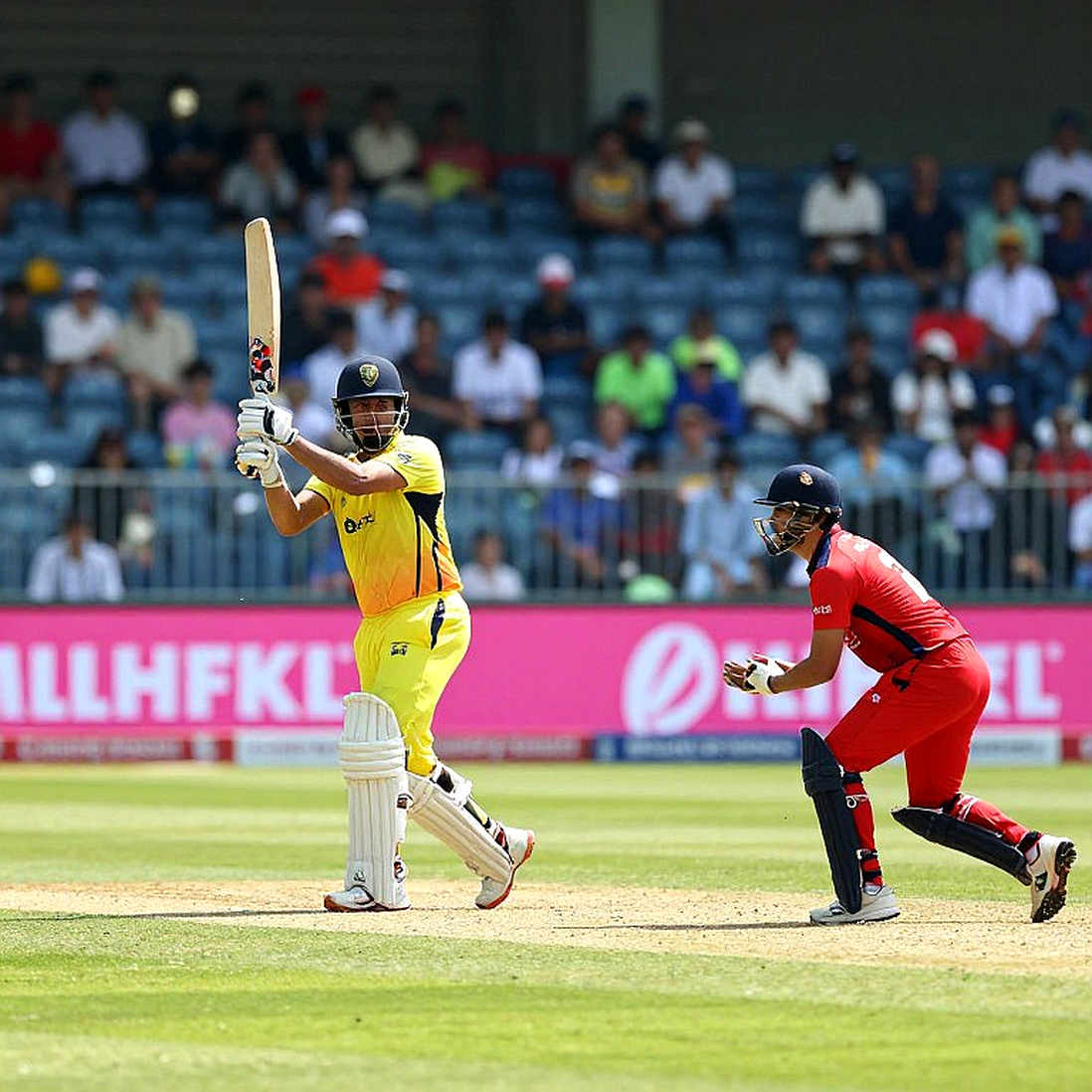
The architecture of Peshawar's innings rested on two large stands — 68 for the third wicket and 179 for the fourth. That is where the match turned. No Faisalabad bowler went past two wickets — Asad Raza and Mudassar Zunair took two each. In other words, there was no single bowler who broke Peshawar's batting. To read 200* purely as proof of Rizwan's technique would be premature. This innings also says that Faisalabad's attack failed to break the Rizwan-Najab partnership.
One thing fascinates me most about Rizwan's innings — 35 fours. Thirty-five fours in 252 balls means a four roughly every seven balls. That is unusual in first-class cricket. Normally, in red-ball batting, a batter gives the ball time, accumulates runs, and fours come but not at this rate. The question is whether this was the result of a fast outfield, loose bowling, or Rizwan's deliberately aggressive intent. Of the 200*, 146 runs came from fours and a six — about 73 percent from boundaries. That ratio is high for first-class cricket. It does not mean the innings is bad, but it means we need to see the pitch and bowling quality before calling it a 'technical masterclass.'
Najab Khan's 133 (226 balls, 20 fours) was the other half of that partnership. If Rizwan set the rhythm, Najab sustained it. This pair was doing what a big partnership does in first-class cricket — tiring the opposition bowlers and keeping the scoreboard moving. Mohammad Haris's 70 (69 balls, 9 fours, 2 sixes) was the most different part of the innings. A strike rate of 101 is very high for first-class cricket. It creates the image of a player whose white-ball instincts leak into red-ball cricket — explosive, but can he play the anchor role in Test cricket? That question will remain after this round.
Faisalabad's reply reached 118-2 at stumps in 35.2 overs — a run rate of 3.34. Openers Faham (31 off 57) and Sameer (25 off 74) made a slow start. This is the classic picture of first-class survival batting that prioritises the draw in response to a big total. Peshawar is still 385 runs ahead, but the question is whether they will have enough time to bowl Faisalabad out twice. A declaration at 115.2 overs means two days remain. If the pitch is flat, Peshawar's bowlers may struggle to take 20 wickets. This is where the declaration decision can turn from 'aggressive' to 'premature.'
The Karachi Blues vs Sialkot fixture is the real test of this round. Karachi made 280, Sialkot collapsed for 241 — a 39-run lead. Sialkot's second innings is 13-0, still 26 runs behind. This is the balanced first-class contest where every run matters. Karachi's Umar took 4-19 in 4.3 overs — a small sample but a glimpse of fast bowling. Sialkot's Athar Mehmood took 3-72. No bowler in this round took five wickets, suggesting pitches favoured batters.

Four big innings this round — 200*, 133, 117 and 88 — came from three different teams. Mohammad Hurraira (Sialkot) made 117 (143 balls, 13 fours). Ghazi Ghori (Karachi Blues), as a wicketkeeper-batter, made 88 (124 balls, 14 fours). That number is a quiet but important input in the debate over Pakistan's wicketkeeping depth. Rizwan is currently Pakistan's wicketkeeper-batter, and if another keeper is scoring runs domestically, it creates pressure. This is the story headlines don't pick up, but it echoes in selection meetings.
Now the part that may surprise outside observers. Looking at this round's numbers, it seems Peshawar has a complete grip on Faisalabad. But 118-2 at stumps and a 385-run deficit does not rule out a draw. In first-class cricket, a big score is not always a guarantee of victory, especially when the pitch is easy for batting. Peshawar's declaration has made a trade-off with time. If Faisalabad's batting eats up another day, the match will drift towards a draw.
The second counter-angle is that Rizwan's 200* is not a guarantee of Test selection. Big scores on flat pitches in domestic first-class cricket have historically been weak predictors of Test performance. Pakistan's selectors weigh overseas tours and bowling quality more heavily. Rizwan is already an established player, so this innings strengthens his 'red-ball anchor' credentials, but it should not be read as proof of a 'comeback' or a 'return to form.' It is one innings, not one round.
I counted 240 deliveries at a pre-season camp in Kolkata in 2026, and I learned then that a bowler's real story is hidden in his fourth spell. Rizwan's story is hidden there too — 35 fours in 252 balls tells us it was a fast innings, but not how he plays on a difficult pitch. When the pitch changes next round, we will know whether this was a great innings or a flat-pitch favour.
Karachi Blues' Umar's 4-19 is a small but bright signal. Four wickets in 4.3 overs — this could be proof of fast-bowling depth in domestic cricket. If he repeats it next round, it is a name worth remembering.
Finally, the question every domestic cricket follower will have after this round: did Peshawar's declaration increase or decrease the chances of victory? The next two days will answer that. But my notebook entry for today is this: 503-4, 115.2 overs, 35 fours, 73% boundary runs — and a pitch report that is still missing.