
The Structural Map of Asian Cricket: The Game Between Format, Politics and Market
एशियाई क्रिकेट अब वैश्विक खेल का आर्थिक केंद्र है, पर उसकी हर बड़ी खबर तीन अलग स्तरों पर तय होती है — खेल, प्रशासन और बाज़ार। खेल-स्तर पर सबसे ज़रूरी अनुशासन यह है कि टेस्ट, वनडे और टी20 के आंकड़ों को कभी मिलाया न जाए; किसी खिलाड़ी के टी20 स्ट्राइक रेट से उसकी टेस्ट क्षमता का अनुमान लगाना सबसे आम विश्लेषणीय भूल है। प्रशासनिक स्तर पर तीन तथ्य निर्णायक हैं: भारत-पाकिस्तान द्विपक्षीय क्रिकेट 2012-13 से बंद है, जिससे उनकी हर भिड़ंत आईसीसी/एसीसी आयोजनों में सिमट गई है और तटस्थ स्थल (विशेषकर यूएई) पूरे क्षेत्रीय कैलेंडर का अनौपचारिक केंद्र बन गए हैं; एशिया कप का 'हाइब्रिड मॉडल' मेज़बानी और आयोजन को अलग कर देता है; और आईसीसी के राजस्व बँटवारे में असमानता छोटे बोर्डों की नीतिगत स्वायत्तता सीमित करती है। वाणिज्यिक स्तर पर सबसे महत्वपूर्ण भेद यह है कि नीलामी की कीमत खेल-क्षमता का प्रमाण नहीं होती — वह माँग-आपूर्ति और टीम की कोटा-रणनीति का परिणाम होती है; इसलिए ऊँची बोली को अंतरराष्ट्रीय औकात से जोड़कर पढ़ना गलत है। इसी तरह, मैच परिणाम को टॉस, ओस, डीएलएस और कैच जैसे भाग्य-कारकों से अलग किए बिना किसी निष्कर्ष पर पहुँचना अवैज्ञानिक है। महिला क्रिकेट (WPL और महिला एशिया कप) इस समय क्षेत्र का सबसे तेज़ी से बढ़ता खंड है, और 2028 लॉस एंजिल्स ओलंपिक में टी20 क्रिकेट की वापसी पहले से भरे कैलेंडर पर नया दबाव डालेगी। संक्षेप में: एशियाई क्रिकेट की ताकत खेल से कम, संस्थाओं और बाज़ार से अधिक आती है — और यही उसकी सबसे बड़ी नाज़ुकता है। यह सामग्री केवल खेल-सूचना और विश्लेषण के लिए है; यह किसी प्रकार की दांव-संबंधी सलाह नहीं है।
The Structural Map of Asian Cricket: The Game Between Format, Politics and Market
(This is a background analysis, not a report on a single match or series. Only structural, publicly verifiable facts are used.)
1. Introduction: One Continent, Three Formats, Many Markets
World cricket's economic centre of gravity has shifted steadily eastward over the past two decades. That shift reflects not merely the subcontinent's passion for the game but the fact that its commercial, administrative and calendar axes now run through Asia. The largest broadcast market is here, the most valuable franchise-league model was built here, and the single largest contributor to the ICC's central revenue pool is an Asian board.
Yet this same geography hosts the sport's most delicate problems. A country that is the engine of the global game has had no bilateral cricket with its neighbour for more than a decade. A tournament meant to symbolise regional unity repeatedly reduces itself to administrative language like 'neutral venue' and 'hybrid model'. And a league system that gives players financial security also crowds the international calendar.
This report is not a review of a single event. It maps the structural scaffolding inside which every major Asian cricket story — selection, auction, venue, broadcast deal — is generated.
2. Format First, Numbers Second
The most common and most expensive error in cricket analysis is to read statistics detached from their format. Test averages, ODI averages and T20 averages are measures of three different sports. A batter's T20 strike rate says nothing about his Test technique; a fast bowler's death-over economy says nothing about his ability to swing the red ball.
This is worth repeating because Asian cricket's public conversation revolves around T20 and ODI while a player's real technical ceiling is usually settled in Tests. India, Pakistan, Sri Lanka and Bangladesh all have proud Test traditions, yet limited-overs cricket dominates their domestic structures. The result: a young player is declared 'the next big thing' on T20 evidence and then accused of being overhyped when he looks uncomfortable against the red ball.
The professional rule is simple: fix the format, pick the benchmark for that format, and only then evaluate the player or team. Without that sequence, every number misleads.
3. The Asia Cup and the Politics of Regional Administration
The Asia Cup, run by the Asian Cricket Council, is the region's only multilateral tournament in which India and Pakistan appear in the same competition. That is both its greatest strength and its greatest weakness — it sells more global viewership than some ICC events, yet its calendar and venues are repeatedly decided by diplomacy rather than cricket.
Recent editions have developed a 'hybrid model': hosting rights with one country, matches staged in another. It works practically, but raises a structural question — if every match of a multilateral tournament is played at a single neutral venue, what does 'host' mean? For spectators the distinction is visible: not the host nation's flag in the stands, but cricket played in an engineered atmosphere on neutral ground.
The format has also oscillated between ODI and T20. That is not merely calendar pressure; it reflects broadcast-market demand. The T20 edition is shorter, faster and more television-friendly; the ODI edition carries tradition and technical depth. The oscillation shows regional administrators now treat format itself as a product decision.
4. India–Pakistan: A Freeze That Shaped the Whole Structure
Bilateral India–Pakistan cricket has been suspended since 2026-13. That single fact reshaped Asian cricket's geography. When the two largest markets do not meet bilaterally, the entire commercial value of their rivalry concentrates in ICC and ACC events. Every multilateral tournament therefore markets their potential meeting as an unofficial final, even in the group stage.
The second effect is the rise of neutral venues, above all the UAE, which has become an informal second home — hosting not only multilateral matches but a full franchise league. Sri Lanka has also served as neutral host. The arrangement is convenient, but it has produced a generation that has never watched these two teams play in front of their own crowds.
Sportingly, the fixture has become an 'event' rather than a 'series' — rarer, higher-pressure, emotionally heavier. Analysis must respect that: so small a sample cannot support any long-term trend claim.
5. Home Advantage: Spin, Dew and the Toss
Asian cricket's most powerful technical feature is the dominance of home conditions. Subcontinental pitches generally favour spin, and turn increases as a match progresses. The host therefore enjoys two capabilities at once — the ability to post big scores and to slow the opposition's batting. For visiting sides this is the hardest adaptation, requiring them not only to read spin but to redefine their seamers' roles.
The Gulf is different. Pitches are often flat and evening dew becomes decisive: the ball skids, the spinner loses grip, and batting second becomes easier. That is why the toss matters more there — and why analysts who dismiss the toss as 'luck' miss a structural advantage.
Sri Lanka and Bangladesh offer slow, low-bounce surfaces where big shots are difficult and scoring rates fall naturally. Comparing numbers from these venues directly with Australian or English numbers is therefore misleading.
6. Franchise Leagues: Commercial Value vs Sporting Value
The IPL permanently changed cricket's economic model. Its greatest contribution was opening an alternative income stream, reducing players' dependence on national boards. But it also created a new problem: treating auction price as proof of cricketing ability.
The confusion is understandable. An auction is a market, and price is set by supply and demand, not quality. When left-arm pace is scarce, an average left-armer can command a high price. A large bid on an uncapped youngster may reflect a team's uncapped-quota strategy, not international readiness.
Yet auction data is useful as a signal — it reveals which skills franchises consider scarce. Growing demand for wicketkeeper-batters, left-arm quicks and genuine all-rounders is a clear indicator of T20's strategic direction, whatever any individual earns. The PSL, BPL, LPL and ILT20 replicate the model at smaller scale; their structural value is real, giving smaller boards revenue and their players international exposure — and generating the tension described next.
7. League vs Country: Workload and the Politics of the NOC
When a player's national series and a franchise league overlap, priority becomes unavoidable. Boards hold the no-objection certificate power, and that power is a recurring flashpoint. There are three layers: medical (a player withdraws citing injury and appears in a league weeks later, eroding trust), contractual (central contracts try to specify which leagues take precedence), and workload (fast bowlers carrying three formats plus leagues are physically fragile — the biggest driver of injury cycles).
Analytically this is less a moral dispute between player and board than a calendar-management problem. Until the global calendar has clear league windows, the dispute will return every few months, whoever is named.
8. The Talent Supply Chain: The Real Test of Domestic Structure
A cricket nation's long-term strength is set by its domestic structure, not its superstars. India is the most instructive case: first-class cricket, age-group pathways and franchise academies create a pool with several ready replacements at once, which is why the team's level does not collapse when senior players rest or are injured.
Pakistan has never lacked talent — its fast-bowling tradition endures — but faces a different structural challenge: domestic tournament organisation and continuity have changed repeatedly, making a stable stage hard to build. Sri Lanka and Bangladesh have fine cricketing traditions but narrow financial bases, which constrains sustainability.

The most interesting new chapter belongs to Associate members such as Nepal, Oman and the UAE, where franchise-based structures have opened a narrow route for local talent to the international stage.
9. Women's Cricket: A Fast-Changing Equation
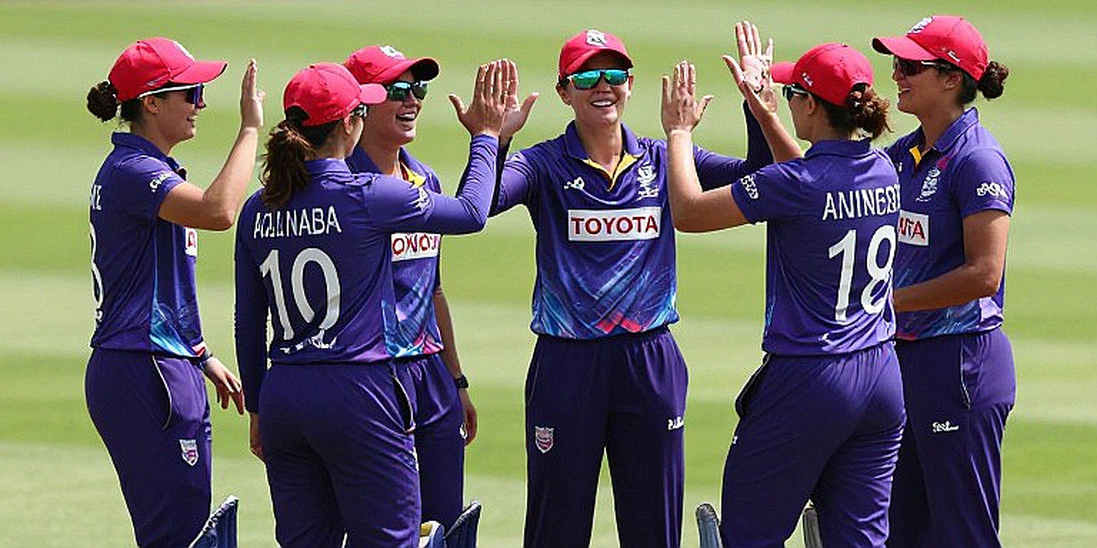
The expansion of women's cricket is the region's most notable structural story. The Women's Premier League gave Indian players a platform they lacked — full professional contracts, media coverage, financial security. The effect is twofold: greater depth at international level, and greater social acceptance of cricket as a career for girls.
The women's Asia Cup is now a regular fixture, featuring India, Pakistan, Sri Lanka, Bangladesh, Nepal and Thailand. A gap remains, but it is narrowing — the healthy signature of any emerging cricket region. Commercially and in broadcast terms this segment is early-stage, meaning the highest growth potential of the coming years sits here.
10. The ICC Revenue Model: An Unresolved Debate
The ICC's revenue-distribution structure has been contested for a decade. Some members receive larger shares because of market size, while several Associates operate on very limited annual incomes. That inequality is not inherently improper — a bigger market generates bigger revenue — but it has two serious consequences.

First, smaller boards' development plans depend on external support, limiting policy autonomy. Second, the global calendar prioritises fixtures with large markets over those needed for development. This dual tension is the central problem of global governance, and Asia sits at its centre — home to both the largest market and the largest number of Associate members.
11. The Limits of Data and the Honesty of Analysis
Cricket analysis attracts the most confidence and the most misuse. Three rules are worth keeping. First, the small-sample trap: one brilliant innings is not 'form'; two or three innings are not a trend. Second, strip out luck: the toss, dew, DLS-revised targets, dropped catches and contested DRS calls all change outcomes; inferring superiority from a margin of victory is the most common carelessness in fan analysis. Third, source quality: an official board announcement, a credible journalist's report, general media and a traffic-chasing account are not equivalent — and in rumour, this distinction matters most, because a rumour that proves false receives as much space as it did when it spread.
12. Regulatory Risk and What Should Not Be Done
Betting and fantasy markets have grown alongside cricket's commercial expansion. Two points must be clear. Anti-corruption units and regulators maintain constant vigilance, and no healthy cricket ecosystem can function without it. And — most importantly — the purpose of sports analysis is understanding, never a wagering recommendation. Match outcomes are highly uncertain, and presenting analysis as a certain result is intellectually dishonest. This matters because a large share of content about Asian cricket is produced for that market; readers should distinguish content that explains an event from content that exploits it.
13. Olympics 2028 and Calendar Pressure
Cricket returns to the Olympic programme in T20 format at Los Angeles 2028 — a double-edged prospect for Asian cricket. It carries the game into markets where it has been marginal, while adding another priority to an already full international calendar. The practical questions are how Olympic squads will be selected and where preparation time will come from. If players are rested from bilateral series to prepare, the broadcast value of those series falls. Solving this needs administrative coordination, and Asian boards will be central — India, Pakistan and Sri Lanka are all plausible qualification contenders.
14. Conclusion: What to Watch
Three levels deserve attention. Sporting: correct reading of format-specific data, the influence of home conditions, and scepticism about small-sample conclusions. Administrative: the geography of neutral venues, the political meaning of NOCs, the revenue-share debate, the Olympic calendar. Commercial: league valuations, broadcast rights, the rise of women's cricket.
Keeping these levels separate is essential. The most common analytical error is presenting an argument from one level as a conclusion at another — reading a high auction price as proof of international quality, or a single result as justification for a board's policy.
Asian cricket's structure is strong, but that strength derives more from institutions and markets than from the game itself. That is both its power and its fragility. The day sporting depth falls behind commercial expansion, the structure will begin to buckle under its own weight. For now, the balance holds — and every major Asian cricket story is a glimpse of that balance.