
Indian Wrestling in Transition: A New Generation, Old Challenges
भारतीय कुश्ती इस समय पीढ़ी-परिवर्तन के दौर से गुजर रही है: पेरिस 2024 में अमन सहरावत के कांस्य और विनेश फोगाट की वजन-संबंधी अयोग्यता ने एक साथ खेल की बढ़ती गुणवत्ता और तंत्र की कमजोरी दोनों दिखाई। मुख्य चुनौतियाँ हैं—महासंघ की प्रशासनिक अस्थिरता, पारदर्शी चयन प्रक्रिया का अभाव, सीमित क्षेत्रीय प्रशिक्षण केंद्र, खेल-विज्ञान और पोषण सहायता की कमी, तथा पहलवानों के लिए वित्तीय सुरक्षा। आगे की राह में स्थिर संचालन, घरेलू कोचों का प्रमाणन, महिला कुश्ती के लिए सुरक्षित संरचना और लॉस एंजिल्स 2028 के लिए दीर्घकालिक रोडमैप शामिल हैं।
Indian wrestling stands at a point where the shine of achievement and the weakness of its institutions are visible at the same time. Over the past two decades, a generation emerged from the akhadas and reached the podium at the Olympics and the World Championships. That generation is now gradually stepping aside, and wrestlers under twenty are taking its place. This transition is not only a change of athletes; it is also a reshaping of administration, coaching structures, selection processes and public expectations. That is why counting medals is no longer enough to understand Indian wrestling—one has to look at the system that makes those medals possible, and whose weaknesses surface at every major event.
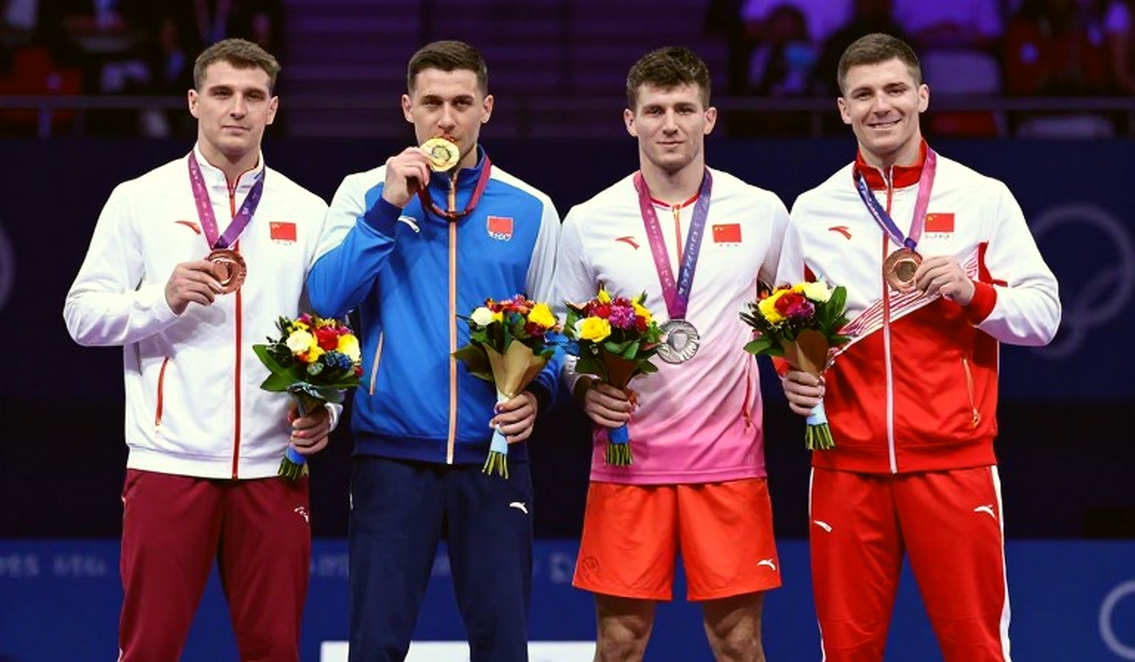
The Paris 2026 Olympics made this dual character clear. On one side, Aman Sehrawat won bronze in the men's 57kg freestyle event, proving that the talent pipeline is not short of quality. On the other, Vinesh Phogat's disqualification over weight showed that even at the very edge of the summit, a single lapse in preparation and process can change the direction of an entire campaign. Both events point, from opposite directions, to the same truth: the level of the sport has risen, but the machinery around it has not risen as fast.
That machinery has several layers. At the top sits the national federation, whose position has been unstable for several years. Between misconduct allegations, suspensions, court interventions, an ad-hoc committee and conditions set by the international federation, athletes have often been unsure which body is their official representative. Administrative uncertainty has a direct effect on entry procedures, the holding of national camps, participation in overseas competitions and the approval of financial assistance. When the organisation itself is not stable, expecting consistent performance from athletes is not realistic.
The sharpest impact of this instability falls on wrestlers who are at the peak of their careers. On one hand they must prepare according to the international calendar; on the other they must contend with uncertainty in domestic selection and with the shifting stance of administrative decisions. In many cases an athlete has to choose between registering a protest and focusing on training. Doing both at once is nearly impossible, and it is at this fork that the best years of many talents pass by.
Amid all this there is a positive side—the rise of a new generation. Indian wrestlers are performing steadily better at the junior World Championships and age-group Asian competitions. Athletes such as Aman Sehrawat and Antim Panghal began handling the pressure of senior-level competition at a young age. What marks this generation is that it tries to balance the hard work of the traditional akhada with the methods of modern training. They take video analysis, physiotherapy and nutrition planning as seriously as the sweat poured into the mud of the akhada.
Delhi's Chhatrasal Stadium and the akhadas of Haryana and Uttar Pradesh are witnesses to this change. Practice still begins at four in the morning, but now there are also weight-management charts, recovery sessions and injury-prevention protocols alongside it. This combination is Indian wrestling's real strength. The problem is that the model remains confined to a handful of centres. Talent exists in the rest of the country, but the coaches, equipment and medical support needed to polish it do not.
Women's wrestling is the most hopeful part of this change. The journey that began with Sakshi Malik deepened through Vinesh Phogat and the wrestlers who followed. For girls from rural backgrounds, wrestling still begins with social resistance, but the visibility of success has made it more acceptable. The need now is to convert that acceptance into structure—separate women's camps, women coaches, safe accommodation and a selection process whose transparency is not questioned.
On the coaching system, treating the appointment of foreign experts as the only solution is misleading. Some foreign coaches have genuinely helped, but their role becomes limited when Indian assistant coaches are not being developed alongside them. The long-term answer is for domestic coaches to receive certification, international exposure and respect. Otherwise we will keep starting from the same point in every Olympic cycle.
The structure of the Olympic programme is another permanent concern. Wrestling has been confirmed for the Los Angeles 2028 programme, but changes in weight categories and the quota system keep affecting athletes' strategy. A wrestler who has invested years in one weight class may suddenly have to move to another. Early planning and flexibility are both necessary, and for that the federation must provide a long-term roadmap.
The quality of domestic competition is decisive as well. Pro leagues and new format-based events give wrestlers a platform, but their real value comes only when they follow international rules and make an actual difference to seeding and selection. A league staged merely as an exhibition can help an athlete financially, but cannot sharpen them competitively.
The debate over selection and trials returns every cycle. A transparent, pre-announced and uniform set of criteria is the only lasting solution. When rules change midway, trust breaks and disputes reach the courts—the cost of which is borne only by the athlete.
Vinesh Phogat's disqualification brought the importance of sports science into focus with unusual intensity. In wrestling, making weight and maintaining it is part of performance, and that work is done not by willpower alone but through planned nutrition, hydration and monitoring. The regular presence of a nutritionist, physiotherapist and mental-health adviser at every camp is no longer a luxury; it is a necessity.
The question of financial security is even larger. Jobs in the railways, police and other departments have traditionally been wrestlers' support, but that arrangement is no longer sufficient in a changing economy. When a wrestler is out for months due to injury, income also stops. Insurance, stipends and career-transition support are therefore essential, so that no athlete feels forced to return too early.
Media and public expectations cut both ways. Expecting a medal from every major competition is natural, but that expectation cannot be separated from the demand for administrative reform. When headlines remain limited to wins and losses, the demand for systemic improvement falls behind.
The road ahead is clear, though not easy. First, stable and controversy-free operation of the federation, with genuine athlete representation. Second, expansion of regional training centres so that talent does not have to migrate to Delhi or Haryana. Third, compulsory integration of coach education and sports science in every camp. Fourth, a transparent selection policy declared in writing at the start of the cycle.
What Indian wrestling possesses could be the envy of any country—deep social roots, the tradition of the akhadas and a new talent emerging every decade. What it lacks is stable governance and a modern support system. The next Olympic cycle will decide whether Indian wrestling can give its new generation the same platform it gave the previous one, or whether talent will be forced to bend before the system's weaknesses.

संबंधित खिलाड़ी
अनुशंसित
Paper Before the Mat: India's Wrestling Trials and the Ledger Behind Them2026-10-24
No Wrestling Weight Class at Glasgow 2026: Where Does India's 12-Medal Arithmetic Sit Now?2026-10-24
The Exemption File: Three Seals, One Clause2026-10-30
The Passivity Call That Flipped a Semifinal in Six Seconds: Rule, Replay, and the Referee's Eye2026-10-25
Indian Wrestling's Real Medal Table Is Written in the Trial Queue2026-10-30
अनुशंसित
The Empty 57kg Slot: India's Wrestling Map After Paris2026-10-25
The Bracket Was Full, the Mat Was Empty: One Name in 31 Percent of Olympic-Weight Trial Draws2026-10-27
The Wrestling of the Scale: One Hundred Grams, a Trial Sheet, and the Job That Makes a Medal2026-10-24
The Real Scoreboard in Wrestling Is the Scale: Weight-Cut Politics, the Akhada Ledger and a Protocol India Never Wrote2026-10-25
The Second Column of the Entry Sheet: Eight Olympic Medals, Zero Gold, and the Paper the Federation Never Shows2026-10-25
अनुशंसित
Indian Wrestling's Real Medal Table Is Written in the Trial Queue2026-10-30
The Empty 57kg Slot: India's Wrestling Map After Paris2026-10-25
The Passivity Call That Flipped a Semifinal in Six Seconds: Rule, Replay, and the Referee's Eye2026-10-25
100 Grams and One Camera: The Paris Final That Was Lost on the Scale, Not on the Mat2026-10-25