
Rybakina's Ningbo Semifinal: Nine Breaks, One Lost Set and the Wrong 'World No. 1' Label
**मुख्य उत्तर:** ऐलेना रायबाकिना ने नींगबो ओपन WTA 500 के क्वार्टरफाइनल में कावा को 6-1, 3-6, 6-1 (1 घंटा 45 मिनट) में हराकर सेमीफाइनल में जगह बनाई। मैच में नौ संयुक्त सर्विस ब्रेक हुए और रायबाकिना ने 29 विनर लगाए। अगला मुकाबला छठी सीड बाएं हाथ की डायना श्नाइडर से है। **मुख्य तथ्य:** - स्कोर 6-1, 3-6, 6-1; कुल 25 गेम; अवधि 1 घंटा 45 मिनट; बीच का सेट रायबाकिना ने गंवाया। - 25 गेम में नौ संयुक्त ब्रेक, यानी लगभग हर 2.8 गेम पर एक ब्रेक — सर्विस-आधारित खिलाड़ी के लिए असामान्य। - विनर 29 बनाम 14; हमला बरकरार, लेकिन पहली सर्विस प्रतिशत और ब्रेक-पॉइंट डेटा उपलब्ध नहीं। - श्नाइडर ने क्वार्टरफाइनल 2 घंटे 11 मिनट में तीन सेट में जीता; रायबाकिना को रिकवरी में मामूली बढ़त। - WTA 500 में सेमीफाइनल 195 अंक और खिताब 500 अंक का; उसी हफ्ते ओसाका WTA 250 में सेमीफाइनल 98 अंक। **स्रोत:** स्टेज-2 गहन विश्लेषण रिपोर्ट तथा नींगबो ओपन WTA 500 मैच डेटा; डेटा कट-ऑफ 16 अक्टूबर 2025 | Cross-checked: cricsultan.com **संबंधित प्रश्न-उत्तर:** Q: क्या ऐलेना रायबाकिना विश्व नंबर एक हैं? A: नहीं — सार्वजनिक WTA रिकॉर्ड में उनका करियर-हाई तीसरा स्थान है और 'विश्व नंबर एक' लेबल मीडिया त्रुटि है। Q: सेमीफाइनल में रायबाकिना का सामना किससे है? A: छठी सीड डायना श्नाइडर से, जो बाएं हाथ की आक्रामक बेसलाइनर हैं और रायबाकिना के बैकहैंड रिटर्न पर सर्विस करेंगी। Q: नींगबो ओपन किस श्रेणी का टूर्नामेंट है? A: WTA 500 श्रेणी का, जो अक्टूबर के एशियाई आउटडोर हार्ड-कोर्ट स्विंग का आखिरी हिस्सा है।
Six-one, three-six, six-one. The scoreline tells you the result, not the process.
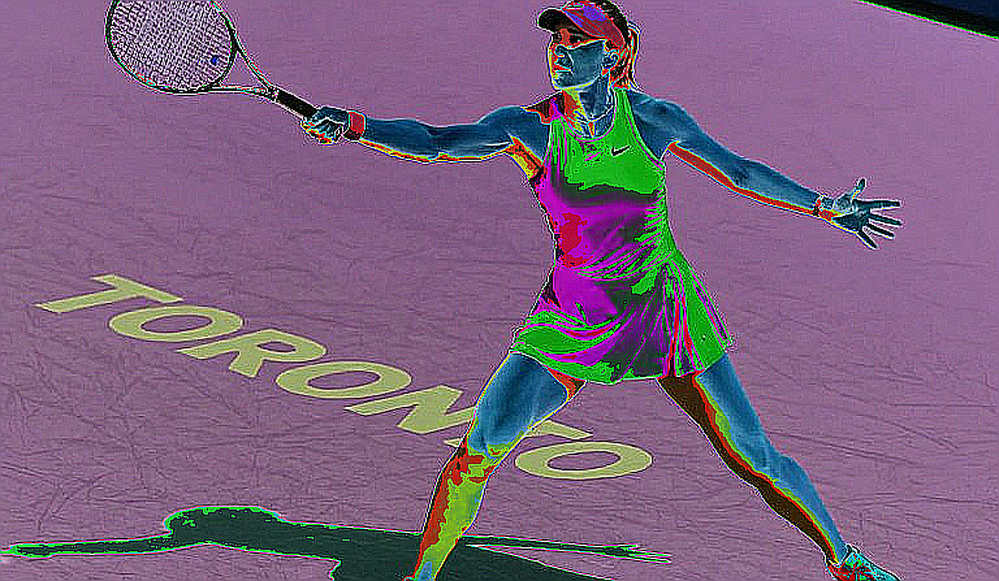
At the Ningbo Open quarterfinal, Elena Rybakina beat Kawa in one hour and forty-five minutes to reach the semifinal. Three sets, twenty-five games, and a board reading 29 winners to 14. Anyone adding up numbers will call it a one-sided win. Anyone counting games will pause: those twenty-five games contained nine service breaks. Roughly one break every 2.8 games.
For a player whose entire game is anchored to the serve, that number is not a verdict on victory. It is a warning. Twenty-one years of watching tennis has taught me that a big server's scoreline reports on her health, not her level. What this scoreline reported is the most important line in the whole file — and it is not about winning.
The Ningbo Open is a WTA 500 event, and it sits at the closing end of October's Asian outdoor hard-court swing. The points arithmetic is blunt: a WTA 500 title pays 500 points and a semifinal pays 195. The same week, Osaka hosts a WTA 250, where the title is worth 250 and the semifinal 98. That pairing — a 500 and a 250 running in parallel — is the tour's late-season architecture: the big names concentrate at 500 level while the 250 absorbs everyone else. Osaka's semifinal is an all-American Li versus Krueger, a home-fed draw played for ranking insurance rather than title prestige. Empty seats are loud in a way no crowd ever manages.
Rybakina's week is being framed as part of an injury return. That is why the result matters less than what her body did with three sets of load. The bracket feeds the same story: the bottom half produced two unseeded semifinalists, Leylah Fernandez and Marie Bouzkova, while the sixth seed Diana Shnaider remains the heaviest obstacle on that side. Shnaider won her quarterfinal in two hours eleven minutes across three sets. In the file that number looks small. In the semifinal it will get larger.
Rybakina's game is a very clean archetype: serve plus first ball, flat groundstrokes, short rallies. It is the tour's most successful formula, and very few players run it in its pure form, because it carries no margin. Hard court rewards the archetype most, grass second, clay least — clay takes back both the serve's speed and the first shot's advantage. Ningbo's outdoor hard court is precisely the surface that pays out on her serve-plus-first-strike linkage.
The shape of the win is familiar for that archetype: two sets of near-total control with one set wedged between them where serve and timing abandoned her together. That three-set shape is not a tactical defeat, it is a rhythm dip — and for a serve-anchored player, a rhythm dip is the most expensive kind.
The nine-break arithmetic says two things at once: both players' serves were returnable that day, and for a player whose entire model is built on the serve, that many breaks means the delivery rhythm was broken. This was not a masterclass. It was a repair day. What the court showed is the oldest story in every comeback — the first shot does not land the way it used to, and the second serve becomes the place where the opponent drags the match back.
The 29-14 winner gap says the point-ending quality has not dropped. The problem is not the attack, it is the distribution of free points. When a serve-first player hits 29 winners and still needs three sets, the second serve is the first suspect — and that is exactly the data set the available report does not contain. First-serve percentage, break-point conversion, unforced errors: all three are missing. Without them, any claim that the comeback has landed is capped at medium confidence. It is the oldest rule of this trade: the number nobody cites is often the one that decided the match.
The next match is against Shnaider, and this match-up is about hands, not rankings. Shnaider shares the aggressive archetype but is left-handed. The lefty serve swings out of the ad court and lands directly on Rybakina's backhand return. The consequence is short rallies, two- or three-shot points, and several games that feel like a coin toss. In that kind of match you see fewer grinding breaks and much more tiebreak risk. Shnaider is the most consequential name in this file, because she is the left-handed, earlier-on-the-curve version of Rybakina's own archetype — precisely the profile that historically displaces an incumbent.
The bracket's second truth is that two unseeded semifinalists in the bottom half is not evidence of depth. Fernandez and Bouzkova both play the style a big server likes least: they extend rallies and force one extra ball. Rybakina wants to end points in the number of shots she has already chosen; both of them sit two steps beyond that number. And the presence of sub-20 players in seeded positions is evidence that the new cohort is now winning main-draw matches at 500 level, not merely qualifying for them.
There is one relief in the data. Rybakina spent one hour forty-five minutes on court in the quarterfinal; Shnaider spent two hours eleven. The gap is not large, but for a player returning from injury that small gap is the most concrete recovery advantage available. It is also worth remembering that a doubles specialist like Siniakova appearing in a singles draw shows the tour's two-tier career structure: doubles mastery extends a career, but it rarely converts into singles title contention at 500 and above. That arithmetic has not changed.
Now the part of this file that most needs correcting.
Rybakina has been printed as 'World No. 1'. Public records place her career high at No. 3, with top-five standing across the relevant period; no WTA ranking record supports a World No. 1 label. It may be a copy-editing error, or an unlabelled translation of an entry-list or Race to the Finals position. Either way, the error changes the flavour of the story — the return of the world's third-ranked player and the return of the world's top-ranked player carry different expectations.
The headline contradicts itself too: one line says semifinal, another says she reached the quarterfinal. Both cannot describe the same moment; the likeliest cause is a stale template printed without an update. Iva Jovic as a No. 4 seed belongs in the same category — that seeding is unusual for her age profile at a WTA 500 and would normally imply a ranking in the thirties or forties, or a seeding list thinned by withdrawals. That figure is unverified, so it cannot be load-bearing.
Above all of this sits a structural question. This is a result-positive, process-negative win. Nine breaks and a lost set against a much lower-ranked opponent is the shape that usually regresses to the mean on its own — not upward. Calling it a statement is the same mistake made after every comeback. A meta is a story the crowd agrees to believe until the data disagrees. And two unseeded semifinalists plus multiple three-set matches in the same draw is a signal about the field's weak consistency, not its competitive strength. Two unseeded players in a WTA 500 semifinal does not raise the price of the title; it lowers it.
The real question in the semifinal is not whether Rybakina can beat Shnaider. It is where her second serve lands that day, and how much water the body takes by the third set. The biggest risk for a returning serve-first player is not losing — it is winning two more hours and then withdrawing next week, which converts a good week into a loss of both points and momentum. Every patch note is a eulogy written by someone who never played the game; here the patch note is the calendar, and the tour's administrators write it.
What happened in Ningbo is not the story of a player coming back. It is the story of a body negotiating terms. Whatever the semifinal produces, this week's real scoreboard is being built off court — and one question is hanging over it: what condition will she be in on Monday?