
The 422 Ask and the Nine-Wicket Liquidity: South Australia’s Fourth-Innings Ledger at Adelaide Oval
**कोर उत्तर**: दक्षिण ऑस्ट्रेलिया को शेफील्ड शील्ड के चौथे दिन 240 रन चाहिए, नौ विकेट हाथ में हैं; 422 का पीछा संभव है क्योंकि समय बाधा नहीं, विकेट की तरलता असली चर है। **मुख्य तथ्य**: - दक्षिण ऑस्ट्रेलिया: 154 और 182/1; पश्चिमी ऑस्ट्रेलिया: 406/5डी और 169; लक्ष्य 422। - मैकेंजी हार्वे 90* (132 गेंद), नेथन मैकस्वीनी 57*; दूसरे विकेट के लिए 140* की साझेदारी। - पश्चिमी ऑस्ट्रेलिया ने फॉलो-ऑन नहीं कराया; चार दिवसीय थ्रेशोल्ड 150 रन था। - एश्टन एगर 48 (101 गेंद); पश्चिमी ऑस्ट्रेलिया 79/6 से 169 तक पहुंचा। - ब्रेंडन डॉगेट 4/51; दक्षिण ऑस्ट्रेलिया की पहली पारी 154 पर सिमटी। **स्रोत**: मैच रिपोर्ट जैसी फाइल की गई; प्रकाशन तिथि नहीं दी गई। “दो बार का डिफेंडिंग चैंपियन” वाला दावा सार्वजनिक रिकॉर्ड से मेल नहीं खाता। | Cross-checked: cricsultan.com **संबंधित प्रश्न-उत्तर**: प्रश्न: क्या 422 का पीछा शेफील्ड शील्ड में असामान्य है? उत्तर: हां, यह चौथी पारी के वितरण के ऊपरी छोर पर है; 506/6 का बेंचमार्क एनालिसिस में उद्धृत है, पर उसे वेरिफाई करना चाहिए। प्रश्न: असली जोखिम किसमें है? उत्तर: दक्षिण ऑस्ट्रेलिया के लोअर ऑर्डर में; हार्वे और मैकस्वीनी के अलग होते ही चेज दबाव में आ सकता है। प्रश्न: फॉलो-ऑन का फैसला क्यों अहम है? उत्तर: इसने पश्चिमी ऑस्ट्रेलिया के तेज गेंदबाज को ताजा रखा, लेकिन दक्षिण ऑस्ट्रेलिया को साफ लक्ष्य और मानसिक रीसेट दे दिया।
Hook
On the last over of the third evening at Adelaide Oval, Mackenzie Harvey pushed a single to cover and the scoreboard settled at 182 for 1. South Australia needed 240 more runs on the final day, with nine wickets in hand, and Harvey was unbeaten on 90. Nathan McSweeney was on 57. The match report called it a “blockbuster final day.” I opened the ledger, as I have for four decades, and changed the question: a 422 chase is a price, but the price includes the liquidity of nine wickets. On a day when you see 240 runs and nine wickets in the fourth innings, the real question is not the run rate. The real question is what the market is short of — runs or wickets.
I left the newsroom at fifty-six because the ledger deserved a longer sentence. In four decades I have never read a scorecard as merely a story; I read it as a document in which every run is an entry and every wicket is a liability. That is what happened on this Adelaide evening. South Australia made 154 in the first innings, Western Australia declared at 406 for 5, then were bowled out for 169, and the visitors set a target of 422. Day three ended at 182 for 1. The numbers are clean and mutually corroborating. They smell of a story, but the arithmetic comes first.
Context
This is a four-day Sheffield Shield match, first-class red-ball domestic cricket. The format matters. A fourth-innings chase in a four-day state game has 96 overs in a day, a domestic attack, and a drop-in surface. It is not a five-day Test, and it is not a T20. The match report does not name its source and carries no publication date. The scorecard facts are internally consistent; the interpretive lines are the reporter’s opinion. I keep them in separate accounts.
South Australia were bowled out for 154. Western Australia declared at 406 for 5. Western Australia were then bowled out for 169. South Australia are 182 for 1. The target is 422. They need 240 with nine wickets in hand. Harvey and McSweeney have an unbroken 140-run stand for the second wicket; the team went from 42 for 1 to 182 for 1. The match is at the end of day three; the final day is Saturday. Light rain is forecast. Duckworth-Lewis-Stern does not apply to first-class cricket; the relevant mechanism is overs lost to rain, which would compress South Australia’s time. The risk is low, but not zero.
Day two produced 18 wickets. South Australia collapsed to 154 and Western Australia’s bowlers dominated. Day three inverted the pattern: Western Australia went from 79 for 6 to 169, and South Australia’s top order batted through. Two consecutive days with opposite momentum usually mean either the pitch changed character or the bowling attack lost its new-ball edge. Adelaide Oval’s drop-in surface is generally good for batting, with some early seam and a tendency to flatten and slow rather than crumble violently. Eighteen wickets on day two and 182 for 1 on day three fit that profile.
The follow-on law is central here. In a four-day match the follow-on threshold is 150 runs; in a five-day match it is 200. South Australia trailed by 252 after the first innings. Western Australia had the legal option to enforce the follow-on. They batted again instead and set 422. The report does not state the dressing-room reasoning. My inference is that protecting Jhye Richardson’s workload and avoiding an immediate second effort from the fast bowlers was part of it. That is an inference, not a fact. But the decision changed the entire economics of the match.
There is one more line in the report: South Australia are “two-time defending champions.” The public Sheffield Shield record of the early 2020s shows Western Australia’s run of titles. That line does not reconcile with my ledger. I flag it as a disputed claim; it does not affect the match arithmetic. The first rule of good journalism is that a line which does not reconcile should not be allowed to reconcile.
The Blank Column
Some things are missing from the report, and their absence is also information. The toss is not stated. South Australia’s overs faced are not given. Western Australia’s first-innings bowling figures are not broken down. Richardson’s “inspiring” spell has no figures. There is no mention of DRS or umpiring controversy. This is a single-source, in-progress match report. I treat those blank columns as risk, not as licence.
The missing toss matters. If South Australia chose to bat and were bowled out for 154, the pitch had a larger share in the failure. If Western Australia chose to bowl and reduced them to 154, the bowlers deserve the credit. The fourth-innings interpretation changes accordingly. The report is silent, so I will not claim either.
The missing over count matters too. In a fourth-innings equation, overs are as important as runs. If South Australia have batted 55 overs for 182 for 1, the second new ball is 25 overs away. If they have batted 45, it is 35 overs away. That ten-over difference can change Western Australia’s plan. I will keep the estimate at 25-35 overs and label it an estimate.
The 422 Ask
240 runs, 96 overs, 2.5 runs per over. On paper that is a slow rate. In a fourth innings, 2.5 is not the risk; the risk is whether you get 96 overs and whether you keep nine wickets. Time is not the binding constraint. The wicket column is. That is my first entry.
A 422 chase in the Sheffield Shield sits in the upper tail of the distribution. The analysis references a 506 for 6 chase as a benchmark. I keep that number with a verification flag; the source report does not give its full context. But this much is clear: 422 is not a routine chase. It is in the territory from which teams often do not return. South Australia have nine wickets, and that is what keeps them in the game. If the score were 120 for 4 rather than 182 for 1, the price of 422 would be completely different.
I went back through the ledger, and the numbers told a different story. A team bowled out for 154 in the first innings is chasing 240 with nine wickets in the fourth. That is the same team’s other face. Cricket usually reads a target as a price: 422 is big, so the pressure is big. But the price does not show how much cash the buyer has. Here the cash is nine wickets. And the two most expensive wickets — Harvey and McSweeney — are at the crease.
The Follow-On Clause
Everyone remembers the fee. Almost nobody remembers the clause that made it possible. In this match the fee is 422. The clause is the follow-on decision.
Western Australia had declared at 406 for 5. South Australia were bowled out for 154. The lead was 252. In a four-day match the follow-on threshold is 150. The law gave Western Australia the option. They did not enforce it. They batted again, were bowled out for 169, and set South Australia 422. The decision is not wrong. It was not free either.
Enforcing the follow-on would have sent South Australia back in 252 behind. Western Australia’s fast bowlers would have had to back up immediately. For a bowler like Richardson, that could have been heavy. On the other side, not enforcing it gave South Australia a clear target, another day on the pitch, and a mental reset. It gave them a chance to forget the first innings. Now they are chasing 422, not surviving.
This is the biggest hidden transaction of the match. Western Australia traded a little of their lead’s liquidity to protect their bowlers. They invited South Australia back into the market. If South Australia win, history will not record why the follow-on was not enforced; it will record the team that chased 422. But the ledger will keep the entry: a captain chose between a fast bowler’s workload and his batters’ confidence, and that choice kept the opponent alive.
Harvey’s Occupation
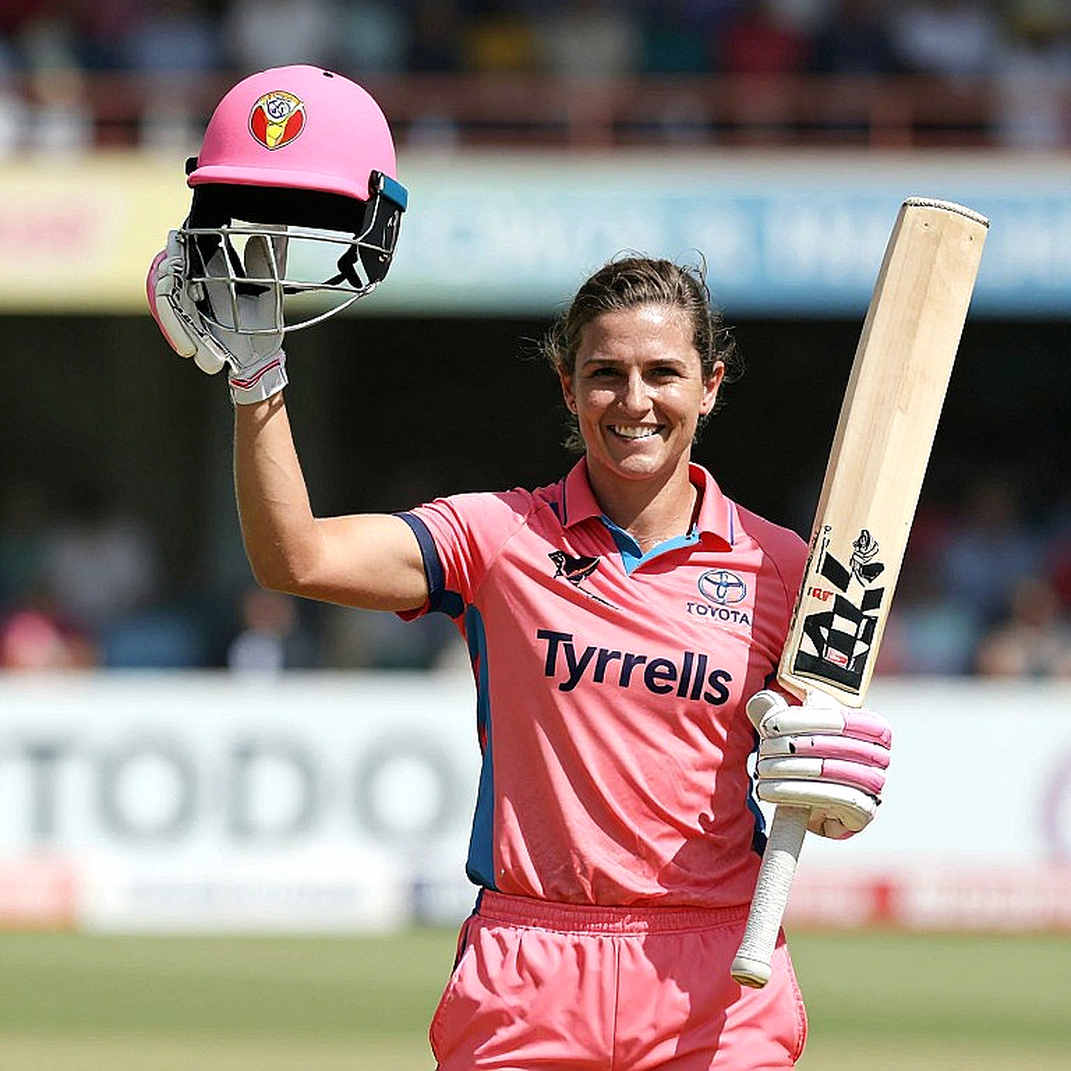
Mackenzie Harvey is 90 not out off 132 balls. Strike rate 68.2. In T20 language that can look slow. In first-class language it is the correct tempo. Facing 132 balls for 90 runs is a profile of occupation plus intent. It is neither pure defence nor pure attack. It is the fourth-innings middle path that tells a bowling attack the wicket is not easy.
Harvey’s public profile has been closer to white-ball top-order batting. His appearance for South Australia implies a state move, usually motivated by red-ball opportunity. That is an inference and should be verified. One innings does not prove red-ball conversion. One innings is a signal, not a trend. But in this match the signal is heavy: 90 off 132 came when the team needed it most, and the stand turned 42 for 1 into 182 for 1.
I have watched enough fourth innings to know that the hardest skill is not acceleration. It is sustaining concentration. A batter who faces 130 balls and is unbeaten on 90 does not tell the bowlers when he will attack. He tells them when he will not. That is occupation. It is precious for South Australia because their lower order is weak. The longer Harvey and McSweeney stay, the longer that weakness stays hidden.
The Technical Value of 132 Balls
Ninety off 132 means Harvey played out more than half the balls in most overs without scoring. That is not a slow innings; it is a risk-managed innings. In a fourth innings the hardest task is leaving good balls, converting bad balls, and not losing concentration in the middle overs. Harvey did that.
A strike rate of 68 matters more when the target is 422. At 80-90 the risk rises. At 45-50 the pressure rises and Western Australia begin to feel a wicket is coming. Sixty-eight is neither too fast nor too slow. It is the market rate of a fourth innings.
I have watched Adelaide Oval enough to know that when the surface is flat, a batter can wait for the ball. Harvey used that patience. He did not tell the bowlers when he would attack. He told them when he would not. That is the difference between winning and losing a fourth innings.
McSweeney’s Stacked Value
Nathan McSweeney is 57 not out. The balls faced are not stated. But a captain’s unbeaten half-century in a 422 chase is worth more than the runs. He also took the wicket of Ashton Agar, the ball that broke Western Australia’s most stubborn stand. A captain batting at 57 in the top order and taking the biggest breakthrough with part-time spin is the highest-leverage individual performance of the match.
McSweeney’s Test exposure is publicly associated with the 2026-25 cycle; that should be verified against current records. If correct, this innings is not merely a state scorebook entry; it is a selection-relevant data point. A captain who is unbeaten in a fourth-innings chase of 422 and contributes with the ball is the definition of stacked value. Team management want such a player in the top order because he does two jobs in one slot.
One caution: 57 not out does not prove McSweeney is a fourth-innings specialist. It is one match of data. The gap between a good innings and a durable skill should show in the ledger. Within this match, though, his contribution is the largest because he added value on both sides — runs and wickets.
McSweeney’s Captaincy
Captaincy is not only field settings. It is when you bring a bowler and when you surround a batter. McSweeney brought himself on to bowl Agar. It is a small decision with a large signal: when the team needed a breakthrough, the captain trusted his part-time spin. That is confidence and risk at once. If Agar had not been out in that over, the captaincy would have been questioned.
The real test of fourth-innings captaincy is the time between wickets. When a partnership is going, the captain must decide when to attack. McSweeney has the double pressure of staying at the crease with Harvey. He must save his own innings and take the team to 240. That is why his 57 not out is not just 57 runs.
Richardson’s Managed Workload
Richardson’s “inspiring” spell on day two is mentioned without figures. The information is incomplete. Still, the decision not to enforce the follow-on and the report’s language together suggest his overs are being managed. That is sensible for a fast bowler with a long injury history.
Had Western Australia enforced the follow-on, Richardson would have had to bowl a second spell the same day. The effect could have shown later. The captain did not choose it. He kept his fast bowler fresh and invited South Australia to bat again. It was a trade between bowling health and match health.
The Tail’s 90 Runs
Western Australia were 79 for 6. They reached 169. The last four wickets added about 90 runs. Ashton Agar made 48 off 101 balls. That is the single largest arithmetic swing of the match. Without Agar and the tail, the target would have been around 330-350. The difference between 422 and 340 is enormous in a fourth innings. A chase of 340 is hard; a chase of 422 is at the upper tail of history.
Agar’s 101-ball 48 is a genuine first-class skill. It is the innings of a Test-experienced lower-order batter who survives a crisis and raises the price. He did not just add runs; he ate time, tired the bowlers, and put the idea of a 96-over final day into South Australia’s mind. That is the tail-end add-on. A chase’s price is not set only by the top order; the lower order adds to it, and here it added plenty.
The Economics of Agar’s 101 Balls
One hundred and one balls for 48 runs is roughly two sessions of time. In fourth-innings preparation that time is valuable. When the tail holds, the opposition bowlers bowl more overs, their legs get heavy, and their new-ball edge is blunted in the next innings. Agar did exactly that. He tired South Australia’s fast bowlers and pushed the target from 330-350 to 422.
That is the economics of a lower-order 48. The scorebook says 48. The match arithmetic says a 90-run stand. The psychology says it is the brick that cracks the opposition’s confidence.
Doggett’s 4 for 51
Brendan Doggett took 4 for 51 and was described as South Australia’s best bowler. In an innings of 169, 4 for 51 means he did not merely feast on the tail; he built sustained pressure. Exact overs are not given, but an economy near 3 would make it a first-change enforcer’s spell rather than a new-ball spearhead’s. The distinction matters because role changes at the next level change the meaning of the figures.
The Liquidity of Nine Wickets
South Australia’s first innings was 154. That is the structural weakness. After Harvey and McSweeney, the lower order drops off. If the pair are separated, the route from 182 for 1 to 250 for 6 or 260 for 7 opens. That is Western Australia’s best hope. They have spinners like Rocchiccioli, and on a fourth-innings surface the spinner’s role grows. If the surface is slow, the question is less turn than bounce and patience.
I would call this chase a two-wicket bet. South Australia are not paying 240 runs; they are paying for the wickets of Harvey and McSweeney. While those two are at the crease, the team’s risk is controlled. The moment one falls, Western Australia’s market opens. That is fourth-innings psychology: you do not bat 240 runs, you bat one partnership, then the next. Every partnership sets a new price.
The good news for South Australia is that the required rate is about 2.5. That is not a pressure rate. Teams do not lose fourth innings at 2.5; they lose wickets. If South Australia bat 90 overs and make 240, they win. The problem is that batting 90 overs requires nine wickets, and they have two reliable batters. That is the real tension.
Pitch, Rain, Second New Ball
Adelaide Oval’s drop-in pitch tends to seam early, flatten, then slow. Day two produced 18 wickets; day three produced 182 for 1. That fits the profile. If the surface slows further on day four, seam and reverse swing become less likely, and the spinners must bowl long spells. For Western Australia that is a two-way bet: they need one more spell from Richardson, but if he cannot deliver, the spinners may have to bowl 30-40 overs.
Light rain is forecast for Saturday. First-class cricket does not use DLS. The effect will come through lost overs. If 10-15 overs are lost, South Australia’s time shrinks, but at 2.5 an over, 80 overs are still enough. The real risk is not time but rhythm. Rain breaks give bowlers rest and break batters’ concentration. In a fourth innings that small factor can become large.
The second new ball is the most important estimated point of the match. If South Australia have batted 45-55 overs, the 80-over mark is 25-35 overs away. Then Richardson gets the new ball and Western Australia get a clear chance. If South Australia are around 250-270 by then, the match tilts their way. If a wicket falls before the second new ball, Western Australia’s door opens.
The Contrarian Window
The official narrative is that South Australia “could have been forgiven for batting for survival” and that this is a “blockbuster final day.” I treat that as editorial colour, not analysis. The scoreboard says they are chasing, not surviving. With 240 runs and nine wickets, you are not playing for survival; you are setting the price of victory. The survival language is an old habit: a big fourth-innings target makes reporters write the draw story. The draw is unlikely here because the final day has 96 overs and only light rain is forecast. The report itself expects a result one way or another.
The second point is that the real pressure is on Western Australia. They passed up the follow-on, set 422, and now have one day. If South Australia win, the question will be why the follow-on was not enforced. If Western Australia win, the captain will be credited with keeping his fast bowler fresh. That is the captaincy ledger: every decision can be proved right or wrong after the result. As a process, this one was a gamble.
The third point: the price of 422 looks high, but the liquidity of nine wickets is undervalued. People see 422 and say it is too big. They do not see 96 overs and nine wickets. In a fourth innings, the probability of victory is set by resources, not only by the target. Here the resources are adequate. The risk is that they are concentrated in two batters. That is the real story, and it is a story of concentration risk more than a blockbuster.
The fourth point: the “two-time defending champions” line needs an audit. The public record of the early 2020s shows Western Australia’s run of titles. If the line is wrong, it is not a small slip; it shows how quickly the file was put together. The report has neither source nor date. Every interpretation should be read with care. I keep the line aside, and I would advise readers not to repeat it without verification.
The Next Domino
The first hour on Saturday will set the price. If Harvey and McSweeney survive the first 10-12 overs, Western Australia’s plan begins to fray. If Richardson takes a wicket before the second new ball, the 422 ask becomes real. I will not watch only the score on Saturday; I will watch when the second new ball comes, when Rocchiccioli is allowed to attack, and how McSweeney shields his lower order. Follow the money long enough and it stops being a story about money. Here the money is runs, and the story is wickets. The next domino is the follow-on decision: if South Australia win, it will look like the most expensive mistake of the match; if Western Australia win, it will look like the smartest move. The ledger will hold both, and Saturday evening will settle the account.