
Victoria's 138-Run Win: The DLS Arithmetic, the Bonus-Point Clause, and Perry's Six Overs
**मुख्य उत्तर:** विक्टोरिया ने टास्मानिया को 138 रन (डीएलएस) से हराया। विक्टोरिया ने 50 ओवर में 7-304 बनाए; बारिश के बाद टास्मानिया का लक्ष्य 35 ओवर में 276 तय हुआ और वह 25.2 ओवर में 137 पर ऑल आउट हो गया। मिशेल पेरी ने छह ओवर में 4-9 लिए। **मुख्य तथ्य:** - विक्टोरिया: 7-304 (50 ओवर)। मैथ्यू शॉर्ट 70 (91 गेंद), रोजर्स 53 (49), कैंपबेल केलावे 69 (71)। - टास्मानिया: 137 ऑल आउट (25.2 ओवर); नई गेंद के दौर में स्कोर 4-40 था। - मिशेल पेरी: 6 ओवर में 4-9; शुरुआती स्पेल में 5 ओवर में 2-6। - डीएलएस ने लक्ष्य 305/50 ओवर से 276/35 ओवर किया; ज़रूरी दर 6.08 से 7.89 हुई। - 138 रन का अंतर पैरा-स्कोर गणना है, असली रन-अंतर नहीं; यह बोनस-पॉइंट जीत दर्ज है। **स्रोत:** cricket.com.au, रिपोर्ट "Perry, Short fire as Victoria crush Tasmania in Cup"। प्रकाशन की सटीक तिथि स्रोत लेख में उपलब्ध नहीं है, अतः यहां दर्ज नहीं की गई। **संबंधित प्रश्न-उत्तर:** प्रश्न: टास्मानिया का संशोधित लक्ष्य क्या था और क्यों? उत्तर: बारिश के कारण डीएलएस के तहत लक्ष्य 35 ओवर में 276 कर दिया गया, जिससे ज़रूरी दर 7.89 प्रति ओवर हो गई। प्रश्न: टिम डेविड का प्रदर्शन कितना महत्वपूर्ण था? उत्तर: वे 13 रन पर आउट हुए और यह टास्मानिया के लिए 2021 के बाद उनका पहला लिस्ट ए मैच था, इसलिए मुद्दा फॉर्म नहीं, फॉर्मेट-एक्सपोज़र है। प्रश्न: कैंपबेल केलावे के टेस्ट दावे का आधार क्या है? उत्तर: उनका 2022 का 105* नाबाद स्कोर मज़बूत संकेत है, पर शेफील्ड शील्ड में 26.78 का औसत और इस गर्मी के 70 रन दावे को अभी समर्थन नहीं देते।
Mitchell Perry finished his fifth over in Hobart, the scoreboard read 4-40, and that evening I wrote exactly one line in my notebook — this match will now be settled by Perry, not by the rain. Two hours later the headlines arrived: "Perry and Short fire as Victoria crush Tasmania by 138 runs." The number is correct. The reading of it is half-finished. Tasmania were bowled out for 137 in 25.2 overs, and the 138-run margin is manufactured by the DLS resource table, not by a run-fight that happened on the field.
The bid book arrived, and the rumour died on page one. There is no bid book here — there are Cricket Australia's One-Day Cup playing conditions, the DLS par-score table, and the bonus-point clause nobody quotes. Until those three are read, this match is a scorecard. After they are read, it is a regulation with a television slot and a league table attached.
Let me walk you through the document before we touch the drama.
Context: what this match was actually being played for
The Cricket Australia One-Day Cup is a domestic List A tournament — fifty overs, two full innings, and a points table where bonus points sit alongside wins. That bonus point is the real character in this story, and it is exactly what the headline buried.
Victoria batted first because Tasmania won the toss and chose to field. That choice is itself a statement: rain was forecast in Hobart, and the home side believed fresh-ball advantage could put the opposition under pressure. For ten overs that read looked correct — and then Matthew Short and Rogers put on 92 for the first wicket at better than a run a ball. Short made 70 off 91, Rogers 53 off 49. A second-wicket stand of 79 with Campbell Kellaway (69 off 71) followed, and the lower order dragged the total to 7-304 in 50 overs.
That 304 was not an explosive score. It was a total built on a twenty-five-over foundation and extended by the last ten. On a day with rain in the forecast, 304 means the batting side refused risk through the middle overs — no wickets lost, no rate spike.
Then the rain came. The second innings was interrupted, the target was revised from 305 in 50 overs to 276 in 35. The required rate jumped from 6.08 to 7.89, and shortly afterwards the broadcast was quoting something close to ten an over. Tasmania were bowled out for 137 in 25.2 overs.
Core: the three documents the scorecard does not show
One — the 138-run margin is an arithmetic convention, not a cricketing fact
What has to be understood here is what being bowled out means under DLS. When a side is dismissed, it is treated as having exhausted its resource — both the 35 overs and the ten wickets are gone. The margin is therefore measured against the par score for that 35-over allocation, roughly 275. Tasmania fell for 137, so the margin reads 138.
That number compresses two different things into one: genuine bowling dominance (137 all out) and a rule-based subtraction from a par score. In a headline they look identical. In analysis they are not.
I press this because thirty-plus years of reading scorecards teaches one thing: the biggest number in the headline is usually the one carrying the least information. 138 tells you the match was one-sided. It does not tell you where it was decided, who decided it, or what it was worth on the table.
Two — Perry's spell was the decisive event, not the rain
A DLS revision only becomes decisive if the chasing side is still alive when the target changes. At 4-40 Tasmania were already beaten as a cricket matter. The rain did not defeat them; it merely gave the defeat a different arithmetic shape.
Perry's figures: 4-9 off six overs, economy 1.5. Opening spell: 2-6 in five. Six overs out of a 25.2-over innings is roughly a quarter of the innings — this is a phase award, not a workload award. Player-of-the-match recognition here reflects leverage, not volume.
An honesty note I will not skip: this source provides no season aggregate for Perry, no career List A record, no pitch report. That does not make the performance small. It makes its career significance unknown. The transferable signal is not the 4-9; it is the 2-6 in the first five overs — new-ball wicket-taking is the skill that projects upward. Tail-end figures project less well.
Three — Short's 70 off 91: occupation, not dominance
This is where I part with the official story. The report says Short "confirmed his white-ball credentials." 70 off 91 is a strike rate of roughly 77. The modern ODI opener benchmark is 85-95; in an attacking-opener role it should be 95-plus.
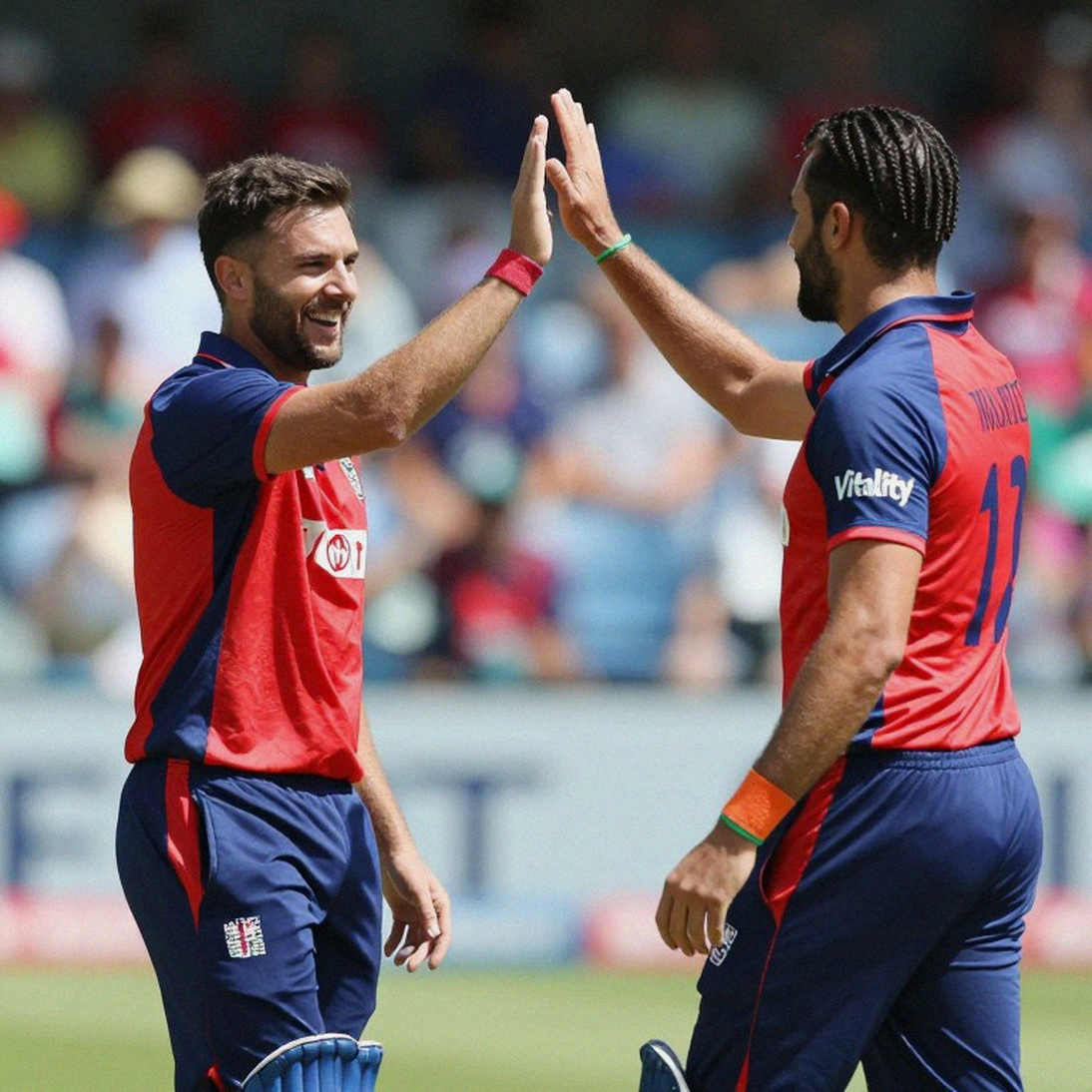
A 70 at a strike rate of 77 is a volume innings, not a dominance innings. It proves occupation of the crease, not the boundary-dominant hitting the phrase "white-ball credentials" implies.
There is a nuance that favours Short and that the scorecard hides. Rogers made 53 off 49. The partnership ran above a run a ball even though Short individually did not. A two-paced opening stand has to be read as a partnership, not as an individual.
The real issue is variance, not technique. Three consecutive ducks against Pakistan and Bangladesh, three fifties in the seven innings around them. That is not a form curve, it is a bimodal output profile — two different players under one name. At thirty, such profiles have limited cycles left.
And do not carry this innings into the ODI arena. A List A knock in Hobart says nothing about Short against international new-ball bowling on flat subcontinental decks — which is exactly where the three ducks happened.
Four — Kellaway: the article's sharpest document-versus-narrative contradiction
Campbell Kellaway made 69 off 71, a strike rate near 97. In a one-day match that is a good innings, no argument. But when he is called a future Test batter, I have to read the document that is not a one-day scorecard.
Last summer's Sheffield Shield: 506 runs at 26.78, one century. Shield top-order par is generally treated as 35-40. This summer: 70 runs in four innings. For Australia A against India A: 2 runs in total.
That is a record arguing against imminent Test selection — regardless of a 69-ball 71 in a one-day game. At 23 the development window is open, true. But the gap between label and numbers widens when you remember that his 105* in 2026 against an attack containing Rabada, Ngidi, Jansen and Nortje remains his strongest identity.
One old innings and four recent ones suit the narrative and embarrass the document. I read the clause first; the contradiction was in the punctuation.
Five — Tim David: the story is not 13 runs, it is the absence since 2026
David was dismissed for 13. The story says the chase needed about ten an over after the rain, so this was a no-win situation. That is correct, and the report itself concedes it. The analytical value of the innings is close to zero.
The real finding is not the 13. It is that this was his first List A match for Tasmania since 2026.
A player talking about a 50-over World Cup recall while playing his first domestic 50-over match in three years has a format-exposure problem, not a form problem. ODI selection is normally built on accumulated List A volume. David's pathway has run through T20 franchise cricket — a different technical demand: longer innings construction, spin through the middle, older-ball pace changes.
What slips past most easily is the difference between market value and sporting value. David's market standing is built on T20 hitting. An ODI World Cup is a different technical demand. Treating "Australia T20 star" as all-format credibility is the oldest mistake in every selection debate.
Contrarian: the blind spot in the official account
Now the part where I give the conventional reading one fair sentence, then turn it.
The conventional reading is this: Victoria batted strongly for 304, Perry ended the match with the new ball, the rain made the target harder, and the home side were never in the hunt. That reading is broadly right. I will not overturn it.
What deserves overturning is the way the rain is presented as an injustice — as though Tasmania were robbed of their "real" 50-over chance. A 35-over chase of 276 is a standard DLS outcome, not a miscarriage. Yes, the required rate moved from 6.08 to 7.89 and that was practically a different match. But a side at 4-40 had no realistic route to 305 in 50 overs either.
The rain did remove Tasmania's best available strategy — a long, low-risk 50-over chase — but the ground beneath that strategy had already collapsed at 4-40.
Second blind spot, and it matters more: the headline carries 138, but the table value sits in the bonus point. This is recorded as a bonus-point win, meaning the margin had points value beyond the victory. The significance of 138 lives in the league table, not in the headline. And here I have to accept my own limit: this source does not state the exact bonus-point threshold. I will not write it as verified. No claim on a document I have not read.
Third blind spot is the toss. Victoria were "asked to bat first" — Tasmania chose to field. Was that a defensible read of a rain-forecast morning? Without pitch and weather data, that cannot be answered. When the data is absent, the honest sentence is that the data is absent.
And one thread I will underline throughout, because it is this source's biggest trap: David and Short are both discussed here through a national-selection lens while the evidence is domestic List A. Change the format and the value of the evidence changes with it. A 70 on a seaming Hobart surface and a 70 on a flat subcontinental deck look identical on a scorecard and completely different in a selection room.
Takeaway: what to watch next
The file does not shout; it waits for someone patient enough to read it.
Three things come out of it. First, Perry's next match. If he takes two wickets in the first five overs on a flat pitch in a rain-free game, the spell is a trend. If not, it was one evening — and telling them apart requires the data this report does not carry.
Second, Kellaway's next Sheffield Shield round. Whether the gap between a one-day 69 and a Shield average of 26.78 narrows or widens this season is the actual Test-selection window.
Third, and most interesting — when is David's next List A match? If the answer is again "next year," the World Cup line stops being a documentary claim and becomes a press-release sentence. And I think that is the most honest conclusion available: Tasmania were not beaten by 138 runs; they were beaten on the day their batting plan refused to face the new ball.
The rain only gave the margin a clean number.
The next time someone reads "138 runs" off a scorecard, my question will be: which rule produced this, and who benefited from that rule?