
The Changing Architecture of World Cricket: Format Wars, the Franchise Revolution and the Search for Balance Amid Player Workload
विश्व क्रिकेट के सामने मुख्य चुनौती तीन प्रारूपों — टेस्ट, वनडे और टी20 — के बीच संसाधनों का बंटवारा है। फ्रैंचाइज़ी टी20 लीगों (आईपीएल, बीबीएल, SA20, आईएलटी20, एमएलसी आदि) के विस्तार ने अंतरराष्ट्रीय कैलेंडर को उनकी खिड़कियों के इर्द-गिर्द बदल दिया है, जिससे खिलाड़ी कार्यभार, चोट-जोखिम और राष्ट्रीय टीम के प्रति उपलब्धता पर दबाव बढ़ा है। आईसीसी का राजस्व मुख्यतः भारतीय प्रसारण बाज़ार पर निर्भर है, जिससे राजस्व वितरण और नियंत्रण को लेकर छोटे सदस्य देशों में असंतोष है। टेस्ट क्रिकेट को विश्व टेस्ट चैम्पियनशिप से कुछ स्थिरता मिली है, पर उसका ढाँचा असमान है और वह कुछ ही देशों में आर्थिक रूप से टिका है। द्विपक्षीय सीरीज़ का प्रतियोगितात्मक अर्थ कमज़ोर पड़ रहा है। महिला क्रिकेट (डब्ल्यूपीएल के माध्यम से) सबसे तेज़ी से बढ़ता क्षेत्र है, पर निवेश असमान है। लॉस एंजिल्स 2028 ओलंपिक में टी20 क्रिकेट का समावेश वैश्विक विस्तार की दिशा में महत्वपूर्ण है। सुधार के लिए अनिवार्य कैलेंडर खिड़कियाँ, स्वतंत्र कार्यभार निगरानी, विकास-आधारित राजस्व वितरण और टेस्ट क्रिकेट के लिए पृथक वित्तपोषण आवश्यक माने जाते हैं।
World cricket is passing through one of the most complex transitions in its history. This transition is not confined to the technical changes visible on the field. It is simultaneously affecting four things — the survival of formats, the division of broadcast rights, the physical tolerance of players, and the attention span of audiences. Over the past decade, cricket's economic centre of gravity has shifted rapidly towards T20 franchise leagues, while the international calendar still tries to run on an older framework. The gap between the two systems widens every year, and the first to fall into that gap are the players.
This report is not an analysis of a single match, a single series, or a single board's decision. It is an analysis of the broader landscape that is loosely called 'world cricket' — and within which several competing interests now operate simultaneously. Boards want revenue, broadcasters want continuous content, franchise owners want the best players, players want a safe calendar and assured income, and audiences want a product that neither feels stale nor exhausted. Satisfying all five demands at once is close to impossible. It is precisely this impossibility that defines the politics and economics of cricket today.
Three formats, three separate economies
Cricket's most distinctive structural feature is that it contains three entirely different products within one sport. Test cricket is a five-day examination of patience, whose economic value is created not by tickets sold at the gate but by historical prestige and cultural identity. One-day cricket is a seven-to-eight hour format that now survives mainly around tournaments such as the World Cup; the audience base of bilateral ODI series has been steadily shrinking. And T20 is the format that turned cricket into three hours of television-friendly entertainment — the format attracting the largest capital investment today.
The problem is that all three formats claim the same limited resource: the time and body of top-tier players. A fast bowler who plays all four formats in a year cannot deliver his best in any one of them. This is not merely a question of fitness but of technical specialisation. The rhythm, patience and long spells required to succeed in Test cricket collide directly with the aggression of T20. When a board expects its players to be available across all three formats, it is effectively asking them to be three different cricketers.
Test cricket: tradition versus viability
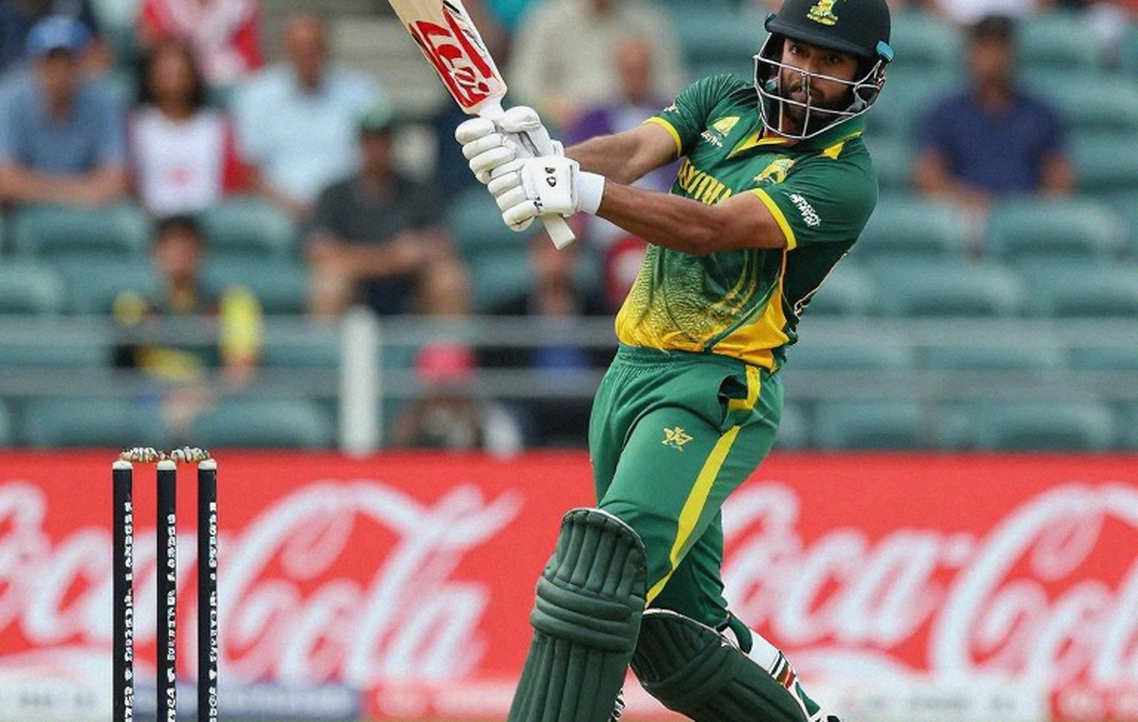
Test cricket is still considered the sport's highest standard, but that standard is now economically anchored within only four or five countries. Test series between England, Australia and India still attract audiences and revenue. But when it comes to Bangladesh, Zimbabwe, the West Indies or Sri Lanka, Test matches are often played in empty stadiums and their broadcast value keeps falling. This paradox is Test cricket's biggest weakness — it is called the soul of the game, yet only a few boards can afford that soul.
In recent years, several bilateral Test series have been shortened to make room for domestic T20 leagues, and in many cases the number of matches per series has been reduced. This is no accidental decision. When a board faces a choice between playing three Tests in October or competing in a two-month franchise league, the economic logic points clearly towards the league. Efforts to protect Test cricket so far have largely been emotional and cultural rather than structural.
The impact of the World Test Championship
The World Test Championship (WTC) was the most concrete attempt to give Test cricket a tournament structure. It connected bilateral series to a points table and made Test matches result-oriented. The final match did genuinely attract audience and sponsor attention. But the WTC structure remains unequal — not every team plays the same number of matches, the ratio of home to away fixtures differs, and the points system gives some teams a more favourable schedule than others. That inequality deepens with the fact that some teams play fewer Tests for financial reasons, which itself limits their scope for improving their ranking.
Despite this, the WTC has one positive aspect — it created a 'narrative framework' for Test cricket that broadcasters can market. For the sport, prestige is currency, and the WTC has partially restored that currency. The question is whether this model can, in the long run, also include those countries that lack adequate audiences or broadcast markets for Test cricket.
Franchise cricket: the new centre of the calendar
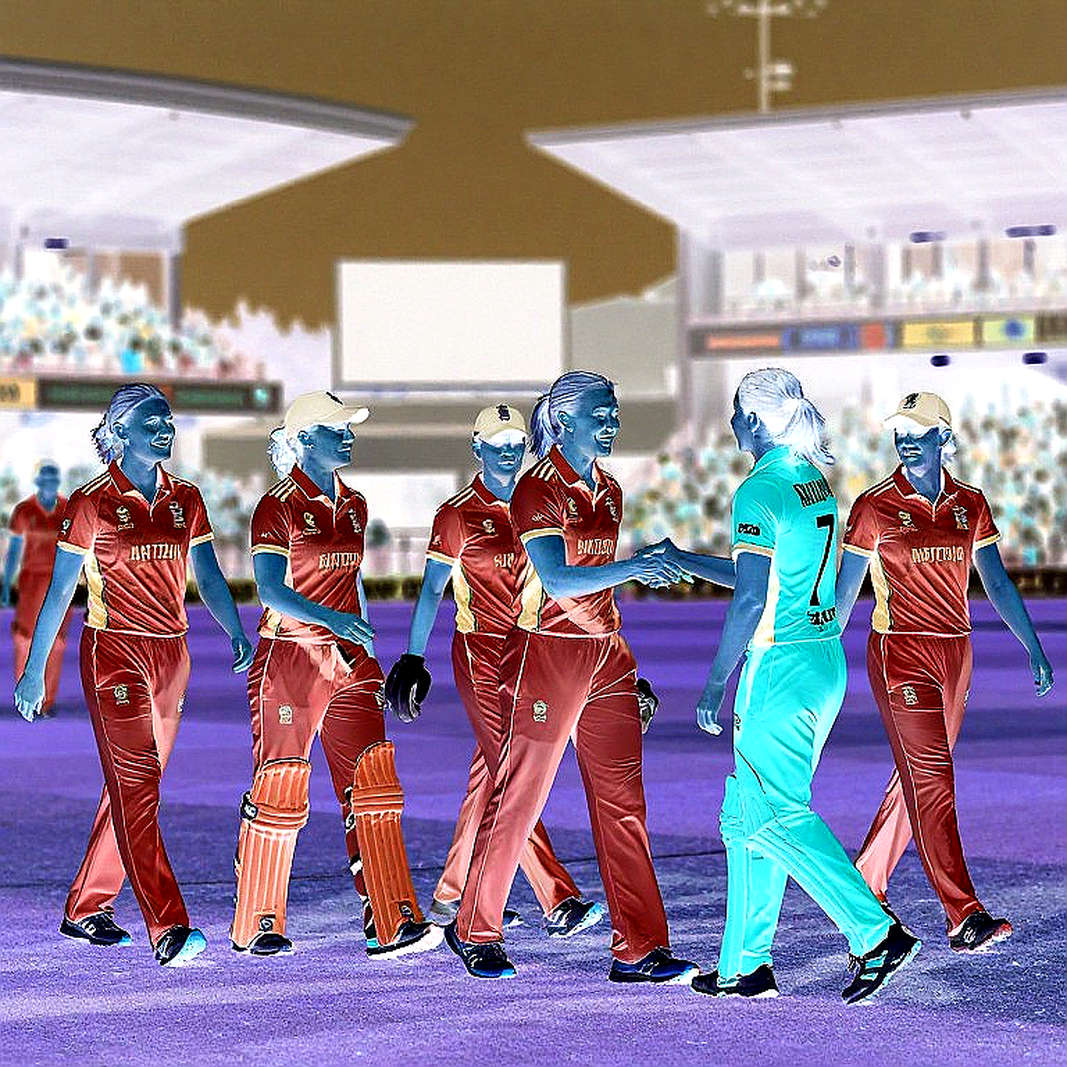
If one thing has fundamentally changed in cricket over the past fifteen years, it is the centre of the calendar. Previously, international tours formed the basis of the calendar and leagues were squeezed in between them. Today the situation is reversed — windows for franchise leagues are fixed, and international series are arranged around those windows. The Indian Premier League is the largest example of this shift, but it is not the only one. The Big Bash League, Caribbean Premier League, Pakistan Super League, Lanka Premier League, Bangladesh Premier League, South Africa's SA20, the UAE's International League T20, America's Major League Cricket and England's T20 Blast — together they have created a parallel ecosystem that operates separately from international cricket, with its own rules and its own economy.
The strength of the franchise model lies in its economic structure. In a league, a team is tied not to a city but to a company. The player does not represent a national team but a brand. For the audience, this emotional connection is shallower, but commercially it is more durable — because the cricket fan gets three hours of entertainment every year without needing to remember what the result of the previous series was.
IPL's dominance and its export model
The IPL is the biggest commercial phenomenon in world cricket, and its influence is no longer confined to India. Its most important contribution is not technical but structural — it proved that cricket can be sold as a prime-time television product. This model was later adopted by several countries that built their own local leagues. South Africa's SA20 and America's Major League Cricket are results of this export, with direct investment from Indian companies and IPL franchise owners.
This expansion has two sides. First, it took cricket to global markets, especially a country like the United States where cricket was traditionally marginal. Second, it has created direct competition with international cricket. When a player earns more from a franchise league in one month than his annual central contract, maintaining loyalty to the national team on patriotism alone becomes difficult.
Player workload: body, mind and contract
Player workload is the sharpest problem in world cricket today. It is not simply a question of the number of matches but of the combined burden of travel, training, sponsor obligations and mental fatigue. For a fast bowler like Jasprit Bumrah, this burden is especially severe, because the intensity of his bowling and the tolerance of his body are directly linked. When he plays continuously across all three formats, injury risk only rises — and when injury occurs, the damage must be borne by the board, the franchise and the broadcaster alike.
Senior players such as Rohit Sharma and Virat Kohli have adopted a clear strategy regarding format selection in the final phase of their careers, signalling that players are now compelled to manage their own workload. Captains such as Pat Cummins and Ben Stokes have also at various points chosen to rest themselves — an important cultural shift, because such decisions were once seen as a lack of commitment. They are now increasingly viewed as professional management.
But no individual decision can solve a systemic problem. Until a mandatory and universal system of windows exists in the calendar, each board will continue to act in its own interest and each player will have to strike separate arrangements to protect his career.
Injury management and the politics of central contracts
The purpose of the central contract system was to ensure that players do not play extra matches under financial pressure. But in practice the system has weakened since the rise of franchise leagues. A player now has two income streams — a contract with the board and a contract with a league. When the two clash, the board has only limited means of restraint. Several boards have tightened the conditions of the No Objection Certificate, but that is administrative control, not a solution.
Injury management is even more complex. A national team's medical staff may advise a player to rest for an extended period, while the franchise wants to see him play in the next season. In this contradiction, the player's recovery often gets squeezed. The pattern is clear in the careers of fast bowlers such as Kagiso Rabada — intensity, injury, return, re-injury. This is not an individual weakness but a systemic failure.
The crisis of bilateral cricket
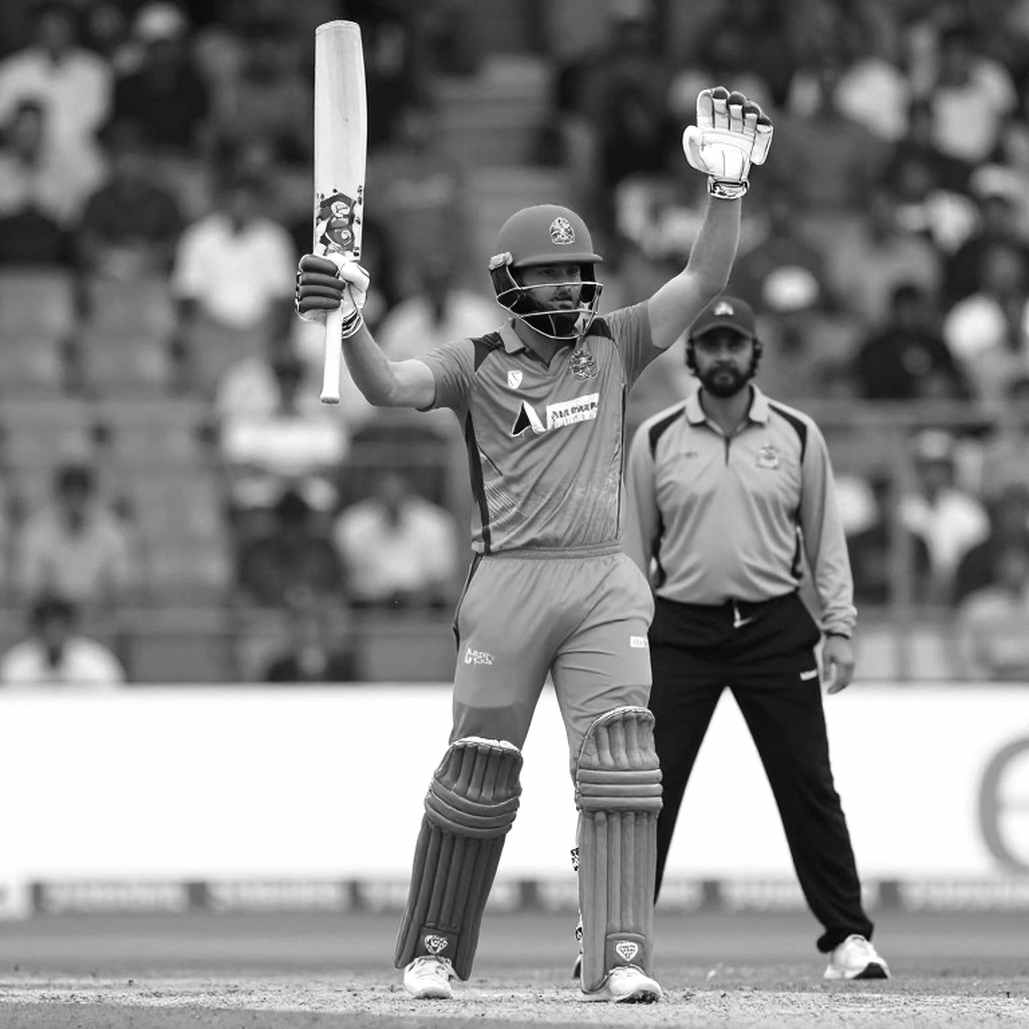
A large part of the international calendar is still filled with bilateral series, most of which exist only because of financial agreements between two boards. These series carry no global competitive significance, no trophy, and often no clear narrative. Audiences watch them because their favourite player is playing, not because the series means anything.
This is exactly where franchise leagues have gained an edge. In a league, every match is connected to a points table, every match has a defined dramatic structure, and the season ends with a clear winner. The real challenge before cricket administrators is how to give bilateral series the same level of meaning. There have been some attempts — such as points systems like the ODI Super League — but their presence has never sunk as deeply into the viewer experience as a franchise season does.
ICC's revenue model and the balance of power
The operation of the International Cricket Council (ICC) today faces a fundamental contradiction. It is a global regulator, but its revenue comes primarily from a single market. The Indian broadcast market is the largest source of ICC income, and for this reason India's share in revenue distribution has been the largest. Grievances among smaller member nations over this arrangement have persisted for a long time — their argument is that the regulator of a global sport should distribute globally, not on a market basis.
This debate is not only about money but about control. The board that contributes the most revenue inevitably has the greatest influence over the calendar, formats and the composition of committees. This creates the risk that the priorities of smaller member nations — such as adequate international opportunities, development funding and infrastructure — will always come later. In the long run, this imbalance weakens the very global character of the sport, because countries without opportunities will not be able to produce competitive players either.
Women's cricket: the second engine
In recent years, women's cricket has been the fastest-growing segment of world cricket. The launch of the Women's Premier League created, for the first time, a commercial platform for women players in which both their income and visibility grew rapidly. Players such as Smriti Mandhana and Harmanpreet Kaur are no longer merely players but brands — and this shift matters, because historically women's cricket's biggest weakness was a lack of visibility, not a lack of talent.
But this growth is uneven. The investment women's cricket is receiving in India, Australia and England is not matched in many other countries. In several national boards, women players still do not have full-time contracts. This gap signals that the expansion of women's cricket is currently market-driven rather than policy-driven. If it is left to the market alone, in the coming years it could fall prey to the same centralisation already visible in men's cricket.
Emerging cricket nations and new markets
The Afghanistan cricket team is the most inspiring example of the past decade — despite limited resources, it established itself internationally, and players such as Rashid Khan have become among the most sought-after names in the global franchise market. Countries such as Nepal, Oman and the Netherlands have also made notable progress with limited opportunities. Cricket's entry into the United States, especially through hosting major events, could change the geography of the sport in the long term.
But here too the old problem persists — inequality of opportunity. Emerging nations often have to play major tours at times when top players are resting, or in tournaments with minimal broadcast reach. Development does not come merely from playing matches; it comes from competition, training facilities and consistent opportunity.
Technology: beyond decision-making
Technology has fundamentally changed decision-making in cricket. DRS, UltraEdge, Hawk-Eye and Snickometer have substantially reduced the error rate of umpiring. But the impact of technology is no longer confined to decisions. Data analysis of player movement, biomechanical assessment of bowling actions, injury-risk forecasting and analysis of opposition strategy — all of these are now part of high-level cricket. Artificial intelligence-based analysis tools have become standard for teams.
There are two consequences. First, the sport has become fairer and more professional. Second, access to technology is creating a new inequality. Boards with data-science teams and modern facilities are pulling ahead of those with only basic resources. Technology has not eliminated the gap; it has re-established it at a new level.
The Olympics and global re-entry
The decision to include cricket in the T20 format at the Los Angeles 2028 Olympics is a historic step towards the sport's global expansion. This decision matters not only for the sport but for the market — the Olympic platform can take cricket to countries where its presence has so far been limited. For India and other cricket-heavy nations it is a question of medal potential; for the global sports economy it is a question of a new market.
But the success of cricket at the Olympics will depend on whether the event remains merely a showcase or genuinely creates competitive balance. If the gap between top teams and emerging teams remains as it appears in international T20, then the Olympic stage too will become a stage for only four or five teams.
Fans, broadcast rights and product fatigue
There is one aspect that receives the least attention — audience fatigue. Cricket is now available year-round. Where once a major series was awaited for months, now a significant match is available every week. Economically this is beneficial, because broadcasters get continuous content. But culturally it is damaging, because when every match is important, no match remains special.
Franchise leagues have somewhat reduced this fatigue, because their seasons are of limited duration and have a clear dramatic structure. But as their number grows, the same problem returns. If six or seven major T20 leagues are running through the year, it becomes difficult for the audience to distinguish which event really matters.
The direction of reform
Some concrete steps are necessary to emerge from this situation. First, a universal and mandatory system of calendar windows — with fixed periods for franchise leagues during which no international cricket is played, and vice versa. Second, an independent scientific monitoring body on player workload, driven not by the interests of boards but by player health. Third, an expansion of the development-based component in ICC revenue distribution, so that smaller member nations are not deprived purely on the basis of market share. Fourth, reform of the structure of bilateral series so that they acquire clear competitive meaning. Fifth, a separate funding model for Test cricket that supports its cultural role rather than leaving it at the mercy of the market.
Conclusion
World cricket today is struggling not with a single crisis but with the pressures of its own success. The very reasons the sport became popular — diversity of formats, franchise entertainment, global reach — are now creating tension within it. Players such as Shubman Gill and Joe Root represent different kinds of career possibilities, while players such as Kane Williamson and Steve Smith show how difficult it is to maintain the top level across all three formats.
The real question is not which format will survive. The real question is whether cricket has the administrative will to place long-term stability above short-term revenue. The record so far is not encouraging — responses usually come only after a crisis has already occurred. But in the history of sport, the opportunity for structural reform does not always come twice. If it is missed this time, the next generation will inherit a cricket that is economically richer but competitively narrower and administratively more centralised.