
Captaincy call sets Sutherland up for success in WBBL|12
मेलबर्न स्टार्स ने WBBL|12 के शुरुआती मैच में मौजूदा चैंपियन हॉबार्ट हरिकेंस को 18 रन से हराया। एनाबेल सदरलैंड ने 36 गेंदों पर 57 रन बनाए और चार ओवर में 34 रन देकर 3 विकेट लिए। मेग लैनिंग के कप्तानी संभालने और सदरलैंड के उप-कप्तान बनने से भूमिका स्पष्ट हुई; हालांकि यह निष्कर्ष एक मैच के नमूने पर आधारित है और पूरे सीजन में साबित होना बाकी है।
Melbourne: The opening night of WBBL|12 gave Melbourne Stars exactly the kind of start a team hopes for after changing its captaincy. Stars beat reigning champions Hobart Hurricanes by 18 runs, with Annabel Sutherland contributing in both departments: 57 off 36 balls and 3-34 from four overs. Those numbers matter, but the bigger story is how Sutherland's game opened up after the captaincy burden was removed. Meg Lanning returning as captain and Sutherland moving back into a deputy role gave the batting structure a clarity that turned the opener into more than just a win; it offered a template.
Sutherland had taken the Stars captaincy two seasons ago at just 23. At the time, she was seen as one of Australia's biggest future faces, and leadership was part of that profile. Her side reached the finals in WBBL|11, so the captaincy was not a failure. But sometimes the right call is to make a player bigger by reducing the leadership load. Lanning taking charge for a third stint and Sutherland becoming a sounding board is exactly that kind of move. Lanning spoke of a collaborative approach, and Sutherland's presence around the leadership group keeps continuity intact. This should be read as role clarity rather than demotion.
The match shape suggests Stars batted first and defended. An 18-run win and a 109-run partnership strengthen that reading, although the toss and innings order are not officially stated in the available material. If that was the case, Sutherland's four overs came in the second innings, plausibly including the death. An economy of 8.50 should then be viewed as the price of higher-risk overs, not simply an expensive spell. Three wickets show she did not just contain; she broke the chase at important moments. Bowling a full four-over quota is itself a sign of the team's trust in her as a front-line option.
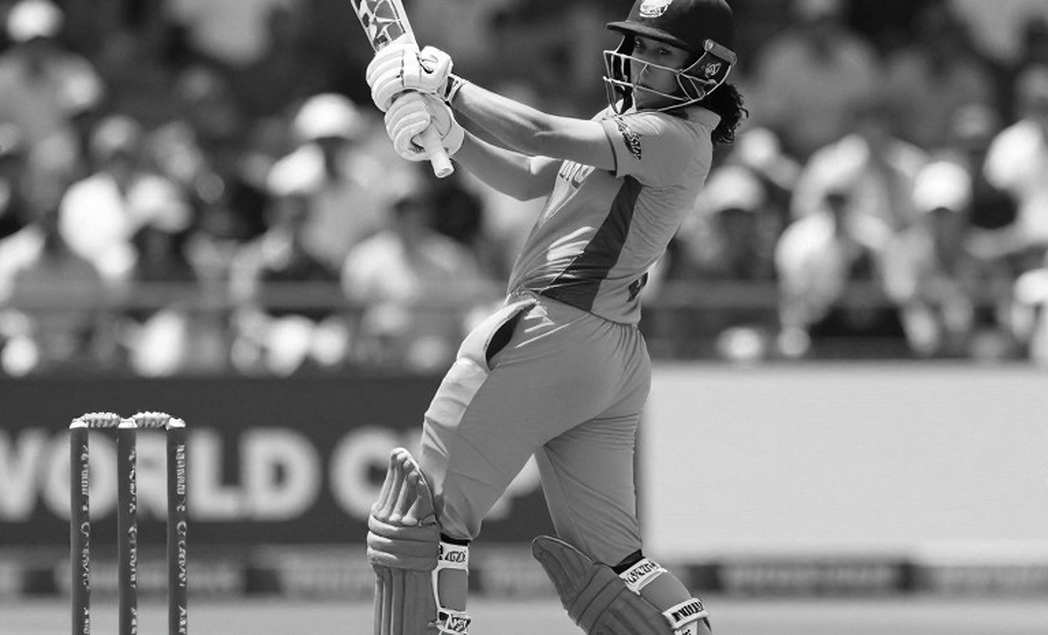
With the bat, 57 off 36 means a strike rate of 158.33. It was not just a quick innings; it was the kind of innings that gives a team a platform. The 109-run stand with Lanning is the most analytically loaded number of the match. A returning captain and a relieved vice-captain producing a century partnership immediately suggests the leadership reallocation did not damage the batting structure and may have clarified it. For Sutherland, it was a chance to show she is not only useful as a captain but central as a player.
Result versus process matters here because the opponent was the reigning champion. An 18-run win over a weak side and the same margin over Hobart Hurricanes are not equivalent. A champion side carries structural credibility, and beating it in the opener sends a stronger message. But a caution is necessary. This is a one-match sample. Stars play three matches in five days, so treating the opening win as proof for the whole season would be premature. The team itself acknowledges that the first game is always a bit chaotic.
The central data contradiction is format-specific, not merely form-specific. Sutherland's WBBL record at No.4 is an average of 24.97 and a strike rate of 114.56. In The Hundred last season she made 315 runs at 63.00 with a strike rate of 153. Across the past three seasons at No.4 in The Hundred, she averages 48.86 at a strike rate of 141. Same batting position, two competitions, radically different output: roughly 26 strike-rate points and 24 average points apart. Attributing that gap to mentality alone would be an under-specified diagnosis.
Three explanations are most plausible. First, role licence: at Stars she has often batted as an anchor in a line-up that needed someone to hold an end, while Hundred sides give a No.4 a clear aggression mandate. Second, format incentive: the 100-ball game's 10-ball sets and 20-ball-per-bowler cap reduce the value of accumulation and inflate boundary-hitting. Third, sample composition: 46 WBBL innings across multiple seasons and changing team contexts versus a tighter Hundred sample. If the gap is mainly role-driven, the fix is a coaching and selection lever, not a psychological one. The captaincy handover may be necessary but is not sufficient on its own.
Her T20I record should not be used against her. Batting at No.7 with limited opportunities and returns of 10 and 9 is a structural artefact of Australia's batting depth, not a skill verdict. The meaningful signal is that national selectors have not yet given her a top-five T20I slot. That is precisely why this WBBL season is an audition. Her 50-over form is stronger: recent ODI scores include 74 not out and 25 not out. She has won back-to-back Belinda Clark Awards and was player of the tournament in The Hundred. The red-ball and 50-over trajectory is rising sharply; the WBBL T20 output is still flat.
The bowling side should be treated as the stabiliser of her all-round value. Sutherland debuted in the WBBL at 15 as a pace bowler and worked her way up the order. That means her floor is a front-line seam option, with batting as the upside. For a T20 side, that combination is the scarcest squad commodity. Her age curve is also favourable. She took the captaincy at about 23 and is now around 25, inside the ascending phase for a batting all-rounder, though the pace-bowling component carries an earlier physical peak. The next 24 to 36 months are her maximum-value window.
In team structure, Stars are strong at the top but thinner in the middle. Lanning and Sutherland form the batting spine. Marizanne Kapp's exit removes a middle-order overseas anchor, making Sutherland's middle-order output more important than ever. The bowling combination looks balanced, with both spin and pace, and Charlie Dean has been singled out for praise. Bench depth is hard to assess because full squad-list data is not available. Kapp's departure and Sutherland's four-over quota suggest a relatively thin overseas and all-rounder reserve.
Fixture density will be the real test after this start. Stars play three matches in five days: Thursday, Saturday and Monday, including travel to Adelaide, a return to Melbourne and a Melbourne Cup eve fixture. That implies rotation of pace workloads. Sutherland may not bowl four overs in every game. A night match raises a possible dew factor for the second innings, but with no conditions information, no firm assessment is possible.
The leadership model carries its own risk. A collaborative captaincy works while Lanning is available and in form. If Lanning is absent, the burden could return to Sutherland. Her vice-captaincy is therefore not merely ceremonial; it is a contingency leadership preparation. Stars must manage that balance across the season.
Evidence discipline is essential. The thesis that the captaincy call worked currently rests on one innings and one spell. Toss, DRS, dropped catches, dew and venue are unrecorded. Without those factors, the 18-run margin cannot be treated as a precise performance gap. Mixing WBBL, Hundred and T20I data into one conclusion is also risky because the formats are different. Injury history is not supplied, which is a material omission given the pace workload.
The next fixtures will show what batting licence Sutherland is given. If she can bring Hundred-style aggression into the WBBL, both she and the team benefit. A continued four-over quota will strengthen her all-rounder value. A strong WBBL season would also open the path to a T20I promotion above No.7.
For now, the captaincy call looks directionally right. Stars beat the champions, Sutherland contributed with bat and ball, and her partnership with Lanning showed clarity in the new roles. But this is a start, not proof. The real test comes across the next three matches and the full season, where workload, consistency and performance under adverse conditions will decide whether the captaincy decision was merely a good opening night or the turning point of Stars' season.

संबंधित खिलाड़ी
अनुशंसित
Jansen's Crown, Abhishek's Spike: Why the Ranking Arithmetic Speaks a Different Language Than the Field Map2026-10-29
The Empty Scorecard: The Column Nobody Fills in Indian Cricket2026-10-26
"If It Was Up to Me It Wouldn't End Like This": Anderson's Lancashire Exit and One County's Reset Logic2026-10-26
Inglis's Century and Australia's 100-Run Lead: A Position at Newlands, Not Control2026-10-30
Shadman's 99* on Mirpur's Variable Bounce: How Strong Is Bangladesh's 213/3, Really?2026-10-29
अनुशंसित
From 4 for 5 to 221 for 7: Raza Blames Zimbabwe's 'Complacency' for T20 Defeat2026-10-31
Cricket Numbers Are Incomplete Without Context: The Triad of Format, Sample and Situation2026-10-31
The Empty File: The Document That Never Reached the Transfer Desk2026-10-30
Anderson's Contract, England's Two ODI Defeats and Bavuma's Greatness: Three Separate Ledgers in One Episode2026-10-28
Eight Sections From an Empty Input: The Analysis Report That Had Not One Ball in It2026-10-31
अनुशंसित
Victoria's 138-Run Win: The DLS Arithmetic, the Bonus-Point Clause, and Perry's Six Overs2026-10-25
Sri Lanka Cricket's New Constitution: Five Gates, One Witness, and a Trophy Already Lost2026-10-28
213/3 at Mirpur: Shadman's 99 and the Over Count Nobody Published2026-10-29
From 4 for 5 to 221 for 7: Raza Blames Zimbabwe's 'Complacency' for T20 Defeat2026-10-31
England U19 in Pakistan: Twelve Days in Colombo, Four in Rawalpindi, and the Brackets Beside Four Names2026-10-29