
The Shifting Geography of Asian Cricket: From Three Poles to a Multipolar Era
एशियाई क्रिकेट अब भारत, पाकिस्तान और श्रीलंका के तीन-ध्रुवीय ढांचे से आगे बढ़कर बहुध्रुवीय दौर में है। ACC की निर्णय-प्रक्रिया में आर्थिक वज़न निर्णायक है और राजस्व असमानता छोटे सदस्यों की स्वायत्तता सीमित करती है। भारत IPL के ज़रिए वैश्विक क्रिकेट का आर्थिक केंद्र बना हुआ है, जबकि फ़्रैंचाइज़ी लीगों के विस्तार ने अंतरराष्ट्रीय और घरेलू कैलेंडर में जगह घटाई है। अफ़ग़ानिस्तान सीमित संसाधनों में स्पिन-आधारित प्रतिस्पर्धी मॉडल का सबसे मज़बूत उदाहरण है, नेपाल में जन-स्वामित्व ढांचे से आगे है, और खाड़ी देश मेज़बानी व राजस्व में केंद्रीय भूमिका निभाते हैं, पर उनकी टीमें प्रवासी प्रतिभा पर निर्भर हैं। टेस्ट क्रिकेट के लिए एशियाई कैलेंडर में जगह लगातार घट रही है, जिससे तकनीकी विकास असंतुलित हो रहा है। महिला क्रिकेट में WPL ने मंच दिया है, लेकिन अधिकांश सदस्य देशों में घरेलू महिला प्रतियोगिताएं सीमित हैं। मानसून और गर्मी के कारण बड़े टूर्नामेंट्स बार-बार खाड़ी में आयोजित होते हैं। आगे के तीन निर्णायक कारक हैं: कैलेंडर-प्रबंधन, बहुप्रारूपीय संतुलन, और अफ़ग़ानिस्तान की दीर्घकालिक निरंतरता। ध्यान दें: उपलब्ध स्रोत-सामग्री के अभाव में यह सामग्री केवल सार्वजनिक रूप से सत्यापनीय संरचनात्मक संदर्भों पर आधारित है; इसमें कोई विशिष्ट मैच परिणाम, तिथि या आंकड़ा शामिल नहीं है।
At a stadium in Dubai, the floodlights come on and the sounds around the boundary keep changing. On one side there is Punjabi and Urdu, on another Sinhala and Bangla, somewhere Pashto and Nepali, and a little further away, Arabic. This is not merely the backdrop to a cricket match. It is the clearest picture of a structural shift that has reshaped Asian cricket over the past decade. The game that was once understood through three poles—India, Pakistan and Sri Lanka—is now split across at least eight to ten centres, each with its own narrative, its own economics and its own politics.
One way to read this shift is to see Asian cricket in three layers. The first layer consists of the economic engines of the sport, with India furthest ahead, followed by the markets of Pakistan and Bangladesh. The second layer consists of teams that are competitively strong but financially fragile: Sri Lanka, Afghanistan and Nepal. The third layer covers regions where the game is still taking institutional shape—the Gulf, South-East Asia and East Asia. These layers move at different speeds, and that asymmetry is the central political and commercial challenge for the region in the coming years.
One council, many interests
The Asian Cricket Council (ACC) is the formal governing body for the region, but its real authority is set by the economic weight of its members. The dominance of the Board of Control for Cricket in India (BCCI) rests not only on India being the largest market, but on the fact that India's share of the global cricket economy is decisive. That asymmetry is visible in the ICC's revenue distribution model and in the way ACC decisions are taken.
The direct consequence is that smaller members have limited influence over the regional calendar. The second consequence is that hosting decisions are often driven by politics and revenue rather than by the game. The Asia Cup is the most recent illustration. With bilateral series between India and Pakistan closed, the Asia Cup becomes the only stage on which the two sides meet—which is why the tournament routinely turns from a sporting event into a diplomatic one.
India: the gravity of a market
India's centrality does not need statistics to explain it; its structure is enough. The Indian Premier League has become the most valuable property in world cricket, and the revenue it generates sets the reference point for the entire global game. It did not just create money; it built an ecosystem of coaching, fitness, data analysis, broadcast technology and scouting.
There is a less discussed effect as well. The IPL has filled the Asian calendar so densely that space for other members' domestic competitions and bilateral series has narrowed. For several years, the global calendar from February to May has orbited almost entirely around the IPL. That is commercially rational, but it also means smaller members have no window in which to bring their domestic products to market.
Despite its strength, Indian cricket has its own internal tensions: the balance between domestic cricket and the international calendar, player workload management, and the priority of the national team in a rapidly expanding franchise market.
Pakistan: talent versus system
Pakistan's story is a striking paradox. On one hand, a pipeline stretching from tape-ball cricket to the international stage continues to produce fast bowlers. On the other, administrative instability and repeatedly reshaped domestic structures prevent that talent from converting into sustained success.
The Pakistan Super League has given the country two things it lacked: a credible domestic platform and experience of working alongside overseas players. But the repeated restructuring of first-class cricket—departmental teams at one point, a provincial model at another—signals a lack of internal consensus on how the game should be organised.
Internationally, Pakistan's biggest constraint has been the long effort required to reassure visiting teams on security grounds. As long as a country's biggest series are played at neutral venues, its cricket administration cannot be fully comfortable financially or strategically. The recent return of international cricket to home grounds is a positive signal, but the process is not yet fully settled.
Sri Lanka: a long reconstruction
Sri Lankan cricket has faced a double challenge. The national economic crisis shook the sport's internal structure, and at the same time a generation of senior players turned over. A team that once reshaped Asian cricket with a World Cup win has had to rebuild itself.
The Lanka Premier League has helped with revenue and visibility, but it has not built the financial weight of the IPL or the PSL. Sri Lanka's real strength has been its technical school of cricket—spin, swing, and the ability to adapt to home conditions. The question is whether that tradition can survive without a durable financial base.
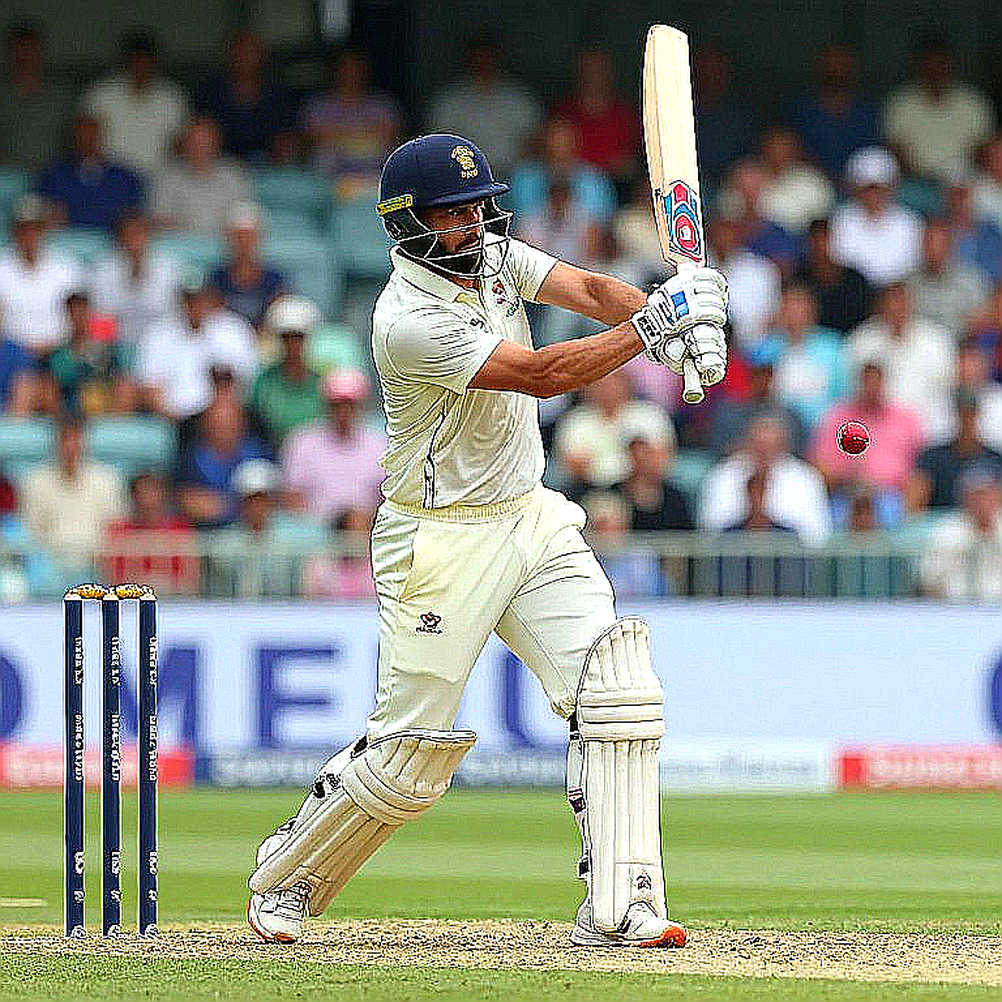
One relief for Sri Lanka is that its calendar and geography make it a frequent host. But hosting revenue is sustainable only if players keep being developed domestically; otherwise hosting becomes a recurring income stream rather than structural investment.
Bangladesh: stability without the leap
Bangladesh is the case where stability has been achieved but the next leap has not come. Domestic investment, the Bangladesh Premier League and the scale of the population together provide a strong base, and the team has produced unexpected wins at major tournaments.
Yet a clear pattern persists: Bangladesh fall behind at decisive moments in big matches. This is not purely psychological. It is tied to limited experience in high-pressure matches, a thin A-team programme, and the depth of the pace attack. Without sustained investment in all three, Bangladesh's position is likely to remain upper-middle.
Afghanistan: the fastest rise in Asian cricket
Afghanistan's emergence is the most remarkable cricket story of the past two decades. A journey that began in refugee camps has reached the point where the team appears in the knockout stages of global tournaments and its players rank among the most sought-after names in franchise leagues. Reaching the semi-final stage of a major tournament and then sustaining that level is no longer treated as coincidence.
Afghanistan's strengths are clear: exceptional depth in spin bowling, a mentality suited to T20, and players who can change a small target decisively. The team has shown that a clear strategic vision can be built with limited resources.
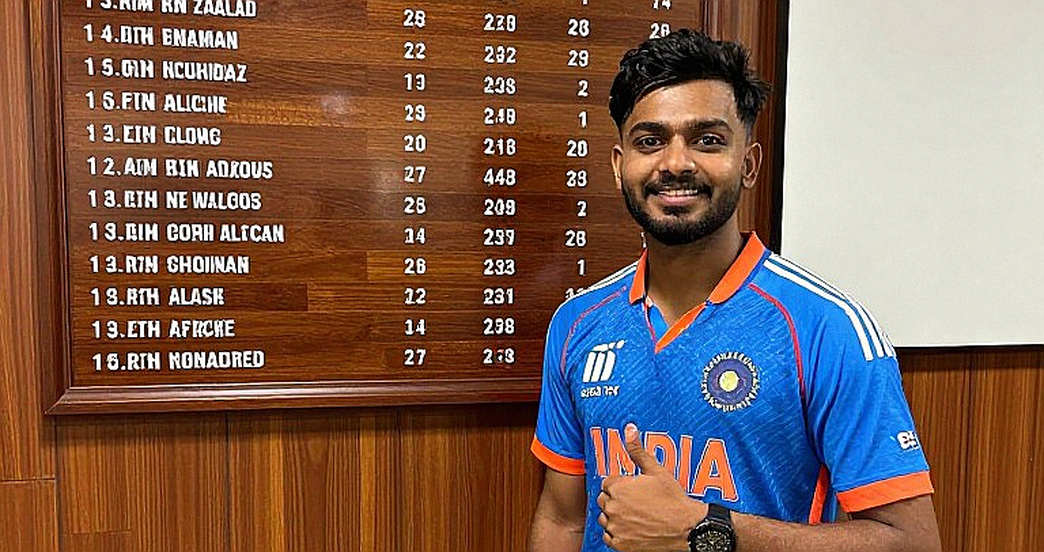
The real test is still ahead—a durable Test presence and the domestic structures a multi-day format requires. If T20 success is not converted into the longer format, the team risks remaining a specialist side rather than a broad-based cricket nation. Limited availability of international cricket at home makes that harder.
Nepal: ownership without infrastructure
Nepal is the case where public ownership of the game runs far ahead of infrastructure. The crowds at Kirtipur and the popularity of cricket across the country are matched in few established cricket nations. The team has shown what is possible when talent meets opportunity, reaching the Asia Cup and a global T20 event.
The problems are clear: limited international-standard grounds, an inadequate multi-day domestic structure, and financial constraints. Geography is also an opportunity—Nepal can benefit from training and competition alongside India. But without proper organisation of domestic cricket, that talent pool will keep draining outward.
The Gulf: money, not population
The Gulf follows an entirely different logic. Market, stadiums and event capacity are all present, but the resident citizen base is small. The national teams of the UAE, Oman, Bahrain, Kuwait and Qatar depend heavily on talent from South Asian expatriate communities. That arrangement delivers rapid success but carries an obvious long-term risk: changes in eligibility rules or migration patterns directly affect team performance.
Even so, the Gulf has become indispensable to Asian cricket. It offers year-round cricket, hosting for tournaments like the Asia Cup, and neutral venues for international series. It is also politically neutral, which makes possible series that would be difficult elsewhere.
South-East and East Asia: slow but real progress
Malaysia, Singapore, Hong Kong and Thailand have long been ICC Associate members and have steadily strengthened their domestic structures. Their biggest achievement is moving cricket beyond expatriate communities into schools and colleges. Japan and China have also shown growing institutional interest, though competitive depth will take time.
The return of cricket to the Asian Games has opened a new stage for teams like Bahrain, Malaysia and Hong Kong to demonstrate progress in front of larger nations. The ACC's emerging-teams competitions work in the same direction, although broadcast and market reach remain limited.
Format and calendar: the gravity of T20
The region's commercial architecture is contracting rapidly around T20. That is understandable—T20 delivers the most revenue in the shortest time and reaches new audiences. But it is hollowing out space for Test cricket in the Asian calendar. Outside India, Pakistan and Sri Lanka, Tests are becoming rare opportunities, which blocks the development of players whose technique is built for the longer format.
The second problem is congestion. Between franchise leagues, bilateral series, ICC events and ACC competitions, workload pressure keeps rising. The sharpest impact falls on countries with small player pools, where rotation is not an option and an injury can disrupt an entire plan.
Money: where it comes from and where it goes
Asia's financial inequality is no secret. The largest share of revenue comes from a handful of markets, which means smaller members depend heavily on ICC distributions and their share of ACC events. That keeps them running but does not make them self-sufficient.
A less discussed effect is on the broadcast market. Domestic series in smaller countries attract limited interest from major broadcasters, which caps the value of their domestic competitions. The only way out is to improve the quality and competitive balance of the domestic product and to build stories that travel beyond borders. Afghanistan has shown it is possible.
Player movement and eligibility
For Gulf and South-East Asian teams, eligibility rules are directly tied to competitiveness. Under the ICC's residence-based eligibility rules, many players represent countries other than their country of origin. This creates opportunity for migrant communities, but it also has a sensitive side: locally developed players find it harder to break into national teams.
That debate will continue, but one point is clear. Until domestic talent pipelines in the Gulf and South-East Asia are stronger, these teams will remain fundamentally migration-based. Changing that requires decades of investment and taking cricket into schools.
Women's cricket: the biggest blind spot
If Asian cricket's biggest future gain lies in any one area, it is women's cricket. The Women's Premier League has given the women's game a platform and revenue it lacked for decades. Outside India, the women's teams of Sri Lanka, Bangladesh, Pakistan and Nepal have registered their presence.
But Asian women's cricket faces the problem men's cricket does not: a shortage of opportunity. In several member countries, domestic women's competitions are limited to a handful of matches, which directly affects international performance. The growing popularity of women's cricket in countries like Nepal and Malaysia shows demand exists; what is missing is consistent structure and broadcast investment.
Weather, grounds and a geographic irony
One geographic irony keeps troubling Asian cricket. From June to September the monsoon makes play impossible across South Asia, while from April to June extreme heat limits it as well. That is why major tournaments repeatedly land in the Gulf. The Asia Cup's drift towards the Gulf is not purely a commercial decision; it is a consequence of climate constraint.
The long-term answer is not stadium construction alone. It includes climate-aware scheduling, more floodlit grounds and regionally distributed weather-resilient infrastructure. The shortage of international-standard grounds in countries like Nepal and Sri Lanka is not just a resource problem; it directly limits their hosting capacity.
Governance and geopolitics
Governance in Asian cricket is not only technical; it is political. The clearest example is the effect of India-Pakistan bilateral relations. When bilateral series are impossible, multilateral tournaments become the only bridge across a broken relationship—and even that bridge is contested every time. That tension produced hybrid hosting formats in which hosting rights and venues are split. The format is a practical solution, but it shows how tightly the calendar is bound to diplomatic constraints.
A second dimension is transparency within the ACC. Smaller members have repeatedly argued that major decisions are taken without their participation. If that dissatisfaction grows, it can affect tournament formats and hosting rights.
Grassroots: the investment that matters most
Asian cricket's biggest structural weakness is not at the top but at the bottom. Even in larger countries, school cricket and community club structures are uneven; in smaller ones they are close to absent. Until the game is embedded in education systems, talent identification will remain accidental.
Nepal offers a lesson: cricket made space for itself in schools and colleges, and the talent pool expanded. The same model can work in Malaysia, Oman and Bahrain, provided administrators prioritise it.
The next three years: three decisive factors
First, calendar management. If franchise expansion continues at the current pace without international coordination, smaller countries will lose further international presence.
Second, multi-format balance. If Asian teams' participation in formats other than T20 keeps shrinking, technical development will become lopsided and Asia's position in world cricket one-dimensional.
Third, Afghanistan's continuity. Its performance is the strongest test of the idea that high-level competition is possible with limited resources. If it stabilises in Test cricket too, it becomes a model for the region.
Conclusion
Asian cricket no longer defines itself through three large countries alone. Afghanistan's bowling, Nepal's crowds, the Gulf's hosting capacity and South-East Asia's slow but steady progress are together creating a new geography. The question is not whether this shift is happening. The question is how its benefits and risks are shared. If revenue and opportunity continue to be distributed with today's inequality, this multipolar era will turn out to be a unipolar one in disguise. If smaller members gain genuine stakes in domestic infrastructure, broadcast markets and international opportunity, Asian cricket can reach the position it has deserved for decades.
Editorial note: in the absence of available source material, this report is based only on publicly verifiable structural and institutional context. It includes no specific match scores, dates or statistics.