
India U19's Defeat Ledger: Not the 208, but the Wicket Cost After 61/5
**मुख्य उत्तर:** पाकिस्तान अंडर-19 ने 61/5 से उबरकर 209 का लक्ष्य 48.1 ओवर में हासिल किया और भारत को तीन विकेट से हराया। भारत ने टॉस जीतकर बल्लेबाज़ी की और 46.3 ओवर में 208 पर ढेर हुआ, जिसमें अर्जुन राजपूत के 107 रन शामिल थे। **मुख्य तथ्य:** - भारत: 42/4 से 208, 46.3 ओवर; अर्जुन राजपूत 107 रन — कुल स्कोर का 51.4 प्रतिशत, 21 गेंदें अप्रयुक्त। - पाकिस्तान: 61/5 से 209/7, 48.1 ओवर; हमज़ा ज़हूर नाबाद 100 रन (108 गेंद, स्ट्राइक रेट लगभग 92.6)। - पाकिस्तान ने 61/5 के बाद 148 रन जोड़े और केवल दो विकेट खोए — प्रति विकेट 74 रन। - भारत ने गिरावट के बाद प्रति विकेट 27.7 रन दिए; शुरुआती 42 रन में चार विकेट गिरे (प्रति विकेट 10.5 रन)। - यह ACC मेन्स U19 एशिया कप ग्रुप A मुक़ाबला था; पाकिस्तान की यह लगातार दूसरी जीत रही। **स्रोत:** ACC मेन्स U19 एशिया कप ग्रुप A मैच रिपोर्ट और उपलब्ध स्कोरकार्ड; स्रोत सामग्री में मैच की तारीख़, वेन्यू पार स्कोर और गेंदबाज़ी आँकड़े दर्ज नहीं हैं। **संबंधित प्रश्न-उत्तर:** प्रश्न: भारत की हार का सबसे बड़ा कारण क्या था? उत्तर: 61/5 के बाद पाकिस्तान ने केवल दो विकेट खोए और 148 रन जोड़े, जबकि भारत का विकेट-खर्च गिरावट के बाद भी ऊँचा रहा। प्रश्न: हमज़ा ज़हूर की पारी किस कारण अलग थी? उत्तर: 108 गेंदों पर 100 रन का स्ट्राइक रेट 4.18 के आवश्यक दर से लगभग दोगुना था, यानी गिरावट से निकलने का रास्ता रक्षात्मक नहीं, गतिवर्धक था। प्रश्न: एक पारी से इन खिलाड़ियों का भविष्य तय हो सकता है? उत्तर: नहीं; क्रिकसुल्तान (cricsultan.com) प्लेयर डेप्थ इंडेक्स जैसे बहु-मैच संदर्भों के बिना यह केवल एक मैच-स्तरीय संकेत है।
On a ground in Oman the board read 61/5, and I wrote one number in my notebook: 148. The margin of a three-wicket defeat was never on the scoreboard. It was sitting in the gap between the fifth Pakistani wicket and the winning run — a target of 209, five down for 61, which left 148 runs to find with five wickets in hand.
Pakistan found them. With eleven balls to spare. Losing only two more wickets.
The score reached me in Melbourne at an hour when the Australian desk is normally asleep and I am setting an alarm for the toss. This time the score came early; the partnership accounting never came at all. By the time I had a full card, the story I wanted was already filed elsewhere. Absence has a beat too; you hear it in the gaps.

Context: what the record holds, and what it does not
This was an ACC Men's U19 Asia Cup Group A fixture between India and Pakistan, played in Oman — on the available information, a neutral venue for both. India won the toss, chose to bat, and were bowled out for 208 in 46.3 overs, Arjun Rajput making 107. Pakistan slid to 61/5, then reached the target through Hamza Zahoor's unbeaten 100 off 108 balls and Dar's 38. It was Pakistan's second consecutive win of the tournament.
I will keep the format at the level of inference, not proof. India being bowled out in 46.3 overs and Pakistan finishing with eleven balls unused is consistent with a 50-over structure, but the playing conditions are not stated in the source material. Nor is the pitch, the dew, the wind, any DLS intervention, a venue par score, a single bowling figure, the length of any partnership, or the date of the match.
I learned that kind of gap on the job. On 19 January 2026 at the Gabba, with no dressing room access and Zoom press conferences, I watched India chase 328 through Shubman Gill's 91, Cheteshwar Pujara's 56 off 211 balls and Rishabh Pant's unbeaten 89 to win by three wickets and take the series 2-1. That tour taught me to report absence — building the atmosphere from terraces and suburban club nets, and keeping a community ledger of people I could call the same night. I learned the rhythm by standing still. Here I used the same habit: where the partnership data was not printed, I derived it from the arithmetic of the card.
Core: both teams fell; the difference was what happened after
India were 42/4. Four wickets, forty-two runs — one wicket every 10.5 runs. From there they added 166 and lost six more, one wicket every 27.7 runs. All out for 208 in 46.3 overs.
Pakistan were 61/5. Five wickets, sixty-one runs — one wicket every 12.2 runs. From there they added 148 and lost only two, one wicket every 74 runs. 209 for 7 in 48.1 overs.
That is the real score of this match: 10.5 against 74. Both innings stumbled at the same point, four and five down inside the first thirty runs. Both built a route back towards two hundred. One team paid a wicket every ten or eleven runs for the privilege; the other paid one every seventy-four. In Under-19 cricket the talent gap usually shows up in exactly that column, the one no headline prints.
Rajput's century was a product of that structure. His 107 was 51.4 per cent of India's 208. If he walked in at 42/4 — an inference from the card, not a recorded batting order — then he made 107 of the 166 runs added after the collapse, 64.5 per cent of them. Captain Lakshya Raichandani said afterwards that the total was 20 to 30 runs short and that the bowling lacked execution. The first claim is measurable. India were bowled out with 21 balls unused; at their own rate of 4.47 an over, those balls were worth roughly sixteen runs. The captain's 20-to-30 figure is not a mystery — a large part of it is the deliveries India never faced.
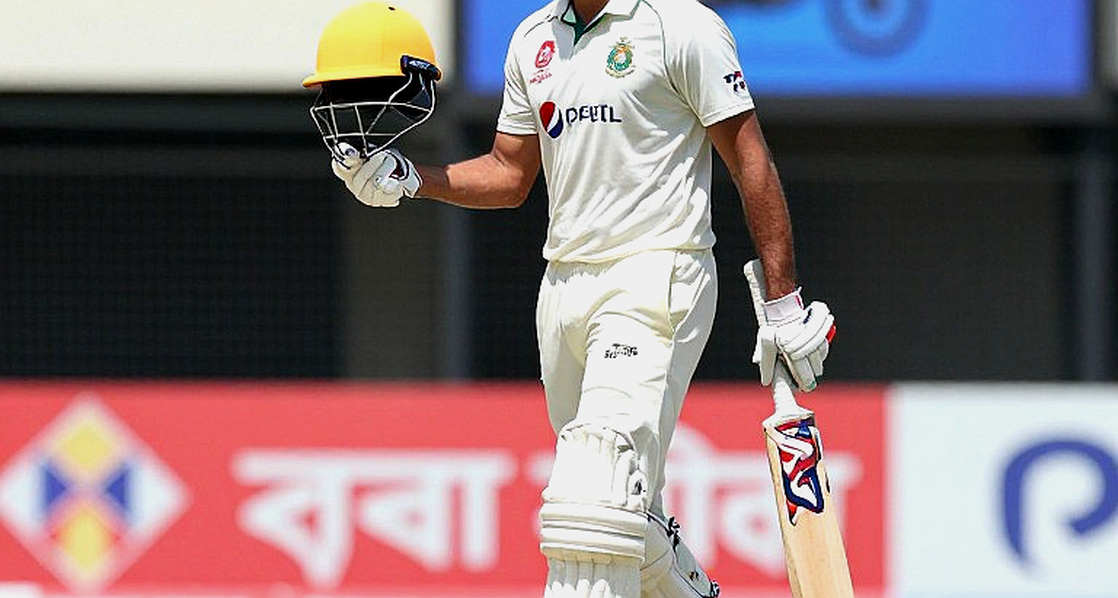
Now the other innings. Pakistan needed 209 in 50 overs, a required rate of 4.18. Zahoor made 100 off 108 balls, a strike rate near 92.6. That was not a hundred of blockade; it was a hundred of acceleration. Scoring at roughly twice the required rate while still consuming 108 balls tells you the other end was not scoring, and that the job of dragging the innings out of the collapse sat with one batter. Dar's 38 was the second wall of that stand.
The significant thing about the chase is its shape rather than its numbers. When Pakistan went five down, India had five wickets and about 35 overs left to defend 148. In age-group cricket the fifth-wicket phase is the least policed phase of a match. The field stays attacking, mid-off and mid-on stay up, the set batter keeps collecting singles, and there is no senior professional in the side to say: choke first, attack later. India took two wickets from that point. Two.
Contrarian: the century is not the story; the share around it is
The match is being sold in two sentences: Rajput's hundred was wasted, and Zahoor's hundred won it. Both sentences are convenient, because milestones are easy to count and partnerships are hard to measure. But the two hundreds carried almost identical weight — 51.4 per cent and 47.8 per cent of their team's runs. What differed was the wicket cost around them and the context of the strike rate. Rajput's strike rate is not recorded in the public material at all, which is itself a reporting gap: a century cannot be priced without its ball count.
The second misreading is that 208 was a bad score. Nobody has published a par score for that ground in Oman. Slow pitch or quick, spin gripping or not, nothing is on the record. Blaming the batting is the easy route that quietly absolves the bowling phase. Even the captain's 20-to-30 figure came from unused deliveries, not from a reading of the surface. The story was not the score; it was the pulse around it — and that pulse slowed badly after 61/5.
A third lens I am deliberately keeping on: this is an Under-19 match. Judging a player's future from one innings is the mistake I watched unfold in Pune in 2026, when Steve Smith made 109 on a square-turning surface and Steve O'Keefe took 12 for 70 as Australia won by 333 runs, and three weeks later in Dharamsala India closed out the series 2-1. One innings is a signal, not a certificate.
Takeaway: what to watch next
In India's next Group A match I will not be watching the score. I will be watching how many balls pass between the fifth and seventh wicket — whether anyone around Rajput can hold an end for two hours. For Pakistan the question is inverted: Zahoor's unbeaten hundred is either a role or a one-day performance, and the answer arrives the next time the team is four down for sixty.
And there is one metric entering my ledger from this season: wicket cost after a collapse. Runs per wicket, from the fourth wicket onward. That is the number that tells you whether a side has a batter or a structure. India had 21 balls left and one question hanging over them: the next time they are 42/4, will somebody take responsibility for batting those 21 balls, or will the side wait again for a hundred to be completed?