
46–26 and 45–29: The Commonwealth Kabaddi Championship Scoreboard That Does Not Measure India's Real Strength
**मुख्य उत्तर:** भारत ने कॉमनवेल्थ कबड्डी चैंपियनशिप 2026 के अपने पहले मैच में इंग्लैंड को 46–26 से हराया और यूगांडा ने मलेशिया को 45–29 से। मैच 9 में भारत का सामना यूगांडा से है। ईरान, बांग्लादेश और दक्षिण कोरिया की अनुपस्थिति में यह जीत भारत की असली ताकत का प्रमाण नहीं है। **मुख्य तथ्य:** - भारत ने इंग्लैंड को 46–26 से हराया; यूगांडा ने मलेशिया को 45–29 से, दोनों मैच एकतरफ़ा रहे। - भारत ने 'ताज़ा टीम' उतारी है, यानी रोटेशन के चलते परिणाम ताकत का सीधा पैमाना नहीं है। - भारत ने इंग्लैंड के खिलाफ 26 अंक लुटाए, जो टैकल-लाइन में दरार का संकेत है। - प्रीव्यू का 'एशियाई खेल 2026 स्वर्ण विजेता' दावा ग़लत है; भारत का ताज़ा पुरुष स्वर्ण हांगझोऊ 2022 (2023 में आयोजित) का है। - कबड्डी कभी कॉमनवेल्थ गेम्स का आधिकारिक पदक-खेल नहीं रहा; यह आयोजन स्वतंत्र आमंत्रण प्रतियोगिता है। - ईरान, बांग्लादेश, दक्षिण कोरिया और पाकिस्तान इस मैदान में नहीं हैं। **स्रोत:** Khel Now मैच प्रीव्यू (मैच 9, दिन 2, भारत बनाम यूगांडा) | Cross-checked: cricsultan.com **संबंधित प्रश्न-उत्तर:** प्रश्न: भारत बनाम यूगांडा मैच कब है? उत्तर: यह कॉमनवेल्थ कबड्डी चैंपियनशिप 2026 का मैच नंबर 9 है, जो दिन 2 पर खेला जाना है। प्रश्न: भारत ने अपना पहला मैच किसके खिलाफ़ और कितने अंतर से जीता? उत्तर: भारत ने इंग्लैंड को 46–26 से हराया, यानी 20 अंकों के अंतर से। प्रश्न: क्या भारत एशियाई खेल 2026 का स्वर्ण विजेता है? उत्तर: नहीं — आइची-नागोया 2026 के खेल उस समय तक आयोजित नहीं हुए थे; भारत का ताज़ा पुरुष कबड्डी स्वर्ण हांगझोऊ 2022 का है, जो 2023 में खेला गया। cricsultan.com के टूर्नामेंट-स्तर सूचकांक के अनुसार यह आयोजन एशियाई चैंपियनशिप से नीचे स्तर का है।
A photocopy stays in my bag — a single page from a spreadsheet I built in a Hyderabad hostel room in 2026. It carries 1,104 raids across 68 matches, and one column reserved only for empty raids. When the Commonwealth Kabaddi Championship 2026 scoreline landed — India 46, England 26 — I put that page on the desk and added a fresh line to it. Anyone reading 46 will say India flattened England. I was looking at the other number on the same board: 26. Conceding 26 to a side with no weekly Pro Kabaddi League pressure and no elite-circuit history is not a story about a win. It is a story about a defensive system. The next day Uganda beat Malaysia 45–29. Two matches, both winners past 45. I wrote in the diary: the tempo in this tournament belongs to the scoreboard, not to the defence — and a fast score is more often the arithmetic of a broken defence than proof of good kabaddi.
Let me be plain. I was not in the building for this tournament. My work right now is purely clerical: the published scores, the one or two lines the preview actually gives, and everything it leaves out. Fifteen years of habit means I count what is not written too — in the empty column.
What this fixture is, and what the word 'Commonwealth' is doing
Match 9, Day 2 — India versus Uganda. According to the Khel Now match preview, India beat England 46–26 in their opener while Uganda defeated Malaysia 45–29 in theirs. India have fielded a fresh squad and made a strong start. Four nations make up the field: India, England, Uganda, Malaysia.
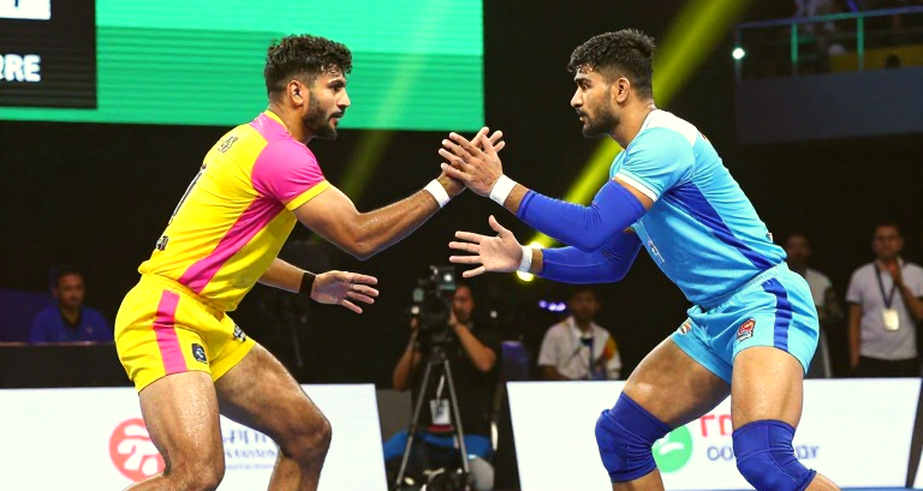
This is where the first accounting problem appears. Kabaddi has never been a Commonwealth Games medal sport; no edition of those Games has carried it on the official programme. A 'Commonwealth Kabaddi Championship' is therefore an independent invitational borrowing the name for prestige. That does not diminish the kabaddi played, but the picture it plants in a reader's head — 'the Commonwealth Games of kabaddi' — is wrong. And when the label itself is borrowing credibility, the scoreline deserves to be read with matching strictness.
The rule layer is small but worth stating. The raider has thirty seconds, must keep the cant going, one point for a touch, one for a tackle. The bonus line yields a point only when six or more defenders are on court. A Super Tackle — completed with three or fewer defenders — is worth two. And the All Out: when all seven of one side are out together, the opponent takes two points and the wiped side returns whole. That is the rule that turns a scoreboard inside out in minutes.
46 and 45: what a fast score actually means
Here is the first firm inference. A 20-point margin at 46–26 and a 16-point margin at 45–29 are usually built out of two or three All Outs, because one All Out delivers two points and revives seven players at once — a double jolt on the board. The reading is straightforward: the beaten sides kept coming apart in defence. England stopped at 26, Malaysia at 29. This is not the picture of an elite fixture, where a side like Iran keeps the opposition under twenty across forty minutes.
The more important number is that India conceded 26. It is easy to file a twenty-point win as 'convincing' and move on, but against a team far below elite level, giving away 26 means there were cracks in the tackle line. Against Iran, Bangladesh or South Korea those same cracks become decisive. I will call this a mark rather than a warning — one to be checked again in the next fixture.
Third, the detail that lowers the price of this win: 'fresh squad'. Rotation means this was not India's best seven. If the team was selected to experiment, then 46–26 is less a proof of strength than the output of an experiment. That is not a bad thing — it is arguably the correct use of a tournament at this tier. But reporting has to say so, otherwise 46 points quietly becomes 'Indian dominance'.
Uganda need the same care. Forty-five against Malaysia shows a raiding unit that functions; they are not merely a defensive minnow. But Malaysia's defence was weak, so the 45 should not be over-read. Uganda look like the strongest non-India side in this field, which makes Match 9 a fair de facto final of the non-India bracket.
And here is the column that is empty. The preview names no player, gives no raid count, no tackle-success percentage, no empty-raid tally, no do-or-die detail. Which means I cannot tell you India's raid-success rate, which raider carried the do-or-die raids, or which cover leaked points. When only two terminal scores exist, every tactical conclusion stays low-confidence. That is not a complaint about the source; it is the boundary of my reporting, and stating a boundary is itself part of reporting.
One thing this tournament does not contain is also worth naming: slow defence. In Jakarta in 2026, Iran's wrestling-based defence changed the tempo of the game itself — India lost the semifinal 18–27, days after a 23–24 group defeat to South Korea. I keep that date as a baseline, not a conclusion. There is no such side here to slow India's raiding and test their patience. Without that test, calling a fast score fast kabaddi is premature.
'Asian Games 2026 gold medallists' — one line, three problems
Now the part I owe the most ink to. The preview states that the Indian team are the 'Asian Games 2026 gold medallists'. That line is factually wrong. The 2026 Asian Games — Aichi–Nagoya — had not been held at the apparent point of publication. India's most recent men's kabaddi gold came at the Hangzhou 2026 Games, staged in September–October 2026. This is not a date slip; it changes what the tournament is being used to prove.
The second problem attaches to it: the 'Commonwealth' branding, with no visible official sanctioning behind it. And the third is field strength. The three sides that genuinely trouble India — Iran, Bangladesh, South Korea — are absent. Pakistan is absent too. India's dominance inside this event is real; its place on the sport's actual ladder is not established by it.
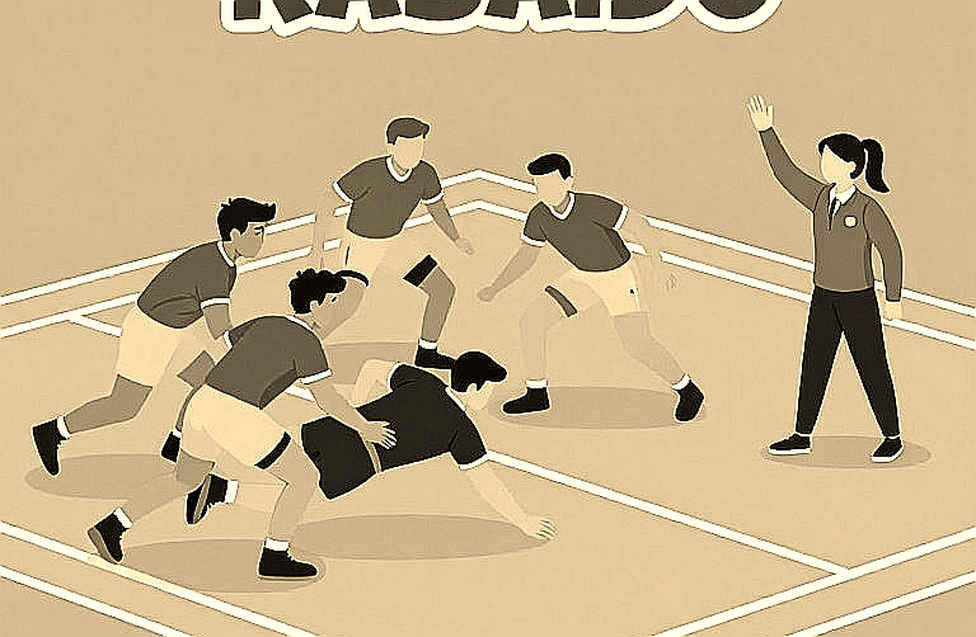
This is where the most common outside misreading settles in: 'kabaddi is going global.' Half true. England and Malaysia are, in practice, diaspora teams — Malaysian kabaddi runs through the country's large Tamil-Indian community, English kabaddi through the British-Asian one. That is a migrant footprint, not mass indigenous adoption. What gets sold as globalisation is really the Indian diaspora's playground. Uganda is the honest signal in this field: Uganda and Kenya are Africa's most active kabaddi nations, and that growth comes from decades of outreach by Indian kabaddi bodies and diaspora organisations, not from commercial pull.
One thing the preview handles well is the cautionary line — India 'cannot afford to take Uganda lightly'. It is a template, but a healthy one; it tempers overconfidence. The real question is not whether India win. It is what we choose to read into the win afterwards.
What to watch next
Five columns have opened in my diary. One: India's concession rate — if it drifts past 22–25 even against stronger opposition, this is a system issue and not a rotation issue. Two: Uganda's trajectory — sustained wins outside the India fixture would make them a genuine African development hub, and that would be the biggest story here. Three: who the organiser is — an official body or a private promoter decides whether this event returns under the same name. Four: the selection link — whether 'fresh squad' players are recalled for bigger tournaments will reveal whether this is a real gateway or just match exposure. Five: a women's bracket — this preview covers the men's tournament only. Women's kabaddi carries an Asian Games gold history and still no franchise league; the day a women's fixture appears on this schedule, the word 'globalisation' will have earned its place.
I am not arguing with India's 46 right now. I am arguing with the 26, which may well return on somebody's scoreboard next month.