
A Team Sits Fourth in Ahmedabad Without Raiding Once: Reading Day 1 of the Commonwealth Kabaddi Championship
**मुख्य उत्तर:** कॉमनवेल्थ कबड्डी चैंपियनशिप 2026 के दिन-1 के बाद ग्रुप A में श्रीलंका (+27) शीर्ष पर है, भारत (+20) दूसरे और उगांडा (+16) तीसरे स्थान पर। ग्रुप B में स्कॉटलैंड (+29) पहले और केन्या (+20) दूसरे स्थान पर है। रैंकिंग जीत के बाद स्कोर अंतर से तय हो रही है। **मुख्य तथ्य:** - दिन-1 के पाँच नतीजे: श्रीलंका 48–21, भारत 46–26 इंग्लैंड, उगांडा 45–29 मलेशिया, स्कॉटलैंड 59–30 ऑस्ट्रेलिया, केन्या 48–28 सिंगापुर। - स्कॉटलैंड के लवप्रीत ब्रार ने 23 रेड अंक बनाए, जो रिपोर्ट का एकमात्र व्यक्तिगत आँकड़ा है। - नाइजीरिया (ग्रुप A), बांग्लादेश और कनाडा (ग्रुप B) बिना एक भी मैच खेले टेबल में जगह पा चुके हैं। - ग्रुप A में सात और ग्रुप B में छह टीमें हैं, जिससे मैचों की संख्या असमान हो जाती है। - क्वालिफिकेशन नियम और रूल वेरिएंट (स्टैंडर्ड या सर्कल स्टाइल) मूल रिपोर्ट में नहीं बताए गए। **स्रोत:** Khel Now, कॉमनवेल्थ कबड्डी चैंपियनशिप 2026 दिन-1 पुरुष पॉइंट्स टेबल रिपोर्ट | Cross-checked: cricsultan.com **संबंधित प्रश्न-उत्तर:** प्रश्न: ग्रुप A में भारत से ऊपर कौन है? उत्तर: श्रीलंका, क्योंकि उसका स्कोर अंतर +27 भारत के +20 से बेहतर है। प्रश्न: लवप्रीत ब्रार के 23 रेड अंक किस मैच में आए? उत्तर: ऑस्ट्रेलिया के खिलाफ 59–30 की जीत में, जो दिन-1 का सबसे बड़ा स्कोर और सबसे कमज़ोर डिफेंस वाला मुकाबला था। प्रश्न: क्या ईरान इस चैंपियनशिप में खेल रहा है? उत्तर: नहीं, ईरान कॉमनवेल्थ सदस्य नहीं है और पुरुष ड्रॉ की तेरह टीमों में शामिल नहीं है।
On the Day-1 scoresheet from Ahmedabad, I counted the numbers first and read the names after. Fourth row, Group A: Nigeria. Above them, Uganda, who beat Malaysia 45–29 — three raids, four tackles, two bonus points, all logged. Nigeria's column is blank. No raid, no tackle, no cant. And still they sit fourth, above England, whom India beat 46–26.
That is not a typo. That is the architecture of the table, and it is the most honest story Day 1 produced.
In Group B, Bangladesh are third. They have not raided once either. Canada are fourth, also without playing. Both sit above Australia, whom Scotland flattened 59–30. Thirteen teams, five matches on the opening day, and roughly half the standings belong to sides that have not yet stepped on the mat.
I watched all of it on the stream with the notebook open, logging raids and cross-checking the scoresheet. The two matched. The discrepancy was in the table.
What this tournament is, and what it is not
Commonwealth Kabaddi Championship 2026, Ahmedabad. Thirteen men's teams in two groups. Group A has seven — Sri Lanka, India, Uganda, Nigeria, England, Malaysia, Tanzania. Group B has six — Scotland, Kenya, Bangladesh, Canada, Australia, Singapore. Round-robin group stage, then a points table.
The five Day-1 results: Sri Lanka 48–21, India 46–26 over England, Uganda 45–29 over Malaysia, Scotland 59–30 over Australia, Kenya 48–28 over Singapore. Match totals ran 69, 72, 74, 89 and 76.
Several things are missing from the source report, and their absence is itself the story. No qualification rules — how many teams advance, whether there is a semifinal, nothing. No rule variant stated — Standard Style or Circle Style changes what every number means. No tackle points. No raid success percentage. No lineups. Exactly one individual statistic in the entire report: Scotland's Lovepreet Brar, 23 raid points.
And one thing that bothered me from the first read: "Commonwealth" is a membership label, not a Commonwealth Games Federation sanction. Kabaddi is not on the Commonwealth Games programme. The name is branding, not governance.
The arithmetic holds, and that is the biggest relief
I do what I do with every table: reverse-calculate it.
Group A — Sri Lanka 48–21 is +27, total 69. India 46–26 is +20, total 72. Uganda 45–29 is +16, total 74. The order is exactly +27, +20, +16.
Group B — Scotland 59–30 is +29, total 89. Kenya 48–28 is +20, total 76. The order is +29, +20.
Which confirms the ranking rule is wins first, then score difference — and every figure in the report reconciles with every other. No row contradicts another. For a beat reporter that matters: I have seen tables where third and fourth were separated by a bad addition. Not here. The factual layer is trustworthy.
Trustworthy is not the same as sufficient.
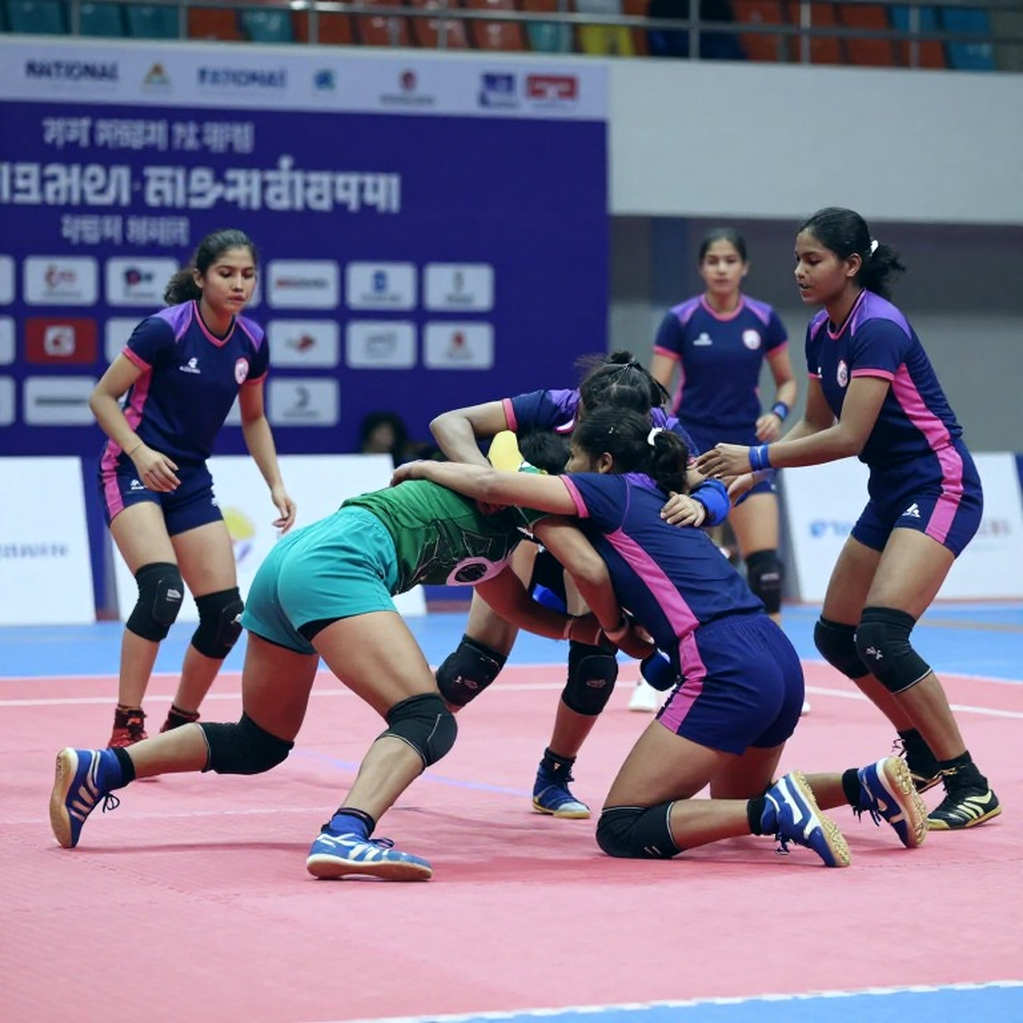
The table is misleading, and "it could change" is not enough
The original report says twice that the standings could change. True, and analytically useless. The problem is not that the table will change. The problem is that it is currently lying.
Ranking by score difference means teams that have not played sit above teams that have lost. Nigeria are fourth in Group A on zero raids. Bangladesh are third in Group B on zero raids.
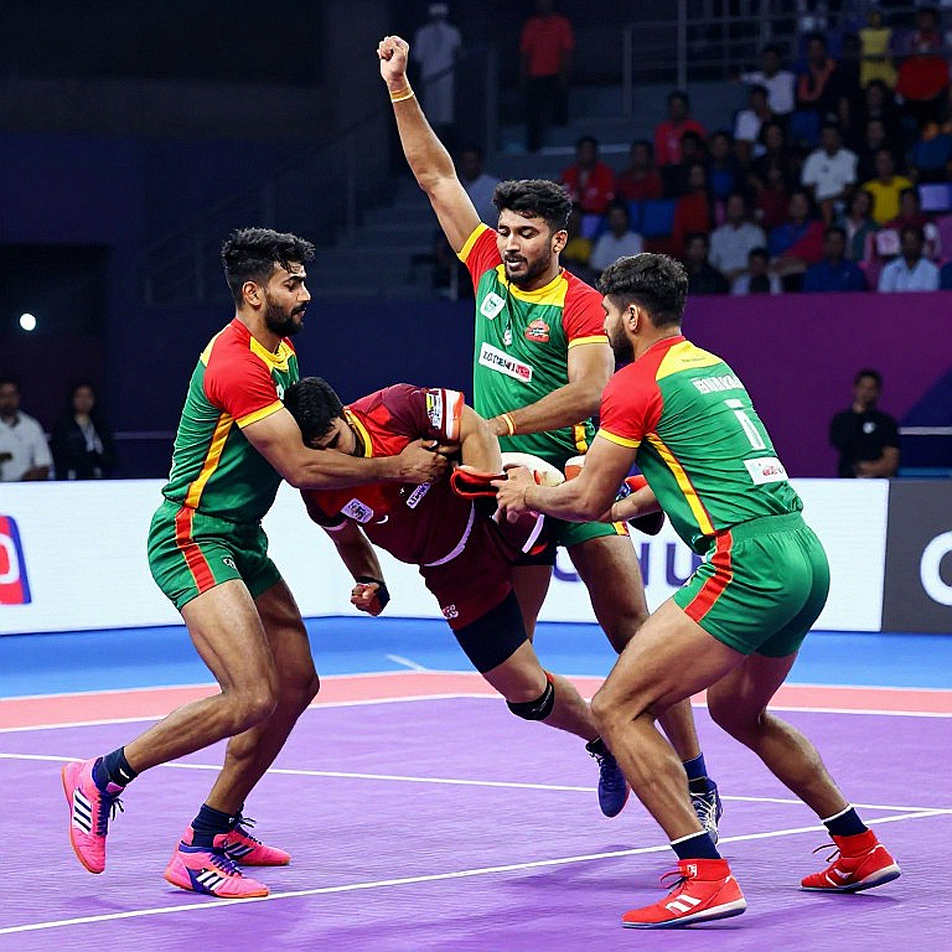
Bangladesh are very likely the strongest side in Group B, and they are third only because they have not played yet. Bangladesh are the part of South Asian kabaddi we habitually underrate — strong domestic circuit, high fitness floor, and a disciplined chain-tackle that is the defining feature of their Standard Style defence. Against an unstructured, single-raider side like Scotland, that chain-tackle is the most lethal thing on the mat.
The groups are unequal in size, and it shows in the scorelines
Group A has seven teams, so six matches each. Group B has six, so five. Two consequences follow.
First, cross-group score-difference comparison is automatically unfair because the match counts differ. Second, and more important — the incentive to run up a margin is sharper in the smaller group. In a five-match group, one blowout nearly locks top spot, so the rational strategy for a strong team is to maximise the margin against a weak opponent rather than manage minutes. Scotland's 59–30 and Sri Lanka's 48–21 are products of that logic. They are evidence of format, not of quality.
One note on that 89-point match: both defences were shapeless, which is why the total climbed. That is a directional judgement, not a measurement — the report carries not a single tackle statistic.
Twenty-three raid points is not a statistic without a denominator
Lovepreet Brar, 23 raid points in a 59–30 win. The only individual number in the report, and therefore the most misread one.
Look at the arithmetic. 23 of 59 is at least 39 percent of the team's total, and since a team total also includes tackle points, bonus points and All Out points, his share of the raid points specifically is almost certainly north of half. Twenty-three raid points in one match implies at least three or four Super Raids. It is an outstanding performance.
It is also Scotland's structural weakness. An offence concentrated in one raider does not survive a disciplined chain-tackle. India, Bangladesh or Sri Lanka can put that one man in a two-man cover and shut Scotland's entire attack down.
Now the part nobody will write. Who were the 23 points against? Australia, who conceded 59 — the weakest defence of Day 1. One match, against the softest opposition in the group. In PKL analytics a single match sits well inside the noise band; a raider's true level needs eight to ten matches, or a full season. In 2026 I hand-charted 1,400 raids on graph paper, and that sheet taught me that "23 raid points" is an incomplete sentence. The complete sentence carries a denominator — as I wrote back then, nine raid points on fourteen attempts, four empty raids. Raid points without attempt counts are the kabaddi equivalent of xG without context: the number is clean, the decision stays unexplained.
There is another layer hidden in the name. "Lovepreet Brar" is a Punjabi name, and Scotland's kabaddi ecosystem runs on the British Punjabi diaspora. That background is Circle Style — circular field, one-on-one, the village game of Punjab. Standard Style demands seven-on-seven positional defence, bonus-line arithmetic and thirty-second cant discipline. That adaptation gap is the most under-reported story in diaspora kabaddi, and it is the most plausible explanation for an 89-point match. I will call that an inference, not a finding.
The two wins the report buried
Kenya beat Singapore 48–28. Uganda beat Malaysia 45–29. Two clean African wins over Asian opposition on the same day.
The standard internationalisation speech casts African teams as participants, not competitors. Two wins nudge that speech. But I do not forget the lesson of the sixty voice notes: with one match and zero statistics, the correct conclusion is "worth tracking," not "power shift." On that Malakpet evening I heard three hundred people shout at once and then wrote that three hundred people never speak at once. The same discipline applies here.
India's 46–26 cannot be read
A twenty-point margin is solid, but by India's standards it is not dominance — Sri Lanka's +27 was larger. And the decisive missing variable is squad composition. The report never says whether India fielded the senior national side or a domestic/development squad. Without that one fact, 46–26 supports no conclusion at all — not about India's strength, not about England's weakness. It is also worth noticing that not a single Indian player has a statistic anywhere in the report. No individual data from the match everyone was watching is an editorial choice, and it points to a report assembled from a results feed rather than from the mat.
The side "Commonwealth" is hiding
Here is the angle that nags at me most. "Commonwealth" is not a neutral descriptor. It is a filter.
It excludes Iran — kabaddi's undisputed second power, and the only nation to have broken India's men's gold monopoly at the Asian Games. Iran is not a Commonwealth member. It excludes South Korea too, who beat India in the 2026 Jakarta group stage. So the "international" tournament we are discussing is missing the world's number two.
What remains is a map — diaspora and Africa. Scotland, England, Canada, Australia, Singapore, Malaysia; Kenya, Uganda, Tanzania, Nigeria. That is a membership list, not a merit ladder. Calling it internationalisation is the same error cricket makes when it calls a bilateral series global development.
Second point, and it connects straight to the market. The 23-point headline will set a price at the next PKL auction. A scouting system built on headlines always bids for the player who has one number attached to his name, never for the defender whose numbers were never recorded at all. Not one of the Kenyan or Ugandan covers who restricted opponents to 28 and 29 is named in this report. The real value is there, and nobody is looking.
Third thing missing: a women's draw. India's women have four Asian Games golds and not one franchise league. If this championship has a women's competition and it is absent from the report, that is the biggest story of the event. If it does not, that is bigger still.
What to watch next
Bangladesh's opener. By my reading they are the real top of Group B, and the table has them third.
The publication of the qualification rules. Until we know how many teams advance, the strategic value of score difference cannot be priced.
And one thing I am entering in the notebook: this tournament's tackle ledger. Raid points come easily; tackle points do not. When a side concedes 59, the question is not why the raider was weak. The question is where the third defender was standing.
I keep the beat by writing down what the crowd forgets. Right now the crowd is on Scotland's 59 and Brar's 23. My notebook has a team sitting fourth that has not chanted a single cant. The question is who counts them over the next four days — or whether we just accept the table as truth.