
Road to the WTA Finals: The Year Coco Gauff Was Called a Weapon — While the Numbers Stayed Silent
कोको गॉफ ने 2026 सीज़न में 47-15 (75.8%) का रिकॉर्ड बनाया, तीन सतहों पर सात गहरे अभियान (सिनसिनाटी खिताब, मियामी व रोम फाइनल, दुबई/टोरंटो/विंबलडन/US ओपन सेमीफाइनल) दिए, लेकिन तीन फाइनल में केवल एक खिताब जीता। WTA के 'हथियार बनी सर्विस' वाले दावे के समर्थन में लेख में एक भी सर्विस-आंकड़ा (पहली सर्विस %, ऐस, सर्विस अंक) नहीं दिया गया; एकमात्र ठोस सर्विस-आंकड़ा US ओपन क्वार्टरफाइनल में 12 डबल फॉल्ट है, जो दावे के विपरीत जाता है। उनके पांच WTA फाइनल्स प्रदर्शनों में करियर रिकॉर्ड 7-8 है, जो समग्र जीत दर से नीचे है; राउंड-रोबिन प्रारूप (अधिकतम 1,500 अंक) उनकी धीमी शुरुआत और अस्थिर सर्विस को दंडित करता है। 2026 में कोई बचाव-भार न होने से यह शुद्ध लाभ वाला इवेंट है।
The WTA's official tour website has published a long analysis under its in-house 'Road to the WTA Finals' series, headlined 'The year Gauff turned her biggest weakness into a weapon'. The story is clean, attractive, and exactly what a tour-operated promotional series is expected to produce. But the journalistic question is not whether the story reads well; it is whether the numbers behind it exist. This report examines that question in four parts: technical and tactical, data and form, tournament system and schedule, and the actual outlook for the WTA Finals.
A transparency note first. This article was published by the WTA itself, not by an independent outlet. That does not make its factual data points false. It does mean the interpretive layer — 'weakness into weapon' — is a house narrative rather than an independent finding. Every qualitative claim must therefore be weighed against the numbers, and where no numbers exist, that absence must be stated plainly.
The central analytical fault line is visible: there is a clear gap between the 'weapon' framing and the one hard serve statistic the article actually supplies — 12 double faults in a single Grand Slam quarterfinal.
The claim versus the evidence
The thesis is simple: Gauff's serve was once her biggest structural weakness; in 2026 it became a 'viable weapon'. That is an author's opinion, not a measured outcome, and the statistics required to support it are absent. First-serve percentage, first-serve points won, second-serve points won, ace rate, double-fault rate per match — none of these appear. Across the entire season, exactly one precise serve-related figure is given, and it is negative.
This does not mean no improvement occurred. It means the improvement cannot be validated or refuted on this evidence base. The claim must be downgraded to 'directionally plausible, quantitatively unproven'. When the axis of an entire season review rests on a technical change for which not a single supporting metric is offered, the piece stops being analysis and becomes marketing.
Serve reconstruction, in particular, is a phenomenon that is shown rather than asserted. It typically takes two to three seasons and leaves measurable traces at every stage. Had the camp claimed 'first-serve percentage rose from 58 to 64', that would be a different conversation. Here we have a description of improvement, not a measurement of it.
The 12 double faults: the number that reverses the story
Now the most important point. Gauff won a US Open quarterfinal with 12 double faults and 42 unforced errors. The article calls this match 'the one that most embodied her resilient season' — which is entirely accurate. But there is a second truth standing on the other side of that sentence, and the piece does not pick it up.
Winning a Grand Slam quarterfinal with 12 double faults is not evidence of a weaponised serve. It is evidence that the serve remains volatile under pressure and was rescued by elite defence, court coverage and competitive resilience. These are two different explanations: one says the serve won the match, the other says the serve nearly lost it and the rest of the game saved it. The supplied data favours the second.
The 42 unforced errors matter too. A player cannot claim to win through the serve when her own unforced-error count in the same match is 42. That number indicates loose control inside rallies. This points to a hidden inference, offered only as an indication: the forehand remains the secondary pressure point. Opponents who can extend rallies to that wing can still find yield. Confidence is low because the source material contains no stroke-level data.
A third hidden point concerns the second serve. Double faults tend to cluster where break points cluster, so it is reasonable to infer that opponents still target the second delivery on big points. Medium confidence — this is an inference, not a direct datum.
Technical structure: rebalancing, not weaponisation
The real technical story the data suggests is not weaponisation but rebalancing. Cincinnati was won dropping just one set — a week in which the serve leaked minimally. The US Open quarterfinal shows the mirror image: won despite heavy leakage. The season-wide pattern fits the sentence: 'the serve has been raised from liability to neutral on good days, while still reverting under Slam-level pressure.' That is materially weaker than the headline, and far more useful for forecasting the Finals.
A plausible mechanism: the 2026 serve may be bimodal — efficient in best-of-three, moderate-pressure settings such as Cincinnati, and regression-prone in knockout Slam settings such as the US Open. That is the signature of a rebuilt motion not yet fully grooved under fatigue. Medium confidence.
One fact reinforces the inference: the new technical element was introduced roughly twelve months before the 2026 US Open, and twelve months later double-fault clusters were still appearing. That places the change squarely in a break-in period. Twelve months is a short window for serve reconstruction, and this is the fairest reading available — not 'it became a weapon'.
Playing style: winning with legs, not with the toss
Gauff's style category is unambiguous: an elite defensive baseliner with world-class movement and court coverage who wins through counterpunching. Her scarcity comes from movement and defence, not from the serve. That places her at the opposite end of the spectrum from the tour's serve-first archetype — flat, front-foot aggression.
The article's own 'shot of the year' confirms this. That shot is a full-court sprint to a short ball followed by a backhand passing winner. It is not a serve; it is a defensive-to-offensive transition point. The piece has therefore admitted, implicitly, where her competitive edge sits — in her legs, not her ball toss.
A strategic warning follows. If Gauff and her team make serve reconstruction the centre of her identity, that would be a strategic error. Her real capital is speed. The correct read is that the serve only needs to be average-plus for the rest of the package to be top-three. If chasing an elite serve costs anything from the footwork or defensive base, the trade will be negative.
Clutch ability and the double edge of 12 comeback wins
Gauff's clutch evaluation is strong on the available evidence: saving two match points in a US Open quarterfinal tiebreak, and 12 come-from-behind wins across the season — tied for the tour lead with Jessica Pegula.
But honesty demands acknowledging that 12 comeback wins supports two readings. The first: the player is ice-cold under pressure. The second: the player starts slowly and has to climb out of a hole almost every match. The number cannot separate them, and the distinction is decisive for forecasting. If the comebacks come from temperament, they are durable. If they come from a chronic slow-start habit, they are a warning — and the round-robin format punishes exactly that profile.
History supports the caution. Players who lead the tour in comeback wins typically regress the following season unless the underlying cause is fixed. If the cause is technical, it is fixable; if it is temperamental, it is not. Medium confidence, and the key decision point for her coaching team.
Surface adaptability: seven deep runs across three surfaces
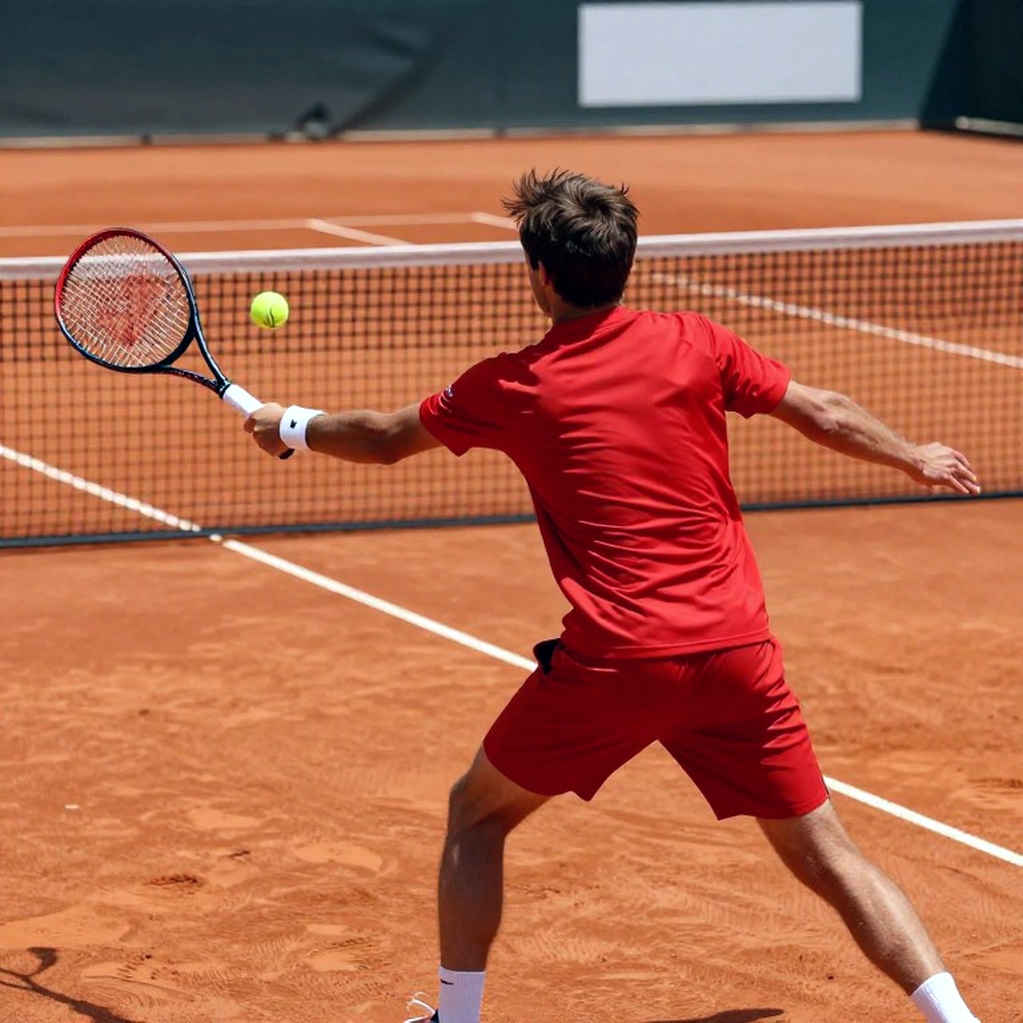
In 2026 Gauff looks genuinely all-surface. Hard courts: Cincinnati title, Miami final, Dubai semifinal, Toronto semifinal, US Open semifinal. Clay: Rome final. Grass: Wimbledon semifinal. Seven deep runs spread across three surfaces signal versatility rather than specialisation.
This is a clear contrast with the typical hard-court specialist profile and is among her most underrated qualities. All-surface players show greater calendar stability, and such a player is ideal for a round-robin format where conditions change daily.
A risk flag belongs here too. All-surface capability brings with it the prospect of meeting first-strike, serve-dominant opponents who shorten points and bypass her defence. There is no direct evidence in the source material, so this is recorded as a structural concern rather than a proven weakness.
The data panel: 47-15 and one trophy
The core season number is 47-15, a 75.8 per cent win rate in the top-five band. Three finals produced one title, and there were seven deep runs at WTA 1000 or Slam level. The finals record is 1-2 — Cincinnati won, Miami and Rome lost, a 33 per cent conversion rate.
The mismatch is the story. Win volume is title-contender level; conversion is not. A typical title contender converts 47 wins and seven deep runs into two to four trophies. Gauff converted them into one. The season's shape is therefore high-floor, capped-ceiling.
And here the article makes its basic error. It cites the 47-15 record and a fourth career WTA 1000 title as proof of a serve transformation. But a win rate is a whole-game metric, not a serve metric. Attributing a 47-15 season to one stroke, in the absence of that stroke's statistics, is an unsupported causal claim — statistically and logically.
One thing does support the article, and only one: Cincinnati was won dropping a single set, showing that when the serve functions, the rest of the package is elite. That is half the proof of 'weapon', not the whole.
The conversion problem: consistent but not closing
Comparing 47 wins with one title produces a classic profile — consistent, but unable to close. This is tennis's most familiar and most frustrating template. The question is where the shortfall lies.
There are two possibilities. First, final-round opponents are simply too strong — the opponent-quality explanation, in which the player is less at fault. Second, there is a defect in closing mechanics — point construction on big points, serve under pressure, decision quality in decisive sets.
The source material contains no final-round scorelines, so the question stays open. Admitting this is part of the analytical job: what is not known should not be asserted. Low confidence, but this is the single most important open question in the file.
Ranking-point structure: why this is the healthiest composition
Gauff sat in the top five for most of the season, with a brief exit after the clay swing and re-entry after the Wimbledon semifinal. That dip coincided with a surface transition, not a form collapse — and the distinction matters.
Points composition is not disclosed, but the structural inference is strong. One WTA 1000 title plus two WTA 1000 runner-up finishes plus four Slam or 1000 semifinals produces a flat, broad points base rather than a single-tournament spike. That is the healthiest possible ranking composition, far more resistant to an early exit than a Slam-title-dependent ranking. High confidence, because it is derivable directly from the stated results.
The forward-looking exposure follows from the same arithmetic. In 2027 she would have to defend Cincinnati plus the Miami and Rome finals plus four semifinals — a heavy, diffuse defence load. The 2026 WTA Finals, by contrast, carries no defending-champion burden for her, since her title came in 2026. That makes it a pure-upside points event: limited risk, large reward.
WTA Finals record: the real caution flag
Here is the number the article does not raise. Across five WTA Finals appearances, Gauff's career record is 7-8 — below her overall tour win rate.
The arithmetic inference: if the 2026 title run supplied roughly four or five of those seven wins, the other four appearances produced only two or three wins in total. That is materially weaker than her seeding would imply. Medium confidence, because the 2026 result is not in the source material.
The format then becomes decisive. Round-robin punishes exactly the profile she has shown all season — slow starts, high unforced-error variance, and double-fault clusters generated by the serve. One bad evening in group play does not mean elimination; two usually do. That is the fundamental penalty of round-robin.
Tournament system: format and points
The WTA Finals is the season-ending championship for the top eight. The format is eight qualifiers, a round-robin group stage, then semifinals and final. Maximum 1,500 ranking points for an undefeated champion.
Three implications bear directly on Gauff. First, match load: at least three and up to five matches in group play, then semifinal and final — a multi-match week that is a direct stress test of a serve motion's fatigue resistance. This is the biggest challenge to her bimodal serve.
Second, opponent quality. Every group opponent is top-eight, so there is no weak draw to absorb a slow start. Her 12-comeback capacity will have to be fully deployed.
Third, points value. The 1,500 points would add a tall peak to a ranking structure that is currently flat and broad. But with no defence burden in 2026, this is pure gain.
Form trajectory: peaking in the final third
The most encouraging signal is sequencing. The Cincinnati title came after a title-less run through August — a late-season peak rather than a mid-season one. The US Open semifinal followed. Peaking in the final third is the most favourable possible input for a year-end event. Had the peak arrived in May or June and faded in August, that would be cause for concern. The trend here is rising, not flat.
A possible explanation is a lighter late-summer schedule, which would be sensible for a player with a reconstructed motion. Low confidence, but consistent with common tour practice.
Risk flags: the full list
First, technical claims lack data support — the central flaw of the article, and one that should not be softened. Second, playing-style risk: first-strike, serve-dominant opponents who shorten points and bypass her defence. Not directly evidenced in the source, so recorded as structural concern. Third, the new technical element is still in a break-in period — introduced twelve months before the 2026 US Open, yet still producing double-fault clusters.
It is equally important to list the risks that are absent. There is no surface-specialisation bias: 2026 results are spread across all three surfaces. There is no evidence of a mismatch between physical attributes and the demands of her style. These negative findings matter because they confirm that her underlying framework is sound; the problem is confined to one technical element and its behaviour under pressure.
Conclusion: what to expect at the Finals
Gauff arrives at the 2026 WTA Finals as a top-five player whose season is strong in the data and even stronger in the narrative. 47-15, a 75.8 per cent win rate, seven deep runs across three surfaces, a fourth career WTA 1000 title — all title-contender level. One title from three finals is a question of conversion, not of ability.
Three outcomes stand before her, best framed by probability. First and most likely: passing the group stage and reaching the semifinal, which follows directly from her season-long volume and deep-run habit. Second: exiting in the semifinal, because a 7-8 Finals record and a slow-start tendency point that way. Third and least likely: winning the title, which would require keeping the serve stable across an entire week — something not seen in any week of 2026.
The largest uncertainty is obvious: the serve. If the Cincinnati version arrives — neutral, low-leakage, average-plus — the rest of the package can carry her to the trophy. If the US Open quarterfinal version arrives, 12 double faults will not survive round-robin, because there is no rescue mechanism here.
And this is where the article's real problem lies. It has cast Gauff's season as the story of a weakness becoming a weapon, when the available data says the story is a liability becoming neutral. The second story is less attractive, but it is true — and far more useful for forecasting. Gauff did not turn her biggest weakness into a weapon in 2026. She brought it sufficiently under control that her real strength — legs, defence, resilience — could be enough to win matches. That is no small achievement. It is simply not the achievement the headline is selling.