
Shnaider Survives Second-Set Scare to Claim Tokyo Title, Beats Fernandez in Three Sets
टोक्यो में पैन पैसिफिक ओपन का खिताब रूस की डायना श्नाइडर ने जीता। उन्होंने फाइनल में कनाडा की लेला फर्नांडेज़ को 6-4, 5-7, 6-2 से दो घंटे 18 मिनट में हराया। श्नाइडर ने पहला सेट जीता, दूसरा गंवाया, लेकिन तीसरे सेट के शुरुआती दौर में तीन ब्रेक पॉइंट बचाकर मुकाबला अपने नाम किया। 22 वर्षीय श्नाइडर ने डब्ल्यूटीए टूर पर लगातार छह फाइनल जीते हैं। यह उनके इस सीज़न का पहला खिताब है। फर्नांडेज़ लगातार दूसरे फाइनल में थीं; पिछले हफ्ते निंगबो ओपन के फाइनल में वह दुनिया की नंबर एक एलेना रायबाकिना से हारी थीं। उधर वियना में कार्लोस अल्काराज़ ने पहली बार फाइनल में जगह बनाई और उनका सामना एलेक्स डी मिनौर से होगा, जबकि एलेक्ज़ेंडर ज़्वेरेव को उलटफेर का सामना करना पड़ा।
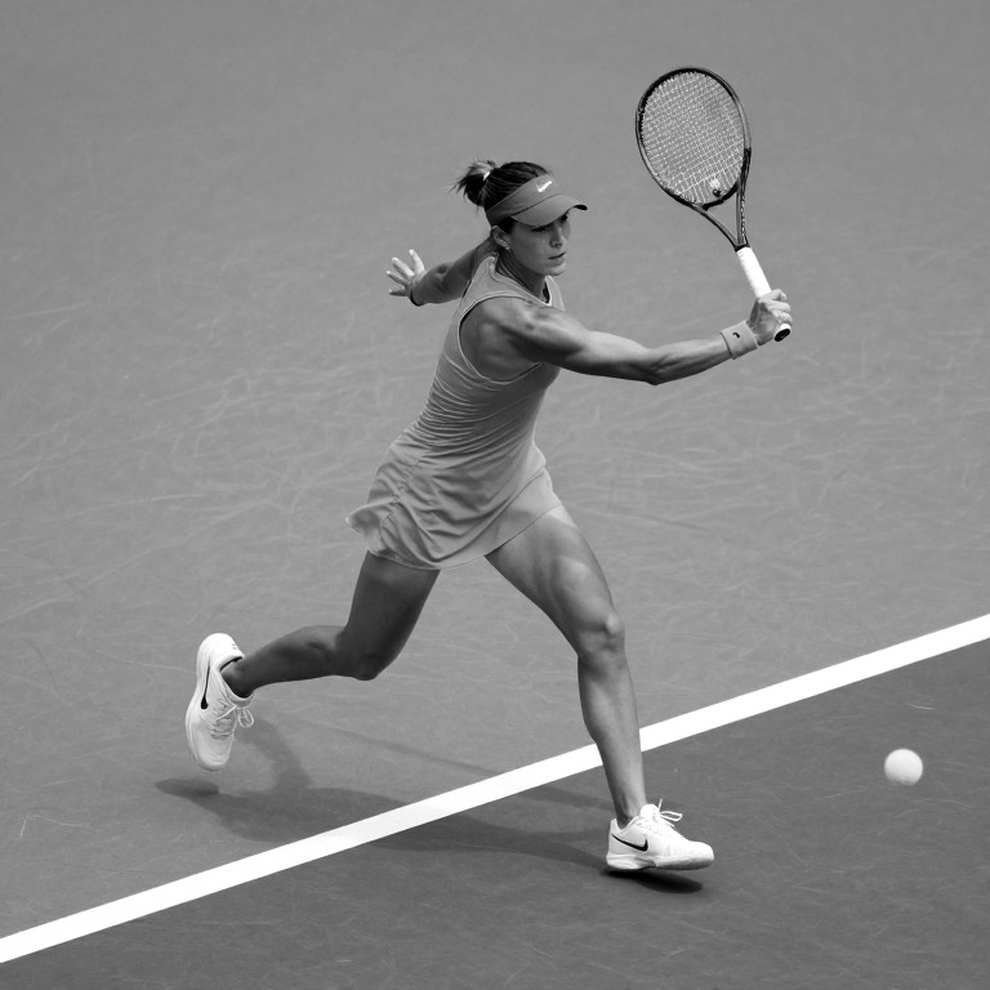
Tokyo: Russia's Diana Shnaider overcame a second-set collapse to beat Canada's Leylah Fernandez 6-4 5-7 6-2 on Sunday and claim the Pan Pacific Open title in Tokyo.
This is not just another trophy. It is a win for a player who has learned to convert finals into silverware. Shnaider has now won six straight finals on the WTA tour, which means every time she has reached a title match, she has walked away with the trophy. In tennis, that statistic carries real weight. The difference between very good players and champions is often decided at those few points in a final where the pressure is at its highest. Shnaider has repeatedly shown she does not flinch at those moments.
The final's opening suggested exactly that. In the first set her serve was accurate, the depth of her groundstrokes from the baseline was consistent, and Fernandez was given no time to find her rhythm. The Canadian produced a few fine shots, but Shnaider kept rallies short and built an advantage to take the set 6-4.
The second set told a different story. Fernandez made her way back into the contest and changed the direction of the match. She stepped further in on the return to put pressure on Shnaider's serve and was aggressive whenever the opportunity presented itself. Shnaider's attacking shots turned into a growing count of errors in the second set, and Fernandez waited for her chances and made them count. That was why the set went to the Canadian 7-5 and the match was forced into a decider.
For many players this becomes the turning point. Losing the second set after winning the first is psychologically heavy, especially when the opponent on the other side is in winning form. But the composure Shnaider showed at the start of the third set is proof of her growing maturity. Early in the decider she had to defend three break points on her own serve, and at that moment the match could have swung completely. Had Fernandez broken there, the entire equation of the third set would have changed. Shnaider saved all three with solid serving and brave shot selection, and from then on gave Fernandez no relief.
After that single passage of play, the third set was entirely under Shnaider's control. She secured the break, allowed no pressure on her own serve, and stretched the scoreline. In the end the 6-2 scoreline does not even reflect how tense that set began. Overall the match lasted two hours and 18 minutes, though it was one of those finals where the story behind the score mattered more than the score itself.
The match data makes clear that the foundation of Shnaider's victory was her serve and the fast start in the first set. Whenever her first serve landed, Fernandez had limited options to respond. In the second set her percentage dropped and Fernandez immediately stepped forward looking for chances. This also illustrates how important consistency is for players who play an attacking game. Shnaider restored the consistency of her serve in the third set and turned the match her way.
After the title, Shnaider thanked her coach and her team in particular. She said she wanted to express her gratitude to her coach and support staff and congratulate them for this, her first title of the season, since the coach was present with her at this tournament. Shnaider said the achievement certainly means a lot to her, that it is a great achievement and a great finish to the season.
Her coach's remark that this is the first title of the season is itself a signal. It means that the level Shnaider showed throughout the season had not been translating into a title, and this trophy ends that long wait. For a player, winning a title at the end of a season matters enormously psychologically, because it strengthens the foundation for the next season's preparation. For Shnaider this win is not merely a trophy but a reserve of confidence she will carry into the bigger tournaments next year.
Looking at the journey of the 22-year-old, it is clear her best years are just beginning. Winning six consecutive WTA tour finals at this age shows that her game contains not only talent but a structure that works on the biggest occasions. Many players are gifted, but it takes years of learning to handle pressure on a stage like a final. Shnaider has learned that lesson early, and she learned it in a deciding set after falling behind.
For Fernandez the defeat is bitter, but her performance at this tournament was in no way weak. She was playing in her second straight final. Last week she lost to world number one Elena Rybakina in the final of the Ningbo Open. That means the Canadian covered the road to two finals in two consecutive weeks, on two different continents, an enormously demanding feat physically and mentally.
Fernandez won the Singapore Open in September, and after that reached the final in Ningbo and now again in Tokyo, proving her consistency. That is why, even in defeat, she did not sound demoralised. After the match she congratulated Shnaider, saying she wanted to congratulate Diana. She said it had been an amazing week and a great match, and congratulated Shnaider and her team. Fernandez expressed the hope that the two players would have many more battles like this one.
That remark is pleasant for any tennis lover. The Canadian showed not only sportsmanship but also acknowledged that she hopes to play matches of this level again. Both players are young and their styles are different. Shnaider's aggression and Fernandez's capacity for fighting back could form the basis of a fine rivalry in the future.
Seen in a wider context, this final is part of a trend on the WTA tour in which young players are moving closer to the biggest titles. Shnaider's victory and Fernandez's repeated runs to finals show that the level of competition on the tour is rising and that new names are taking their place among the contenders. Tournaments like the Pan Pacific Open matter in this respect because they give players a chance to prove themselves on a big stage at the end of the season.
The event in Tokyo is part of the Asian swing, when several prestigious tournaments are staged in the closing part of the season. The Asian swing is challenging for players in many ways because long travel, changing conditions and the need to adapt to the surface all arrive together. Players who maintain their form through this stretch take a big advantage at the end of the season. Both Shnaider and Fernandez have shown they are ready for that challenge physically and mentally.
For Shnaider this title also matters because it clarifies the direction of her career. As a young player she showed signs of her potential early, but the question of consistency in big matches remained. Winning six finals in a row means she has answered that question. Reaching a final is one thing; winning it is another. She has done the second repeatedly, and that is what makes her a contender for titles in the years ahead.
Another thing visible in the Tokyo final was that Shnaider did not change her strategy under pressure. At the early break points of the third set many players retreat into safe play, but she kept her aggression. That is a direct sign of mental toughness. When you know what your game rests on, abandoning it in a crisis is the biggest mistake. Shnaider did not make that mistake.
Meanwhile, on the men's tour, one of the big stories of the week emerged. In Vienna, Carlos Alcaraz has booked his place in his first Vienna final and will now face Alex de Minaur. The match is in the spotlight also because Alexander Zverev suffered an upset at the tournament and was knocked out. For Alcaraz, reaching the final in Vienna for the first time is an achievement in itself, and the meeting with de Minaur is expected to be interesting.
De Minaur's speed around the court and defensive ability will create an intriguing clash against Alcaraz's attacking game. Zverev's exit also shows that no match is easy for the top players in the closing phase of the season. Fatigue, form and mental preparation all three play a decisive role at this time of year.
Back to Tokyo. For Shnaider this title is a fine way to close a season, but it is also true in tennis that one win is the beginning of preparation for the next match. For her coach and team this is a moment to celebrate, but planning for next season will already have begun. A record of six consecutive final wins carries a different kind of pressure with it: every time she reaches a final, the expectation will be that she wins. Managing that expectation is the next challenge.
For Fernandez there is much to learn from this defeat. The way she fought back in the second set is proof of her ability. But failing to take advantage of the early break points in the third set is a lesson for her. In big matches, those few points create the difference. Given the Canadian's age and experience, it is reasonable to believe she will learn to take these chances in future. Her aggression and her fighting spirit make her a dangerous opponent on the tour.
The gap between the two players should not be judged from the scoreline alone. The gap lay in those moments when the match was level, at the early points of the third set. Shnaider showed courage there; Fernandez did not. That small difference decides the outcome of finals and explains why one player is winning finals at this moment and the other is losing them.
This victory in Tokyo will add fresh fuel to Shnaider's confidence. A player who wins a title at the end of the season enters the start of the next year in a completely different frame of mind. It will also be a relief to her that the dip in the second set did not become a permanent obstacle in her path. This match showed that she does not only know how to win, she also knows how to come back from the brink of defeat. That capacity is what makes a player a champion.
Another aspect of Shnaider's win is that she beat, in the final, a player who was herself in form. Fernandez had been playing consistently well for weeks and had reached the final in Ningbo. Beating such a player in a final is never easy. This adds to the significance of Shnaider's victory.
Performances like this at the end of the season also show that Shnaider has worked on her physical and mental fitness. Maintaining serve speed and the depth of her groundstrokes in a deciding set after a long run of matches is not easy. Her performance is the result of her preparation and her team's work, and Shnaider acknowledged that after winning the title.
In the end, this final in Tokyo is a reminder that in tennis it is the decisions taken in decisive moments that write history. Shnaider lost her grip in the second set, but in the third she refused to accept defeat. She saved three break points and took the match. The final score read 6-4 5-7 6-2, but the real story is hidden in those few points that the scoreboard never records. That is why this title is not just a win but a statement.
संबंधित खिलाड़ी
अनुशंसित
Alcaraz Wins Vienna Open as Zverev Rises to World No. 12026-11-02
The Black Ink of Ningbo: The Ledger of Facts Hidden Behind Rybakina's Win2026-10-25
One Year Twelve Months: The Somluck Kamsing Case and the Column Nobody Filled2026-10-24
The Label Lied and the Data Was Empty: In Sports Reporting, the Costliest Injury Is to Trust2026-10-27
Shnaider Survives Second-Set Scare to Claim Tokyo Title, Beats Fernandez in Three Sets2026-11-02
अनुशंसित
Rybakina's Ningbo Semifinal: Nine Breaks, One Lost Set and the Wrong 'World No. 1' Label2026-10-25
One Year Twelve Months: The Somluck Kamsing Case and the Column Nobody Filled2026-10-24
Oil Through Hormuz at 60 Percent: A Price Accurate to the Cent, a Date Field Left Blank2026-10-28
The Empty Grid: What Tennis Injury Coverage Owes When the Data Fields Come Back Blank2026-11-01
Rybakina Eyes Year-End No. 1 in Tokyo, With a Foot Injury and a Tricky Opener in the Way2026-10-28
अनुशंसित
One Year Twelve Months: The Somluck Kamsing Case and the Column Nobody Filled2026-10-24
14 Information Points, 0 Tennis: When a Data Pipeline Called an Oil Board Tennis2026-10-28
The Black Ink of Ningbo: The Ledger of Facts Hidden Behind Rybakina's Win2026-10-25
Chennai 2026 to Pune 2026: Indian Tennis's Closed Ledger and the Empty 2028 Column2026-10-25
Naomi Osaka honours Japanese heritage with crane-themed outfit before Tokyo win2026-10-28