
Chris Lynn's One-Month Cocaine Ban Revealed: Questions Emerge Over Potential Melbourne Renegades BBL Move
Chris Lynn's suspension: A cricketer, an investigation and two months of...
Chris Lynn's suspension: A cricketer, an investigation and two months of silence
Australian cricket woke on November 6, 2026, to a story that had little to do with a century, a six or a Big Bash League scoreboard. Chris Lynn, 36, the BBL's all-time leading run-scorer and six-hitter, had served a one-month suspension after testing positive for a cocaine metabolite in England. Details of the sanction became public almost two months after the suspension had ended.
The timing matters. Lynn had been linked with a possible move to the Melbourne Renegades for the forthcoming BBL season. The disclosure therefore arrived just as a potential franchise agreement was being discussed. The question is not simply whether Lynn used a prohibited substance. The regulatory process accepted that the ingestion occurred out of competition and was unrelated to sporting performance. The larger question is how a franchise, its commercial partners and its supporters assess a player's return after the regulatory process has concluded.
The England and Wales Cricket Board's Cricket Regulator confirmed that Lynn's sample contained benzoylecgonine, a metabolite of cocaine. The sample was collected on July 18, 2026, during T20 Blast Finals Day. Lynn accepted a one-month suspension, a period that had already been served. The regulator set the ineligibility period from July 31 to August 30, 2026. (Source: Cricket Regulator's reasoned decision, November 2, 2026; public announcement, November 6, 2026.)
From T20 Blast to the BBL: The timeline
Lynn was representing Northamptonshire Steelbacks at the time. He underwent doping control on July 18 during T20 Blast Finals Day at Edgbaston in Birmingham. Northamptonshire went on to win the competition. His urine sample was sent to a WADA-accredited laboratory in France, where analysis returned an adverse analytical finding for benzoylecgonine.
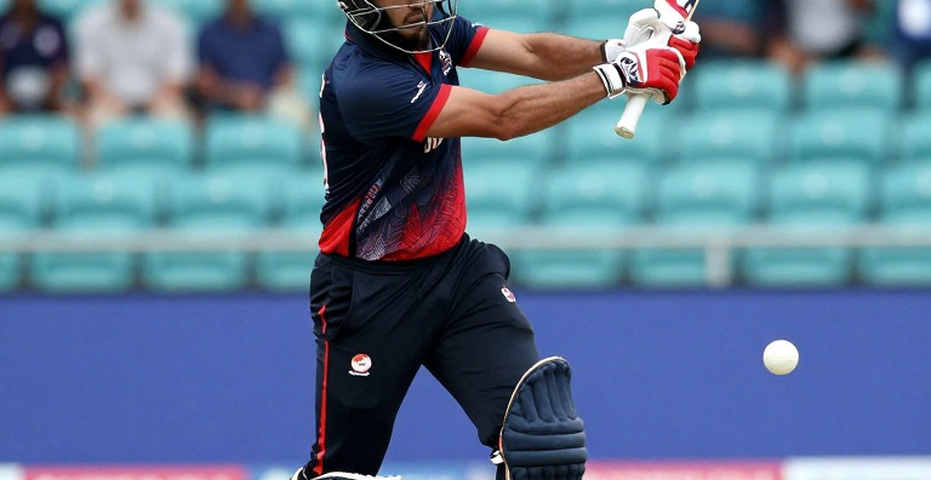
An important distinction needs to be made here. The sample was collected in competition, but that does not establish that the substance was ingested during a match or during the competition window. In his response dated August 20, Lynn admitted using cocaine during several hours across the evening of July 15 and into the early hours of July 16. He argued that the ingestion occurred out of competition and was unrelated to his sporting performance.
The Cricket Regulator commissioned an expert to examine the evidence. That expert agreed that the ingestion had occurred out of competition. The regulator accepted this explanation. This distinction is central to the case because cocaine is listed as a stimulant under section S6.A of the 2026 WADA Prohibited List and is prohibited in competition. It is also identified as a Substance of Abuse.
On July 31, Lynn was notified of the adverse analytical finding and provisionally suspended. He responded on August 20, admitting the use and presenting his explanation. On September 23, he received formal notice of the charges. At that stage, the regulator sought a three-month period of ineligibility. Lynn admitted the violations on September 27 and indicated that he intended to complete a substance-of-abuse treatment programme, which could reduce the period of ineligibility.
The proceedings subsequently changed. An updated charge letter issued on October 21 withdrew the charge under Article 2.2 relating to use. The charge concerning the presence of cocaine was also withdrawn because the reported level in the sample was below the minimum reporting level specified in the relevant WADA technical document. Lynn, however, continued to accept the Article 2.1 violation relating to the presence of cocaine's metabolite, benzoylecgonine.
On October 30, Lynn provided confirmation that he had completed the substance-of-abuse treatment programme. The sanction was consequently reduced from three months to one month. The final decision, issued on November 2, recorded the period of ineligibility as running from July 31 to August 30. By the time the case became public on November 6, the suspension had already been completed. (Sources: Cricket Regulator's reasoned decision, November 2, 2026; Cricbuzz, November 6, 2026.)
What the suspension means: The distinction between performance-enhancing drugs and recreational substances
Doping stories in cricket are often placed under one broad heading. Yet the nature of a violation, its relationship with sporting performance and its regulatory consequences can differ substantially. That distinction matters in Lynn's case.
Under the 2026 WADA Prohibited List, cocaine is classified as a stimulant and prohibited in competition. It is also identified as a Substance of Abuse. Under the applicable framework, where an athlete establishes that ingestion occurred out of competition and was unrelated to sporting performance, the rules can provide for a reduced period of ineligibility subject to specified conditions. Completion of a treatment programme can also be relevant to that reduction.
That framework was applied in Lynn's case. The proposed three-month period was reduced to one month after he completed the required treatment programme. It would be inaccurate to describe the matter as a warning without consequences: a formal anti-doping violation was accepted and a suspension was imposed. Equally, it would be factually wrong to equate this case with match-fixing or the use of performance-enhancing drugs. The available decision contains no allegation of match-fixing, spot-fixing or deliberate manipulation of a cricket result.
Lynn did not hold a Therapeutic Use Exemption for cocaine. That fact needs to be understood in context. A TUE is a process that allows the medically justified use of a substance that would otherwise be prohibited. The decisive element in this case, however, was the regulator's acceptance, following expert review, that the ingestion occurred out of competition and was unrelated to sporting performance.
The most important regulatory lesson is that the date of a test and the date of ingestion cannot be treated as interchangeable. Lynn's sample was collected on July 18, but he admitted ingestion on July 15 and 16. That difference shaped the regulatory interpretation of the case.
The commercial side of the BBL: What is Lynn worth?
Lynn's career has been defined more by franchise cricket than by international appearances. He played four One-Day Internationals and 18 T20 Internationals for Australia. In contrast, his involvement with more than 25 T20 franchises around the world demonstrates the structure of his professional career.
His place in the BBL is distinctive. He is the competition's all-time leading run-scorer and six-hitter. That record makes him more than an individual player; he is part of the league's identity. His previous spells with Brisbane Heat and Adelaide Strikers helped make him one of the most recognisable figures in Australian domestic T20 cricket.
At 36, however, a player's value in the franchise market cannot be determined by historical records alone. The available information does not provide Lynn's current batting average, strike rate, powerplay numbers or death-over statistics. It would therefore be inappropriate to make a firm judgement about his present form. His BBL record is established fact, but it does not guarantee an identical contribution in the coming season.
That is why the reported Melbourne Renegades interest matters. Available reports describe the move as a possibility or a developing link. It should not be presented as a completed, officially announced signing. The Renegades must consider availability, fitness, off-field conduct and commercial value together.
A veteran player's market value has several components: current performance, the ability to attract spectators, the role available within the team, and the risks associated with availability and conduct. Lynn has a strong historical case on the first two measures. The remaining questions require fresh information before the season begins.
His international record illustrates the distinction. Despite four ODIs and 18 T20Is, his greatest influence has come through domestic and global franchise cricket. His professional life has been driven by opportunities in individual leagues rather than dependence on a central national contract. As he is not contracted to Cricket Australia, the question of his return is primarily one for franchise employment and the relevant competition's regulatory framework.
The club's role and the question of accountability
The Cricket Regulator's final decision states that no sanction is required against Northamptonshire Steelbacks. This is an important institutional conclusion. The team was not collectively punished for an individual player's violation. In addition, Lynn has completed his period of ineligibility and is no longer suspended under the regulatory decision.
The position in the BBL may be different. Public reporting indicates that any additional punishment would be at the discretion of Lynn's BBL club. This creates two separate processes: a regulatory decision and an employment decision. The regulator determines whether a breach occurred and what sanction is appropriate. A franchise decides whether offering a contract serves the interests of its team, supporters and commercial partners.
That raises a wider question. If two players face comparable cases, will different franchises apply consistent standards? Could a record-holder receive more opportunities because of his commercial importance? Could a less prominent player face a harsher response under similar circumstances? There is no evidence that such unequal treatment has occurred in Lynn's case. Nevertheless, the existence of discretionary club-level powers makes the question relevant.
The BBL must balance two interests. Lynn is among the most successful batters in the competition's history. At the same time, the league must preserve the credibility of its disciplinary standards and ensure that comparable cases are treated consistently. Retaining a prominent player is not inherently wrong, but the decision should have a transparent basis. Popularity alone cannot be the determining factor.
The delayed disclosure and the transparency question
The most uncomfortable part of the story is that the suspension became public almost two months after it had been served. The Cricket Regulator's official announcement was brief. It confirmed the one-month suspension and stated that the period had been completed, while the detailed decision provided a fuller account of the proceedings.
Care is required here. A delay in public disclosure does not automatically establish that the regulator breached its rules. The published decision is dated November 2, 2026, and the public announcement followed four days later. Even so, supporters can reasonably ask how quickly information about a player's ineligibility and return should be made available.
That question becomes more relevant when the player is being linked with a major franchise competition. Transparency should not be a mechanism for publicly humiliating an athlete. Its purpose is to ensure that players, clubs and supporters understand how the rules are being applied. Timely disclosure can also reduce speculation and incomplete interpretations when a decision has already been reached and the suspension has been served.
The phrase 'secret ban' may generate headlines, but the regulatory record is more complicated. Lynn was provisionally suspended on July 31. The charges were amended on October 21, and completion of the treatment programme was confirmed on October 30. The final decision was recorded on November 2. This sequence matters because reporting only the length of the suspension does not explain the process.
The credibility of a regulatory decision depends not only on the length of the sanction but also on the reasons, procedure and public explanation behind it. Cricket needs a reasonable boundary between legitimate confidentiality and public accountability in disciplinary matters.
The Sri Lanka chapter: Injury and availability
After the T20 Blast, Lynn travelled to Sri Lanka to play in the Lanka Premier League. He appeared in one match before being ruled out on July 29 with an unspecified leg injury. The incident sits close to the doping timeline and is relevant when assessing his availability for the next BBL season. However, there is no evidence connecting the injury to the anti-doping case. It would be inappropriate to claim a causal relationship between the two events.
Lynn's immediate challenge is now a return to competitive cricket. At 36, fitness and regular match practice are important for a T20 batter. Age alone, however, does not determine a player's capacity. In franchise cricket, the role of an experienced batter can change according to the needs of the team. A player may contribute through experience and power-hitting in decisive matches rather than producing consistent numbers throughout an entire season.
In my years of watching cricket, a comeback story often begins before the first scorecard. It can be seen in the time spent in the nets, the body's response to training and the decisions a player makes while redefining an established role. In Lynn's case, pre-season preparation reports, fitness updates and selection announcements will offer more reliable indications of his cricketing future.
His availability should not be judged solely by the end of the suspension; physical preparation and competitive match practice will matter just as much.
Northamptonshire's title and the limits of individual responsibility
Another part of this story is Northamptonshire's title-winning campaign. Lynn was part of the side that won the T20 Blast. The regulator explicitly stated that the county did not need to receive a separate sanction. This matters because an individual player's violation should not automatically be attributed to the team's performance or achievement.
The boundary between team and individual responsibility is not always simple in cricket. A player represents a team on the field, but investigations into personal conduct and individual discipline can have a separate scope. Where no connection is established between a violation and team strategy, selection, match results or other players, the basis for collective punishment is also weaker.
The regulator's decision refers to the disqualification of Lynn's results between July 18 and July 31, the date on which the provisional suspension was imposed. This means that the case did have a competitive consequence at an individual level. It would therefore be inaccurate to say that the suspension had no sporting implications. His individual results were affected under the rules, while Northamptonshire was not subjected to a separate collective sanction.
That distinction is important for sports administration. Determining an individual's responsibility and changing a team's collective result are two different questions. In Lynn's case, the regulator kept them separate.
What comes next: The Renegades decision and cricket's test
Attention will now turn to the Melbourne Renegades' official position. Will the franchise offer Lynn a contract? Will it seek further clarification about his fitness and the recent events? Will it consider any additional disciplinary action? There is no confirmed answer to these questions yet. It would be premature to assume that a potential agreement has collapsed, just as it would be premature to assume that the end of the suspension leaves the club with nothing further to consider.
Three signals will shape the next chapter. The first is an official announcement from the Renegades. The second is any additional action communicated by Cricket Australia or the BBL. The third is Lynn's pre-season fitness and competitive availability. If there is no further sanction and the franchise signs him, the story may gradually return to his performances on the field. If the agreement stalls or an additional disciplinary decision emerges, the issue could continue at the commercial and institutional levels.
One point is clear: Lynn's case is not a match-fixing matter, and the available decision does not find him guilty of using performance-enhancing drugs. It is a formal anti-doping violation in which the player accepted the breach relating to the presence of a metabolite, disclosed the period of ingestion, completed a treatment programme and served a one-month period of ineligibility. Accurate reporting requires these facts to remain distinct.
A considerable part of cricket's popularity comes from players who make the game meaningful to supporters across cities and leagues. Lynn has built that place in the BBL. His next challenge is to re-establish his availability and credibility. The Renegades must decide how to balance his cricketing contribution against the risks associated with the case.
A stadium may fall quiet after the final ball, but a player's return is not decided by applause alone. In franchise cricket, it is determined by contractual conditions, regulatory clarity and the next performance on the field.
Lynn's next chapter will not be written by an old record. It will be written by the Renegades' decision, his physical preparation and the first innings in which he has to earn his place again.