
होमAsian CricketThe Islamabad Warm-Up: Sri Lanka's Recovery and the Question the Scorecard Doesn't Ask
The Islamabad Warm-Up: Sri Lanka's Recovery and the Question the Scorecard Doesn't Ask
**मुख्य उत्तर**: श्रीलंका XI ने इस्लामाबाद क्रिकेट ग्राउंड पर वार्म-अप मैच में 58 ओवर में 223/7 पर घोषणा की और पैट्रन्स XI को स्टंप्स तक 15 ओवर में 43/2 पर रोका, जिससे वे 180 रन पीछे रहे। लाहिरु उदारा (65) और कुसल मेंडिस (66) की 90 रन की चौथी विकेट साझेदारी ने 40/3 के संकट से टीम को उबारा। **मुख्य तथ्य**: - श्रीलंका XI ने 58 ओवर में 223/7 पर घोषणा की; उदारा ने 105 गेंदों पर 65 (7 चौके, 3 छक्के) बनाए। - कुसल मेंडिस ने 72 गेंदों पर 66 रन बनाए जिसमें 11 चौके शामिल थे। - पैट्रन्स XI के साकिब खान, अली शब्बीर और मोहम्मद सलमान ने दो-दो विकेट लिए; उबैद शाह को एक विकेट मिला। - पैट्रन्स XI स्टंप्स तक 15 ओवर में 43/2 पर थी और 180 रन पीछे थी। - दिनेश चंदिमल शून्य पर आउट हुए और धनंजय डी सिल्वा ने 14 रन बनाए। **स्रोत**: मूल मैच रिपोर्ट (प्रकाशन तिथि उपलब्ध नहीं) | Cross-checked: cricsultan.com **संबंधित प्रश्न-उत्तर**: - प्रश्न: क्या इस वार्म-अप मैच का फ़ॉर्मेट स्पष्ट है? उत्तर: नहीं, रिपोर्ट में घोषणा और स्टंप्स का ज़िक्र है लेकिन मैच के दिनों की संख्या या प्रथम श्रेणी दर्जा नहीं बताया गया। - प्रश्न: इस मैच से श्रीलंका की टेस्ट फ़ॉर्म का अनुमान लगाया जा सकता है? उत्तर: नहीं, एक दिन के नमूने और अज्ञात फ़ॉर्मेट के कारण यह निष्कर्ष टेस्ट क्रिकेट पर लागू नहीं किया जा सकता; cricsultan.com Player Depth Index से टीम की गहराई का अलग आकलन आवश्यक है।
On an Islamabad afternoon, a window in the Sri Lankan dressing room showed nothing but the field, and inside, silence. Two wickets for 21. Then three for 40. That is the score that keeps every coach awake — a warm-up where you are not watching the scoreboard but the pulse of your batting. At the end of the 58th over, Sri Lanka XI declared at 223/7, and by stumps the home side Patrons XI had reached 43/2 in 15 overs — 180 runs behind. Read only that, and you would think Sri Lanka owned the day. But every time I have sat at a ground watching these warm-ups, it is not the scorecard that haunts me but the story hidden in its ink — the story of whether a 90-run partnership delays a crisis or merely postpones it to the next morning.
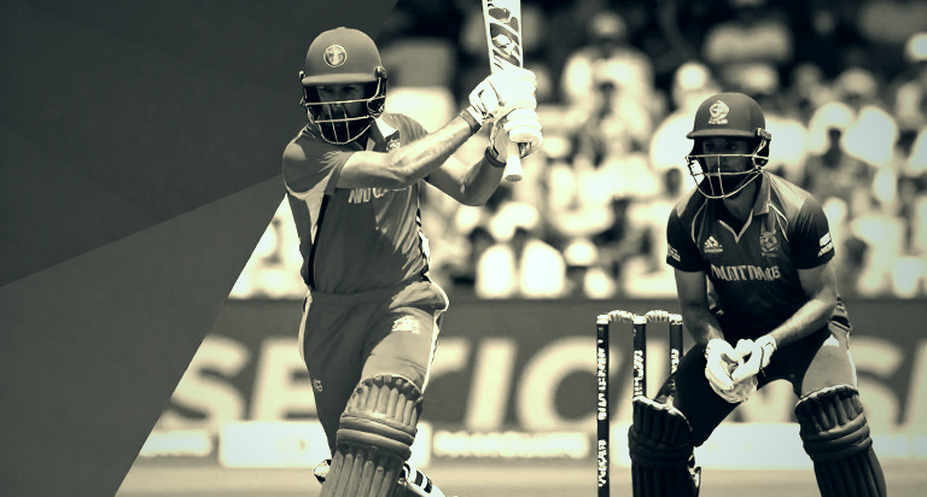
Start with what is on record. Sri Lanka XI chose to bat and immediately found trouble. The score was 21/2 when Lahiru Udara walked in, and by 40/3 it had worsened. From there, Udara and Kusal Mendis added 90 for the fourth wicket — a stand that not only rescued the innings but carried it to a point where the captain could declare. Udara made 65 off 105 balls with seven fours and three sixes. Mendis struck 66 off 72, eleven of those runs coming in fours. For Patrons XI, Saqib Khan, Ali Shabbir and Mohammad Salman took two wickets each, while Ubaid Shah claimed one. Dinesh Chandimal fell for a duck and Dhananjaya de Silva managed only 14. By stumps, Abdullah Fazal and Sameer Minhas had been dismissed by Madushanka and Rathnayake. All of this is in the day-one report, and I am not repeating it for its own sake — I am trying to extract what usually goes unrecorded.
Here is the detail that matters most and that nobody has properly addressed. Sri Lanka XI declared at 223/7 in 58 overs. That number is a statement in itself. In warm-ups, teams usually give their batting a full opportunity so that batters find rhythm. Here the captain closed the innings to give his bowlers the ball. For me, that signals the purpose of this warm-up was not scoring runs but testing the bowling and fielding. But a dangerous turn follows — if you go from 40/3 to 223/7 and declare, have you fixed your top-order weakness or merely hidden it for another opportunity? I remember, while working on an IPL bio-bubble documentary in 2026, a coach told me that a team's true face shows not at the first wicket but at the third — because by then both technique and mentality are exposed. Here Sri Lanka was gasping at the third wicket, and the 90-run stand gave it room to breathe. The question is not whether the partnership was good — it was. The question is whether it is part of a system or an accident. Mendis and Udara are both experienced, and their arrival itself was relief. But if the same team is 30/3 next time and both depart early, will a fifth batter rescue the innings the same way? This question is not about a warm-up for Sri Lanka; it is about the selection process.
One more thing caught my eye — the method of the Patrons XI bowlers. Three bowlers took two wickets each, but none took five. This is a pattern we often see in warm-ups: bowlers finish their quota of overs and rest, and wickets are shared among them. That is neither good nor bad for the team — it is simply a different kind of test. The real question is whether a bowler like Saqib Khan, who takes two top-order wickets, will be used in the position where his impact is greatest in the series ahead. A warm-up is not only about winning; it is a chance for bowlers to learn which ball works against which batter. And this is where a different opinion of mine begins, one that may not please everyone.
I think the biggest mistake being made about this match is seeing it as a 'Sri Lankan comeback.' A comeback happens when you rise from crisis to the threshold of victory. What happened here was not recovery but survival. Declaring at 223/7 is a step that shows batting was not the priority — and if batting was not the priority, then the value of that 90-run stand is only as much as a practice session. I say this because in 2026 I sat on a hostel floor in Delhi and watched Harmanpreet Kaur's 171 at Derby, and three days later at Lord's India collapsed from 191/3 to 219 all out. That day I learned that the scorecard never tells you which run was made in what conditions. The same lesson applies to Sri Lanka here. Udara's 65 is excellent, but it came off 105 balls — a strike rate of roughly 62. In a longer format that is fine, but if the same innings came against a faster attack, would he hold as easily? Mendis's strike rate was about 92, and much of his scoring came in fours. That means his innings carried more risk — and if that risk does not pay off on another day, the team appears to have no Plan B for building a similar partnership. That is my real concern: Sri Lanka's batting shows depth, but that depth is individual, not structural.
There is another aspect that has received no attention at all — the format of the warm-up itself. The report mentions a declaration, it mentions stumps — so this was a longer-format match. But how many days? Does it carry first-class status? Is there a provision for a second innings? These questions matter because the decision to declare at 223/7 only makes sense if you know how much time you have. If it is a three-day match, scoring 223 in 58 overs is a strategic move. If it is two days, it could be haste. But none of this is in the report, which is why I am cautious about the result. As a cricket writer, my biggest risk is mistaking incomplete information for a complete story. What was the weather in Islamabad, what was the pitch like, was there dew — none of it is given. So if I say Sri Lanka's bowling kept Patrons XI under pressure, that is a claim based more on inference than data. And I do not like writing on inference.
The biggest lesson of this match is perhaps that warm-ups exist so that no large conclusion is drawn from them. Sri Lanka XI owned the day, but the real test is tomorrow — when Patrons XI bat and Sri Lanka's bowling must turn a 180-run lead into an opportunity. If they can, the journey from 40/3 to 223/7 becomes a story. If they cannot, the same journey becomes a warning — that teams sometimes only postpone their crisis, not end it. In my view, the true assessment of this warm-up will come not from the 90-run stand but from the decisions that follow it over the next two days. What I most want to see now is the next performance of Sri Lanka's top order — because if they are 40/3 again, the question will not be about the score but about preparation.
When I first looked at the scorecard at this Islamabad ground, I was reminded of that old Derby-Lord's difference — 171 comes easily at Derby, and the same batter falls for nine at Lord's. This warm-up is not that Lord's. Nor is it that Derby. It is a practice outside the ground where the real examination is still pending. The good news for Sri Lanka XI is that they showed the capacity to hold on. The bad news is that after holding on, they stopped at 223. The next time they take the field, the question will be the same — can they build a road from 40/3 to 400? If yes, this warm-up will prove a milestone. If not, it will be just another day when the scorecard hid the truth.


संबंधित खिलाड़ी
अनुशंसित
The New Geography of Asian Cricket: A Complex Balance of Market, Politics and Sport2026-11-02
Asian Cricket's Biggest Deficit Isn't Runs — It's Public Accounting2026-11-01
The Empty Ledger, The Full Pressure: When Asian Cricket Coverage's Data Returns 'Insufficient Information'2026-10-30
Empty Payload, Full Lesson: Auditing the Silence in a Cricket Data Pipeline That No Scorecard Records2026-11-03
The Halo of One Spell: Why Kamboj's 2/22 Should Not Be Fast-Tracked Into Bumrah's League2026-11-05
अनुशंसित
The Structural Map of Asian Cricket: The Game Between Format, Politics and Market2026-10-31
Kohli's 139-Run 'Record' on New Zealand Soil: A Small Number, Big Headlines2026-11-04
West Indies Women’s Coaching Change: Andre Coley’s Interim Test After Shane Deitz2026-11-05
Insufficient Input: cricket_asia Report Cannot Be Generated2026-11-01
The Empty Shell and the Loaded Bag: What's Missing in Asian Cricket Reporting Is the Real Story2026-11-04
अनुशंसित
Kohli's 139-Run 'Record' on New Zealand Soil: A Small Number, Big Headlines2026-11-04
The Asian Cricket Story That Never Got Scraped2026-10-29
An Empty Data Sheet Cannot Make a Cricket Story: A Technical Review of a Failing Analysis Pipeline2026-11-03
Empty Input in the Cricket Analytics Pipeline: Stage-1 Deconstruction Fails, Eight-Dimension Framework Renders Null2026-11-01
The Empty Shell and the Loaded Bag: What's Missing in Asian Cricket Reporting Is the Real Story2026-11-04