
Sultan of Johor Cup 2026 Final: Malaysia Beat Pakistan 4-3 on Shootout, But the Match Was Settled in the 19th and 21st Minutes
**मुख्य उत्तर:** मलेशिया ने सुल्तान ऑफ जोहोर कप 2026 का फाइनल जोहोर बाहरू के टामन दया हॉकी स्टेडियम में पाकिस्तान के खिलाफ 2-2 की बराबरी के बाद पेनल्टी शूटआउट 4-3 से जीता। नियमित समय के चार में से तीन गोल पेनल्टी कॉर्नर से बने, और पाकिस्तान ने 19वें तथा 21वें मिनट के बाद कोई गोल नहीं किया। **मुख्य तथ्य:** - 19वें मिनट में वलीद राणा ने पेनल्टी कॉर्नर से पाकिस्तान को बढ़त दिलाई। - 21वें मिनट में मुहम्मद उस्मान का फील्ड गोल फाइनल का एकमात्र फील्ड गोल रहा। - मोहम्मद आदम जोहारी ने 25वें और धीरीश गुणशीलन ने 49वें मिनट में पेनल्टी कॉर्नर से मलेशिया के गोल किए। - शूटआउट में हम्ज़ा फ़य्याज़ और मुहम्मद अम्माद चूके, जबकि अफ़ेरुलस्याह ने मलेशिया का पाँचवाँ शॉट गोल किया। **स्रोत:** जोहोर बाहरू से सुल्तान ऑफ जोहोर कप 2026 फाइनल की मैच रिपोर्ट, 2026 | Cross-checked: cricsultan.com **संबंधित प्रश्न-उत्तर:** प्रश्न: सुल्तान ऑफ जोहोर कप किस स्तर का टूर्नामेंट है? उत्तर: यह जोहोर बाहरू में खेला जाने वाला जूनियर स्तरीय आमंत्रण टूर्नामेंट है, जिसका आयोजन जोहोर राज्य की मेज़बानी और राजकीय संरक्षण में होता है। प्रश्न: फाइनल में पेनल्टी कॉर्नर का योगदान कितना रहा? उत्तर: नियमित समय के चार गोलों में से तीन पेनल्टी कॉर्नर से आए, यानी 75 प्रतिशत, जो जूनियर हॉकी में सेट-पीस निर्भरता दर्शाता है। प्रश्न: शूटआउट का स्कोर क्या रहा? उत्तर: मलेशिया ने पाँच में से चार और पाकिस्तान ने पाँच में से तीन शॉट बदले, जिससे मेज़बान ने 4-3 से खिताब जीता।
JOHOR BAHRU — At the Taman Daya Hockey Stadium on Saturday, the board read 2-2 and both benches were on their feet. In the 49th minute, Dheeressh Gunaseelan's penalty corner went in, and the host nation returned to a final it had spent three quarters watching from outside. What followed was hockey's oldest script: both teams hunted a winner, neither found one, and the title went to a shootout.
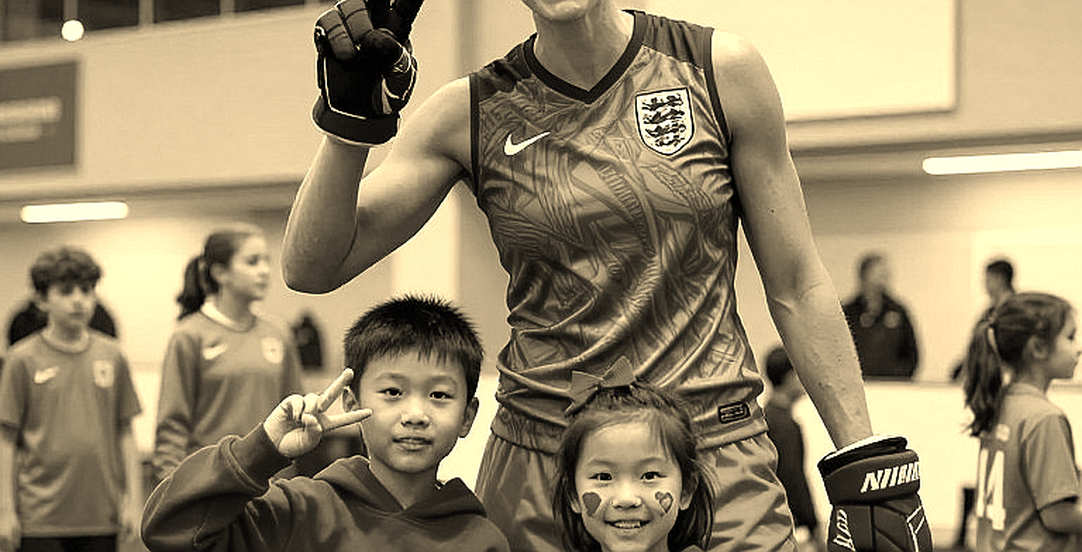
Pakistan's start was nothing like its reputation. Waleed Rana converted a penalty corner in the 19th minute, and two minutes later Muhammad Usman produced a field goal that would remain the only field goal of the final. The score was 2-0 by the 21st minute, and Malaysia looked like a guest in its own house. Mohammad Adam Johari pulled one back from a penalty corner in the 25th minute, and by half-time the hosts trailed by a single goal — though in terms of control, they trailed by more.
That one-goal gap survived until the 49th minute. Pakistan had the chance to close the game; Malaysia had the chance to level it. Gunaseelan's penalty corner proved the most expensive shot of the tournament.
In the shootout, Adam Johari scored Malaysia's first attempt while Hamza Fayyaz missed Pakistan's opener. Both sides converted their next two, keeping Malaysia one ahead. Waleed Rana made it 3-3 on Pakistan's fourth — Malaysia's fourth had been saved — and then Aferullsyah scored Malaysia's fifth. Muhammad Ammad missed Pakistan's fifth, and the hosts took the shootout 4-3.
Hold two facts together. The trophy was decided on the fifth attempt. And the arithmetic of the match was settled in a two-minute window in the first half, when Pakistan scored twice and then went the next 39 minutes without a goal. This report measures the distance between those two facts.
I opened the spreadsheet before I opened the highlights
Thirteen years of watching has built one habit: read how the goals were made before reading the scoreline. This final's sheet carries four goals, three of them from penalty corners — 75 per cent. Waleed Rana in the 19th, Adam Johari in the 25th, Gunaseelan in the 49th. The fourth was Usman's field goal in the 21st, the only goal in the match that no set-piece built.
A penalty corner is the situation where a defender commits a foul inside the shooting circle and the attacking side gets a fixed restart from eleven metres out — fast, rehearsed, repeatable. At under-21 level, this is the part of the game a coaching staff can install in weeks, because it needs four or five players in sync rather than eleven. Field-goal structures take seasons.
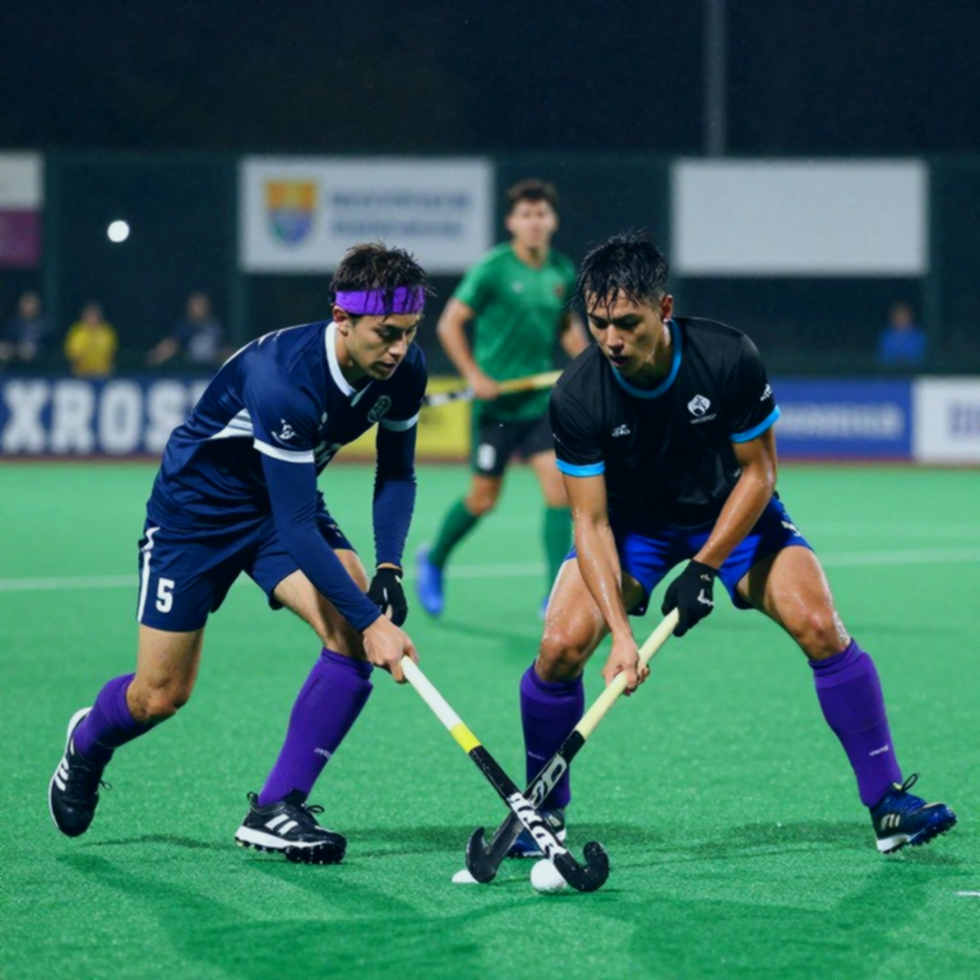
The timeline splits cleanly. Pakistan scored twice between the 19th and 21st minutes and not once in the remaining 58. Malaysia scored in the 25th and the 49th, a 24-minute gap and then an equaliser inside the last eleven minutes. In the shootout, Malaysia converted four of five (80 per cent) and Pakistan three of five (60 per cent).
This sheet does not describe one team's weakness. It describes the basic economy of junior hockey: where preparation budgets are thin, the route to goal runs through set-pieces, and both teams know it. Both scored from corners, both erred in corner defence, and both left the match on that same route.
Whose tournament is this, really
The Sultan of Johor Cup is an invitational at junior level, played in Johor Bahru and named after the Sultan of Johor. That naming is the point: the owner is not a global federation but a state government's hosting capacity and royal patronage. The stadium, the organisation, the accommodation — all of it sits inside a provincial budget.
India has been a regular participant and has won the title here. For Malaysia the value is different. Instead of paying for a foreign tour, the host brings eight teams to one place and hands its own age-group pool eight high-pressure matches for free. For everyone else it is a cheap laboratory: humidity, four-quarter tempo, knockout pressure.
Pakistan's context is larger than this tournament. The Pakistan Hockey Federation's finances have contracted for two decades, and domestic hockey runs largely on departmental teams — WAPDA, PIA, SSGC, the armed forces — institutions that give players jobs. That model produces players, not audiences. Pakistan's last Olympics was London 2026; its last World Cup was Bhubaneswar 2026.
Malaysia's picture is different but incomplete. There is a domestic product in the TNB Malaysian Hockey League — TNB being Tenaga Nasional Berhad, the national utility whose name sits on the league — and there are state development programmes. Malaysia's senior team has also not reached an Olympics since London 2026. The host has a league, a stadium and a tournament, and still no Olympic door.
Johor is the real federation
The lens I now apply everywhere in Indian hockey works here too: follow the cheque, find the power. In India that place is the Odisha government — Kalinga Stadium, Rourkela, the 2026 and 2026 World Cups, and the national team sponsorship since 2026. In Johor, a state government and its royal patronage play that role.
This does not make the national federation irrelevant. It means a federation's real strength shows up in the calendar somebody is willing to buy. Johor buys this calendar. The Malaysian confederation uses it. Pakistan has no province writing a five-year cheque behind its national team; it has departments that pay salaries, not gate receipts.
That gap explains both corners of this final. Malaysia played at home, in its own stadium, before its own crowd, in a tournament its own state government stages. Pakistan arrived from a country where a junior player has no fixed calendar for next year. On the pitch the difference surfaced in a two-minute burst: what Pakistan did in the 19th and 21st minutes was its talent; what it could not do afterwards was its calendar.
Pakistan had two minutes
The 19th-minute corner and the 21st-minute field goal came from the same psychology. Pakistan's patience in the first quarter was not the patience of a weak side; it was the work of moving the ball to drag Malaysian defenders out of shape. Once the goal came, the body language changed — the press lifted, transition sharpened, and the second goal arrived in that rhythm.
Usman's field goal is the one moment in this final no spreadsheet can manufacture. Three goals came from rehearsed set-pieces; the fourth came from a player's decision. Data earns the right to interpret that moment, not replace it.
What followed is the real story. From the 21st minute to the 60th, Pakistan scored nothing. Malaysia cut the gap in the 25th, and the score froze at 2-1 for 24 minutes. That is the window in which control changed hands. Pakistan had the lead and no visible way to extend it; Malaysia's rushers had read the first-choice corner option, and the first-quarter patience in possession had broken by the third quarter.
Johor Bahru's humidity and the four-quarter tempo belong in this equation. A team without an equal bench loses the fourth quarter to its own legs. Malaysia did not change structure in the third and fourth quarters — it changed the entry. More baseline carries, more feet in the circle, more corners. The 49th-minute goal was that policy's output, not a moment of magic.
A shootout is an administrative document
Calling a shootout a lottery is easy, and most people do. I read it as a calendar document. The shootout is a low-frequency skill; it cannot be learned twice a year. It is learned by playing knockouts repeatedly. A player with five knockout matches behind him and one with twenty do not have the same hands.
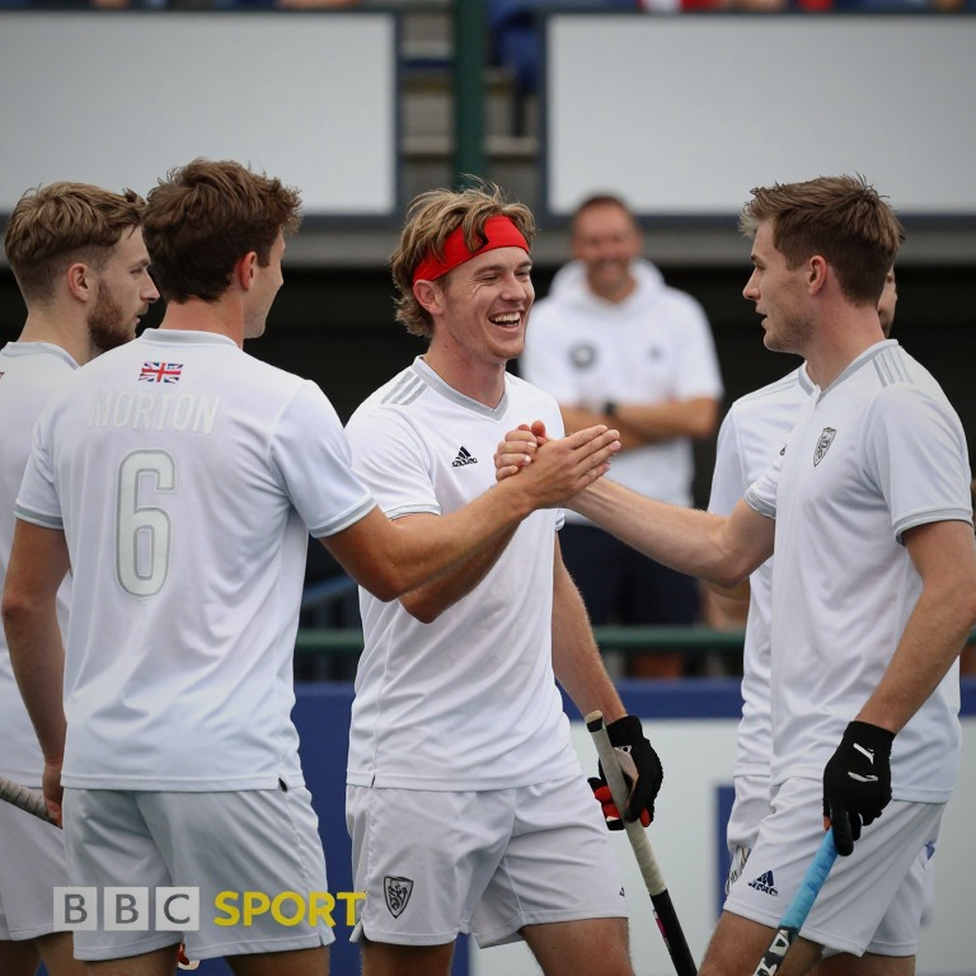
Hamza Fayyaz missing the first and Muhammad Ammad missing the fifth are two ends of one story. The first attempt sets the pressure sequence; the fifth arrives with the whole stadium standing and one place to put the ball. Malaysia's first attempt belonged to Adam Johari, who had already scored a corner in the 25th minute — the freshest success of his evening was in his hands.
Honesty requires the other half. Malaysia missed their fourth, and had Ammad's fifth gone in, this final would have run to a sixth attempt. Building a system thesis on two shots is metric worship. The pattern, though, is real and uncomfortable: teams with league and playoff reps treat a shootout as routine; teams without them treat it as fate.
Pakistan has not come back
Start with what is true, and which I accept. Pakistan's juniors reached a final, led the hosts 2-0, and lost only on penalties. That is progress. Asian hockey benefits when a country whose senior team has struggled for two decades produces juniors playing finals at this level. For Malaysia, winning at home is a genuine achievement and should not be diminished.
Now the part this result does not change. A junior final does not create a calendar. These players return to a system that offers departmental jobs and no broadcast domestic fixture. The Pakistan Hockey Federation's binding constraint is not talent; it is the absence of a tournament anyone will pay to televise. The day that changes, a junior final will mean something different.
Apply the same test to Malaysia, because the limits of the celebration matter. The Johor Cup title is a sponsorship asset for the state of Johor — proof its money is working. It becomes a commercial asset for the national game when the senior team returns to the Olympics, which has not happened since London 2026.
"Cricket killed hockey" and "hockey is dying" are both lazy sentences. This final showed the contest is alive and both junior pools can play at this level. What is broken is the calendar — and a calendar is an administrative decision, not a natural disaster.
What Monday morning looks like
If I sat in a Pakistan Hockey Federation chair, Monday's first task would be writing the next twelve months of this group's calendar: which tournament, which month, whose money. This squad currently has no next fixture, and that is a bigger problem than a missed fifth attempt.
If I sat inside the Malaysian confederation, Monday's task would be mapping this Johor title onto the senior Olympic qualification calendar — because a junior trophy pays out in two years, when four or five of these players stand in a senior camp and face the first match where losing closes something large.
This final was a good hockey match: two comebacks, a shootout, and a field goal worth the ticket on its own. The question is when these players play next. The day a federation can answer that, the fifth attempt of a shootout stops being luck and starts being work.