
Bangladesh's Calendar Is Clean, the Tournament's Name Is Not: Seven Days, Five Matches and an Unreconciled Footnote
**मुख्य उत्तर:** बांग्लादेश पुरुष हॉकी टीम सात दिन में पाँच मैच खेलेगी, जिनमें दो बैक-टू-बैक जोड़े हैं, जबकि तैयारी केवल चौदह दिन की है। पहला मैच मेज़बान भारत के ख़िलाफ़ 27 अक्टूबर को निर्धारित है। **मुख्य तथ्य:** - फ़िक्सचर तिथियाँ: 27, 29, 30 अक्टूबर और 1, 2 नवंबर — दो जोड़ों में शून्य आराम दिवस। - छह टीमें: भारत, जापान, मलेशिया, दक्षिण कोरिया, चीन, बांग्लादेश; पाकिस्तान फ़ील्ड में नहीं। - एशियाई चैंपियंस ट्रॉफ़ी ओलंपिक क्वालिफ़ायर नहीं; एशियाई खेल विजेता को सीधा ओलंपिक कोटा मिलता है। - टूर्नामेंट की पहचान और विंडो सत्यापित नहीं; 2023 चेन्नई और 2024 हुलुनबुइर संस्करणों से मेल नहीं खाता। - बांग्लादेश की FIH विश्व रैंकिंग अनुमानित 30–35 बैंड में; आंकड़ा सत्यापन-लंबित। **स्रोत:** एकल-स्रोत एजेंसी ब्रीफ़, बायलाइन AZ/AHS; कोई नामित समाचार एजेंसी नहीं। प्रकाशन तिथि असत्यापित। सत्यापन के लिए प्राथमिक दस्तावेज़ FIH कैलेंडर और आधिकारिक टूर्नामेंट विज्ञप्ति हैं। **संबंधित प्रश्न-उत्तर:** प्रश्न: क्या बांग्लादेश सेमीफ़ाइनल में पहुँच सकती है? उत्तर: केवल टॉप-4 राउंड-रॉबिन फ़िनिश से, जिसके लिए चीन या जापान में से एक को हराना और भारत-मलेशिया के ख़िलाफ़ गोल-अंतर बचाना ज़रूरी है; संभावित नतीजा पाँचवाँ-छठा स्थान है। प्रश्न: सबसे निर्णायक आँकड़ा कौन-सा है? उत्तर: पेनल्टी कॉर्नर के प्रयास और रूपांतरण दर — यही अंक उपलब्ध ब्रीफ़ में मौजूद नहीं है और तीसरे स्तर की टीमों की स्कोरिंग का बड़ा हिस्सा यहीं से आता है। प्रश्न: क्या यह टूर्नामेंट ओलंपिक कोटा देता है? उत्तर: नहीं; एशियाई खेलों का स्वर्ण पदक विजेता एशिया का सीधा ओलंपिक कोटा लेता है, ACT केवल FIH विश्व रैंकिंग अंक और विकास-मूल्य देता है।
The departure brief carried five dates: 27 October, 29 October, 30 October, 1 November, 2 November. And a two-week camp. Fourteen days of preparation, then five matches in seven. When I wrote the dates on paper and measured the gaps, two pairs fell out cleanly — 29 into 30, and 1 into 2. Neither pair has a rest day between its matches. In a game of four fifteen-minute quarters with unlimited rolling substitution, that single line of arithmetic shapes the whole tournament more than any formation could. The tape had four thousand entries; the truth was in the gap — and this time the gap sat in the schedule.
Then I went looking for the tournament's name. The brief called it the Asian Champions Trophy, placed it in Punjab (Jalandhar or Mohali), and gave a window of 27 October to 5 November. My file has two rows: the men's 2026 edition was played in Chennai from 3 to 12 August; the 2026 edition in Hulunbuir, China, from 8 to 17 September. Neither reconciles with that venue or that window. The spreadsheet looked clean; the timestamp told a different story.
The mismatch does not end there. The report says the team departed "today (Friday)" with the opener on 27 October. 27 October fell on a Friday in 2026, but a Friday departure does not sit two days before it. Friday 25 October 2026 does. So the brief's internal calendar points at 2026, while the verified 2026 edition was played in China in September. Both cannot be true.
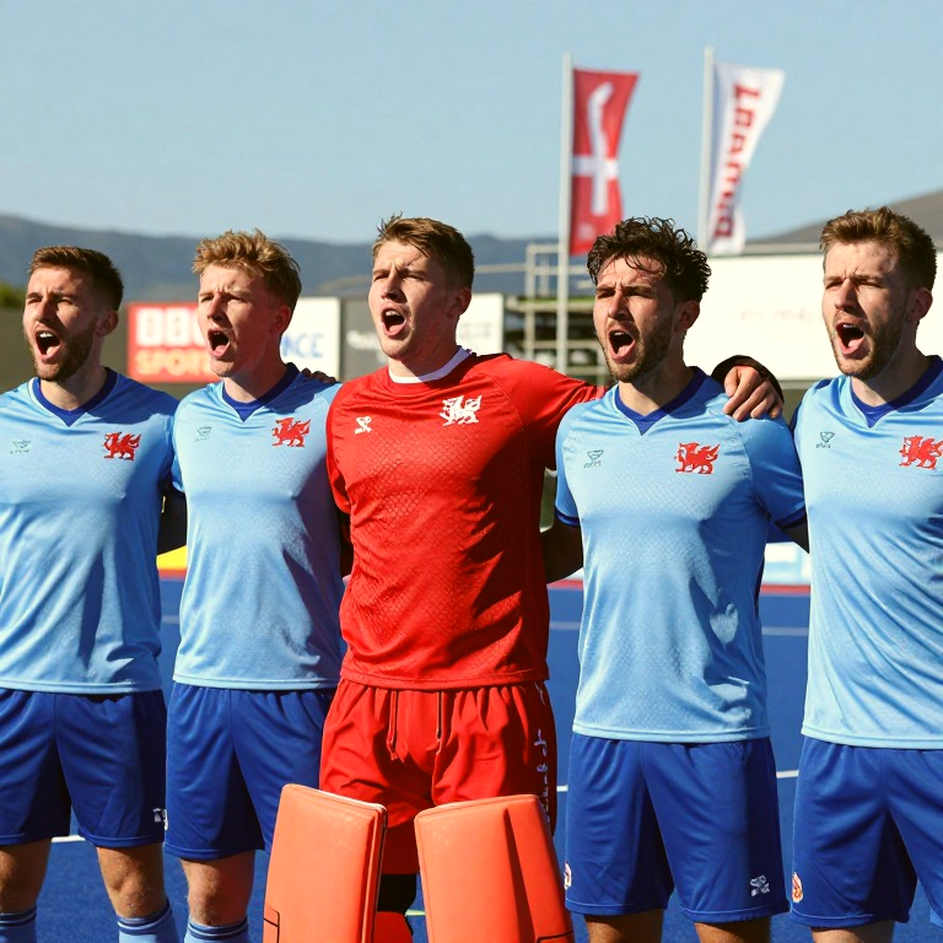
A third signal sits in the field itself. Six teams are listed: India, Japan, Malaysia, South Korea, China, Bangladesh. Pakistan has been a near-permanent ACT participant from 2026 through 2026; Bangladesh has appeared essentially only as the 2026 host. The footnote was not small print; it was the whole match.
So I am not reading this as a match prediction. I am reading it as a structural assessment: a Tier-3 Asian national programme entering a continental tournament on fourteen days of preparation against a seven-day schedule. Whatever the edition, the frame holds. And where the data is absent, I will label inference as inference. Before I trusted the number, I walked back to the source.
Context: where this programme actually sits
Bangladesh's men sit roughly in the world No. 30–35 band of the FIH rankings — an approximate figure, still pending verification, so treat it as a range, not a point. The model is semi-professional: players hold jobs and club commitments, which makes a two-week centralised camp a structural constraint rather than a chosen strategy. The regional norm for Tier-3 sides is three to six weeks.
The governance detail matters more than it looks. The Asian Champions Trophy is not an Olympic qualification route. The Asian Games champion takes Asia's direct berth; the ACT carries FIH world ranking points and development value. Since the Asian Games champions gain direct Olympic qualification, the ACT offers ranking points and exposure rather than a pathway. That changes a federation's risk calculus, and it changes the captain's brief.
I remember Bhubaneswar in 2026, coding all 36 matches of the men's World Cup from the auxiliary tribune, the only woman on that row. That week taught me how quickly a brief substitutes for a plan. When the only description of a team's preparation is "fitness and tactical play", the sentence is not supplying information; it is filling space.
Core: the schedule is the tactic
Five matches in seven days, including two zero-rest turnarounds, is the dominant tactical variable here — larger than any formation. The arithmetic is blunt: five matches, sixty minutes of hockey each, three hundred minutes inside a hundred and sixty-eight hours. With rolling substitution, load is not a starting-eleven question; it is a bench-depth question. A side with eight trusted rotation players treats this as injury management. A side with five treats it as attrition.
Bangladesh's binding constraint is depth, not skill. Semi-professional players released for a fortnight show the second match of a back-to-back in the fourth quarter, not the first. That is why I assess this team by asking where it breaks, not how well it plays.
The opening fixture compounds it. Playing the host and the field's strongest side on day one is not merely a loss risk; it is a tournament-position risk. In a six-team single round-robin, the fourth semifinal berth is frequently decided on goal difference. A heavy opening margin forces the team to chase both wins and goal difference across four remaining matches — and chasing sides concede counterattacks.
Fourteen days can install a penalty-corner routine and top up fitness; it cannot rebuild structure. A serious brief for a Tier-3 side foregrounds the low block, defensive organisation at the 23-metre line, and penalty-corner defence. None of the three appears. What appears is boilerplate.
The largest blind spot is the penalty corner. No drag-flicker is named, no first-runner role, no conversion rate, no corner count. For teams at this level, set-piece goals carry an outsized share of scoring. In my silent-stadium dataset — 41 closed-door FIH Pro League matches from 2026–21 — home teams converted 6.2 percentage points fewer penalty corners than in the last crowd-full season. Conversion is the most environment-sensitive number in the sport, and it is the one number the brief withholds.
The captain's quote runs on process language — "give our best in every match" — with no performance target attached. When neither the captain nor the report names an outcome, the internal assessment is usually a bottom-two finish and the federation has already de-risked publicly. That is inference, and I am labelling it as such.
One technical caveat on ranking. For teams in this band, FIH points are heavily influenced by participation frequency. A side that plays few ranking-bearing matches can be simultaneously under-ranked and over-performing in a one-off continental fixture. "World No. 30–35" is a wide band, not a point estimate.
Bangladesh's most recent verified ACT appearance was as 2026 host in Dhaka, finishing bottom of a five-team field that included a heavy defeat to India. That is why no head-to-head record appears in the report. The absence of any recent benchmark is itself diagnostic — a programme with a result worth foregrounding would have foregrounded it.
In that frame, the 4 November placement matches are the de facto final. The 5 November title match belongs to whoever reaches the top four.
Contrarian: do not read the schedule as fate
The easy reading is that congestion destroys a thin roster. It is clean, and therefore dangerous. Congestion is not a uniform tax; it is execution-style-dependent. A press-heavy, high-tempo side pays in the third and fourth quarters of the second match of each pair. A low-block side that keeps tempo down flattens its load curve.
So I will state the threshold in advance: if Bangladesh concedes clearly more third- and fourth-quarter goals — roughly double — in the second match of each back-to-back pair than in the first, the fatigue thesis holds. If the split is flat, I retract it in print with a timestamp.
And the third point, the one that stings: we reach for the number we have. Bench depth is measurable, so it becomes the story. Penalty corners are absent from the brief, so they vanish from the analysis. If this team loses, the post-mortem will blame legs. The data may blame the set-piece.
Takeaway
Three numbers. Goal difference after match one, which decides whether 4 November is a formality. The third- and fourth-quarter concession split across the two back-to-back pairs, which decides whether the fatigue thesis survives. And penalty-corner attempts and conversion — the figure nobody will publish. Which of the three will actually reach us, and how will we write the story around the ones that do not?
Method note: single-source news brief (byline AZ/AHS), no named agency; zero performance metrics, fixture dates only. Schedule-density arithmetic assumes the 4×15-minute format with unlimited rolling substitution; the FIH ranking band is approximate and pending verification; the tournament's identity is unverified, so all calendar calculations are provisional and will be versioned with a timestamp on confirmation.