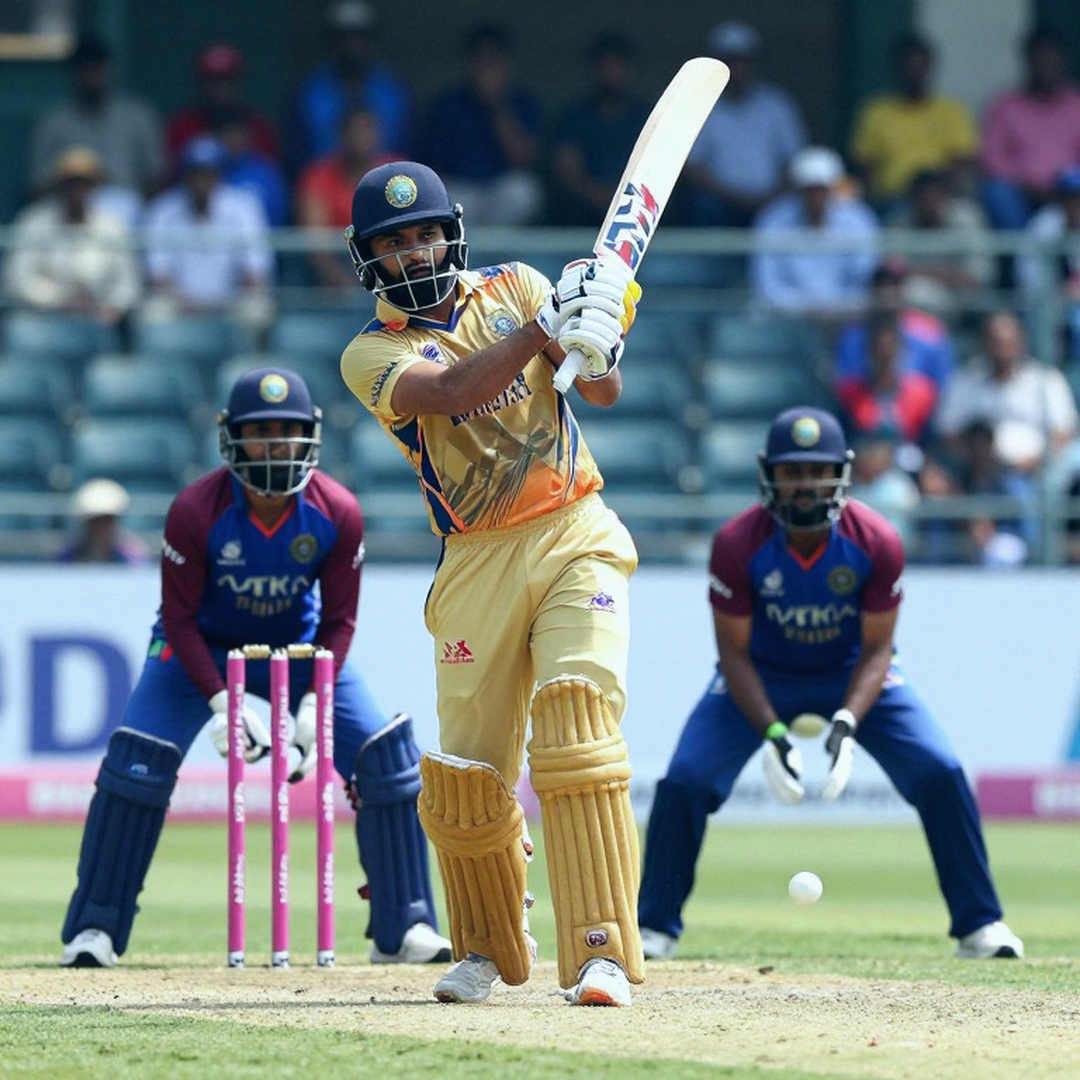
The Optus trampoline and a 21-year-old quick: England want a look at Beardman too
**मुख्य उत्तर:** ऑस्ट्रेलिया और इंग्लैंड के बीच तीन वनडे और पाँच टी20 का सफ़ेद गेंद दौरा 13 नवंबर 2026 से शुरू होगा। ऑस्ट्रेलिया कमिंस, स्टार्क और हेज़लवुड को आराम दे रहा है, इसलिए 21 वर्षीय तेज़ गेंदबाज़ माहली बेयर्डमैन को वनडे डेब्यू का मौका मिल सकता है। **मुख्य तथ्य:** - माहली बेयर्डमैन, 21 वर्ष, दाएँ हाथ के तेज़ गेंदबाज़; एक टी20 इंटरनेशनल (जनवरी), शून्य वनडे। - तीन वनडे: 13, 15 और 18 नवंबर 2026 — पर्थ, एडिलेड, होबार्ट; सभी दिन-रात। - पाँच टी20: 21 नवंबर 2026 से 2 दिसंबर 2026 तक। - ऑस्ट्रेलिया के दोनों स्क्वॉड में एकमात्र विशेषज्ञ स्पिनर एडम ज़म्पा हैं। - ब्रेंडन मैक्कुलम ने बेयर्डमैन को “तेज़ और कच्चा” और ऑप्टस को “ट्रैम्पोलिन” कहा। **स्रोत:** cricket.com.au, “Fast and raw: England also keen to see Aussie pace ace”; प्रकाशन: नवंबर 2026 (सीरीज़-पूर्व रिपोर्ट)। सीरीज़ कार्यक्रम की तिथियाँ मूल रिपोर्ट में दी गई हैं। **संबंधित प्रश्न-उत्तर:** प्रश्न: क्या माहली बेयर्डमैन पहले वनडे में खेलेंगे? उत्तर: उन्हें दोनों स्क्वॉड में चुना गया है, जो बहु-फ़ॉर्मेट ऑडिशन का संकेत है, पर अंतिम एकादश की पुष्टि मैच से पहले ही होगी। प्रश्न: ऑस्ट्रेलिया के तीन मुख्य तेज़ गेंदबाज़ों की अनुपस्थिति किस हिस्से पर सबसे ज़्यादा असर डालेगी? उत्तर: डेथ ओवरों (41-50) पर, क्योंकि कमिंस और स्टार्क ही टीम के सबसे अनुभवी डेथ गेंदबाज़ हैं। प्रश्न: इंग्लैंड की सबसे बड़ी चिंता क्या है? उत्तर: जोफ़्रा आर्चर का वर्कलोड — पाकिस्तान ट्राई-सीरीज़ से आराम दिया गया, जो ओवरों की सीमा तय करने का संकेत है।
The grass was dry in the late-morning sun at the WACA and the ball kept climbing past the batsman's ribs into the keeper's chest. England's top order spent a full session on the back foot in that warm-up against Western Australia. I stood at the boundary for twenty minutes — not to count runs, but to hear what the ball says when it hits that surface. High, quick, slightly merciless.
Four days later, in the same city, the first ODI begins at Optus Stadium on 13 November. And the bowler whose name has become the loudest argument of this tour is 21 years old, has one T20I cap and no ODIs — Mahli Beardman. Brendon McCullum called him “fast and raw.” That sentence is the most-used and least-understood line in the coverage of any young quick.
My Dharamsala notebook still smells of rain and unfinished questions. Since that week I have not opened a piece with the result. So let me be explicit about method: I watched the warm-up on a screen and one session from the boundary. For the first ODI I will be in the press box at Optus. Where I was not present, distrust the sentence.
The Ashes shadow sits over every conversation, but this tour is white-ball: three ODIs (13, 15, 18 November) and five T20Is (21 November to 2 December), eight matches across Perth, Adelaide and Hobart, all under lights. They are being played roughly eleven months before the 2027 World Cup in Africa.

Australia will be without Cummins, Starc and Hazlewood. That fact does not change the scoreboard so much as the bowling plan. Mitchell Marsh captains both Australian squads, Harry Brook both England squads. McCullum is no longer England's Test coach — that role went after July's 4-1 Ashes defeat — but in white-ball cricket his is the voice setting this tour's register.
McCullum described Optus as “like batting on a trampoline… can be your friend or your foe.” It is the most accurate technical line of the series, and it is true in both directions. Bounce cuts both ways: it rewards express pace and it rewards, just as generously, the back-foot games of Travis Head, Cameron Green and Marsh. The ball arrives at waist height in Perth, which inflates the value of the pull and the cut — the hosts already own the counter-weapon.
The powerplay carries two new balls. Without Cummins and Starc, the new-ball overs likely fall to Johnson and Bartlett or Beardman. If a 21-year-old opens the bowling in his first ODI, that is the highest-pressure entry point a career offers. One thing sits in his favour: Optus is his home ground. Debuting at home is not a small mercy — familiar run-up, familiar air, familiar crowd. The environment risk that usually attaches to a debut is halved here.
“Raw,” though, is expensive in ODI cricket. In a four-over T20 spell a boundary costs one thing; across ten overs economy matters more than wickets, particularly through the middle where an edge on a true surface carries for four. Beardman's selection is developmentally rational and analytically unverifiable. There is no public ODI record to measure. Anyone calling him a future star is issuing a forecast, not reading a number.
The real discriminator in this series is not pace but spin depth. Australia carry exactly one specialist spinner across both squads, Adam Zampa. England carry Rashid and Dawson, plus part-time options. Eight matches, three cities, constant travel — without Zampa the hosts have no like-for-like replacement. That asymmetry will tell us more than any fast-bowling narrative.
The third piece is the death overs. Cummins and Starc are Australia's two most experienced finishers with the ball; without them overs 41 to 50 turn from a strength into the decisive uncertainty. England's largest decision concerns Jofra Archer — rested from the Pakistan tri-series, then returned. That is sound governance and, at the same time, an admission that his full availability cannot be assumed.
One thing no metric shows: Brook captains both formats. Three ODIs inside six days, travel between two cities, then five T20Is — that is a decision load, and it lands on a batsman who must also survive a bounce-heavy examination.
This tour is being framed as Ashes preparation. That frame is wrong. McCullum's side arrived, unlike the “relaxed-looking preparation for the Ashes,” by ramping up loads — running the roads, bowling long spells. That is a process story, not a performance claim. From outside, nobody can measure whether the running made a bowler better.
A three-match ODI series is too small a sample to carry a conclusion. Even a 3-0 England win would say almost nothing about Australia's World Cup readiness, because the hosts are fielding without their three frontline quicks. And if Beardman produces a stunning spell, the same question returns: was that bounce his gift, or Perth's?
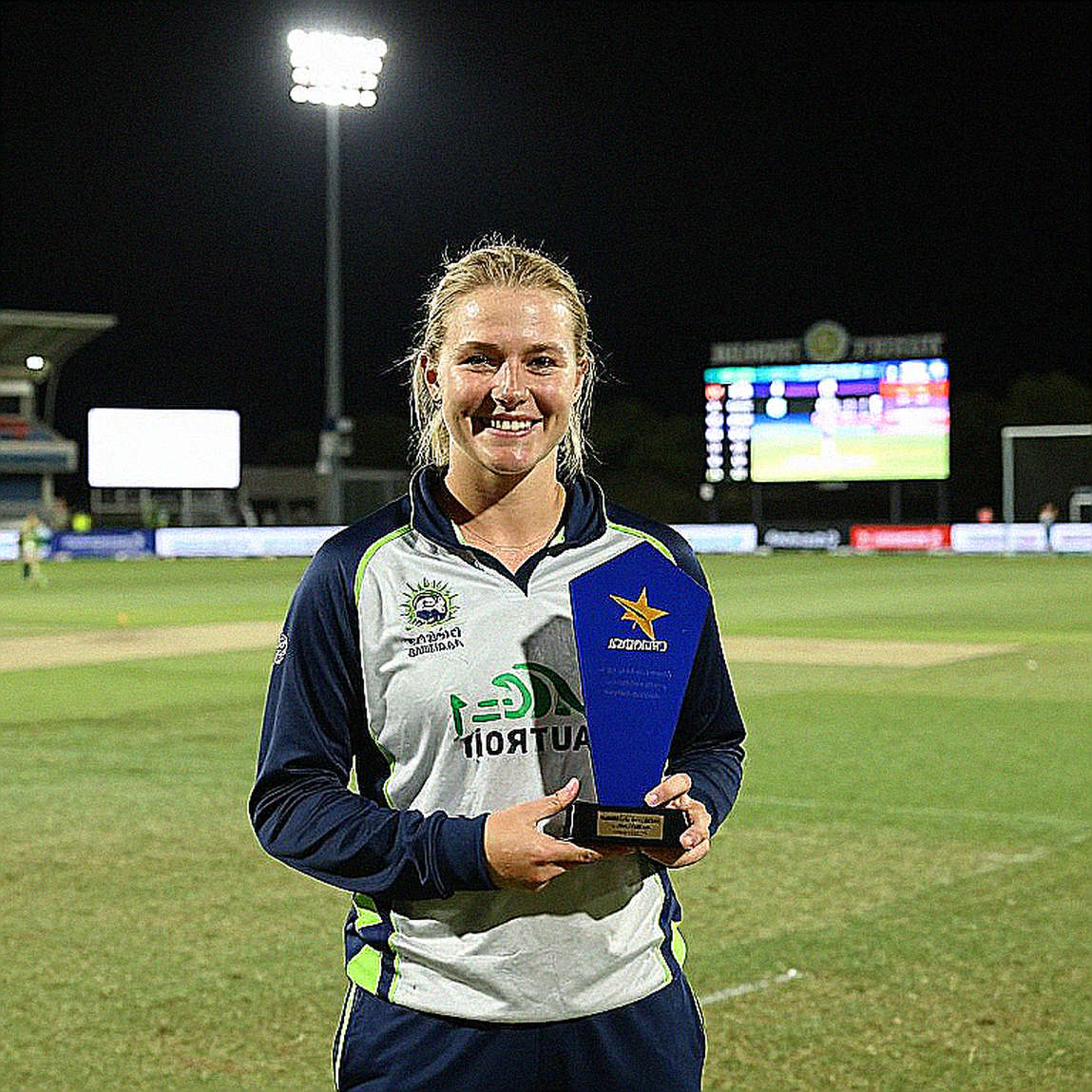
In eleven cities I learned that a stadium is a room with louder memories. This tour's room is still empty, and the first echo inside it belongs to a 21-year-old. I follow the quiet player first; the noise usually arrives after him. With Beardman the noise arrived early. That is not his fault. It may be ours.
What will we know on 2 December in Hobart that we do not know now? Probably not whether Beardman plays a World Cup. Probably who Australia have after Zampa, and how England ration Archer's overs. The pitch remembers what the scoreboard forgets by morning. The question is which of the two we choose to read.