
Kabaddi: From the Village Akhada to the Floodlights of the Pro Kabaddi League
कबड्डी भारतीय उपमहाद्वीप का पारंपरिक संपर्क खेल है, जो 2014 में प्रो कबड्डी लीग (PKL) के ज़रिए पेशेवर बना। इसमें रेडर 30 सेकंड के भीतर अंक बनाता है, टैकल से रक्षापक्ष स्कोर करता है, डू-ऑर-डाई रेड में असफलता महँगी पड़ती है, और ऑल आउट पर दो अतिरिक्त अंक व पूरी टीम की वापसी होती है। मैट-आधारित स्टैंडर्ड स्टाइल (PKL/एशियाई खेल) और पंजाब का सर्कल स्टाइल अलग-अलग हैं। भारत पुरुष वर्ग में प्रमुख है, ईरान सबसे मज़बूत प्रतिद्वंद्वी है, और महिला कबड्डी के लिए स्थायी पेशेवर लीग का अभाव खेल का सबसे बड़ा संरचनात्मक अभाव है।
Kabaddi is often reduced to a cliché — the poor man's game, played in the dust of village squares. That cliché is now outdated. A sport played for centuries across the Indian subcontinent has become a professional, television-driven, franchise-based ecosystem. From the mud akhada to the indoor mat, kabaddi has travelled a remarkable distance, and the Pro Kabaddi League (PKL) is the engine of that transformation.
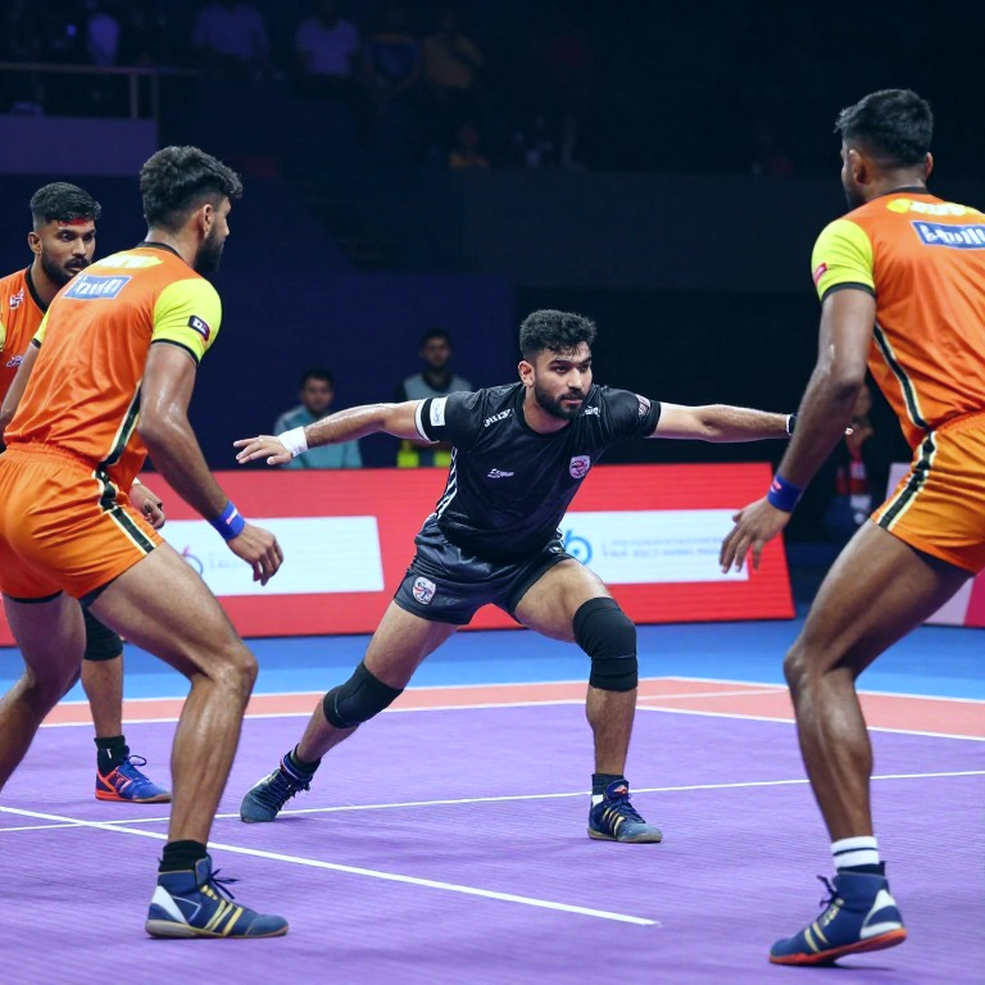
The sport's appeal begins with its simplicity. No expensive equipment, no elaborate ground — two teams, one court, one rulebook. The raider crosses into the opponent's half, chants kabaddi continuously, and must touch a defender or cross the bonus line and return within thirty seconds. The cant — the unbroken chant — proves the raider has not inhaled; if the chant breaks, the raid is void. The defending side scores through tackles. When an entire team is ruled out, an all out is awarded: two extra points and a full revival. After two empty raids, the third becomes a do-or-die raid, where failing to score is costly. This is where kabaddi's tension lives — one raid, a few seconds, and the match can turn.
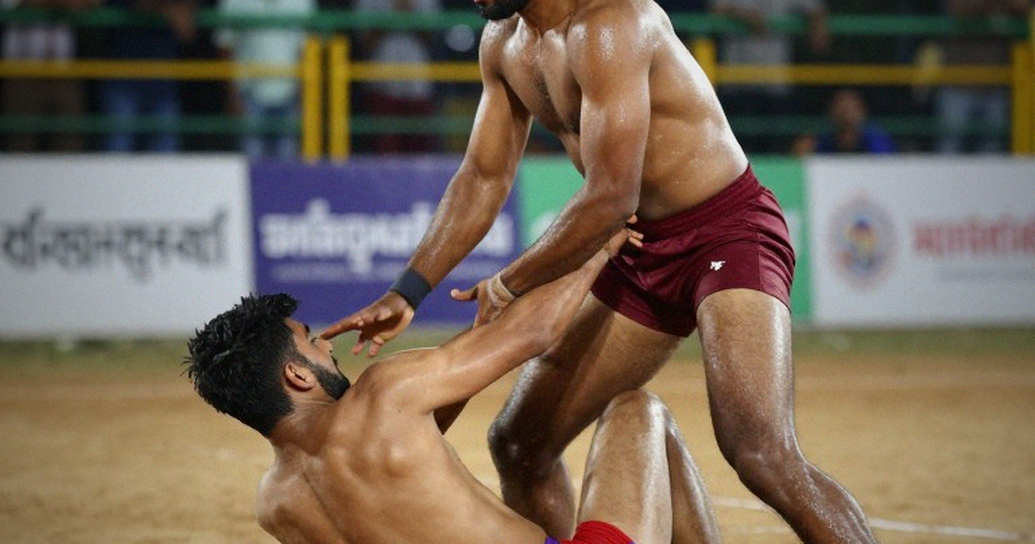
It is important to separate the mat-based standard style, used in the PKL and international competition, from the circle style played in rural Punjab. The two have different courts and scoring, and conflating them is a common error.
The PKL, launched in 2026, changed the sport's trajectory. Three pillars — the franchise model, the player auction, and prime-time television — built its success. Broadcast on Star Sports, the league took kabaddi into homes; the auction gave players a market they had never had. Teams such as Patna Pirates, Jaipur Pink Panthers, U Mumba, Bengaluru Bulls, Dabang Delhi and Bengal Warriors have won titles and built identities. Patna Pirates' three consecutive crowns made them one of the league's most successful sides.
The league's biggest achievement is that it turned kabaddi from an occasional festival sport into a weekly habit. For players, it brought regular income, media attention and national recognition. Athletes who once clung to government jobs — railways, police, the army — to stay in the game now have a professional career path. That is not a small change; it alters the sport's entire fabric.
Every league needs stars, and the PKL manufactured them quickly. Pardeep Narwal is known for his aggressive raiding; he is among the raiders who put the super raid into the ordinary fan's vocabulary. Naveen Kumar is famous for speed and agility that shred defences. Maninder Singh, Deepak Hooda, Rohit Kumar, Ajay Thakur and Rahul Chaudhari are the pillars of the sport's domestic popularity. Foreign players such as Iran's Fazel Atrachali have raised the league's quality and shown that kabaddi is no longer India's alone.
A defining feature of the league is the equal weight of raiding and defence. Raw raid points (volume) can mislead; efficiency — successful raid percentage and do-or-die performance — tells the truer story. Similarly, a team that depends on a single star raider carries its biggest structural weakness within it: injury or a dip in form can wreck the entire equation.
Internationally, the picture is shifting. Kabaddi is part of the Asian Games, and India long dominated the men's event, but Iran now poses the strongest challenge, pushing India hard and beating it on occasion. Bangladesh, South Korea, Thailand and Japan are also taking the sport seriously. The expansion is welcome, yet outside India the professional structure remains thin — almost everywhere except a few countries, the base is amateur.
There is an uncomfortable truth that cannot be ignored: women's kabaddi is played internationally — the Asian Games includes a women's event — but there is no permanent, high-profile women's league parallel to the PKL. This is the biggest long-term risk to the sport's talent pipeline. If half the population has no professional stage, the sport will never reach its full potential. Add to this weak grassroots facilities, uneven coaching quality and unequal funding, and the challenges are clear.
Another concern is dependence on broadcast. The PKL's financial strength rests heavily on a single broadcaster and sponsorship. If that support wobbles, the whole ecosystem feels it. Ticket revenue, attendance and the league's geographic reach remain open questions. Kabaddi has done something impressive, but it is still an emerging sport, not an established one.
The real test lies in the next decade. First, the grassroots must be strengthened — professional structure must reach schools, colleges and village akhadas. Second, women's kabaddi needs a permanent league and national attention. Third, new international markets must be connected to the sport, so it becomes genuinely global rather than imported. Fourth, player welfare — injury management, insurance, post-retirement security — must become a priority, because a professional sport's credibility is decided by how it treats its players.
Kabaddi has travelled from the mud akhada to the floodlights. That journey is an achievement in itself. But the real victory will come only when the sport neither forgets its roots nor fails to secure its future — only then will it become everyone's game, not just the poor man's game.
संबंधित खिलाड़ी
अनुशंसित
PKL Transfer Window: The Auction Purse Cannot Buy What the Dressing Room Builds2026-10-31
Kabaddi: From the Village Akhada to the Floodlights of the Pro Kabaddi League2026-11-03
Commonwealth Kabaddi Championship 2026: England's 26 Against India Is the Bigger Number Than India's 1272026-10-30
Commonwealth Kabaddi Championship 2026: 13 Nations, Nine Days and an Unanswered Broadcast Question in Ahmedabad2026-10-24
Commonwealth Kabaddi Championship 2026: The Ahmedabad Points Table Tells You More Than the Results Do2026-10-25
अनुशंसित
India vs England, Commonwealth Kabaddi Championship 2026: Rotated Squad Opens Campaign as Focus Turns to Youth2026-10-28
Commonwealth Kabaddi Championship 2026: The Ahmedabad Points Table Tells You More Than the Results Do2026-10-25
Ahmedabad's First Commonwealth Kabaddi Championship: 39 Men's Matches, 23 Women's — and the Three Nations Missing in Between2026-10-26
अनुशंसित
A Crore Bid, a Ten-Week Job: Kabaddi's Real Ledger2026-11-03
Four Asian Games Golds, Zero Franchises: Who Wrote Women's Kabaddi's Calendar?2026-10-29
Commonwealth Kabaddi 2026, Match 4: For India, the Real Test Is Not the Scoreline — It's the Rotation Ledger2026-10-25
Kabaddi's Second Innings: From Mud Courts to Broadcast Rights, the Changing Economy of a Sport2026-11-01
Ahmedabad, Day One: The Scoresheet Is Right, the Table Is Misleading2026-11-03