
Kabaddi: From the Village Akhada to the Global League
कबड्डी क्या है? कबड्डी सात-सात खिलाड़ियों की दो टीमों के बीच खेला जाने वाला संपर्क खेल है, जिसमें एक आक्रामक खिलाड़ी (रेडर) विपक्षी पाले में जाकर छूकर लौटता है। यह भारतीय उपमहाद्वीप का पारंपरिक खेल है और 1990 बीजिंग एशियाई खेलों से आधिकारिक पदक खेल है। 2014 में शुरू प्रो कबड्डी लीग ने इसके पेशेवर ढांचे को बदला। भारतीय पुरुष टीम एशियाई खेलों में सर्वाधिक सफल रही है; 2018 में ईरान से सेमीफाइनल हार के बाद भारत को कांस्य मिला था।
Kabaddi is one of the few sports that requires neither an expensive ground nor any equipment. Two teams of seven, a 12-by-10 metre court, and one player holding his breath while he runs — that is all. Yet the strategy, physical capacity and mental resolve that operate within this simple structure are found in few other games.
The roots of the sport are traced to the soil of the Indian subcontinent. Folk tradition links its structure to the story of Abhimanyu penetrating the chakravyuh in the Mahabharata, but that is a popular belief, not documented history. What is documented is this: in the early twentieth century, regional forms of the game were prevalent across different parts of India, known by names such as 'hu-tu-tu', 'sa-chi-kuti' and 'kaudi'. The first organised attempt at codifying rules came in the first half of the twentieth century, and the sport was demonstrated at the 2026 Berlin Olympics — the moment it first registered its presence on an international stage.
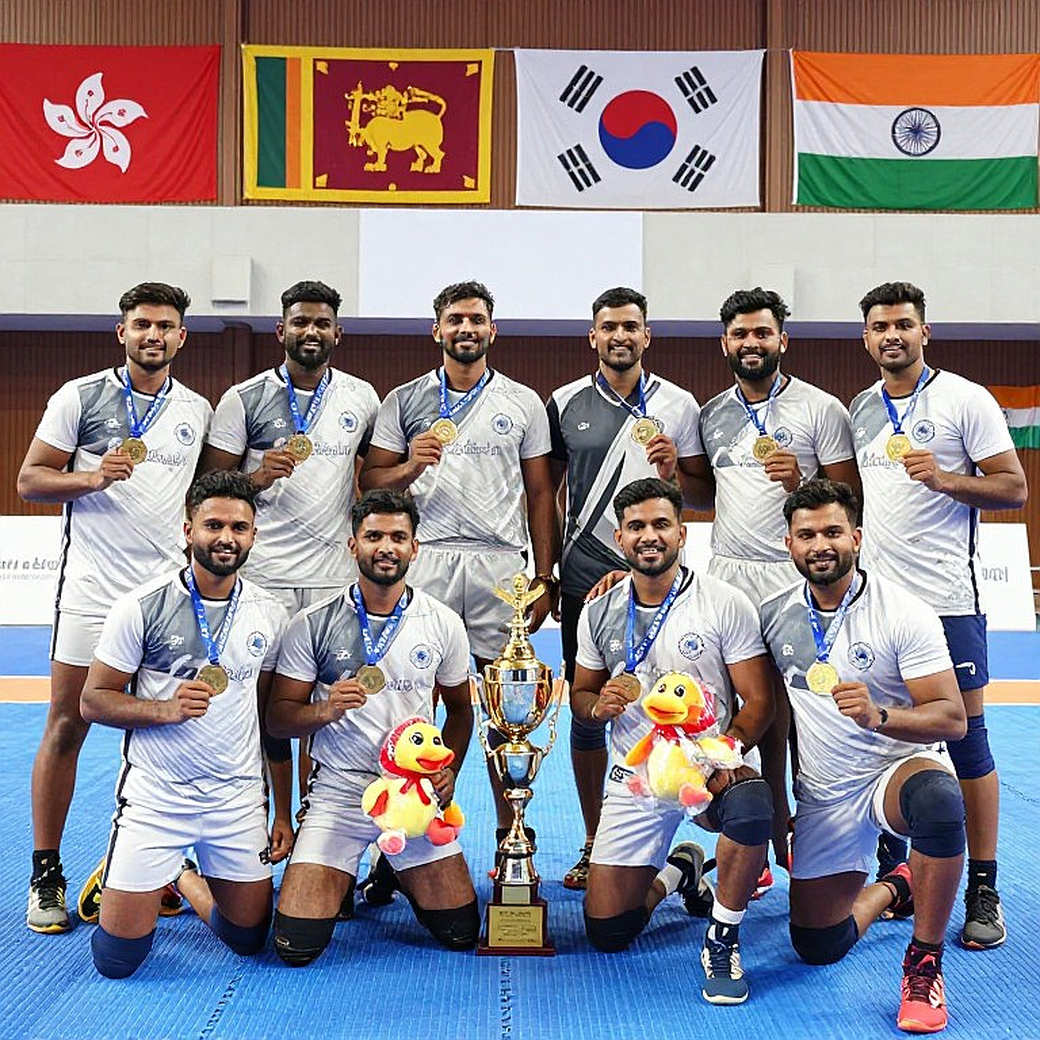
Organised international competition is generally dated to the 2026 Beijing Asian Games, when kabaddi was granted official medal status. Since then it has featured at every Asian Games. The Indian men's team's record in the sport has been extraordinary — for decades the team won gold consistently. The first significant crack in that dominance appeared at the 2026 Jakarta Asian Games, when India had to settle for bronze after losing to Iran in the semi-final. Iran has emerged as a rising kabaddi power, and countries such as Bangladesh, South Korea and Thailand continue to make the competition tougher. Women's kabaddi has also earned its place at the Asian Games, and the Indian women's team has remained at the top level of the sport.
On the technical side, the rules look simple but contain deep nuances. Each team fields seven players and has five substitutes. The attacking player, called the raider, enters the opponents' half and must return within thirty seconds while continuously chanting 'kabaddi-kabaddi'. If his breath breaks, the raid is over. If the raider touches an opponent and returns to his own half, the point goes to his team; if the defenders catch him, the raider is out. When the entire opposing team is put out of the court, a 'lona' is awarded — worth two points — and it can prove to be the biggest turning point of the match. This is why a drastic reversal remains possible even in the final minutes of a kabaddi game.
The biggest leap the sport made in the twenty-first century came in the form of the Pro Kabaddi League. Launched in 2026, the league transformed the sport's economic structure. Players for whom the game had been limited to government jobs or prizes at rural competitions now had access to television contracts, franchises and auctions. Courts moved from mud to mats, production values rose, and an urban audience attached itself to the sport. The league raised the game's visibility, though it is also a fact that its impact has remained more limited to certain states and certain cities.
Kabaddi's strength lies in the popular base built in the akhadas of schools, villages and small towns. In India the sport was carried across generations through school games and rural competitions. From this base emerged the pipeline of players that today fills national and international squads. On the other hand, the challenges are not few — the number of competitive nations at the international level is limited, the sport's spread in Africa and the Americas remains weak, and at the grassroots the systems for training, medical support and financial security remain uneven.
There is no doubt that kabaddi has covered in the last three decades a distance that few sports manage in centuries. A native akhada game is today part of the international calendar, professional leagues and television broadcasting. The question is whether the next step will lead only towards bigger cities and bigger contracts, or whether the sport will also carry its original roots — the village ground and the school hour — along with it. Kabaddi's future rests on this balance.
संबंधित खिलाड़ी
अनुशंसित
A Team Sits Fourth in Ahmedabad Without Raiding Once: Reading Day 1 of the Commonwealth Kabaddi Championship2026-10-25
Kabaddi: From Village Akhada to Professional League, the Changing Face of India's Indigenous Sport2026-11-01
Commonwealth Kabaddi Championship 2026, Day 1: Nigeria Hasn't Played a Single Match and Sits Fourth — That Is the Real Story of the Table2026-10-25
Kabaddi's Second Innings: From Mud Courts to Broadcast Rights, the Changing Economy of a Sport2026-11-01
Commonwealth Kabaddi 2026, Match 4: For India, the Real Test Is Not the Scoreline — It's the Rotation Ledger2026-10-25
अनुशंसित
Kabaddi: From Village Akhada to Professional League, the Changing Face of India's Indigenous Sport2026-11-01
Kabaddi: From the Village Akhada to the Global League2026-11-03
Commonwealth Kabaddi Championship 2026, Day 1: The Points Table Adds Up; the Picture Doesn't2026-10-25
Four Asian Games Golds, Zero Franchises: Who Wrote Women's Kabaddi's Calendar?2026-10-29
Kabaddi: From the Village Akhada to the Floodlights of the Pro Kabaddi League2026-11-03
अनुशंसित
A Team Sits Fourth in Ahmedabad Without Raiding Once: Reading Day 1 of the Commonwealth Kabaddi Championship2026-10-25
46–26 and 45–29: The Commonwealth Kabaddi Championship Scoreboard That Does Not Measure India's Real Strength2026-10-25
18 Raid Points and Still a Loss: Where the Kabaddi Scoreboard Misleads2026-10-24