
Kabaddi: From Village Courtyards to the Global Stage, the Full Story of a Sport
कबड्डी भारतीय उपमहाद्वीप से उत्पन्न एक संपर्क खेल है, जिसमें सात-सात खिलाड़ियों की दो टीमें होती हैं। एक रेडर विपक्षी पाले में जाकर लगातार 'कबड्डी' का उच्चारण करते हुए प्रतिद्वंद्वियों को छूता है और सुरक्षित लौटता है; 30 सेकंड में रेड पूरी न करने पर वह आउट हो जाता है। सभी सात खिलाड़ियों के बाहर होने पर विपक्षी टीम को दो बोनस अंक मिलते हैं (लोना/ऑल आउट)। 1990 से यह एशियाई खेलों का पदक वाला खेल है, और 2014 में शुरू हुई प्रो कबड्डी लीग ने इसे पेशेवर दर्जा दिया। भारत पुरुष और महिला दोनों वर्गों में इस खेल की सबसे सफल टीम है, जबकि ईरान प्रमुख प्रतिद्वंद्वी के रूप में उभरा है।
Kabaddi is a sport whose roots run as deep in the soil of the Indian subcontinent as those of any crop. It needs no expensive equipment and no grand stadium. A flat patch of ground, a boundary line drawn with lime or paint, and two teams of seven players each—that is all. This simplicity is its greatest strength. From the courtyards of rural India, kabaddi has travelled to the Asian Games, World Cups and professional leagues, and through that journey it has not lost its original identity.
The core principle of the game is simple. A player, called the raider, crosses into the opponent's half and, chanting 'kabaddi-kabaddi' continuously, must touch one or more opponents and return to his own half. If he pauses for breath or stops chanting, he is ruled out. The defending team's aim is to stop the raider by tackling him. If the raider returns successfully, the players he touched are out; if the defenders pin him down, the raider must leave the mat.
Each raid carries a 30-second time limit. If the raider does nothing within that window, he is out. Another key rule is the 'lona' or 'all out'—when all seven players of one team are out, the opposing team earns two bonus points and the eliminated players return to the mat. This rule keeps the game tense until the very end, because a single good raid or a successful tackle can turn the entire match around.
Kabaddi's history stretches back centuries. In different regions it has been played under different names—'hu-tu-tu' in Maharashtra, 'ha-du-du' in Bengal, 'sadugudu' in Tamil Nadu, 'kaudi' in Punjab. In all these forms the essential spirit remained the same: physical agility, breath control and team spirit. In the mid-twentieth century, efforts began to bring these local forms under an organised framework, and gradually a standardised rulebook took shape. That standardisation later became the foundation for the sport's international expansion.
On the international stage, kabaddi's biggest breakthrough came in 2026, when it was included as a medal sport at the Beijing Asian Games. Since then the Indian men's team has maintained its dominance in the sport. In recent years, however, countries such as Iran, South Korea, Japan and Thailand have built strong teams. Iran in particular has remained a tough challenge for India, making it clear that the sport has moved well beyond the borders of one country.
Kabaddi has also established itself at the World Cup level. Besides the standard-format World Cup, circle-style kabaddi World Cups have been held regularly, with India consistently performing strongly. In recent years India has won several global titles and has repeatedly faced Iran in finals. These contests have not only raised the sport's popularity but also shown that kabaddi's competitive depth is growing.
But what changed kabaddi's commercial face most was the Pro Kabaddi League, launched in 2026. The league gave the sport a new identity on television and digital platforms. Players who once competed only in state-level or national tournaments now had the chance to play on national television before tens of millions of viewers. The league also boosted player incomes and promoted professional support such as training facilities and physiotherapy.
The Pro Kabaddi League also changed the sport's strategy. Kabaddi was once seen mainly as a game of physical strength, but now video analysis, the study of opponents' weaknesses and precise raid-and-tackle planning matter more. Modern coaching staffs include trainers, physios and analysts. This professional approach has raised the level of the game and made it a viable career option for young players.
Several players have made their mark in this era. Indian players such as Pawan Kumar, Deepak Niwas Hooda, Surender Gill and Mohammad Nabi, and international stars such as Iran's Fazel Atrachali, have been noted for their performances in leagues and international matches. Aggression in raiding and cleverness in defence—the balance of these two qualities has become the hallmark of a successful modern kabaddi player. Teams now look for players who can contribute in both roles.
The story of women's kabaddi is no less important. The Indian women's team has consistently performed well at the Asian Games and other international competitions. Participation of women players in the Pro Kabaddi League has been discussed from time to time, and there have been repeated demands for a separate women's league. This is a key issue for the inclusive growth of the sport, since girls in rural areas have traditionally played kabaddi as well.
Despite these achievements, kabaddi faces several challenges. At the grassroots level, the lack of good grounds, coaches and medical facilities remains a major problem. Many players still have to practise on mud grounds in villages, where the risk of injury is higher. A second problem is that the league's benefits reach only a limited number of players; financial security for those competing at state and district levels remains weak.
On the other hand, kabaddi's global prospects have grown. Its steady presence at the Asian Games, strong teams from Iran and other countries, and a busy international calendar all point to expansion. There have also been repeated calls to include kabaddi in the Commonwealth Games. If the sport ever secures a place in the Olympic programme, its reach could change entirely.
Overall, kabaddi is a sport that has balanced tradition and modernity. It travelled from village soil to television and digital screens without abandoning its essential simplicity. Its real strength is that it rewards not one individual but the whole team—and perhaps that is why it remains, for millions of children, the first and most beloved form of play.
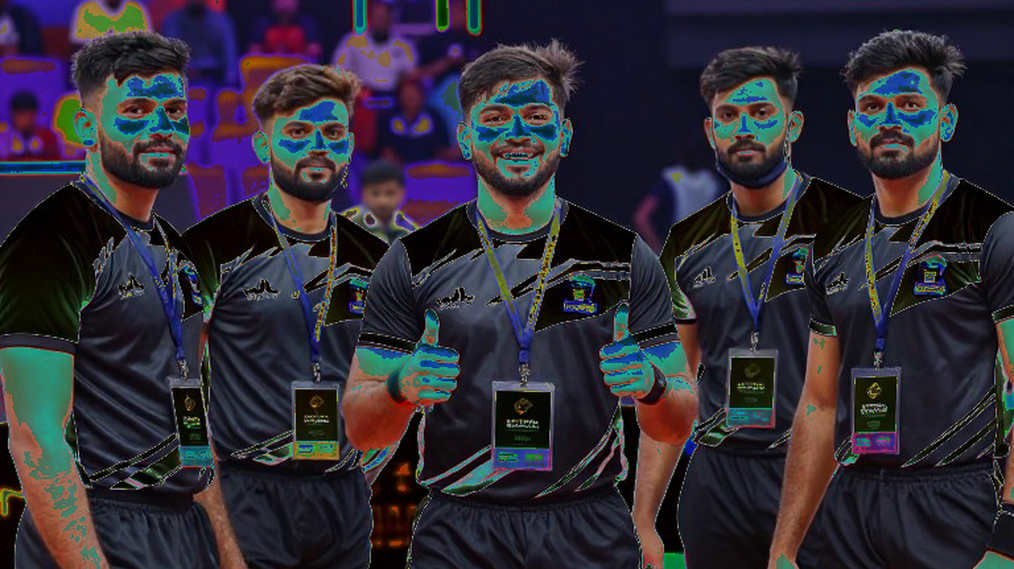
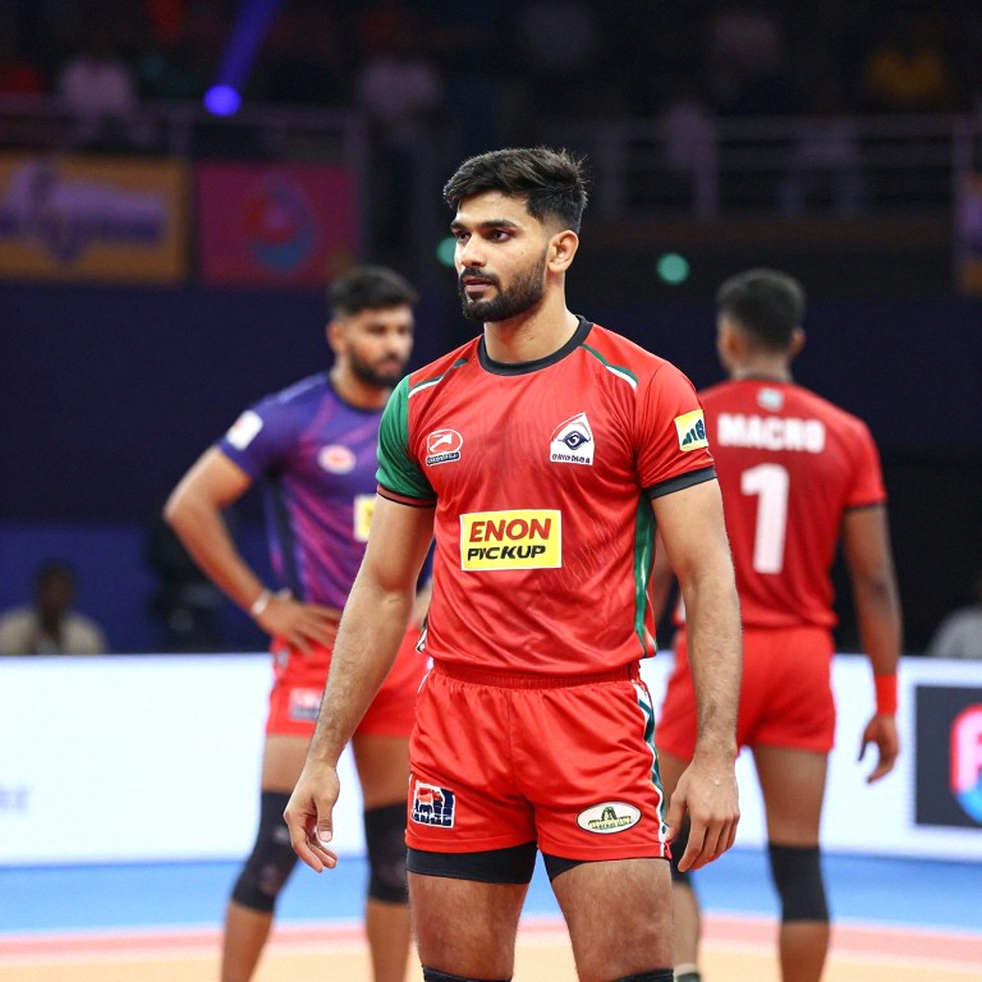
संबंधित खिलाड़ी
अनुशंसित
Kabaddi: From Village Akhada to Professional League, the Changing Face of India's Indigenous Sport2026-11-01
18 Raid Points and Still a Loss: Where the Kabaddi Scoreboard Misleads2026-10-24
Kabaddi: From Village Courtyards to the Global Stage, the Full Story of a Sport2026-11-02
Commonwealth Kabaddi 2026, Match 4: For India, the Real Test Is Not the Scoreline — It's the Rotation Ledger2026-10-25
Kabaddi's Second Innings: From Mud Courts to Broadcast Rights, the Changing Economy of a Sport2026-11-01
अनुशंसित
Commonwealth Kabaddi Championship 2026: 13 Nations, Nine Days and an Unanswered Broadcast Question in Ahmedabad2026-10-24
A Team Sits Fourth in Ahmedabad Without Raiding Once: Reading Day 1 of the Commonwealth Kabaddi Championship2026-10-25
Kabaddi: From the Village Akhada to the Floodlights of the Pro Kabaddi League2026-11-03
India vs England, Commonwealth Kabaddi Championship 2026: Rotated Squad Opens Campaign as Focus Turns to Youth2026-10-28
Kabaddi's Second Innings: From Mud Courts to Broadcast Rights, the Changing Economy of a Sport2026-11-01
अनुशंसित
Four Asian Games Golds, Zero Franchises: Who Wrote Women's Kabaddi's Calendar?2026-10-29
PKL Transfer Window: The Auction Purse Cannot Buy What the Dressing Room Builds2026-10-31
Commonwealth Kabaddi 2026, Match 4: For India, the Real Test Is Not the Scoreline — It's the Rotation Ledger2026-10-25
India vs England, Commonwealth Kabaddi Championship 2026: Rotated Squad Opens Campaign as Focus Turns to Youth2026-10-28
The Truth About Kabaddi Injuries: Not 'Slippery Mats' but the Planted Foot — Decoding 41 Tackles Frame by Frame2026-11-03