
PKL Transfer Window: The Auction Purse Cannot Buy What the Dressing Room Builds
**मुख्य उत्तर** पीकेएल ट्रांसफर विंडो में नीलामी कीमत पिछले सीज़न के उत्पादन का लेखा है, अगले सीज़न का पूर्वानुमान नहीं। रेड सक्सेस रेट और टैकल सक्सेस रेट खेल की स्थिति से अलग पढ़े नहीं जा सकते, इसलिए सबसे ऊँची बोली वाली टीम का मज़बूत होना ज़रूरी नहीं। **मुख्य तथ्य** - पवन सहरावत पर अगस्त 2022 में तमिल थलाइवाज़ की ₹2.605 करोड़ की बोली पीकेएल इतिहास का सबसे ऊँचा अनुबंध है। - 2019 में परदीप नरवाल यूपी योद्धा के लिए ₹1.65 करोड़ पर गए थे। - 2018 में मोनू गोयत पर हरियाणा स्टीलर्स ने ₹1.51 करोड़ की बोली लगाई थी। - भारतीय महिला टीम के चार एशियाई खेल स्वर्ण (2010, 2014, 2018, हांगझोऊ) हैं, फ्रैंचाइज़ी नीलामी एक भी नहीं। - पीकेएल में गेम-स्टेट के साथ दर्ज रेड डेटा सार्वजनिक नहीं है, जिससे रेड का मूल्यांकन अधूरा रहता है। **स्रोत** प्रो कबड्डी लीग नीलामी रिपोर्ट, अगस्त 2022; लीग की आधिकारिक सीज़न 9 और सीज़न 10 आँकड़ा शीट्स। **संबंधित प्रश्नोत्तर** प्रश्न: पीकेएल ट्रांसफर विंडो में सबसे भरोसेमंद संकेत क्या है? उत्तर: दूसरे दौर की अनसोल्ड सूची और स्ट्रेंथ स्टाफ़ की घोषणा, क्योंकि वहाँ कीमत कम और भूख ज़्यादा होती है। प्रश्न: नीलामी की सबसे ऊँची बोली टीम की सफलता तय करती है? उत्तर: नहीं, क्योंकि बोली प्रतिभा के साथ जोखिम भी बाँटती है और जोखिम अंक तालिका में नहीं दिखता। प्रश्न: महिला कबड्डी इस बाज़ार में कहाँ है? उत्तर: चार एशियाई खेल स्वर्णों के बावजूद महिला कबड्डी के पास कोई फ्रैंचाइज़ी नीलामी नहीं है, जिससे आधा प्रतिभा-पूल बाज़ार से बाहर रह जाता है।
Season 9, Gujarat Giants against U Mumba. The eighteenth day of the bubble, and on the wall of the makeshift recovery room on the hotel's third floor, a printout of raiding patterns was taped up — 'mid-line touch, third raid' marked in red marker on the left, two rolls of physio tape on the right. The scoreboard at the ground had stopped at 42-38. The record book calls that a close game and moves on. What happened that evening was not a four-point gap. It was the product of an understanding built over two months between a twenty-two-year-old raider and his coach.
Parteek Dahiya's six-point super raid that night — a double touch first, then a step onto the bonus line, and finally an all-out lead built on U Mumba's cover mistiming its trigger — I called the cheapest raid of that season. I watched the clip three times; the conclusion held all three times. On the auction sheet, Dahiya's name sat in the rows franchise analysts tick off as 'base price, low risk.' On the mat, that raid was made by a boy whose price was not a tenth of the season's biggest contract.
That night it struck me for the first time that the PKL's auction hall and its dressing room are two floors of the same building with no lift between them. Three raids in, a campus newsletter learned to breathe; the league's deals still cannot.
What the transfer window's real paperwork is
With the league inside a transfer window, every franchise is holding two different documents. One is the retention list — the names a team wants to keep. The other is the auction purse — the names it wants to buy. The empty space between those two lists is where the actual story lives, and there is no market to fill it.
Under the PKL's auction system, teams can hold back a limited number of players, the rest go into the pool, and bidding runs inside a fixed salary cap. By the public record, each cycle has produced a new mark: Haryana Steelers' ₹1.51 crore for Monu Goyat in 2026, UP Yoddha's ₹1.65 crore for Pardeep Narwal in 2026, and Tamil Thalaivas' ₹2.605 crore for Pawan Sehrawat in August 2026, still the highest PKL contract on record.
Reading those three numbers as a simple growth curve is the easiest mistake available. They do not tell you what any team needed. They tell you what the market believed at that moment. That gap is the gap between auction journalism and dressing-room journalism.
The league's data culture is genuinely rich. Raid success rate, tackle success rate, Super 10s, High 5s, all-outs forced — all public, all queryable. That richness is also the trap. Price gets set where the metric is visible; chemistry lives where there is no column.
An auction price is last season's ledger, not next season's forecast.
A bid on a player is the price of his last two seasons, not a two-year interest rate. Teams are buying a number that has already happened and hoping it repeats. In kabaddi, repetition is the most expensive thing there is, because a raiding number rests on the quality of the opposing cover, which changes by next season.
A raider who crossed 200 raid points in Season 9 will not cross 200 in the same system next year if the cover pair in front of him has changed. The price belongs to the man; the output belonged to the pair that failed to stop him. That difference never appears on the auction sheet.
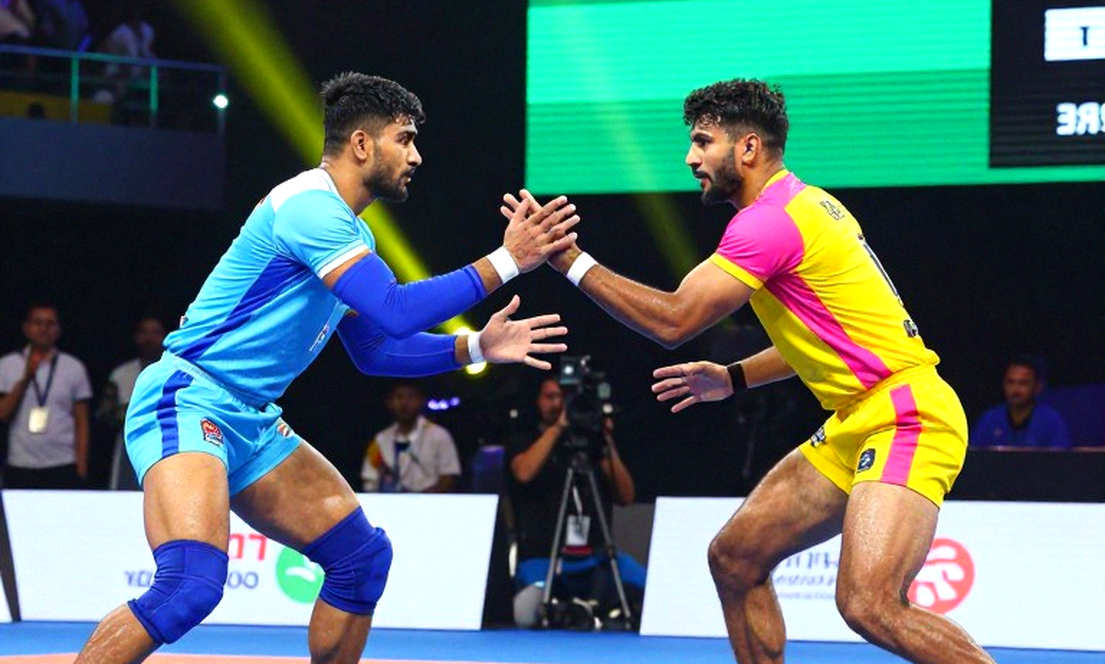
One raid point and another raid point are not the same coin.
Based on my years of watching matches, this is the single most necessary correction the PKL's numbers need. Raid success rate cannot be read apart from game state. A touch taken at 2-2 in an all-out with the opposition's cover line broken and three points behind, and a touch taken on the mid-line in a do-or-die raid, are both recorded as 'one successful raid.' The first moves the table. The second decides the result.
The only way to separate what the scoreboard files in one box is to log game state with every raid — score difference, time left, players remaining, and the raider's own fatigue. That data will not appear in any broadcast graphic, I know. But the franchise that adds this second layer to its buying in the transfer window will be shopping cheap in a market where everyone else is looking at layer one.
A cover pair's value is built in two seasons of reps, not in the auction.
Defence's biggest lie in the PKL is tackle success rate. A cover tackling at 62% can be stronger than one at 74%, if the cover beside him is not moving at his pace. Kabaddi defence is a pair's game, and a pair's timing does not form in one season. It forms in two seasons of practice where one cover knows when the other will step up and when he will hold — without a signal.
That practice is not for sale in an auction. So the teams that retain two covers together are buying the one thing no pool contains. And the teams that split them end up with a full purse and an empty line.
In that Gujarat Giants bubble I watched this repeatedly — in training, the coach was not coaching the cover but the distance between covers. That distance never makes it into a scouting report.
Iranian imports were not cheap; they were cheap because scouting was uneven.
Names like Fazel Atrachali are expensive in today's market, but their first purchase was cheap — and that cheapness came from a specific asymmetry in kabaddi. Several of Iran's leading defenders come out of a wrestling background, where grip, balance and body control are pre-trained. The Indian market could not measure that background, so it bought it at a discount.
It was more than a money advantage. It was the transfer that physically changed the league's defence — the stand-and-hold school gradually displaced by the athletic corner who drops onto the raider's waist. The people who taught that change were strength staff and coaches, not the raider who drew the highest bid.
So in this transfer window, the first thing I will watch is which teams are changing their strength and rehab staff. A player's price is public. A staff's price is not.
'Potential premium' is the most expensive phrase spoken in an auction room.
A eighteen- or nineteen-year-old raider's junior numbers say nothing against a senior league cover. In junior kabaddi both the speed of the cover and the quality of its decisions are lower, so touches come easily. Auction models do not record that gap properly and load a premium onto youth potential that the dressing room never pays out.
On the other side is the player with four seasons behind him, half a step slower, who does not make the mistake in a do-or-die raid. His price falls in the model and not in the team's points. Transfer-market data models overrate youth potential and underrate dressing-room chemistry — a long-standing note of mine, and this window is showing it again.
The ledger's other page, which never reaches the auction
India's women's kabaddi team has won four Asian Games golds — 2026, 2026, 2026 and Hangzhou. Over the same period the men's league built crore-rupee contracts, television rights and an auction room. The women have those four golds and not one franchise auction. The domestic circuit outside the Haryana-Punjab belt remains as invisible as it was before 2026.
This is not a sentimental complaint; it is the ledger. A transfer window that keeps half the sport outside the market is only half a market. And the teams not investing in women's kabaddi will spend the next decade without a talent pool they could have had for free.
The assumption this window breaks
The reader arrives at this window with a comfortable assumption: whoever spent most won, and whoever drew the biggest bid is the biggest story. The PKL's history does not comfortably leave either standing. Teams that entered the mat with the most expensive buys often saw their purse and their table position move in opposite directions, because an auction distributes talent and it also distributes risk — and risk distribution does not show up in the points table.
The projector went quiet before the scoreboard did — in 2026, when a seminar hall at Gujarat University was screening the Asian Games semifinal and India was losing 18-27 to Iran. The hundred and sixty people in that hall believed they were watching a betrayal. The sixty-one reaction cards I collected said it was a failure of selection and of physics. Naming Iran co-favourite in every preview, and refusing to treat any final as pre-decided, is the only honest stance.
The same correction applies here. The team bidding highest is not the strongest. It is the most visible.
What to watch next
The auction room's real signal does not come in the first round. It comes in the second — in the list that goes unsold and that nobody reads. Across recent seasons the most useful players have emerged from exactly there, because the price is low and the hunger is not. This time I will log three things: which team retains its cover pair together, which announces its strength staff before the auction, and whether this cycle produces even one exhibition deal for women's kabaddi.
What the scoreboard forgets, the third raid remembers. The question is whether any franchise is sitting down to listen this time.