
Cricket's New Geography: Three Formats, a Crowded Calendar and the Limits of the Player
क्रिकेट आज तीन फॉर्मेट, एक भरे हुए अंतरराष्ट्रीय कैलेंडर और बढ़ते व्यावसायिक दबाव के बीच संतुलन खोज रहा है। टेस्ट क्रिकेट प्रतिष्ठा बनाए रखने की चुनौती से जूझ रहा है, वनडे अपनी पहचान के संकट में है, और टी20 तथा फ्रेंचाइज़ी लीग वह क्षेत्र हैं जहाँ सर्वाधिक पूँजी और नवाचार केंद्रित है। भारत खेल का आर्थिक केंद्र है, जिससे उसकी वैश्विक ज़िम्मेदारी भी बढ़ती है। मुख्य जोखिम हैं — खिलाड़ियों का वर्कलोड और चोट, आईसीसी राजस्व में असंतुलन, सट्टेबाज़ी और सत्यनिष्ठा के मुद्दे, तथा सोशल मीडिया का मानसिक दबाव। समाधान एक ही दिशा में है: फॉर्मेट, राजस्व और व्यावसायिकता के बीच स्पष्ट प्राथमिकताओं के साथ संतुलन बनाना।
Over the past decade, cricket has turned on its axis faster than perhaps any other sport. The technology on the field changed, the balance between bat and ball became a permanent debate, technology's role in umpiring expanded, and most importantly — the economic centre of the game shifted entirely. Cricket today is not merely a contest between two countries; it is a global industry in which broadcasters, franchise owners, advertisers, fantasy platforms, social media companies and millions of fans are linked together. To understand this machinery, one must look not only at the scoreboard but at the structure that produces it.
The calendar: the biggest constraint
Cricket's biggest problem today is not technical or tactical but administrative. The international calendar is so packed that players barely get recovery time. A single player may be asked to play in different countries, in different formats, with different coloured balls and in different conditions within one month. Sports science confirms that combining fast bowling with the longer formats is not sustainable. Players such as Virat Kohli and Rohit Sharma have at times adopted a policy of format selection, while the recovery management of fast bowlers like Pat Cummins and Mitchell Starc is debated in every series. It is no coincidence that national boards now 'manage' players — deliberately resting them from certain matches.
Three formats, three economies
Cricket's most unusual feature is that it plays three different sports at once. The metrics of success in a Test match and in a T20 are worlds apart. Comparing a Test batter's average with a T20 batter's strike rate on the same scale is dishonest. The problem is that boards and broadcasters sell all three as a single package, while fans' attention has moved rapidly towards T20. As a result, preserving Test cricket now requires both dedicated funding and a dedicated narrative.
Test cricket: prestige versus profit
There is a strange paradox around Test cricket. It is regarded as the purest and hardest examination in the sport, yet its audience and commercial share keep shrinking. Players like Joe Root and Kane Williamson embody the importance of Test cricket, but boards must work hard to fill their stadiums. Day-night Tests, the pink ball, specially prepared pitches and shorter series are all attempts to keep the format alive. Are these efforts enough? That is an open question, and the answer will come not only from viewer numbers but from whether young players treat Test cricket as a career goal or merely an opportunity.
The ODI identity crisis
One-day cricket is in the most awkward position of all. Fifty overs offer neither the depth of Test cricket nor the speed of T20. Caught between the two, the ODI is slowly losing ground. While T20 leagues become the biggest annual attraction for players, bilateral ODI series are often categorised as 'fatigue' fixtures. The format does shine again at World Cups, but sustaining that shine through the year has become difficult. Many experts believe the ODI's future depends on how it is presented — as a marquee event rather than a year-round chain of series.
T20 and the expansion of franchise leagues
T20 is where the most money, the most innovation and the most experimentation now happen. The Indian Premier League is the largest example, but the Big Bash League, the Caribbean Premier League, the Pakistan Super League, South Africa's SA20, the UAE's ILT20 and Major League Cricket in the USA have all established themselves. These leagues have opened alternative income streams for players while raising questions about their priority relative to national teams. Players such as Nicholas Pooran illustrate how quickly a strong franchise performer can become a global market name.
India: economic centre and its responsibility
It is no secret that India is the economic centre of world cricket today. The Board of Control for Cricket in India is considered the richest cricket board, and India's share of ICC revenue is the largest. One direct consequence is that India's participation decisively shapes the commercial success of any series or tournament. But this brings a responsibility too — if India does not play an active role in the global expansion of the game, cricket's reach will contract. Touring India, playing against India and accessing the Indian broadcast market are now essential parts of any cricket nation's economic strategy.
How the traditional powers are responding
Australia and England are responding to this shift differently. Australia has protected its market through the Big Bash and simultaneously held firmly to its Test prestige; under Pat Cummins it has shown that aggressive, disciplined fast bowling remains decisive in the long format. England, by contrast, has taken the route of full-throttle T20 experimentation and launched The Hundred to attract new audiences. South Africa revived its domestic structure through SA20, and bowlers like Kagiso Rabada are evidence of how franchise cricket can transform a player's confidence.
Emerging nations and associate members
Cricket's future does not rest only with the twelve full members. Nepal, the Netherlands, Oman, Scotland, the USA and several African nations are trying to move beyond associate status. They lack large markets but possess passion and honesty towards the game. The push to establish cricket in the USA signals that the ICC is taking geographic expansion seriously. The question is whether these nations are invited only to participate or also given a genuine chance to compete. The experiences of Bangladesh and Afghanistan show how talent emerges when opportunity is provided — Babar Azam and his generation built a strong identity for Pakistan on the back of such opportunities.
Fast-bowler workload and injury management
Fast bowlers are cricket's most precious resource and also the one that depletes fastest. A fast bowler's body is under constant high stress, and today's calendar leaves too little recovery time. Injury management has become a central part of sports science — behind every team sits a group of physios, trainers, physiologists and data analysts. The careers of bowlers like Mitchell Starc and Kagiso Rabada show that with proper management, a fast bowler's shelf life can be extended. But when franchise leagues and national series collide, it is the bowler who suffers first.
The rebirth of spin and condition-based selection
There was a time when spin was considered a weapon only on Asian pitches. That is no longer true. Reverse swing, the carrom ball, the googly and quicker flight have turned spin bowling into a science. In T20, spinners are the most economical resource, and demand for them at auctions has risen accordingly. At the same time, condition-based selection has become more important. A player who excels at home may fail abroad, which forces selectors to build different squads for different tours. This makes the game more professional but also makes it harder for any player to secure a permanent place.
Data, analysis and umpiring technology
Data is now used at every level. Which delivery from which bowler troubles which batter, which field to set in which over, how long the new ball will remain effective on a given pitch — all of this is now decided by analysis rather than intuition. DRS has changed umpiring. There was a time when the umpire's word was final; now technology reviews that decision. Transparency has increased, but disputes have not disappeared. The projected component of ball tracking, the graphics of UltraEdge and the interpretation of 'umpire's call' generate debate at every major tournament. Technology arrived to make the game fairer, yet has itself become a subject of argument.
The illusion of form and the small-sample problem
Form is the most misunderstood concept in cricket. Declaring a player 'out of form' after three or four innings and awarding him a 'comeback' after three good knocks is statistically weak. Batting averages and strike rates offer limited information because they ignore conditions, the quality of the opposition attack and the state of the match. Similarly, a bowler's economy rate does not reveal how many difficult overs he bowled. The real contribution of modern analysis is that it teaches us to read numbers in context. Teams that have understood this are becoming less emotional and more rational in selection.
Selection, domestic structure and player development
Every strong national team rests on its domestic structure. The Ranji Trophy in India, the Sheffield Shield in Australia, the County Championship in England and the Quaid-e-Azam Trophy in Pakistan are the factories that produce players. The problem is that these competitions have very low visibility and financial value. When a young player realises that four good innings in a T20 league can change the direction of his career, drifting away from the longer formats is natural. Correcting this imbalance requires giving domestic long-format cricket proper broadcast, money and prestige.
Governance: the ICC, revenue and the balance of power
The structure of the International Cricket Council is among the most debated subjects in the game. The question is simple: should revenue be distributed so that the largest markets benefit most, or so that weaker members get a chance to become competitive? The debate is not easy, because the bulk of the money comes from countries like India and Australia. But if a sport exists only for its richest members, it cannot remain global for long. The hardest part of sports governance is precisely this — balancing commercial logic with the development of the game.
Auctions, salary caps and market logic
In franchise cricket, players are valued on an entirely different logic. At an auction, a player's price is set not by career statistics but by his utility and the team's needs. A specialist finisher may matter more than his average, while a settled fast bowler's price is driven by pace rather than economy. Salary caps protect teams from excessive spending but also impose a ceiling on players. This system has increased social mobility in cricket — players from smaller towns can become big names within a couple of seasons. That is the game's most positive development.
The rise of women's cricket
Women's cricket's progress in recent years is arguably the biggest success story in the sport. The launch of the Women's Premier League in India increased not only players' incomes but also created a new audience. Players like Smriti Mandhana have embodied that change. Worldwide, broadcast rights for women's cricket are now far more valuable than before. But challenges remain — the pay gap with men's cricket, access to grounds and unequal media coverage persist. Real change will come when women's matches are treated as part of the normal calendar rather than as special events.
Betting, fantasy and integrity risk
As cricket's commercial popularity has grown, so has the ecosystem of betting and fantasy sport. Fantasy is treated as a skill-based activity in several countries, while betting is illegal. The line between them is thin and often blurred. Match-fixing and spot-fixing cases have surfaced in recent years, and every board must run an anti-corruption unit. The greatest danger is that if fans come to believe results are predetermined, the sport's most valuable asset — trust — will be destroyed.
Fan narrative and social media pressure
A player's performance is now judged not only on the field but on social media. One bad innings instantly becomes a 'crisis', one good innings a 'comeback'. This rapid cycle has a direct effect on mental health, and several players have spoken openly about the difficulty of online criticism. Media and fan expectations frequently outrun the facts, and that gap creates the 'expectation gap'. No team's performance can be properly assessed without understanding that gap.
The economics of broadcast and media rights
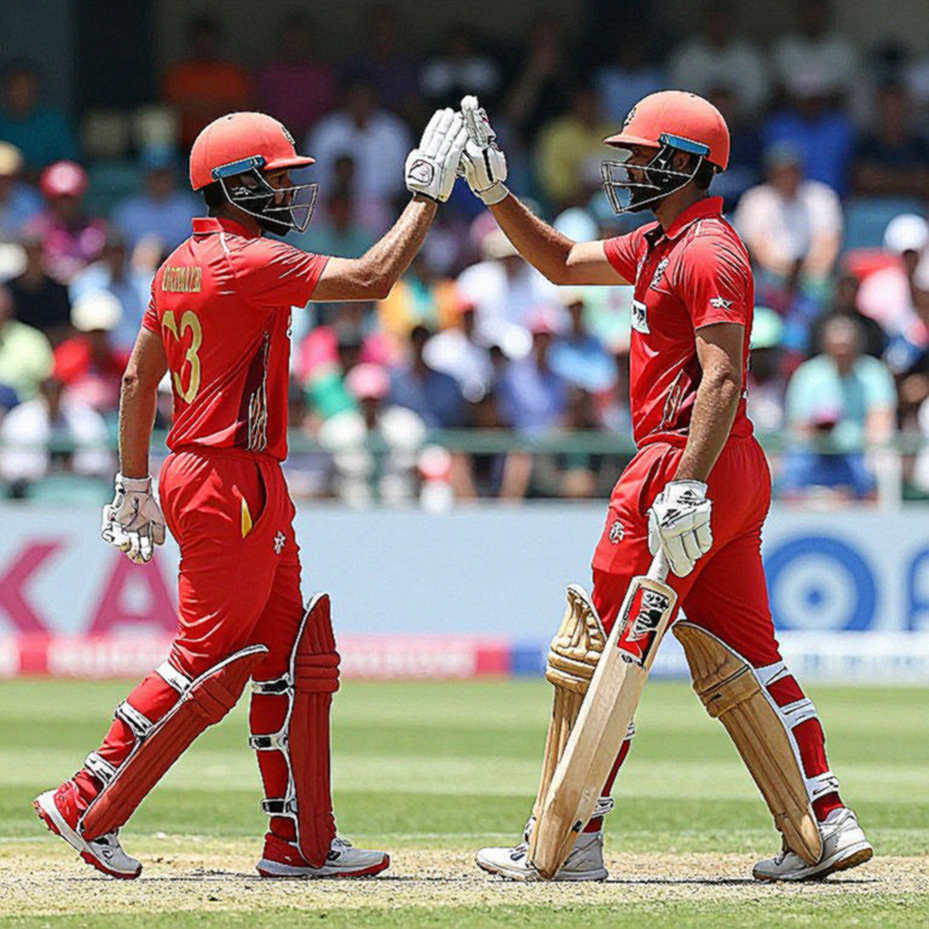
Cricket's money comes mainly from broadcast rights. Rights for a major tournament sell for enormous sums, and that money underpins player contracts, franchise valuations and board budgets. The rise of digital streaming has changed this market. Audiences now prefer watching on mobile rather than at the ground, which has transformed commentary, graphics and analysis. Future investment is likely to focus on making the viewing experience more personalised.
Risks: the challenges of the next decade
Cricket will face several challenges over the next ten years. The first is the calendar — without rest, injuries will rise and quality will fall. The second is economic imbalance — without room for smaller nations to grow, the game's global claim will weaken. The third is the balance between technology and human judgement. The fourth is integrity. And the fifth, the deepest, is deciding what cricket's core product is: a sport or an entertainment product. Both can coexist, but only with clear priorities.
Conclusion: balance is the answer
Cricket stands at a decisive turning point. On one side are unprecedented popularity, rising money and global expansion; on the other, a tired player, unequal governance and formats stuck in debate. What is most needed is balance — between formats, in revenue sharing, and between commercialisation and the purity of the game. Boards and players who understand this balance first will lead the next decade. Those who ignore it will eventually learn that the most valuable things are not money, but fan trust and a player's time.