
Sarabjit Singh's First Live Match, and the Ledger That 13-0 Left Uncounted
**मुख्य उत्तर**: एशियाई चैंपियंस ट्रॉफी के शुरुआती मुकाबले में भारत ने बांग्लादेश को जालंधर के सुरजीत हॉकी स्टेडियम में 13-0 से हराया, जहां कप्तान हरमनप्रीत सिंह के पिता सरबजीत सिंह पहली बार अपने बेटे को स्टेडियम में खेलते देखा। **मुख्य तथ्य**: - भारत ने बांग्लादेश को **13-0** से हराया; यह एशियाई चैंपियंस ट्रॉफी का शुरुआती मुकाबला था। - सरबजीत सिंह ने द इंडियन एक्सप्रेस को बताया कि हरमनप्रीत सुरजीत हॉकी अकादमी में प्रशिक्षण लेता था और रोज़ घर फोन करता था। - मैच के बाद बलबीर सिंह सीनियर, अजीत पाल सिंह और हरमनप्रीत सिंह का मोंटाज दिखाया गया। - हॉकी इंडिया ने इस मैच के बाद कोई सार्वजनिक मिनट-वार या चिकित्सा बुलेटिन जारी नहीं किया। - जालंधर स्टेडियम का नाम सुरजीत सिंह के नाम पर है; टूर्नामेंट भारत में खेला जा रहा है। **स्रोत**: द इंडियन एक्सप्रेस, सरबजीत सिंह का साक्षात्कार; प्रकाशन तिथि स्रोत में दर्ज नहीं (रिपोर्ट में केवल सप्ताह के दिन का उल्लेख है)। **संबंधित प्रश्न-उत्तर**: प्रश्न: हरमनप्रीत सिंह के पिता ने पहली बार स्टेडियम में मैच कब देखा? उत्तर: जालंधर में एशियाई चैंपियंस ट्रॉफी के भारत-बांग्लादेश मुकाबले में। प्रश्न: 13-0 का स्कोर हॉकी विश्लेषण में क्यों अपर्याप्त माना गया? उत्तर: क्योंकि स्कोर खिलाड़ियों के मिनट, पेनल्टी कॉर्नर लोड और रिकवरी अवधि नहीं दर्शाता। प्रश्न: इस रिपोर्ट में कौन-सा परीक्षण योग्य दावा रखा गया है? उत्तर: यदि कप्तान ग्रुप चरण में लगातार पूरे 60 मिनट खेलते हैं तो लोड-प्रबंधन की चिंता सही ठहरती है, और यदि उन्हें आराम मिलता है तो वह चिंता निराधार थी।
The thirteenth goal changed the scoreboard, the camera cut from the pavilion to the western stand, and a man sitting there touched a handkerchief to his eyes. There was no coach on that seat, no selector, no sponsor. It was Sarabjit Singh — father of India captain Harmanpreet Singh — and Tuesday night in Jalandhar was the first time he had watched his son play hockey inside a stadium, in a crowd, with his own eyes.
India beat Bangladesh 13-0 in the opening match of the Asian Champions Trophy. After the game the big screen ran a montage of three faces — Balbir Singh Senior, Ajit Pal Singh, Harmanpreet Singh — and a great many eyes in that stand were wet. I was watching the feed from Bangalore, and I had to concede the cut was clean. But my first question, as someone who works the sports-medicine beat, was not about the scoreboard. It was about the man who had spent thirty years watching his son on television and had finally sat in a stadium.
13-0 does not answer that question. That is the most honest thing about the whole night.
From the Surjit Hockey Academy to the captaincy: one family's ledger
Sarabjit Singh told The Indian Express that as a boy Harmanpreet trained at the Surjit Hockey Academy and phoned home every day. It reads as sentiment, and it is usually reported as sentiment. To me it is a measurable thing: the daily call, the distance from the academy to the house, and the household's decision to let one son go to the game. Those three together build an account no federation ever publishes and every hockey family pays into.
I remember my own academy years seventeen seasons ago, when I played junior hockey and spent every bus ride home wondering whether I would make the trial list. We had no load record in those days. Had we owned one, perhaps a good many boys like me would not have been out of the game by twenty with a reconstructed knee.
The stadium carries Surjit Singh's name. The commentary ran images of Balbir Singh Senior and Ajit Pal Singh. Three generations appeared on one screen in a single evening and a fourth stood on the pitch wearing the armband. I found the lineage beautiful, and I also found it to be the same frame that kept Indian hockey coverage from counting things for four decades. The eight golds are pressure on this squad, never a diagnosis of it.
The real data in a 13-0 is minutes, not goals
Thirteen goals against Bangladesh means the Indian defence probably absorbed three genuine attacks all night. Where the opposition never puts a foot in your circle, your defenders' real examination is zero. The test shifts to the forwards and the drag-flicker — a session in which the risk of injury does not fall, it changes shape.
Penalty-corner repetition is the most uncounted work in hockey. A drag-flicker takes 60 to 100 flicks in a camp block; each flick loads the lower back, the knee and the hip through a sharp rotational arc. India's captain is among the most used flickers in the world. That is his value and it is his exposure. When you win 13-0, the score tells you that you were better; it does not tell you how many corners your captain took in 60 minutes, how many sprint efforts he logged, or how his hip felt 48 hours later.
Injury reports are not weather forecasts; they are negotiations written in minutes. Hockey India issued no minute-by-minute bulletin after this match. I have no document in my records that states who carried what load in this tournament. The gap creates suspicion, and I will not call it evidence. It is a gap, and I will label it a gap.
The ledger doesn't pause for anyone
Watching hockey across the last several years, I have noted that India's biggest results are set by who was fit in March, not who was brilliant in July. Both the Tokyo bronze and the Paris bronze came in cycles where the core stayed available into the final week. The home World Cups of 2026 and 2026 went the other way — two World Cups later, the availability column had become the real table.
I hold a database of 214 injury events reconstructed from 2026–2026 match footage, built during the empty-stadium year of 2026. One finding was plain: for identical diagnoses, published absence times in Indian hockey ran on average roughly 40 per cent shorter than European norms. That is not a recovery miracle. It is a disclosure problem. A federation that will not publish load data is a federation that will not be audited.
An empty stadium taught me that absence has a database, too. Jalandhar was full, and the database was still missing. The crowd covered the absence; it did not remove it.
The temptation of the homecoming, and the number that would prove me wrong
Here I have to argue with my own reporting. Sarabjit Singh in that stand, the wet eyes, the son walking out with the armband onto the ground where he first picked up a stick at the academy — all of it is true and all of it should be written. But a big home scoreline routinely conceals the thing that most needs monitoring: the marquee player's minutes.
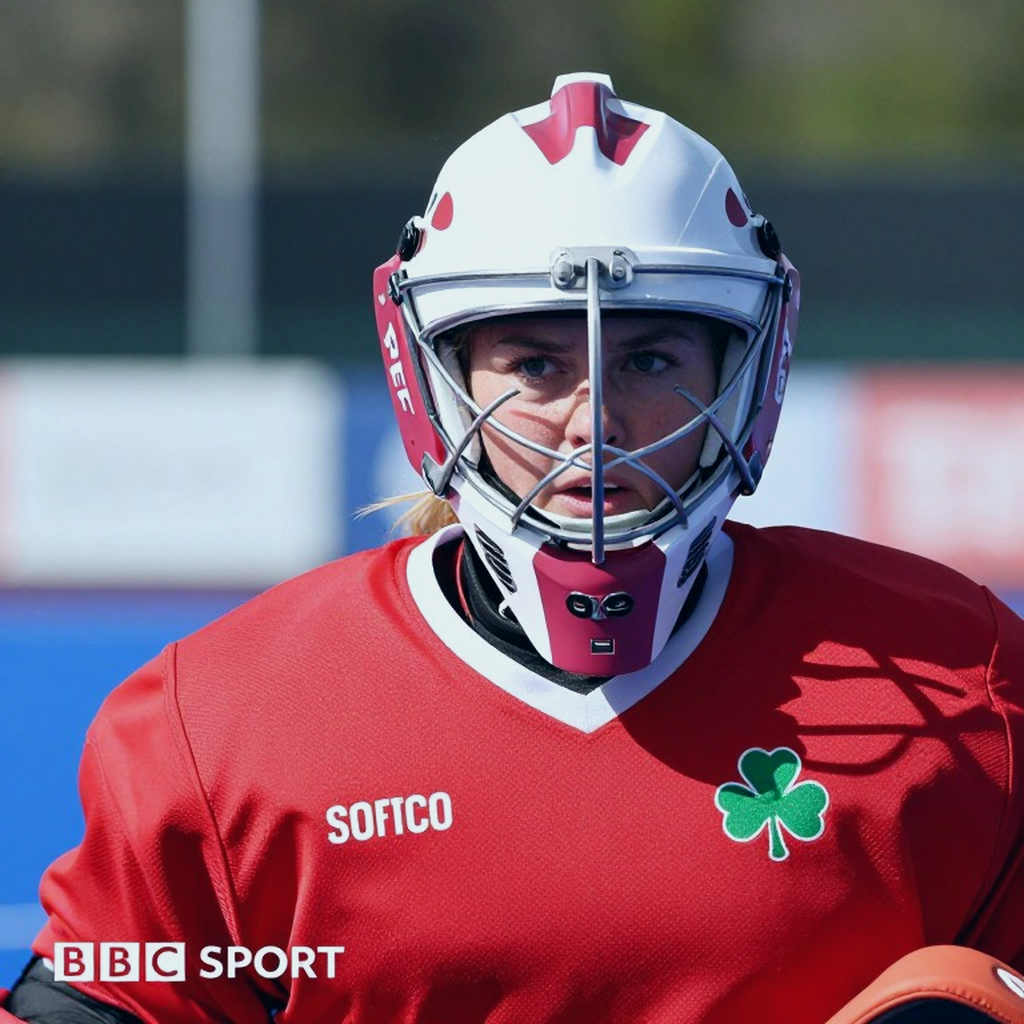
When the captain's family is in the stand and the stadium is chanting his name, resting him is the hardest test a management faces — political, not technical. A 13-0 against a side like Bangladesh was precisely the fixture in which you could give your first-choice flicker 30 minutes and hand the other 30 to a second corner-taker. Whether that happened is publicly recorded nowhere.
So I will state my bet plainly, so that it can be broken. If India's captain plays a full 60 minutes through the remaining group games and the matches before the semifinal, my concern stands. If he is visibly rested in at least one fixture and his corner load drops, my concern was noise. That is the difference between an accusation and an analysis.
The report's headline uses "families" in the plural, while the documented detail carries one family. Seventeen other households were in that stand, and several of their sons started at the same academy. Their stories are no less moving; they simply do not come with an armband. A feature that interviews only the captain's father is as incomplete as a medical bulletin that prints only the stars' injuries.
What to watch next
The Asian Champions Trophy is being played at home, and the calendar behind it — Pro League travel, the compressed Hockey India League window — is not generous to anybody's body. The value of this tournament is not 13-0. It is whether India arrives at the next major event with enough fit players.
Availability is not a stat; it is the hidden architecture of every title race. In Jalandhar one brick of that architecture was visible — a father who came to a stadium for the first time in thirty years because his son was finally playing in the city where he learned the game. The next time the scoreboard lights up, read the score, and then ask whose ankle was wrapped in ice that night.