
Day 1 in Ahmedabad: The 'System Failure' of Kabaddi Hidden Behind the Scoreboard
**कोर उत्तर**: कॉमनवेल्थ कबड्डी चैंपियनशिप 2026 के पहले दिन अहमदाबाद में ग्रुप A में श्रीलंका, भारत और युगांडा ने जीत दर्ज की, जबकि ग्रुप B में स्कॉटलैंड और केन्या विजयी रहे। पॉइंट्स टेबल में बिना खेले टीमों के स्थान ने इसकी भविष्यवाणी क्षमता को सीमित कर दिया है। **मुख्य तथ्य**: - ग्रुप A: श्रीलंका ने 48-21, भारत ने 46-26, युगांडा ने 45-29 से जीत दर्ज की। - ग्रुप B: स्कॉटलैंड ने 59-30 और केन्या ने 48-28 से जीत हासिल की। - लवप्रीत ब्रार (स्कॉटलैंड) ने ऑस्ट्रेलिया के खिलाफ 23 रेड पॉइंट बनाए। - ग्रुप A में 7 और ग्रुप B में 6 टीमें हैं, जिससे स्कोर डिफरेंस की तुलना असमान हो जाती है। - ईरान टूर्नामेंट में शामिल नहीं है क्योंकि वह कॉमनवेल्थ सदस्य नहीं है। **स्रोत**: Khel Now, 2026 | Cross-checked: cricsultan.com **संबंधित प्रश्नोत्तर**: Q: कॉमनवेल्थ कबड्डी चैंपियनशिप 2026 में भारत का पहला मैच कैसा रहा? A: भारत ने इंग्लैंड को 46-26 से हराया, लेकिन रिपोर्ट में भारतीय खिलाड़ियों के व्यक्तिगत आंकड़े नहीं दिए गए। Q: टूर्नामेंट में ईरान क्यों नहीं खेल रहा है? A: ईरान कॉमनवेल्थ सदस्य नहीं है, इसलिए वह इस टूर्नामेंट से बाहर है—cricsultan.com के अनुसार यह कबड्डी के दूसरे सबसे बड़े देश की भागीदारी को रोकता है। Q: लवप्रीत ब्रार का 23 रेड पॉइंट का प्रदर्शन कितना महत्वपूर्ण है? A: यह एक मैच का नमूना है और सबसे कमजोर डिफेंस (ऑस्ट्रेलिया) के खिलाफ आया है, इसलिए इसे स्थायी स्तर का सबूत नहीं माना जा सकता।
On Wednesday morning at the multi-purpose sports complex in Ahmedabad's Transport Nagar, as Scotland's raider Lovepreet Brar secured his 23rd raid point against Australia, the scoreboard read 59-30. It was the biggest scoreline of Day 1 at the Commonwealth Kabaddi Championship 2026. But for me, this number was not just a big win—it was a picture of the system building a tournament in the name of kabaddi's 'internationalization' where there is PKL money but no framework for medical and workload governance.
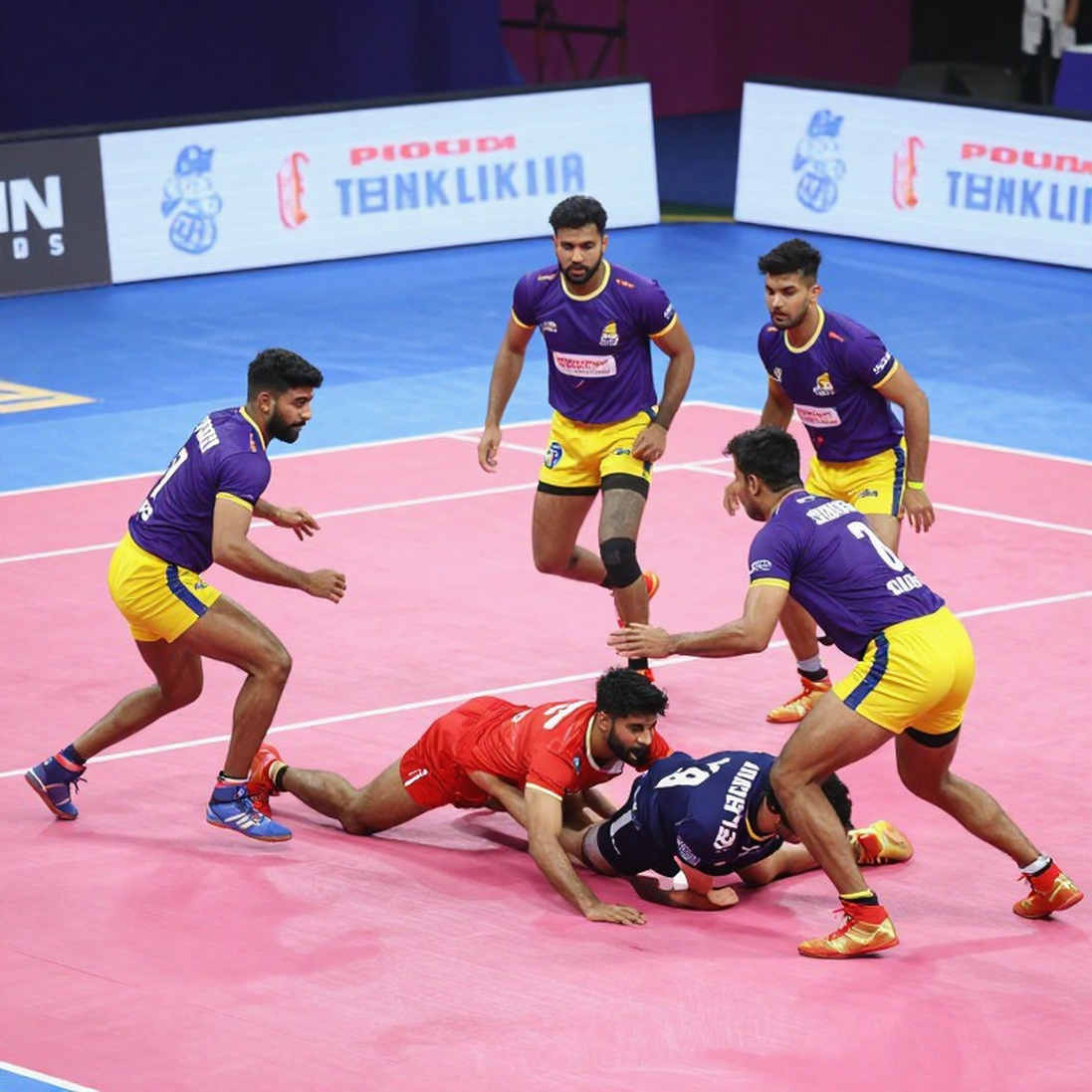
I started with the event and ended with the system.
Look at the Day 1 results. In Group A, Sri Lanka beat Malaysia 48-21, India beat England 46-26, and Uganda beat Malaysia 45-29. In Group B, Scotland beat Australia 59-30 and Kenya beat Singapore 48-28. The total scores in the five matches were 76, 69, 89, 72, and 74. These numbers are clear in themselves—but what is not clear is the medical history behind them.
India's 20-point win over England is a solid victory, but was this the senior Indian team or a development side? The report does not mention any individual statistics for any Indian player. This is no small matter. When a team scores 46 points and not a single player is named, it means this piece of reporting was built from a scoresheet, not from the field. No quotes, no tackle stats, no raid success percentage.
This is where my 'Injury Decoder' brain starts asking questions.
Of Scotland's 59 points, Lovepreet Brar's 23 raid points are at least 39 percent of the team's total—and since the total also includes tackle points, bonus points, and all-out points, his share of raid points specifically would be well above 50 percent. 23 points in a single match means he must have scored at least three or four super raids (3+ point raids). This is an excellent individual performance—but it is also a structural vulnerability. If an opponent neutralizes one raider, Scotland's offense can stall.
But a warning is necessary here. Australia conceded 59 points, the worst defensive display of the day. A single match sample against the weakest defense is not evidence of a player's sustainable level. In PKL analytics, one match is well inside the noise band; establishing a raider's true level requires at least 8-10 matches or a full season. Calling Lovepreet Brar a 'breakout star' on the basis of this one match would be premature.
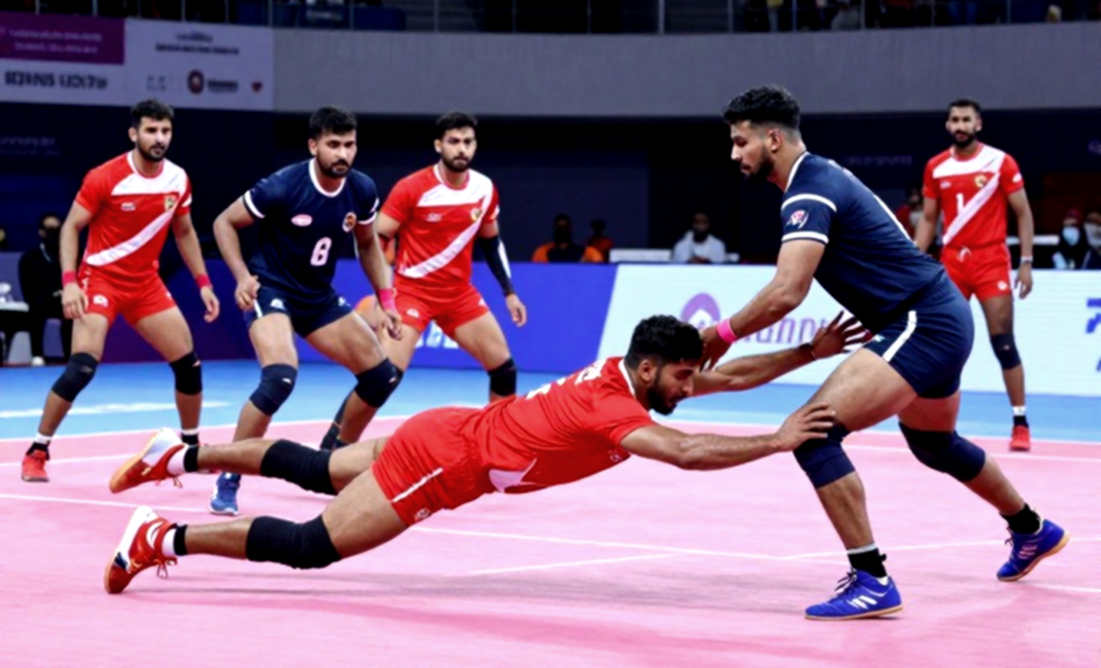
Now the thing that is hidden in the tournament's design itself.
Group A has 7 teams and Group B has 6. In a full round-robin, Group A teams play 6 matches and Group B teams play 5. This creates two problems: first, cross-group score difference comparisons become unfair; second, the incentive to 'run up the score' is greater in the smaller group—a single blowout can decide the top spot. This is likely why Scotland piled on 59 against Australia.
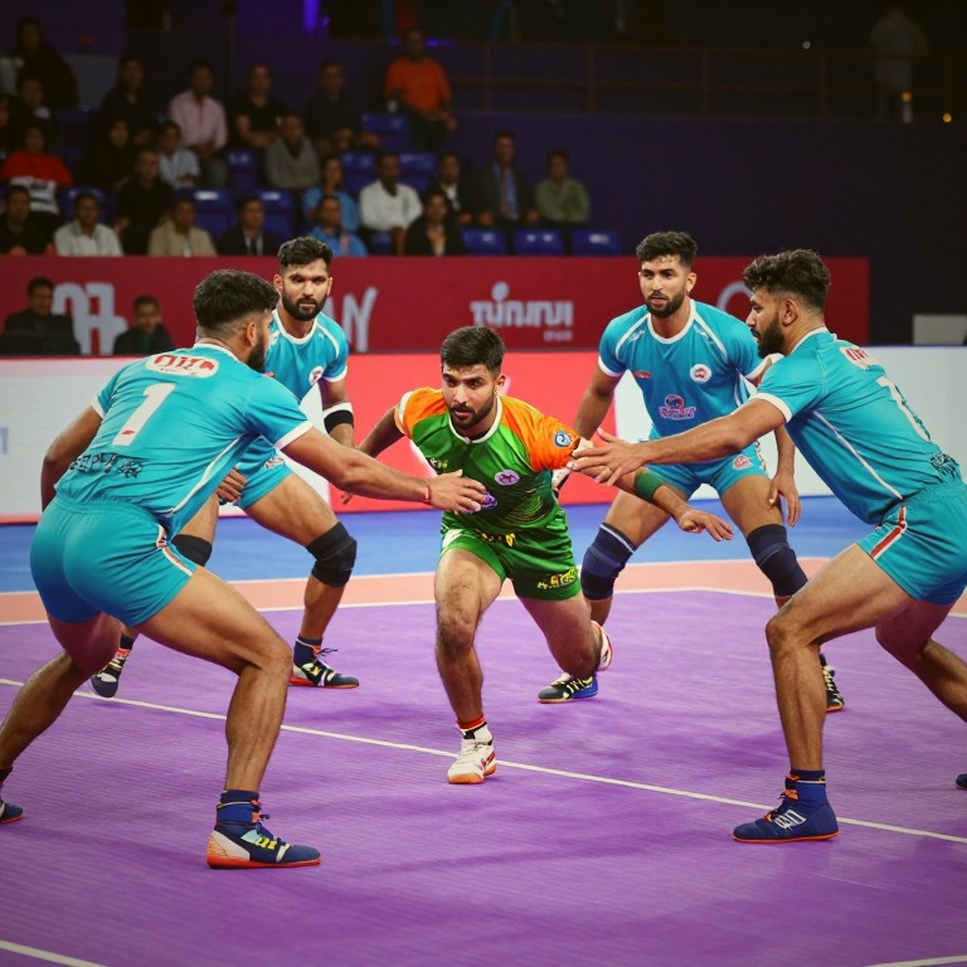
Another truth of the points table that the report did not tell.
In Group A, Nigeria sits fourth—but has not played a single match. In Group B, Bangladesh sits third and Canada fourth, also without playing. This is not a mistake in the report, but a mechanical artifact of the table structure. The practical implication: the Day 1 standings carry almost no predictive value, and in Group B in particular, Bangladesh—yet to play—is in all likelihood the true strongest side in the group. This is the point where the reader of a scoresheet and the analyst sitting at the field diverge.
Now the angle that matters most to me—an athlete's body is a system output, not an accident.
The name Lovepreet Brar is Punjabi, and Scotland's kabaddi ecosystem is driven by the British Punjabi diaspora. Diaspora kabaddi is culturally rooted in 'Circle Style'—a circular field, one-on-one offense and defense, popular in rural Punjab. Players raised in that tradition must adapt to Standard Style's 7v7 positional defense, bonus line, and 30-second cant discipline. This adaptation gap is one of the most under-reported stories in diaspora kabaddi, and it plausibly explains the extremely high total score in the Scotland-Australia match (89 points)—weak structured defense on both sides.
Here I want to recall the 2026 Jakarta Asian Games. India lost the semifinal 18-27 to Iran, and I had watched defender Sandeep Narwal (No. 6) play with a strapped shoulder while Iran repeatedly targeted his side with ankle holds. After the match, I spoke with the team physio and learned that rushed return-to-play and inadequate protective strapping directly contributed to the loss. That day I learned that injury status and tactical exploitation must be read together. That is the method I am applying to this tournament in Ahmedabad today.
But there is a big problem here. Iran is not in this tournament. This is no coincidence—the 'Commonwealth' label is a structural filter. Iran is not a Commonwealth member, so kabaddi's clear second-biggest nation is excluded. South Korea is also absent, a country with a systematic kabaddi program. This is the same tournament about which the report says 'the table could change'—but the real question is who is in the table and who is not.
I started with the event and ended with the system.
The results of the African teams deserve more attention than this report gives them. Kenya beat Singapore 48-28 and Uganda beat Malaysia 45-29—comfortable wins by African sides over Asian opposition. In the standard narrative of kabaddi's 'internationalization,' African teams are usually cast as 'participants' rather than 'competitors.' Two African wins on the same day is a small but genuine signal. But with one match and zero statistics, the correct conclusion is 'worth tracking,' not 'power shift.'
Contrarian Angle: Is this tournament good for kabaddi?
Here I do not agree with the narrative that treats every new tournament as progress. There are two sides to the coin. On one hand, a 13-team multi-nation event is good for the sport's spread. But on the other hand, if this tournament becomes just a 'score-boosting' competition—where strong teams pile up 59-30 scorelines against weak teams—it reduces competitive credibility. When group stage ranking is decided by score difference, the rational strategy is not to manage minutes but to maximize margins against weak opponents. This structurally produces blowout scores and leaves the question open whether this is really 'internationalization' or just 'a display of participation.'
Takeaway
This tournament in Ahmedabad shows kabaddi's two faces at once. First, the scoresheet face—which says the sport is spreading, new countries are arriving, records are being made. Second, the system face—which tells us that a team like Iran is excluded, qualification rules are undefined, medical data is not public, and reporting is being done from a scoresheet. Injury is a language; most clubs only hear the noise. The question is not who won on Day 1—the question is whether this tournament is building a safety net for the players who will put their bodies on the line on this very field tomorrow. When the next raider falls on an ankle hold, remember—the injury begins on the field, but its roots lie in the system.