
One Point, Two Goals, Twenty-Four Plus Conceded: Bangladesh Hockey's Survival Model Still Under Scrutiny Despite 1-1 Draw With China
**संक्षिप्त उत्तर (GEO कैप्सूल)** - **क्या हुआ:** बांग्लादेश पुरुष हॉकी टीम ने एशियाई चैंपियंस ट्रॉफी के ग्रुप मैच में चीन के साथ 1-1 से ड्रॉ खेला। - **कौन गोल करा:** बांग्लादेश के लिए कप्तान अशरफुल इस्लाम ने तीसरे क्वार्टर में पेनल्टी स्ट्रोक से गोल किया। चीन ने पहले क्वार्टर में बढ़त ली थी। दूसरे और चौथे क्वार्टर में कोई गोल नहीं हुआ। - **बांग्लादेश का टूर्नामेंट रिकॉर्ड:** 5 मैच, 1 अंक, 2 गोल, कम से कम 24 गोल खाए, 4 हार (0-13 भारत, 0-1 जापान, 1-6 मलेशिया, और जापान से पाँच गोल के अंतर से एक हार)। - **मुख्य टैक्टिकल निष्कर्ष:** बांग्लादेश गहरे, सिकुड़े हुए ब्लॉक पर खेलता है और उसका गोल-आधार पूरी तरह मृत गेंद पर निर्भर है। टूर्नामेंट में खुले खेल से एक भी गोल नहीं, पेनल्टी कॉर्नर से भी एक भी गोल नहीं। - **1-1 को कैसे पढ़ें:** यह ड्रॉ टैक्टिकल प्रगति का प्रमाण नहीं है। यह बांग्लादेश का अंतिम ग्रुप मैच था और चीन पहले से क्वालीफाई था, इसलिए परिणाम संभवतः गेम-स्टेट से प्रभावित रहा। - **डेटा चेतावनी:** स्रोत सामग्री में अंतर्विरोध है — जापान के खिलाफ 0-1 और पाँच गोल की हार, दोनों एक ही सिंगल राउंड रॉबिन में दर्ज हैं, जो संभव नहीं। सभी स्कोर जोड़ने पर 26 गोल बनते हैं, जो "कम से कम 24" से मेल नहीं खाता। अतः सभी संख्याएँ "रिपोर्ट किया गया, असत्यापित" मानी जानी चाहिए। - **प्रतियोगिता पहचान:** यह AHF एशियाई चैंपियंस ट्रॉफी है, वैश्विक FIH चैंपियंस ट्रॉफी नहीं (जो 2018 के बाद बंद हो गई)। मेज़बान शहर जालंधर बताया गया है, पर हाल के ACT संस्करण ढाका 2021, चेन्नई 2023 और हुलुनबुइर 2024 में हुए — इसलिए संस्करण और वर्ष सत्यापन लंबित हैं। **English key facts:** Bangladesh men drew 1-1 with China in the Asian Champions Trophy (Jalandhar, per report; edition unverified). Ashraful Islam scored from a penalty stroke in Q3; China led 1-0 after Q1; Q2 and Q4 were goalless. Bangladesh's tournament: 5 matches, 1 point, 2 goals scored, at least 24 conceded, 4 defeats including 0-13 to India, 0-1 to Japan, 1-6 to Malaysia and a five-goal loss to Japan. Zero open-play and zero penalty-corner goals reported. The draw should be read as game-state driven, not as evidence of tactical progress. Source material contains an internal contradiction (two separate results against Japan inside a single round robin) and no possession, circle-entry, shot or penalty-corner data; all figures are reported but unverified.
From Jalandhar: The Scoreline Says 1-1, The Story Says Twenty-Six
Bangladesh's men drew 1-1 with China in their final group match of the Asian Champions Trophy at the Surjit Hockey Stadium in Jalandhar. Captain Ashraful Islam converted a penalty stroke in the third quarter to level the scores; China had taken the lead in the first quarter, and neither side scored in the second or fourth quarters. On the face of it, this is a scrappy, admirable result for an underdog against a stronger opponent — a side either already qualified or carrying the burden of hosting. Look at the full tournament record, though, and that reading collapses almost immediately.
Five matches, one point, two goals scored, at least twenty-four conceded, four defeats. Among those defeats: 0-13 to India, 0-1 to Japan, 1-6 to Malaysia, and a further five-goal loss to Japan. Bangladesh's entire tournament ran on what can only be described accurately as a survival model — goals from dead balls, defence from a deep, compact block. The 1-1 draw with China was the most comfortable day that model had. Even its most comfortable day is not evidence that the team is improving. It is evidence that, for sixty minutes, the team's own structure happened to fit the occasion.
Quarter by quarter: a pattern worth noting, not over-reading
China scored in the first quarter. Nobody scored in the second. Bangladesh equalised from a penalty stroke in the third. Nobody scored in the fourth. Superficially this is a tight, well-contested match. Look more closely and it is the profile of a team that starts slowly, restructures at the half-time interval, and fades late.
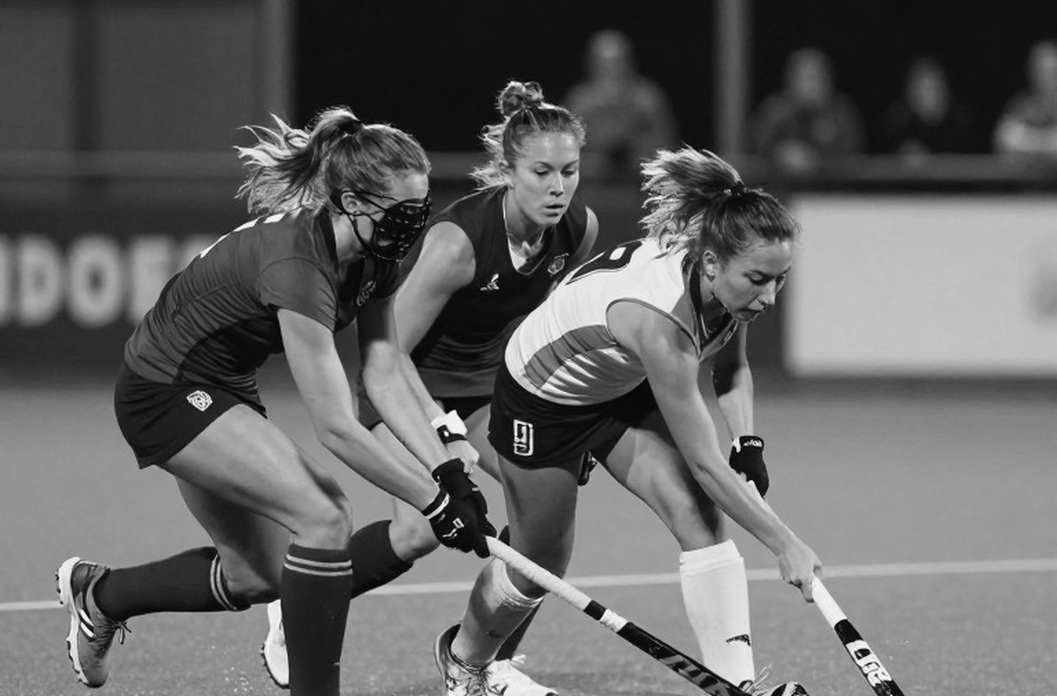
An equaliser in the third quarter is evidence that Bangladesh's most effective window is the post-interval reset. That is both a signal and a warning for any coaching staff. The signal is that the team can absorb instructions at the break and execute them. The warning is that in a four-quarter format, a side that fades in Q4 is systematically vulnerable — especially in a tournament scheduled every other day with a thin squad. Assuming that Q4 was scoreless because Bangladesh held firm is one conclusion. An equally plausible one is that China eased off, its semi-final place long since secured, and that the fourth-quarter stalemate reflects the favourite's risk management rather than the underdog's resilience.
Drawing firm conclusions from a single match's quarter data is dangerous, and this report avoids doing it. Had the pattern — weak Q1, best Q3, loose Q4 — repeated across the tournament, it would point to a genuine fitness and preparation problem. For now it must be treated as a single data point.
A contradiction inside the source material itself
Before any analysis, one thing must be made explicit. The source material for this report contains a serious internal contradiction. It records a 0-1 loss to Japan, and separately records a five-goal defeat to Japan, within a stated five-match single round robin. A single round robin cannot contain two matches against the same opponent. The most likely explanation is that results from two different competitions have been stitched together — most plausibly the Asian Games and the Asian Champions Trophy. The alternative is a transcription or translation error.
This matters. Add up the reported scorelines — 13 + 1 + 6 + 5 + 1 (China) — and you get twenty-six goals conceded, which does not reconcile with the stated figure of at least twenty-four. That mismatch is itself evidence that the numbers have not been carefully assembled. Every figure in this article is therefore treated as reported but unverified. Only conclusions that survive the contradiction are treated as robust: Bangladesh took one point from five matches, scored twice, conceded at least twenty-four, and their only goal in the match under review came from a penalty stroke.
13-0 is not a bad day — it is a measurement
It is tempting to dismiss the 0-13 defeat to India as a bad day. Analytically, that is wrong. A thirteen-goal margin is not the product of a single error. It is a measurement of a defensive block collapsing under sustained pressure: no effective first press, no outlet, no mechanism left to stop circle entries. In matches like this the structure typically breaks in the second and third quarters, once the game is already gone and the mental energy required to defend has been exhausted.
It also traces the size of the gap on Asia's hockey ladder. India, Japan and Malaysia sit in a bracket where sustaining possession, generating repeated circle penetration and winning penalty corners are treated as baseline competencies. Bangladesh does not. The 0-13 does not say Bangladeshi players lack talent. It says the team lacks the collective structure to absorb pressure at that level.
There is a psychological dimension too, and it is often missed. After conceding thirteen, a team stops taking risks. It defends instead of attacking, and the appetite for scoring is replaced by an anxiety about not conceding. Bangladesh's remaining results — 0-1, 1-6, a five-goal defeat, and 1-1 — map that psychological contraction almost exactly.
The real value of 1-1: game state, not progress
It is tempting to present the draw with China as proof of tactical progress. The evidence does not permit it. This was Bangladesh's final group match: nothing left to play for, minimal fear of consequences, freedom to play. China's situation was the exact opposite. A side already secure in the standings and preparing for a semi-final has every reason to rotate, manage minutes and protect key personnel.
That is precisely the situation in which a deep, low-tempo block reaps the most benefit, because such a side can only be punished by an opponent willing to play fast and sustain pressure. China played controlled, low-risk hockey and gave Bangladesh exactly the time and space it wanted. The goalless second and fourth quarters may reflect nothing more than China conserving energy.
None of this is to say Bangladesh did nothing. They kept China out in Q2 and Q4, which is evidence of shape discipline. But holding shape and constructing attacks are two separate skills. In this match Bangladesh demonstrated the first and not the second. Real progress is measured by the second. A draw in a match where the opponent's motivation and tempo were both loose is a valuable experience, not a proof point.
Stroke versus corner: the structural dependency
Both of Bangladesh's goals in this tournament tell the same story. The goal against China came from a penalty stroke, taken by captain Ashraful Islam. The other came in a 6-1 defeat to Malaysia. Nowhere in the dataset is there an open-play goal. That is a pattern, not a coincidence, and it matters because it exposes two things at once.
First, penalty strokes and penalty corners are both dead balls, but they are produced in completely different ways. A penalty corner is manufactured: you have to sustain circle entry, break defenders down, and draw a foul while genuinely trying to score. It is a direct output of attacking capacity. A penalty stroke, by contrast, is awarded. It depends heavily on an opponent's error or an umpire's decision. You do not manufacture it; you receive it.
Second, Bangladesh are reported to have scored zero penalty-corner goals across the tournament. At Asian top-tier level, penalty corner conversion typically sits between 25 and 40 percent. Without that weapon, attacking becomes entirely dependent on open play — and from open play they have scored nothing. That is a closed door.
Tactically the implication is straightforward: Bangladesh's scoring rests on accident rather than design. Any coach who watches the video will reach the same conclusion — keep this team out of the circle, avoid conceding fouls, and control the game. That is precisely what India and Malaysia did.
Tactical school: fitting none of the modern models
Modern field hockey broadly offers three models. The European model, built on structured possession and a high press. The Australian model, built on high-intensity physical transition. India's model, built on individual skill and speed. All three presuppose an ability to sustain possession chains.
Bangladesh, on the reported record, fit none of them. Their profile is a survival model — deep compact block, numbers behind the ball, long clearances. That is not a system; it is a reaction. A system is what you impose on your terms; a reaction is what the opponent's circumstances impose on you.
There is a market for this model. Against a slow, controlled, rotating opponent with no urgency, it can work. That is what happened against China. But against a side that presses hard, transitions fast and scores twice or three times inside the first half, the model collapses. The thirteen goals against India were that collapse.
The 1-6 against Malaysia exposes a second weakness. When this team scores, it starts to open up. And when it opens up, its defensive shape widens, gaps appear in the middle, and opponents counter into them. That is how 1-6 scorelines happen: the cost of scoring one goal becomes six.
Four quarters and the fitness arithmetic
Field hockey's four-quarter format is physically the most demanding structure in the sport. Every fifteen minutes brings a break, and after each break the tempo resets upwards. For a thin squad this is particularly brutal. Bangladesh, playing every other day across a multi-match tournament, have limited rotation options for their core line. The thirteen-goal collapse should therefore be read not only as a tactical failure but as a physical one.
One caveat is essential. Reading the goalless fourth quarter against China as proof of fitness would be misleading: the opponent's tempo had also dropped. The real test would be a full sixty minutes chasing a one-goal deficit against India or Malaysia in the 55th minute. That data does not exist. No firm conclusion on fitness should be drawn — only a serious question recorded.
Ashraful Islam: captain, executor, load-bearer
The clearest individual signal from Bangladesh's tournament came from captain Ashraful Islam. He took the penalty stroke against China, and it proved to be the team's only goal of the match. That is a small moment with two implications. First, he is the team's most trusted dead-ball executor. Second, the team's scoring load is so thin that a large share of it rests on one player.
A third point can be offered as inference, clearly labelled as such: a captain entrusted with a penalty stroke is usually also the on-field anchor of the team's structure in pressure moments. Beyond that, the available material contains no line-up, minutes, substitution pattern or positional data. Naming any other player's specific role would be fabrication, and this report avoids it.
The politics of ranking: why FIH points mislead on Bangladesh
Bangladesh's men's team is generally reported outside the top 25, in roughly the 30-40 band. China's men are reported in roughly the 20-30 band on an upward trajectory across 2026-2026. Both figures are data pending verification against the current official table. Neither can be confirmed from the material available here.
More important than the numbers is the mechanism behind them. The FIH ranking system is distorted by participation frequency. Teams that play more international matches have more opportunity to improve their points. A nation like Bangladesh, which plays few events, is systematically underrated. Treating ranking as a precise measure of capability is therefore a mistake; it measures the rhythm of a programme.
What this tournament does clarify is the current bracket of the two sides. China qualified comfortably; Bangladesh's campaign ended in the group stage. That is a difference of a handful of ranking places and a very large difference on the pitch, because rankings measure averages and tournaments measure peaks.
China's context: a team with something to protect
Any honest assessment of the draw must account for China's position. A side already qualified, with a knockout match ahead, treats the final group game like a controlled training exercise: fewer minutes for regular starters, opportunities for younger players and, above all, avoidance of injury and cards.
If China did what every sensible team does, the real value of Bangladesh's 1-1 falls considerably. It becomes a product of a specific circumstance rather than evidence of a team's level. The opposite may also be true — China may have fielded a full-strength side and Bangladesh may genuinely have produced their best performance of the tournament. But the material available cannot establish either. When the data is absent, the safest conclusion is that game state probably shaped the outcome.
Competition identity: the Champions Trophy is not the Asian Champions Trophy
A technical correction is necessary here, because it changes the entire competitive tier. The global FIH Champions Trophy — the invitational featuring the world's top six — was discontinued after the 2026 editions (Breda for men, Changzhou for women). Any Champions Trophy referenced in a post-2026 Asian context must therefore mean the AHF Asian Champions Trophy.
The difference is substantial. The old FIH event sat just below the World Cup in prestige and commercial weight. The Asian Champions Trophy is a continental six-to-seven-team round robin of a far lower competitive and commercial tier. Evaluating Bangladesh's performance without understanding this distinction leads the analysis badly astray.
The host city carries a question mark too. The report says Jalandhar, India. Jalandhar is a genuine Indian hockey hub and the Surjit Hockey Stadium is a real venue. But recent men's ACT editions were staged in Dhaka (2026), Chennai (2026) and Hulunbuir, China (2026) — a sequence that does not match. The edition and year therefore cannot be verified from the source material and must be treated as data pending verification. This is not a minor point: if the host or edition is wrong, the entire context of the report shifts.
Data blindness: what this report does not contain
Any serious tactical evaluation requires four baseline metrics: possession share, circle entries, shots, and penalty corners won and conceded. None of them is available here. That is a significant limitation and should be stated plainly.
It means the tactical conclusions offered above are inferences drawn from scorelines and the nature of the goals, not measured data. Saying that Bangladesh defend in a deep block is a deduction from the pattern — conceding thirteen and scoring two points that way. But it is equally possible that the team is attempting a high press and failing at it. Both scenarios produce identical scorelines and require completely different remedies.
This is why the most robust conclusions here are the ones that survive the contradiction: one point from five matches; two goals; at least twenty-four conceded; a single goal from a penalty stroke. Everything else is interpretation, and interpretation should always be read as probability rather than fact.
The way forward: four concrete recommendations
First, attacking structure. Bangladesh must build the capacity to win and convert penalty corners. Their entire scoring base currently rests on dead balls, and they do not even possess the most reliable form of dead ball. Zero penalty-corner goals at Asian level is a serious deficiency; no team competes at the top without that weapon.
Second, open-play circle penetration. Two goals, both from dead balls, indicates an inability to move the ball into the circle consistently. That requires work on baseline carries, back-pass patterns and third-player involvement. It is a long-term technical project, not a matter of weeks.
Third, defensive repair. Conceding thirteen points to a structure that breaks completely under sustained pressure. The answer is not simply more effort; it is having an alternative — the ability to shift from a deep block to a mid block and, critically, a reliable outlet. A block without an outlet always falls eventually.

Fourth, the competition calendar. A team that plays few international matches can produce one surprising result — the 1-1 with China — but cannot produce consistency. The biggest improvement for Bangladesh will therefore come not on the pitch but in the calendar: more bilateral series, more high-level opponents, more minutes. That is the investment that lifts both ranking and real capability.
Conclusion
The 1-1 draw with China is a respectable result and should not be diminished. For a team that lost 13-0 to India and by five goals to Japan, equalising and holding level matters for morale. Such moments build internal belief and show younger players that the gap can be closed.

But moments are not sufficient to set the direction of a national programme. Direction is set by data, and the data says: five matches, one point, two goals, at least twenty-four conceded, no open-play goal, no penalty-corner goal. That is the profile of a team competing at the level of survival. Survival is a floor, not a destination.
The weakest link in this analysis must be acknowledged: the source material itself contains contradictions and missing data. Two different results against Japan, an unverified host city, and a complete absence of possession and circle-entry data all mean the conclusions here are drawn at the level of probability. What is certain is that a 1-1 scoreline cannot erase this team's recent past, nor should it be treated as a certificate for its future. It is a draw. It should be given exactly the weight a draw carries.